
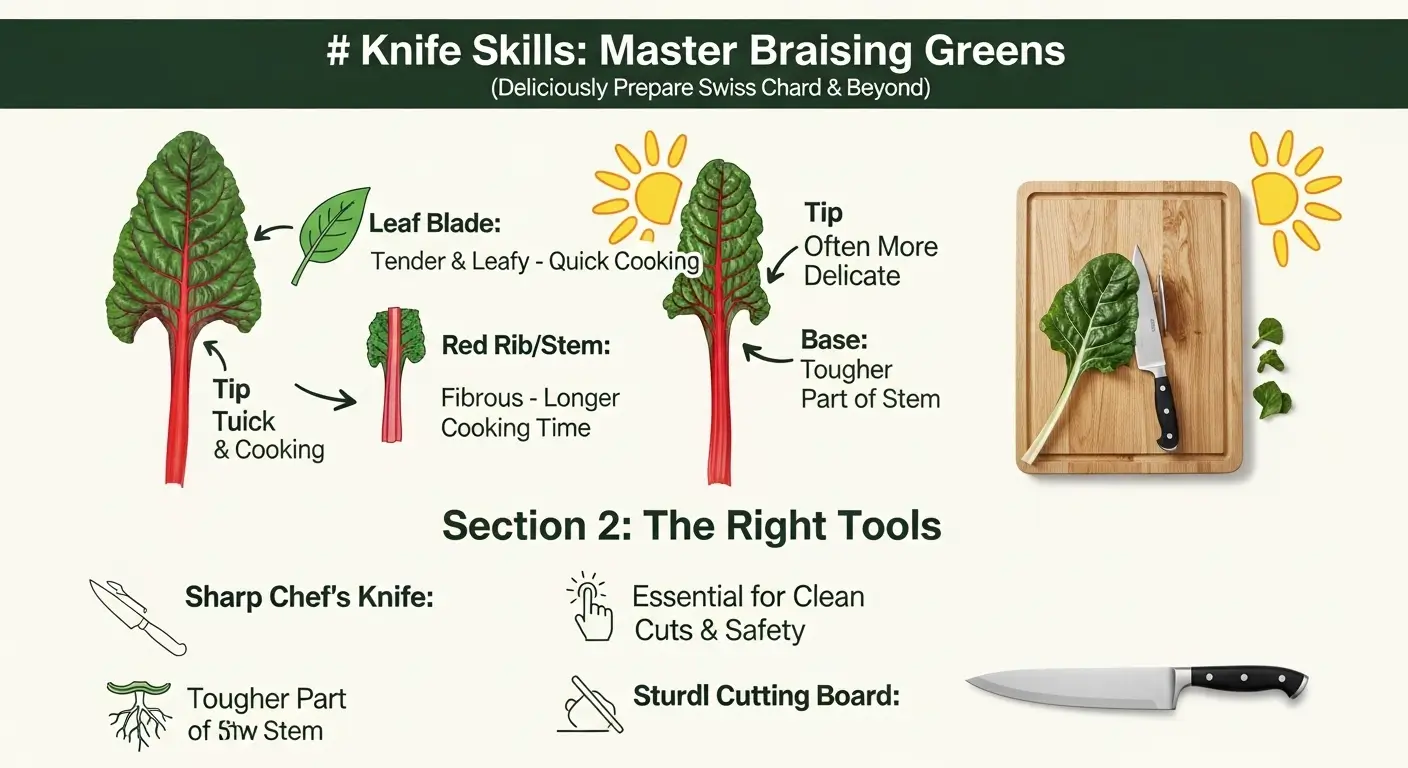
If you want to make the most of your Swiss chard and other braising greens, mastering the right knife skills is key. Cutting these greens the right way not only makes cooking easier but also keeps their texture and flavor just right.
You’ll discover simple, effective techniques that help you chop like a pro—saving time and boosting your kitchen confidence. Ready to transform your greens and elevate your meals? Keep reading to learn how to cut Swiss chard and other braising greens with ease.
Benefits Of Braising Greens
Braising greens like Swiss chard offers many benefits. These leafy vegetables are easy to cook and bring a unique taste to meals. Braising softens the leaves while keeping nutrients intact. This method also helps to mix flavors well. It transforms tough greens into tender, delicious dishes.
Nutritional Value
Braising helps keep important nutrients in greens. Swiss chard and other braising greens contain vitamins A, C, and K. They also provide minerals like iron and magnesium. Braising preserves these nutrients better than boiling. The gentle cooking method prevents vitamin loss. Eating braised greens supports good health and strong bones.
Flavor Enhancement
Braising deepens the flavor of greens. The slow cooking draws out natural sweetness. It reduces bitterness found in some leaves. Braising also allows spices and herbs to blend well. The result is a rich, smooth taste. This makes braised greens enjoyable for any meal.
Selecting Fresh Greens
Selecting fresh greens is essential for great taste and texture. Fresh Swiss chard and braising greens have bright colors and firm leaves. They should feel crisp, not wilted or slimy. Proper selection ensures your dishes cook evenly and taste fresh.
Identifying Quality Swiss Chard
- Choose leaves with vivid green or red veins.
- Look for smooth, unblemished leaves without holes.
- Stems should be firm and brightly colored.
- Avoid any leaves that look yellow or dry.
- Check that the chard feels crisp when you touch it.
Choosing Other Braising Greens
- Spinach leaves should be deep green and free from tears.
- Kale leaves need to be firm and not wilted.
- Collard greens should have thick stems and smooth leaves.
- Mustard greens must look fresh with no spots.
- All greens should have no slimy or soft areas.
Essential Tools For Cutting
Having the right tools is key to cutting Swiss chard and other braising greens safely and efficiently. The proper knife and cutting board make the process easier and protect your ingredients. Choosing tools that fit well in your hand and suit the task helps you work faster and cleaner.
Knife Selection
Pick a sharp knife with a comfortable handle. A chef’s knife or a santoku knife works best for braising greens. These knives offer good control and smooth cuts through thick stems and tender leaves. Avoid dull knives because they slip and cause uneven cuts.
Blade length between 7 to 8 inches is ideal. A wide blade helps scoop up chopped greens to transfer them to the pot or bowl. Keep your knife sharp by honing it regularly. Sharp knives reduce effort and keep leaves from bruising.
Cutting Board Choices
Use a sturdy cutting board to protect your countertop and knife. Wooden or plastic boards are popular options. Wooden boards are gentle on knife edges and have natural antibacterial properties. Plastic boards are easy to clean and dishwasher safe.
Choose a board size that fits your workspace and the volume of greens. A larger board gives you more room to chop and organize. Place a damp cloth under the board to stop slipping. This simple step improves safety and precision.
Preparing The Greens
Preparing Swiss chard and other braising greens properly makes cooking easier and tastier. Fresh greens often hold dirt and grit that you must remove. Also, stems can be tough and affect texture. Cleaning and handling these greens well improves your dish’s flavor and mouthfeel.
Cleaning And Washing
Start by separating the leaves from the stems. Fill a large bowl with cold water. Submerge the leaves and swish gently. Dirt and sand will sink to the bottom. Lift the leaves out and place them in a colander. Repeat the process if needed until water stays clear. Dry the leaves using a salad spinner or clean kitchen towel.
Removing Stems
Stems can be thick and fibrous, making them harder to cook. Hold the leaf in one hand and the stem in the other. Pull gently to separate the stem from the leaf. For tender stems, chop them finely to cook faster. Discard very thick or woody stems or save them for stock. Properly removing stems ensures even cooking and better texture in your dish.
Cutting Techniques
Mastering the right cutting techniques transforms your experience with Swiss chard and other braising greens. Proper cuts not only affect cooking times but also enhance texture and presentation. Your knife skills will directly impact how these greens absorb flavors and blend into dishes.
Chiffonade Method
The chiffonade method is perfect for leafy greens like Swiss chard. Start by stacking the leaves, rolling them tightly into a cigar shape. Then, slice thin ribbons across the roll using a sharp knife.
This technique creates delicate, uniform strips that cook evenly and look elegant in soups or sautés. I remember the first time I tried chiffonade—I was surprised how fast the greens softened without becoming mushy. Have you noticed how even cuts speed up cooking?
Julienne Style
The julienne style cuts greens into thin, matchstick-like strips. Begin by stacking and folding the leaves, then cut lengthwise into narrow strips, about 1/8 inch thick.
This style is excellent for adding texture to stir-fries or salads. The long, slender pieces hold their shape well and allow each bite to have a slight crunch. Have you tried julienning your greens to improve both look and mouthfeel?
Safety Tips
Handling knives safely is essential when cutting Swiss chard and other braising greens. Sharp blades can cause serious injuries if not used correctly. Following safety tips keeps your fingers safe and your kitchen efficient. Focus on control and awareness to prevent accidents.
Proper Knife Handling
- Hold the knife firmly with your dominant hand.
- Keep your fingers curled on the other hand, using a claw grip.
- Cut on a stable cutting board to avoid slips.
- Use smooth, even strokes instead of forceful chopping.
- Keep the knife blade sharp to reduce slipping risks.
- Store knives securely when not in use to prevent injuries.
Avoiding Common Mistakes
- Do not rush; slow, steady cuts are safer.
- Avoid cutting with a dull knife, which requires more force.
- Never catch a falling knife; step back instead.
- Do not place fingers near the blade’s path.
- Keep the cutting area clear of clutter.
- Clean knives carefully, avoiding direct contact with the blade.
Storage Tips For Freshness
Keeping your Swiss chard and other braising greens fresh after cutting is just as important as mastering the knife skills to prepare them. Proper storage preserves their vibrant color, crisp texture, and full flavor, making your dishes taste better and last longer. Have you ever bought fresh greens only to find them wilted and slimy a day later? The way you store them can make all the difference.
Refrigeration Methods
To keep your braising greens fresh, start with the right refrigeration approach. Wrap the cut greens loosely in a damp paper towel. This keeps moisture in without making them soggy.
Then, place the wrapped greens inside a perforated plastic bag or a container with some air holes. This setup allows airflow and prevents excess moisture buildup, which causes wilting and rot.
Store the greens in the crisper drawer of your fridge, where the temperature and humidity are more controlled. Check them daily and replace the paper towel if it becomes too wet.
Preservation Techniques
If you want to extend freshness further, consider blanching your greens before storage. Quickly boiling them for 30 seconds and then plunging into ice water stops enzyme activity that leads to spoilage.
After blanching, dry the greens thoroughly and store them in airtight containers or freezer bags. This method works great if you plan to use the greens later in cooked dishes.
Another option is to keep your greens in water like fresh flowers. Stand trimmed stems in a jar of cold water inside the fridge and cover loosely with a plastic bag. Change the water every couple of days to keep them crisp.
Cooking Braising Greens
Braising greens like Swiss chard need gentle cooking to keep their texture and flavor. Cooking them slowly in a small amount of liquid helps soften the leaves and stems. This method brings out a tender, rich taste without losing the bright green color. It works well for tougher greens too.
Start by washing and chopping the greens properly. Then sauté garlic or onions in oil or butter for extra flavor. Add the greens with a splash of broth or water. Cover and cook over low heat until tender. Stir occasionally to prevent sticking.
Flavor Pairings
- Garlic and onions add depth and aroma.
- Olive oil or butter enhances richness.
- Lemon juice or vinegar brightens the dish.
- Crushed red pepper flakes bring a mild heat.
- Herbs like thyme, parsley, or dill complement the greens.
- Salt and pepper balance and enhance flavors.
Popular Recipes
- Sautéed Swiss chard with garlic and lemon zest.
- Braised kale with onions and smoked paprika.
- Collard greens simmered with bacon and vinegar.
- Swiss chard and white bean stew with herbs.
- Spinach and chard sauté with pine nuts and raisins.

Credit: www.realfoodwithdana.com
Frequently Asked Questions
How Do You Properly Cut Swiss Chard Stems?
Cut Swiss chard stems by first trimming the base. Slice stems into thin strips for even cooking. This ensures they soften well and blend with leaves in braising recipes.
What’s The Best Knife For Cutting Braising Greens?
A sharp chef’s knife is ideal for cutting braising greens. It offers precision and control. Avoid dull knives to prevent bruising the leaves and stems.
Should Swiss Chard Leaves Be Cut Differently Than Stems?
Yes, separate leaves from stems before cutting. Chop leaves into bite-sized pieces. Stems take longer to cook, so slice them thinner and cook first.
How Do I Avoid Tearing Swiss Chard Leaves When Cutting?
Use a sharp knife and gentle slicing motions. Avoid crushing or pressing down hard on leaves. This preserves texture and prevents tearing during preparation.
Conclusion
Cutting Swiss chard and braising greens is easier than it seems. Use a sharp knife and steady hands for best results. Remove tough stems first, then slice leaves into bite-size pieces. Practice makes your cuts neater and faster. These simple steps help your greens cook evenly and taste great.
Try different greens to find your favorite flavors and textures. Keep these knife skills in mind for tasty, healthy meals every time. Enjoy your cooking journey with fresh, vibrant greens!
