
You want a quick, reliable answer for how to clean nonstick pan without wrecking the coating or risking flakes in your food. If the surface is intact, a short soak in warm, soapy water and a soft sponge will usually restore performance, but if you see flaking or bubbling, stop using the pan and replace it.
Manufacturer specifications indicate PTFE coatings begin to break down above 260°C, that is 500°F, and aggregate reviews as of 2026 show most nonstick pans last 2 to 5 years under normal home use. Read those signs, then follow the step-by-step workflow below to choose the safest cleaning action.
How to Clean Nonstick Pan 2026
Quick answer: the safest first step based on what’s wrong with the pan
If food comes off with a soft sponge after a 10 to 30 minute soak, hand-wash and air-dry, you’re done. If the pan has stuck-on but not carbonized food, soak longer and use a plastic scraper or nylon pad to lift residue, then hand-wash. If you find chips, flaking, bubbling, or deep scratches, stop using the pan for food and replace it, because flaky coatings can contaminate food.
Quick checklist, pick one and act
- If surface looks smooth and intact, soak 10 to 30 minutes in warm water plus dish soap, then clean with a non-scratch sponge.
- If residue won’t budge, use a baking-soda paste or short boil method, then rinse and inspect.
- If coating is damaged, discard the pan or consult the manufacturer for warranty or recall instructions.
This gives you a fast safe route, then the sections below explain why each step matters and how to choose the right method.
The common problems you’ll run into with nonstick pans
Nonstick pans fail in predictable ways, and each failure needs a different response. Here are the problems you’ll see most often, what causes them, and the immediate action to take.
Common problems, causes, and first actions
- Food sticks, especially eggs and fish: cause, worn or dirty nonstick surface; action, clean gently and re-season if the pan allows, or replace if performance won’t return.
- Scratches from metal utensils: cause, using metal spoons or spatulas; action, stop using metal tools, check for deep gouges and consider replacement.
- Flaking or peeling coating: cause, prolonged overheating, dishwasher damage, or age; action, stop cooking with the pan and discard.
- Burnt-on carbonized residue: cause, prolonged high heat or cooking sugary sauces; action, soak, use a baking-soda paste, or use the boil-and-scrape approach depending on coating.
- Discoloration or mineral scale: cause, hard water or heating oil to smoke; action, try vinegar soak or gentle scrubbing, then test with a light cook to confirm release.
- Warping: cause, thermal shock or high heat; action, check flatness on a stovetop or flat surface, and replace if it doesn’t sit evenly.
A short, practical rule: sticky or stained surfaces can often be rescued with low-tech cleaning, damaged coatings cannot. The rest of the article helps you decide which is which and how to proceed.
How different nonstick coatings change what you should do (PTFE/Teflon vs ceramic vs hybrids)
Different coatings behave very differently, so your cleaning choice must follow the coating type. Here is a compact breakdown, showing heat tolerance, scratch resistance, dishwasher recommendations, and safe cleaning approaches.
Table: coating types and safe cleaning methods
| Coating type | Heat tolerance | Scratch resistance | Dishwasher? | Safe cleaning approach |
|---|---|---|---|---|
| PTFE (Teflon, PTFE-based) | Up to about 260°C (500°F) before decomposition | Low to moderate, scratched by metal | Often labeled not dishwasher-safe by premium makers | Warm soapy soak, soft sponge, nylon scrubber, baking-soda paste for residue |
| Ceramic-coated | Generally lower heat tolerance than PTFE, manufacturer varies | Moderate, more brittle at high temps | Often dishwasher-safe, but manual washing extends life | Gentle soap, soft sponge, avoid abrasive pads, light oil seasoning possible |
| Hard-anodized (nonstick finish) | Higher heat tolerance than PTFE | Higher scratch resistance | Many are dishwasher safe but hand-wash recommended | Warm soapy water, nylon pads; can tolerate slightly more abrasion |
| Diamond/titanium-infused | Varied by brand, typically marketed as tougher | Higher | Check manufacturer | Gentle to moderate scrubbing, avoid steel wool |
Key takeaways, practical
- If your pan is PTFE-coated, avoid high-heat scrubbing and abrasive chemicals; use only soft scrubbing tools and mild cleansers. Manufacturer specifications confirm PTFE coatings can release decomposition products above 260°C, so avoid flame-high heats.
- For ceramic-coated pans, the coating can be more brittle, and aggressive abrasion shortens life; a light re-seasoning with neutral oil after cleaning will often restore slickness.
- Hard-anodized and reinforced coatings can survive slightly tougher cleaning, but they still benefit from gentle care to extend useful life.
Aggregate reviews as of 2026 report PTFE pans give the smoothest release for eggs, while ceramic pans excel for stick-free searing at moderate heats, so match your cleaning and use habits to the coating you own.
Pre-clean inspection: what to check before you touch the pan
Before you wash, inspect. That short check guides whether you proceed with gentle cleaning, a restorative method, or immediate replacement.
Signs of coating damage (scratches, flaking, bubbling)
Look closely under good light. If you see any of the following, stop using the pan for food and handle it as a damaged item.
- Flaking or peeling fragments visible on the surface or in the pan.
- Bubbling or blistered patches that indicate delamination.
- Deep scratches that reveal a different-colored substrate beneath the coating.
If any of the above appears, the risk of coating particles mixing into food is real. Manufacturer guidance and consumer safety authorities recommend discarding pans with these signs, particularly if the coating is PTFE.
Insert the example image showing flaking where visible damage is clear, this helps you match what you see to the right action.
Heat-abuse indicators (warping, discoloration, burnt layers)
Check for these physical signs, they point to overheating or thermal shock.
- Warping, where the pan no longer sits flat on a stovetop.
- Discoloration that looks like a rainbow or brown/black smoked layer in the cooking zone.
- Persistent burnt-on black patches that resist soap and sponge.
If you see heavy discoloration but no flaking, a cleaning routine may fix it. If the pan is warped, replacement is usually the safest path because an uneven base causes hot spots that worsen wear.
Manufacturer care and warranty notes to verify
Manufacturer care instructions are not just legal boilerplate, they give the single best path for cleaning and warranty claims. Before aggressive cleaning, check the manual or the maker’s website for these items.
- Whether the pan is labeled dishwasher-safe, oven-safe, and the maximum oven temperature.
- Any cleaning agents explicitly forbidden, such as oven cleaners or bleach.
- Warranty period and what types of damage are covered, for example defects versus user-caused overheating.
Per manufacturer specs and consumer safety guidance as of 2026, following the care instructions often preserves warranty rights. If the pan fails within warranty and the damage looks like a defect, document it with photos before disposing.
Decision workflow: choose the right method by condition
Follow-if/then logic to pick the safest and most effective cleaning path. Read the condition, then take the recommended action.
Branch A — Light grease or everyday food residue
If food comes off with a soft sponge after a 10 to 30 minute soak, then:
- Steps: fill the pan with warm water and 1 teaspoon of dish soap, let sit 10 to 30 minutes, use a soft sponge to wipe clean, rinse, dry with a towel.
- Tools: soft sponge, microfiber towel.
- Why: typical cooking oils and food films dissolve in warm soapy water, no abrasion needed, preserves coating life.
Branch B — Stuck-on but not burnt food
If residue stays after a normal soak, then:
- Steps: fill the pan with enough hot water to cover residue, add a tablespoon of dish soap, bring to a simmer for 5 minutes, turn off, let cool slightly, use a plastic scraper or nylon pad to lift loosened food, wash and dry.
- Soak timing: 30 minutes to an hour if simmering is not desirable.
- Tools: plastic scraper, nylon scrub pad, soft sponge.
- Note: never use metal scrapers on PTFE or ceramic, they cause scratches.
Branch C — Heavy baked-on or carbonized residue
If the food is carbonized or sugar-based and won’t come off, then:
- Steps: make a paste of baking soda and water, apply to affected area, let sit 15 to 30 minutes, use a nylon scrubber with gentle circular pressure, rinse thoroughly. If that fails, fill the pan with water and 1 cup white vinegar, bring to a boil for 5 minutes, then add a tablespoon of baking soda off heat, let fizz, cool, and scrub gently.
- Caution: choose the gentlest method compatible with the coating. Ceramic tolerates vinegar well, PTFE reacts better to baking-soda paste.
- If multiple attempts fail, and the pan still functions without visible damage, consider a professional manufacturer-recommended restoration or replace it.
Branch D — Mineral deposits, staining, or discoloration
If you have scale, gray ring, or surface staining, then:
- Steps: use a 1:1 white vinegar to water solution, soak 20 to 30 minutes, rinse, then wash with warm soapy water. For stubborn mineral scale, repeat or use a vinegar soak with gentle nylon scrubbing.
- Test the surface after cleaning by cooking a bit of egg or pancake to confirm release.
Branch E — Coating flaking, peeling, or delaminating
If coating flakes, peels, or shows blistering, then:
- Action: stop using the pan for food immediately, inspect manufacturer guidance, photograph the damage, and check warranty or recall notices. Discard or return under warranty. Do not attempt to sand, recoat, or use aggressive solvents to "fix" a failing coating.
- Safety note: flaking coatings can end up in food and are a contamination hazard.
Practical tools and where to use them
- Soft sponge and dish soap, universal for Branches A and B.
- Nylon scrub pad and plastic scraper, for Branches B and C.
- Baking soda and white vinegar, for Branches C and D.
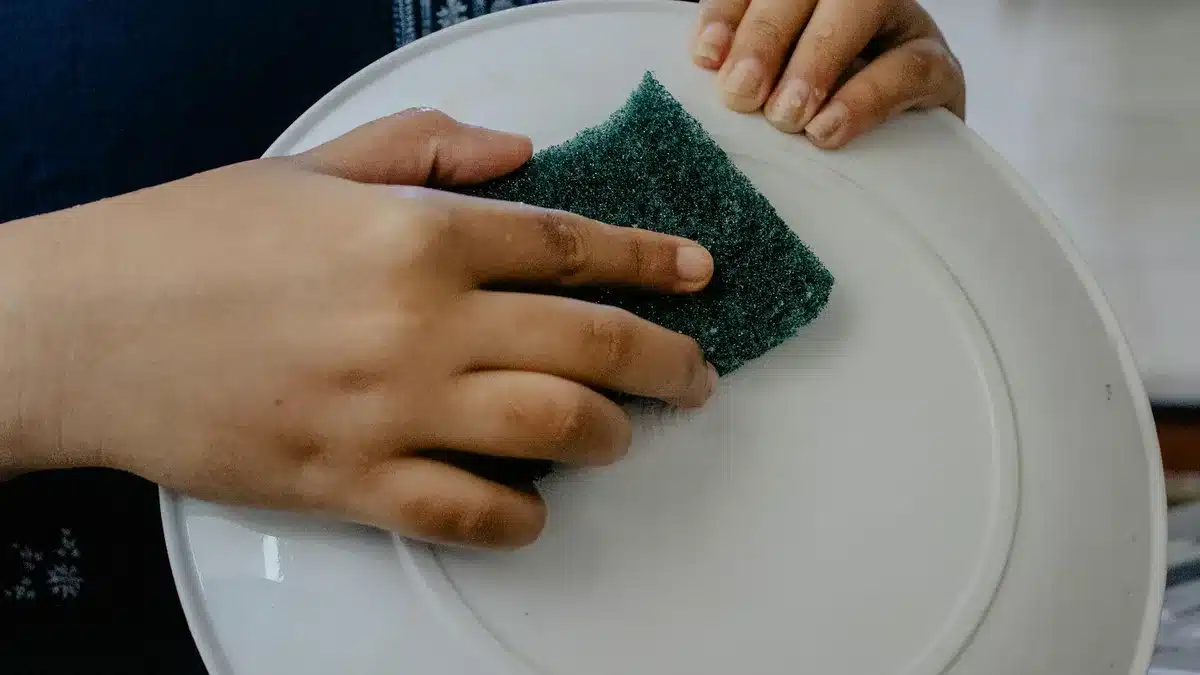
- If you need a visual reminder of safe scrubbing tools, use the nylon scrubber image here to match what to keep in your drawer.
Follow these branches, and you’ll avoid the most common cleaning mistakes while keeping your pan functioning longer. If you hit Branch E, pause and replace the pan, because no cleaning routine restores a delaminating coating.
Tools, cleaners, and safe abrasives to keep (and what to avoid)
Start with a drawer audit, then keep only tools that are coating-safe. Soft sponges, silicone or wooden utensils, plastic scrapers, and nylon scrub pads are the core items that preserve nonstick surfaces. Manufacturer specs and aggregate reviews as of 2026 favor nylon pads for removing residue without scoring PTFE or ceramic.
Safe cleaners and remedies
- Mild dish soap, warm water, and a soft sponge, the everyday trio for most soils.
- Baking soda, used as a paste with water, acts as a gentle abrasive for baked-on food.
- White vinegar diluted with water, useful for mineral deposits and discoloration, particularly on ceramic and hard-anodized finishes.
What to avoid, unequivocally
- Steel wool or metal scouring pads, they create deep scratches and accelerate delamination.
- Oven cleaners, oven-cleaner aerosols, and strong solvents, because they can chemically attack coatings and adhesives.
- Highly alkaline concentrated degreasers on PTFE, which some manufacturers list as unsafe.
Storage and tools checklist
- Keep separate sets of metal and non-metal utensils, label drawers if needed.
- Replace worn nylon pads regularly, because embedded grit turns a soft pad into an abrasive.
- For cookware with removable handles, check the manufacturer for handle-care guidance before soaking.
Step-by-step cleaning procedures for each scenario
Hand-wash routine for everyday cleanup
- Cool the pan until warm, not hot, to avoid thermal shock.
- Add 1 to 2 teaspoons of dish soap and warm water, soak 10 to 30 minutes.
- Wipe with a soft sponge, rinse, and dry with a towel.
Soak plus gentle scrape for stuck-on food
- Fill the pan with hot water, add a tablespoon of dish soap, bring to a low simmer for 3 to 5 minutes or just let it soak 30 to 60 minutes.
- Turn off heat, cool slightly, use a plastic scraper to lift softened residue, finish with a nylon pad if needed.
- Rinse thoroughly and dry.
Baking-soda paste and gentle abrasion for baked-on residue
- Mix baking soda with a little water to form a spreadable paste.
- Apply to the affected zone, let sit 15 to 30 minutes, then scrub with a nylon pad using light circular pressure.
- Rinse well, then test with a small cook, such as scrambled egg, to confirm release.
Vinegar boil method for mineral deposits and discoloration
- Add equal parts white vinegar and water to cover the cooking surface, bring to a short boil for 3 to 5 minutes, then let cool.
- Pour out, wash with dish soap and a soft sponge, then air dry.
- Repeat once if scale persists, but avoid prolonged acid exposure on some finishes; always check manufacturer guidance.
Dishwasher and machine-cleaning considerations
- Aggregate user feedback shows dishwashers shorten many nonstick lifespans, even when a pan is labeled dishwasher-safe.
- If you must use a dishwasher, place the pan on the top rack, avoid high-heat drying cycles, and hand-wash as soon as practical to remove residual detergent.
Quick troubleshooting steps
- If residue persists after one method, try the complementary method once, then inspect for damage.
- If deep scratches, flaking, or bubbling appear at any point, stop and move to the retirement workflow in the safety section.
Reconditioning and minor restoration (when it helps)
Reconditioning can work for cosmetic issues or light loss of slickness, but it never fixes structural coating failures. Use reconditioning only when the surface remains intact and free of flakes.
Light re-seasoning for ceramic and hard-anodized pans
- Wipe the cleaned, dry pan with a thin layer of neutral oil, such as canola or grapeseed.
- Heat the pan gently on low to medium heat for 2 to 5 minutes, then cool and wipe off excess oil.
- Manufacturer specs vary, but this light oiling can restore some release for ceramic surfaces.
When gentle abrasion helps
- A single baking-soda paste treatment followed by a light oil wipe can remove blackened film and restore slip for PTFE pans that are otherwise intact.
- Avoid repeated abrasive cycles, because cumulative micro-scratches reduce coating life even if each pass seems harmless.
When to contact the manufacturer
- If the pan is within the warranty period and damage looks like delamination or manufacturing defect, document the issue with photos and compare defects to the warranty language.
- Manufacturer media and manuals often list approved restoration steps; following those steps preserves warranty rights and reduces risk.
Restoration you must not attempt
- Do not sand, recoat with aftermarket sprays, or use high-temperature treatments to force adhesion back.
- Those DIY fixes mask underlying failure and can make contamination risks worse.
Mistakes that shorten a nonstick pan’s life (and immediate fixes)
Avoid these common mistakes, they are the fastest way to kill a nonstick finish. If you catch them early, some have simple fixes.
Cooking mistakes and quick remedies
- Repeated high-heat cooking, particularly empty-pan heating, causes coating breakdown. Remedy, avoid heating an empty pan and use medium or lower heat for long cooks.
- Metal utensils causing scratches. Remedy, switch to silicone, wood, or nylon utensils immediately and inspect the surface.
- Dishwasher use with harsh detergents. Remedy, switch to hand-washing and run a single mild dishwasher-safe test only if the manufacturer explicitly approves.
Cleaning mistakes and fixes
- Using abrasive powders or steel wool. Fix, stop immediately and use baking-soda paste plus nylon pad for stubborn spots.
- Letting greasy residue bake into carbonized layers. Fix, soak promptly in hot soapy water, then use the soak plus gentle scrape routine.
Storage and handling mistakes
- Stacking pans without protection, causing abrasion from other cookware. Fix, add pan protectors or paper towels between pans.
- Thermal shock from running cold water over a very hot pan, causing warping. Fix, let the pan cool gradually before washing.
Red flags that mean the mistake is final
- If you see coating flakes, bubbling, or deep substrate exposure after fixing the mistake, stop using the pan and follow the safety and retirement steps.
Safety, regulations, and when to retire a pan
Safety is non-negotiable. If the coating is compromised, replacement is the right choice.
When to retire a pan, quick checklist
- Visible flaking or peeling on the cooking surface. Retire, these particles can get into food.
- Bubbling or blistering, signs of delamination. Retire, adhesive failure usually precedes rapid shedding.
- Deep scratches that reveal a different-colored base metal. Retire, unless the manufacturer explicit instructions say otherwise.
Regulatory and material context
- PFOA has been phased out of new PTFE processes in most major markets, and many brands label pans as PFOA-free. Aggregate regulatory updates as of 2026 show continued monitoring under EU REACH and similar frameworks.
- The U.S. FDA provides guidance on food-contact surfaces, and the U.S. Consumer Product Safety Commission issues notices when hazards are identified, so check those sources for recall alerts.
Safe disposal and recycling tips
- Check local recycling rules, because many municipalities accept aluminum cookware separately from mixed metals.
- If you cannot recycle, wrap the pan and mark it as nonfood-safe before discarding, to prevent accidental reuse.
If you suspect overheating or chemical exposure
- PTFE coatings begin to degrade at temperatures around 260°C, that is 500°F, and overheating can produce fumes that are harmful to birds and may cause temporary flu-like symptoms in humans at high exposure. Follow ventilation best practices, and if a pan was overheated extensively, retire it.
- For any suspected contaminant or abrupt failure, photograph the damage, consult manufacturer guidance, and report serious hazards to the relevant consumer agency.
Practical end rule
- If the coating is intact, keep cleaning and reconditioning within the gentle methods described. If any structural failure appears, retire the pan, replace it, and follow local disposal rules.
Maintenance and storage tips to extend nonstick life
Treat cleaning as part of maintenance, not just an emergency fix, and you’ll get more life from any coating. Wash after each use with warm soapy water, avoid the dishwasher when possible, and dry by hand to prevent mineral spotting and detergent film buildup. Aggregate user feedback and manufacturer specs as of 2026 agree, gentle daily care beats occasional deep scrubbing.
Use these storage practices
- Place pan protectors, thin cloths, or paper towels between stacked pans to prevent abrasion.
- Store utensils separately, keep silicone, wood, or nylon tools in a dedicated holder to avoid accidental metal contact.
- If the pan has a removable handle, check the manufacturer for soak and storage guidance before packing it away.
Small routine actions that matter
- After cleaning, wipe the interior with a little cooking oil on a paper towel to restore slickness for ceramic finishes.
- Avoid rapid temperature changes, let the pan cool before rinsing under colder water to reduce warping risk.
- Replace nylon pads periodically, because embedded grit turns them into abrasives over time.
A short maintenance calendar
- Weekly: clean thoroughly, inspect for scratches and discoloration.
- Monthly: run a vinegar or baking-soda treatment if mineral rings or grease film appears.
- Annually: review the pan against warranty period and consider replacement if heavy wear appears.
Quick decision guide: replace, repair, or keep using? (timeline + warranty checklist)
If the coating flakes, peels, or blisters, replace the pan. If the surface is intact but performing poorly, try reconditioning first, then decide whether to keep using the pan.
Decision checklist, follow-if/then logic
- If flakes or peeling are present, retire the pan immediately.
- If deep scratches expose the metal substrate, retire the pan unless the manufacturer states otherwise.
- If the surface is merely stained, sticky, or slightly dulled, attempt the cleaning and reconditioning steps described earlier, then test with a small cook.
Warranty and timeline table
| Situation | Action to take | Typical timeline |
|---|---|---|
| Manufacturing defect within warranty | Contact manufacturer with photos, request repair or replacement | Within warranty period, often 1 to 5 years |
| Early failure but outside warranty | Photograph damage, contact support for goodwill options, otherwise retire | Immediately |
| Cosmetic wear, intact surface | Clean, recondition, continue use | Try cleaning once a month, replace when performance fails |
| Safety failure (flaking, bubbling) | Stop use and discard or return via recall program | Immediately |
Warranty checklist before throwing a pan away
- Find the serial or model number, check the manufacturer's care page for matching failure conditions.
- Photograph the damage in good light, showing the cooking surface and any flakes or discoloration.
- Compare failure to warranty terms, file a claim if the timeline and defect type match.
Expert tips, shortcuts, and real-world tricks that actually work
Use a few small habits to keep your pans performing far longer than average, based on manufacturer guidance and editorial analysis of user reviews.
Quick, practical tips
- Use medium or medium-low heat for most cooking, because PTFE and ceramic coatings work well at lower temperatures and heat abuse shortens life.
- Test release after cleaning by frying a small egg, this quick check tells you whether the surface is restored.
- Keep a small container of baking soda under the sink for rapid paste repairs on baked-on spots.
Shortcuts that save time without harm
- For light daily cleanup, wipe with a warm dishcloth and a drop of soap instead of full soaking, especially on low-use days.
- To remove stubborn grease without scrubbing, pour one cup of hot water and one teaspoon of dish soap, cover, let stand 30 minutes, then pour and wipe.
- Use a soft microfiber cloth to buff away detergent film, it restores sheen and slip faster than more aggressive methods.
Troubleshooting quick wins
- If a pan smells after cleaning, simmer a lemon slice in water for five minutes, then wash and dry.
- If the nonstick seems sluggish after a dishwasher cycle, run a vinegar soak then re-season lightly with oil.
- If a metal utensil scratched the surface but no flakes are visible, stop using metal tools immediately and monitor for peeling over the next few uses.
FAQs
Can I use metal utensils on nonstick pans?
No, you should not use metal utensils on most nonstick coatings, because metal can score PTFE and ceramic, creating scratches that lead to flaking. Use silicone, wood, or nylon tools and keep a separate metal-utensil set for stainless steel or cast iron pans.
Is it safe to put nonstick pans in the dishwasher?
Sometimes, manufacturers label pans as dishwasher-safe, but hand-washing extends life and reduces the risk of detergent film and heat-abuse. If you use a dishwasher, place the pan on the top rack, avoid high-heat drying cycles, and inspect the surface after several washes.
How long does a nonstick pan normally last?
Typical useful life under regular home use ranges from about two to five years, depending on coating quality, heat exposure, and care. Premium PTFE pans with multiple layers often sit near the higher end of that range, while budget pans may wear faster.
What temperature damages PTFE coatings?
PTFE-based coatings begin to degrade at temperatures around 260°C, that is 500°F, which commonly exceeds normal stovetop cooking. Avoid empty-pan high heat, preheat briefly on low to medium, and follow manufacturer oven-temperature limits.
Can I restore a badly scratched nonstick pan?
You can restore light surface dulling with cleaning and re-seasoning, but you cannot safely repair deep scratches that expose the substrate or cause flaking. If the coating is compromised, follow the retirement checklist and replace the pan.
How should I dispose of an old nonstick pan?
Check local recycling options for aluminum cookware, otherwise wrap the pan and label it as nonfood-safe before disposing to prevent accidental reuse. For recall or warranty returns, follow the manufacturer's shipping and disposal instructions.
Final Recommendation / Verdict / Decision Guide
If the pan performs well after the cleaning and reconditioning steps, keep it and follow the maintenance calendar. If you see structural coating failure, replace it and follow disposal or recycling guidance.
Final practical decision steps
- Inspect the surface, photograph any concerning areas, and compare against warranty terms.
- Try the appropriate cleaning branch once, recondition if the surface is intact, then test with a small cook.
- If flakes, blistering, deep scratches, or persistent odor appear, retire the pan and replace it.
Replacement buying tips
- Choose pans with clear manufacturer care instructions and reasonable warranties, typically one to five years.
- Match pan type to your cooking style, PTFE for low-fat frying and eggs, ceramic or hard-anodized for moderate searing and easier cleaning habits.
- Keep receipts and register the product with the manufacturer, this simplifies warranty claims should defects appear.
Follow these steps and you’ll limit contamination risk, save money by replacing only when needed, and get the most from whatever nonstick cookware you own.
