
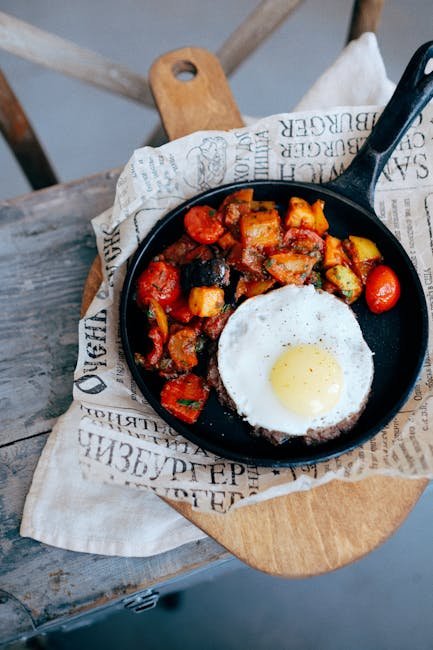
Imagine the sizzling sound of a perfectly seared steak, the aroma wafting through your kitchen, and the anticipation of that first juicy bite. Cooking steak in a cast iron skillet can transform a regular meal into a culinary delight.
If you’ve ever wondered how to achieve that restaurant-quality steak at home, you’re in the right place. You don’t need fancy gadgets or professional chef skills—just a trusty cast iron skillet and a few tips and tricks. By the end of this article, you’ll discover the secrets to cooking steak that is crisp on the outside and melt-in-your-mouth tender on the inside.
Ready to elevate your steak game? Let’s dive in and unlock the best way to cook steak in a cast iron skillet!
Choosing The Right Cut
Selecting the perfect steak cut is essential for cast iron skillet cooking. Ribeye or sirloin offer great flavor and tenderness. Season generously, and sear for a delicious crust.
Choosing the right cut of steak is a crucial step in ensuring your meal is both delicious and memorable. Not all steaks are created equal, and each cut brings its own flavor, tenderness, and cooking requirements. Whether you’re a seasoned home cook or just starting out, understanding which cut to choose can make all the difference in your culinary experience.Popular Steak Cuts
When it comes to popular steak cuts, you have several options, each with its unique characteristics. – Ribeye: Known for its rich flavor and juicy marbling, the ribeye is often a favorite among steak lovers. It’s perfect for those who prefer a juicy, flavorful steak. – Filet Mignon: This cut is famous for its tenderness. While it’s not as flavorful as the ribeye, its buttery texture makes it a luxurious choice. – New York Strip: Offering a balance between tenderness and flavor, the New York Strip is a versatile cut that’s great for any occasion. – T-Bone: This cut gives you the best of both worlds, with a portion of both the strip and the tenderloin. It’s a great choice if you want a mix of flavors and textures.Factors To Consider
Several factors can help you decide which cut is right for your cast iron skillet. – Flavor Profile: Consider what kind of flavor you’re looking for. A ribeye will offer a rich, beefy flavor, while a filet mignon will provide a milder taste. – Cooking Time: Different cuts have different thicknesses and fat content, affecting how long they need to cook. Do you have the time to slow-cook a thick ribeye, or are you looking for a quick-searing filet? – Occasion: Are you cooking for a special occasion or a weeknight dinner? A T-bone might be a showstopper at a dinner party, while a New York Strip could be just right for a regular meal. – Budget: Consider what you’re willing to spend. Filet mignon can be pricey, while a New York Strip offers a more budget-friendly option without sacrificing quality. Choosing the right cut is about balancing these factors to suit your taste and needs. Have you ever tried a cut you weren’t familiar with? How did it turn out? Experimenting with different cuts can be a delightful journey in the kitchen.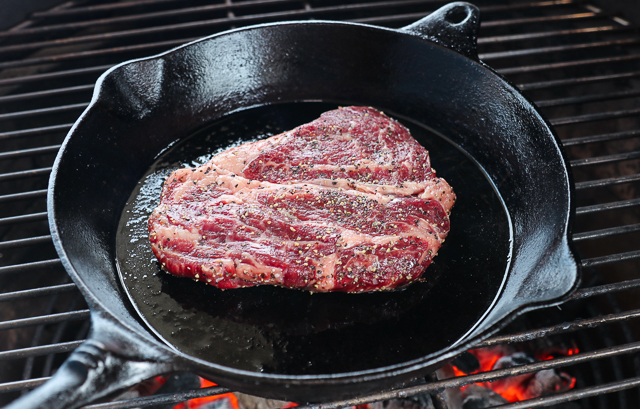
Credit: howtobbqright.com
Preparing The Steak
Cooking steak in a cast iron skillet enhances its rich flavor and tender texture. Start by preheating the skillet until it’s hot. Sear the steak on each side for a few minutes, creating a crispy crust while keeping the inside juicy.
Preparing a steak for cooking in a cast iron skillet is an art that transforms a simple piece of meat into a delicious masterpiece. It’s not just about tossing it onto the pan; it’s about the anticipation and the care you put into each step. Have you ever wondered how restaurants achieve that perfect crust and juicy interior? The secret lies in the preparation. Let’s dive into two crucial steps: seasoning techniques and the importance of bringing your steak to room temperature.Seasoning Techniques
Seasoning is your chance to infuse flavor into your steak. Start with a generous pinch of salt. Don’t be shy; salt is your steak’s best friend. It draws out moisture, creating a flavorful crust. Pepper adds a subtle heat. Freshly cracked is best. Consider adding garlic powder or smoked paprika for extra depth. Have you tried adding a dash of rosemary or thyme? These herbs can elevate the taste profile, making your steak irresistible.Bringing Steak To Room Temperature
Why is room temperature important? A cold steak won’t cook evenly. You risk overcooking the outside while the inside stays raw. Let your steak sit out for about 30 minutes. This simple step ensures a more consistent cook. Feel the difference when you cut into it. The juices are evenly distributed, and the texture is perfect. As you prepare your steak, think about these techniques. How will they change your cooking experience? Could they be the secret to your next dinner success?Setting Up The Cast Iron Skillet
Cooking steak in a cast iron skillet creates a perfect crust. Heat the skillet until it’s very hot. Add the steak and sear each side for a few minutes. Finish in the oven for even cooking.
Setting up your cast iron skillet is the foundation of cooking a perfect steak. It’s not just about turning on the stove; it’s about creating an ideal environment for the steak to sear beautifully. With the right preparation, you can achieve a mouthwatering crust and tender, juicy interior. Are you ready to elevate your steak game?Preheating The Skillet
Preheating is crucial for a perfect sear. Without it, the steak can stick or cook unevenly. Place your cast iron skillet on the stove and turn the heat to medium-high. Allow it to heat for about 5 to 10 minutes. You want it hot, but not smoking. A good way to check the temperature is to flick a few drops of water onto the skillet. If they sizzle and evaporate immediately, you’re ready to go. Some people skip this step, thinking it saves time. But trust me, the difference in the crust is worth the wait. Have you ever regretted taking an extra step for better flavor?Using The Right Oil
Choosing the right oil is equally important. You need an oil with a high smoke point to prevent burning. Options like canola or avocado oil work well. Pour just enough oil to coat the bottom of the skillet lightly. You don’t want the steak swimming in oil, just enough to aid the searing process. The oil choice can influence the final taste of your steak. Imagine the difference between a subtly flavored steak and one overwhelmed by oil. Which would you prefer? Setting up your cast iron skillet is an art that can transform your steak into a culinary masterpiece. With these steps, you’re not just cooking; you’re crafting an experience. Ready to hear that sizzle?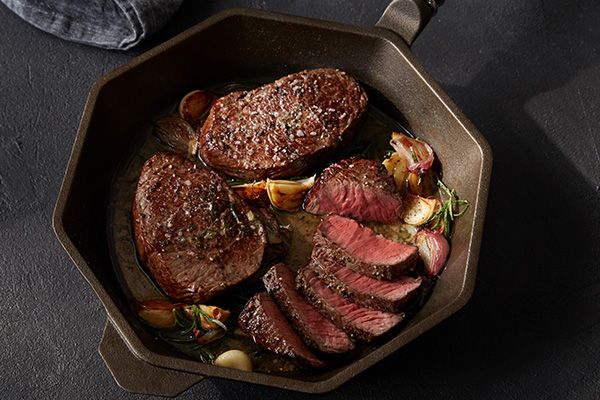
Credit: www.kansascitysteaks.com
Cooking The Steak
Cooking steak in a cast iron skillet brings rich flavors. The skillet’s even heat creates a perfect crust. This method enhances the steak’s natural taste. Let’s explore how to achieve a perfect steak.
Searing For Flavor
Searing locks in juices and creates a crispy crust. Preheat your skillet over high heat. Add a bit of oil to the pan. Once the oil shimmers, place the steak in the pan. Press it down gently for full contact with the surface. This step is crucial for building flavor.
Managing Heat Levels
Adjusting heat levels is essential. Start with high heat to sear the steak. After searing, reduce the heat to medium. This prevents the steak from burning. Monitor the heat to maintain a steady cooking process. Consistent heat ensures even cooking throughout.
Timing And Doneness
Timing determines the steak’s doneness. For a medium-rare steak, cook for 3-4 minutes per side. Use a meat thermometer for accuracy. Aim for an internal temperature of 130°F (54°C) for medium-rare. Let the steak rest before serving. This allows juices to redistribute, enhancing tenderness.
Resting And Serving
Cooking the perfect steak in a cast iron skillet is an art. After achieving the ideal sear, resting and serving are crucial steps. These steps enhance the flavor and presentation.
Importance Of Resting
Resting steak is essential for juicy results. It allows juices to redistribute. This prevents the steak from losing moisture when cut. Resting should last 5 to 10 minutes. Cover the steak loosely with foil. This keeps it warm without steaming.
Slicing And Presentation Tips
Slicing steak correctly enhances the eating experience. Always cut against the grain. This makes each bite tender. Use a sharp knife for clean cuts. Arrange slices neatly on a plate. Garnish with herbs or a drizzle of sauce. This adds color and flavor.
Troubleshooting Common Issues
Cooking steak in a cast iron skillet can face issues like uneven cooking. Ensure the pan is preheated evenly. Use oil to prevent sticking and achieve a perfect sear.
Cooking steak in a cast iron skillet can be a delightful experience. But, it comes with challenges. Common issues like overcooking and excessive smoke can frustrate cooks. Understanding these problems helps in preparing the perfect steak. This section will guide you through solutions to these challenges.Avoiding Overcooking
Overcooking a steak ruins its texture and flavor. Use a meat thermometer for accuracy. Aim for an internal temperature of 130°F for medium-rare. Remove the steak from heat slightly before it reaches desired doneness. Resting the steak allows carryover cooking to finish the job. This method ensures a juicy and tender steak. Ensure the skillet is preheated before placing the steak. A hot skillet sears the meat quickly, locking in juices. Flip the steak only once for even cooking. Timing is crucial. Keep a close watch to avoid overcooking.Dealing With Smoke
Smoke can fill your kitchen while cooking steak. To reduce smoke, use oils with high smoke points. Canola or grapeseed oil are good choices. Ensure your kitchen is well-ventilated. Open windows or use an exhaust fan. Pat the steak dry before cooking to reduce smoke. Excess moisture creates steam, increasing smoke levels. Avoid using too much oil in the skillet. A thin coat is enough to prevent sticking. Check the heat level. Medium-high heat is ideal. Avoid cooking on very high heat to reduce smoke. These steps help in maintaining a smoke-free cooking environment.Cleaning And Maintaining Cast Iron
Cleaning and maintaining a cast iron skillet is essential for cooking the perfect steak. Proper care ensures your skillet lasts for years. A well-maintained skillet enhances your cooking experience. It provides a non-stick surface and even heat distribution. Explore these steps to keep your cast iron skillet in top shape.
Cleaning Techniques
Never use soap on your cast iron skillet. Soap removes the seasoning and damages the surface. Instead, clean the skillet with warm water and a stiff brush. For stubborn food bits, use a paste of coarse salt and water. Scrub the skillet gently to avoid scratching. Rinse well and dry immediately with a towel.
Avoid soaking the skillet in water. Prolonged exposure to water causes rust. After cleaning, heat the skillet on the stove. This removes any remaining moisture. Store in a dry place to prevent rust.
Seasoning The Skillet
Seasoning maintains the skillet’s non-stick surface. It prevents rust and enhances flavor. To season, apply a thin layer of vegetable oil to the skillet. Use a cloth or paper towel for even coverage. Place the skillet upside down in a preheated oven at 375°F (190°C). Bake for one hour to let the oil bond with the metal.
Allow the skillet to cool in the oven. This ensures the seasoning sets properly. Repeat this process every few months. Frequent use may require more seasoning. Regular seasoning keeps your skillet performing at its best.
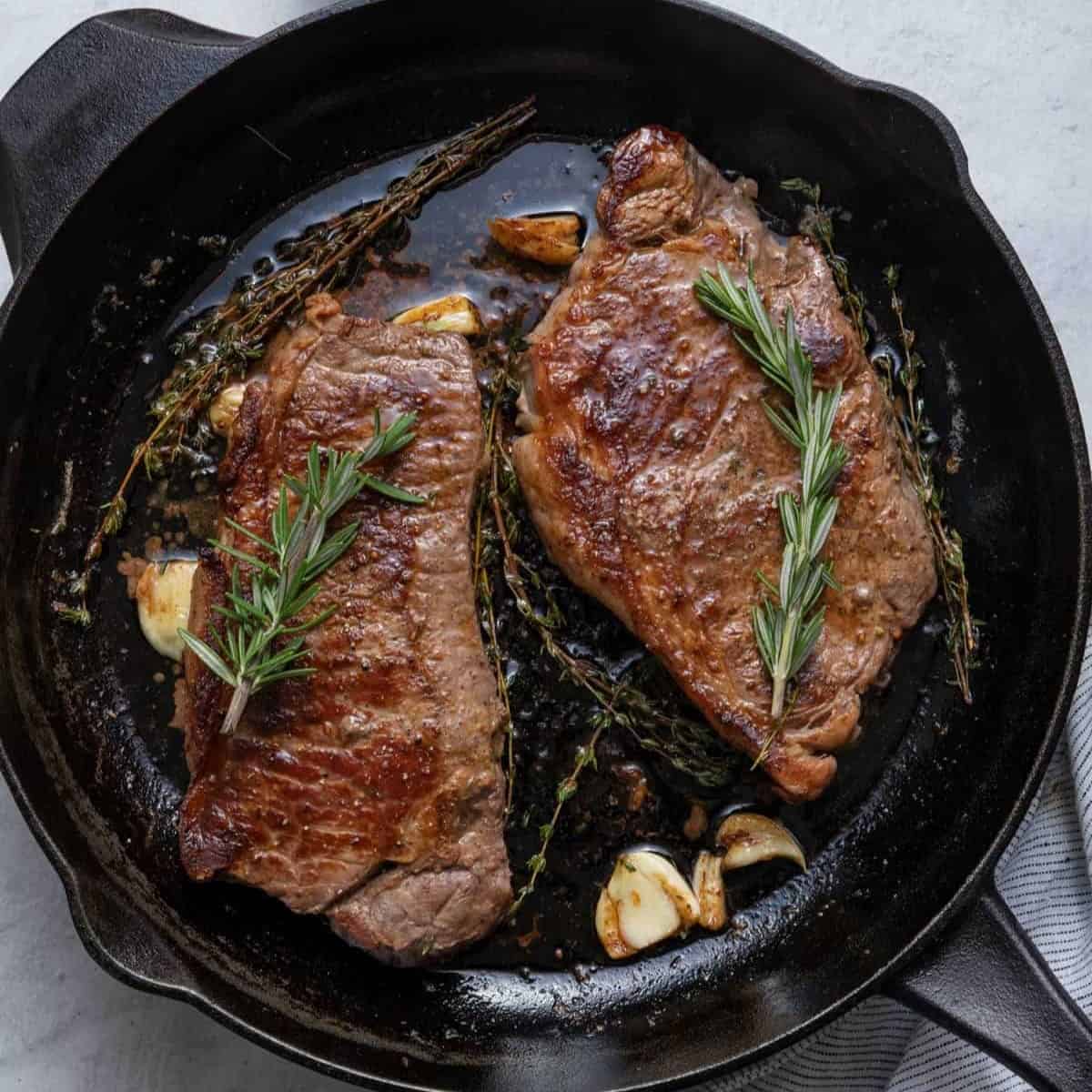
Credit: feelgoodfoodie.net
Frequently Asked Questions
What Is The Best Way To Cook A Steak On A Cast Iron Pan?
Preheat the cast iron pan over medium-high heat. Season steak with salt and pepper. Sear each side for 3-4 minutes. Let it rest for 5 minutes before serving.
What Is The 3-3-3 Rule For Steaks?
The 3-3-3 rule for steaks involves cooking for 3 minutes on each side, then letting it rest for 3 minutes. This method ensures even cooking, achieving a juicy and perfectly cooked steak every time. Adjust cooking time based on thickness and desired doneness.
What’s The Best Oil To Use To Cook A Steak In A Cast Iron Skillet?
Use oils with high smoke points like avocado, canola, or grapeseed for cooking steak in a cast iron skillet. These oils handle high temperatures well, ensuring a perfect sear. Olive oil can also be used, but monitor the heat closely to prevent burning.
Always preheat the skillet before adding the oil.
How Does Gordon Ramsay Cook Steak In A Cast Iron Skillet?
Gordon Ramsay seasons the steak with salt and pepper. He heats the skillet on high and adds oil. He sears the steak, adding garlic and herbs for flavor. Ramsay bastes the steak with butter, cooks to desired doneness, and rests it before serving.
Conclusion
Cooking steak in a cast iron skillet is simple and satisfying. This method gives your steak a perfect sear. Rich, deep flavors emerge with every bite. Preparation is key, so season your steak well. Heat the skillet until it’s scorching hot.
The meat sizzles, sealing in the juices. Let it rest before serving. This small step enhances taste. Cast iron skillets offer even heat distribution. This ensures your steak cooks uniformly. Make your next meal a delightful experience. Enjoy a delicious steak cooked just right!
