
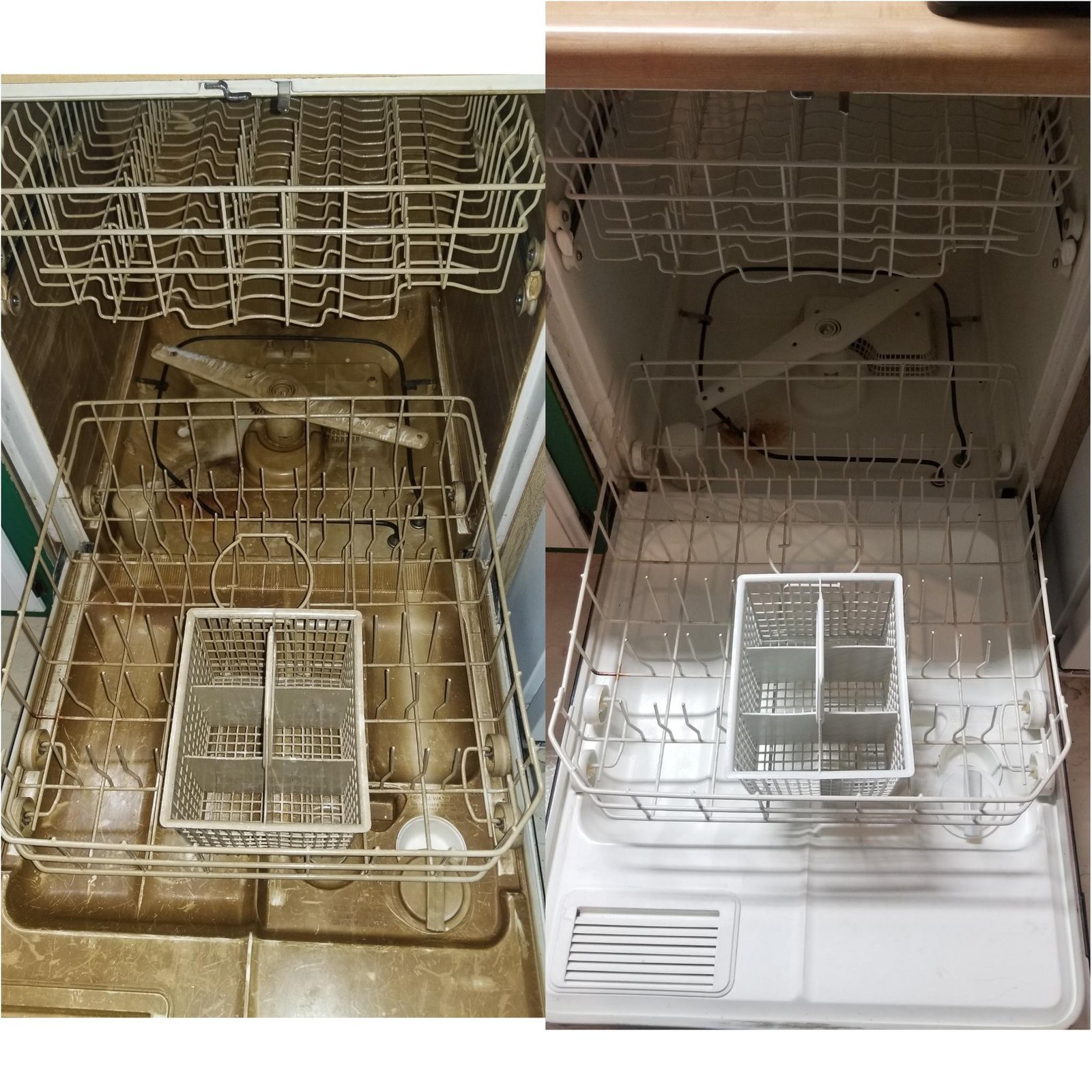
Are you tired of opening your dishwasher only to find cloudy glasses and stubborn residue on your dishes? Hard water can be a sneaky culprit, leaving mineral deposits that not only affect the cleanliness of your dishes but also the efficiency of your dishwasher.
If you’re nodding along, you’re not alone. Many homeowners face this common yet frustrating issue. But here’s the good news: you can easily tackle this problem and restore your dishwasher to its sparkling best. Imagine pulling out spotless glasses and gleaming plates every time.
Intrigued? Read on to discover simple, effective steps to clean your dishwasher from hard water stains and keep it running smoothly.

Credit: www.thepinjunkie.com
Identifying Hard Water Signs
Hard water can leave marks on your dishwasher. These deposits can affect performance and appearance. Identifying signs of hard water is crucial. It helps in maintaining your dishwasher efficiently.
Signs Of White Residue
White residue can be a sign of hard water. These deposits often appear on dishwasher walls. They might also show on dishes after washing. This residue can be chalky and stubborn.
Spotty Glassware
Glassware might have spots after a wash. These are mineral deposits. They make glasses look dull and dirty. Spotty glassware is a common sign of hard water.
Reduced Cleaning Efficiency
Hard water can reduce cleaning efficiency. Dishes might not come out clean. This happens due to mineral buildup. It can block detergent from working properly.
Clogged Sprayer Arms
Sprayer arms can get clogged with minerals. This affects water flow. Clogged arms lead to poor washing results. Regular checks can help identify this issue.
Fading Dishwasher Appearance
Hard water can fade your dishwasher’s appearance. Mineral deposits may dull its shine. This can make your appliance look older. Fading is a clear sign of hard water.
Difficulty In Opening Soap Dispenser
The soap dispenser might stick. Mineral buildup can cause this issue. It can lead to soap not being released. This affects the cleaning process.
Essential Cleaning Supplies
Cleaning your dishwasher from hard water build-up requires the right tools. Essential cleaning supplies ensure a thorough job. They help in removing mineral deposits. Having these supplies on hand makes the task easier and more efficient. Let’s explore the must-have items for this cleaning process.
Vinegar
Vinegar acts as a natural cleaner. It effectively breaks down hard water stains. Use white vinegar for best results. Pour it into a dishwasher-safe cup. Place the cup on the top rack. Run a hot water cycle.
Baking Soda
Baking soda helps deodorize the dishwasher. It also aids in loosening grime. Sprinkle a cup of baking soda on the bottom. Run a short hot water cycle. This process freshens and cleans.
Lemon Juice
Lemon juice cuts through mineral deposits. It also leaves a fresh scent. Add a cup to the bottom of the dishwasher. Run a normal cycle with hot water. This enhances the cleaning effect.
Dishwasher Cleaner
Store-bought cleaners are specially formulated. They target hard water and lime deposits. Follow the product instructions. Use them regularly for maintenance. They help prolong your dishwasher’s life.
Soft Cloth Or Sponge
Use a soft cloth to wipe surfaces. A sponge works for scrubbing corners. Clean the door seals and edges. These areas often trap grime. Gentle scrubbing removes build-up effectively.
Toothbrush
A toothbrush reaches tight spots. It cleans around sprayers and filters. Use it with vinegar or baking soda. A toothbrush helps maintain the dishwasher’s efficiency. Keep one handy for future use.
Preparing The Dishwasher
Preparing your dishwasher for cleaning is a crucial first step. This ensures a thorough and effective process. Follow these steps to get started.
Emptying The Appliance
First, make sure your dishwasher is completely empty. Take out all dishes, glasses, and utensils. Check for any forgotten items. This makes cleaning easier and more effective. An empty dishwasher allows you to inspect for leftover food debris.
Removing Racks And Utensil Holder
Next, carefully remove the racks and utensil holder. These parts can usually be taken out with ease. Check your dishwasher’s manual if unsure. Removing these items allows you to clean them separately. It also gives you better access to the interior. Once removed, set them aside for cleaning. This step is essential for a deep clean.
Cleaning The Interior
Hard water stains can affect dishwasher performance. Start by removing racks and spraying vinegar on the interior. Scrub gently with a cloth to dissolve mineral buildup. Rinse thoroughly to ensure sparkling clean results. Regular cleaning maintains efficiency and extends your dishwasher’s life.
Cleaning the interior of your dishwasher is essential to maintain its efficiency and prolong its lifespan. Hard water stains can build up over time, making your appliance less effective and even causing damage. It’s surprising how a few simple steps can make such a big difference. Have you ever wondered how some households manage to keep their dishwashers looking brand new? It’s all about regular maintenance and knowing the right tricks. Let’s dive into some easy and effective methods to tackle those stubborn hard water stains.Using Vinegar Solution
Vinegar is a fantastic natural cleaner. Its acidic properties help break down mineral deposits from hard water. Simply fill a bowl with white vinegar and place it on the top rack of your empty dishwasher. Run a hot water cycle. The vinegar will spread throughout the machine, cleaning and deodorizing it. This process is not only easy but also economical, using items you likely already have in your pantry. Have you tried using vinegar before? It’s a wonder how something so simple can be so effective. Give it a shot and see the difference it makes.Baking Soda Rinse
After the vinegar cycle, sprinkle a cup of baking soda across the bottom of your dishwasher. Baking soda acts as a gentle abrasive that removes lingering stains and odors. Run another hot water cycle. This step will polish the interior and leave your dishwasher sparkling clean. It’s a quick and straightforward way to ensure your appliance is in top condition. Isn’t it amazing how baking soda, a common kitchen staple, can transform your dishwasher? It’s all about using the right tools to achieve great results. Regularly cleaning the interior of your dishwasher can save you from costly repairs down the line. Are you ready to take these steps to ensure your appliance runs smoothly and efficiently? Try these methods today and enjoy the satisfaction of a spotless dishwasher.Cleaning The Spray Arms
Cleaning the spray arms of your dishwasher is crucial for maintaining its efficiency, especially if you live in an area with hard water. Hard water can cause mineral buildup, leading to clogs and reduced performance. Regular maintenance can prevent these issues and keep your dishwasher running smoothly. Have you ever noticed your dishes aren’t coming out as clean as they used to? It might be time to give those spray arms some attention.
Removing And Checking For Clogs
Start by removing the spray arms from your dishwasher. This might seem daunting, but it’s usually a simple task. Refer to your dishwasher’s manual for specific instructions on how to detach them. Once removed, inspect the small holes on the spray arms. These are prone to clogs from mineral deposits.
Use a flashlight to examine these holes closely. If you find any blockages, it’s time to get rid of them. You’d be surprised how a tiny clog can affect the cleanliness of your dishes. Keeping the spray arms unclogged can significantly improve the performance of your dishwasher.
Cleaning With A Brush
To clean the spray arms, use a small brush, such as a toothbrush or a pipe cleaner. These tools are perfect for getting into the small holes and removing any debris. Gently scrub each hole to clear away buildup. It’s a simple task that can make a big difference in how well your dishwasher works.
If the buildup is stubborn, soak the spray arms in a solution of vinegar and water for a few hours. This can help dissolve mineral deposits. After soaking, rinse the arms thoroughly to remove any remaining residue. Have you tried this method before? It’s surprisingly effective.
Cleaning the spray arms regularly can extend the life of your dishwasher. Why not make it part of your routine maintenance? Keeping your dishwasher in top shape ensures your dishes come out sparkling clean every time.
Maintaining The Filter
Regular maintenance ensures your dishwasher runs smoothly. Clean the filter to remove hard water deposits. This prevents blockages and keeps your dishes sparkling clean.
Cleaning your dishwasher from hard water deposits is essential for maintaining its efficiency, and one of the most crucial components to address is the filter. Think of the filter as the gatekeeper of your dishwasher, catching food particles and preventing them from clogging the system. If it’s not regularly maintained, hard water deposits can accumulate, leading to poor performance and even unpleasant odors. Keeping the filter clean ensures your dishwasher runs smoothly and your dishes come out sparkling clean. But how do you maintain it effectively? Let’s dive into the steps.Locating The Filter
First, you need to find the filter in your dishwasher. Generally, it is located at the bottom of the dishwasher, beneath the lower spray arm. You might be surprised how easy it is to miss this component. Check your dishwasher manual if you’re unsure. Manuals often contain diagrams showing the exact location. If you’ve misplaced the manual, a quick online search with your dishwasher model can be a lifesaver.Removing And Washing The Filter
Once you’ve located the filter, it’s time to remove it. Most filters twist off easily with a gentle turn. Some may have a latch or clip; just be cautious not to force anything as filters can be fragile. After removal, rinse it under warm, running water. Use a soft brush to scrub away any stubborn debris and hard water buildup. If you’ve ever noticed your dishwasher smelling off, this step might just solve it. Consider cleaning the filter every month to keep things running smoothly. Have you noticed your dishes aren’t as clean as they used to be? It might be time to check the filter. Maintaining this little component can save you from bigger headaches down the road.Addressing Hard Water Build-up
Addressing hard water build-up in your dishwasher is crucial for efficiency. Hard water leaves mineral deposits that can affect performance. These deposits can clog spray nozzles and filter screens. Regular cleaning helps maintain your dishwasher’s efficiency. It also extends the appliance’s lifespan. There are effective methods to tackle this issue. Let’s explore some solutions.
Using Commercial Cleaners
Commercial cleaners can effectively remove mineral build-up. They are specially formulated for dishwashers. Look for cleaners with citric acid or phosphates. These ingredients help break down mineral deposits. Follow the instructions on the package carefully. Run an empty cycle with the cleaner. This ensures thorough cleaning of all parts. Repeat this process monthly for best results.
Natural Alternatives
Natural alternatives offer a chemical-free cleaning option. White vinegar is a popular choice. It dissolves mineral deposits effectively. Pour a cup of vinegar into the bottom of the dishwasher. Run a hot water cycle without dishes. This will help clean and deodorize the appliance.
Baking soda is another excellent option. It helps remove odors and stains. Sprinkle a cup of baking soda on the bottom of the dishwasher. Run a short hot cycle. This leaves the dishwasher smelling fresh and clean. Using natural methods is cost-effective and safe for the environment.
Credit: www.reddit.com
Preventive Measures
Hard water can damage your dishwasher over time. Prevention is key. Implementing preventive measures helps maintain your appliance’s longevity. Avoid buildup and improve efficiency. Simple steps can make a big difference.
Installing A Water Softener
Water softeners reduce mineral content. They help prevent hard water stains. Consider installing one in your home. It treats water before it reaches the dishwasher. This simple addition can greatly reduce mineral deposits. Enjoy cleaner dishes and less maintenance.
Regular Maintenance Tips
Regular cleaning is essential. Use vinegar to remove deposits. Run an empty cycle with vinegar monthly. Check and clean the filter often. Remove food particles and debris. This keeps water flowing freely. Ensure spray arms are clean. Wipe them regularly to remove buildup. Proper maintenance keeps your dishwasher efficient.
Troubleshooting Common Issues
Dishwashers can face problems due to hard water. Cleaning them helps maintain their efficiency. Sometimes, issues still occur even after cleaning. Knowing how to troubleshoot these common problems is crucial.
Persistent Stains
Hard water leaves stubborn stains. These stains often stick to dishes and the interior. Use vinegar to tackle them. Fill a cup with vinegar and place it on the top rack. Run a hot cycle. The vinegar helps break down mineral deposits. Baking soda can also aid in removing stains. Sprinkle some on the bottom and run another hot cycle.
Unusual Odors
Hard water might cause unpleasant smells. These odors can linger in the dishwasher. Check the filter for trapped food bits. Clean it regularly to prevent smells. Use lemon juice for a fresh scent. Place a bowl of lemon juice inside. Run a short cycle to eliminate odors. Also, ensure the drain is clear. Blocked drains can cause bad smells.

Credit: www.reddit.com
Frequently Asked Questions
Will Hard Water Ruin A Dishwasher?
Hard water can cause mineral buildup in dishwashers. This may reduce efficiency and lifespan. Regular cleaning with vinegar or using a water softener can help prevent damage. Ensuring proper maintenance will keep your dishwasher running smoothly and effectively.
How To Remove Thick Limescale From A Dishwasher?
To remove thick limescale, fill a cup with white vinegar and place it in the dishwasher. Run a hot cycle. Scrub remaining limescale with baking soda. Repeat if needed. Regular cleaning prevents buildup. Use dishwasher salt to enhance performance and reduce limescale.
Will Vinegar Descale A Dishwasher?
Yes, vinegar can descale a dishwasher effectively. Use a cup of white vinegar in an empty cycle. Vinegar helps remove mineral buildup, ensuring your dishwasher functions optimally. Regular use prevents clogs and maintains efficiency. Always follow manufacturer guidelines for best results.
How To Clean A Dishwasher With Vinegar For Hard Water?
Clean your dishwasher by placing a cup of vinegar on the top rack. Run a hot water cycle. This removes hard water stains and mineral buildup effectively. Repeat monthly for best results.
Conclusion
Keep your dishwasher clean for better performance. Hard water leaves stains. Regular cleaning prevents buildup. Follow simple steps to maintain it. Use vinegar for freshness. Baking soda helps too. Scrub gently to avoid scratches. Check filters often. Remove debris for smooth operation.
Clean every month for best results. A clean dishwasher saves money. It lasts longer and runs efficiently. Protect your investment with care. Enjoy spotless dishes every time. A little effort goes a long way. Keep your kitchen shining bright. Simple routine, big difference.
Clean dishwashers make happy kitchens. Start today for a cleaner tomorrow.
