
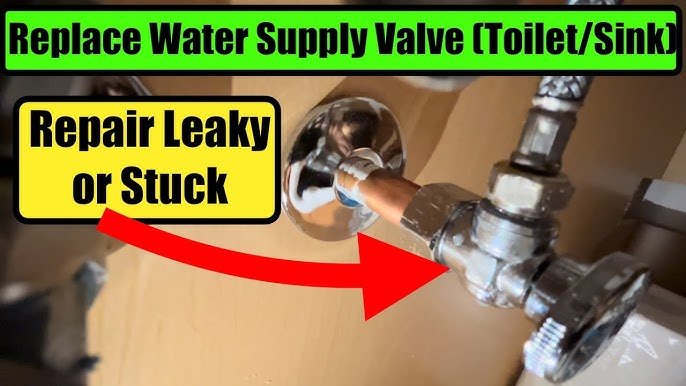
A leaking or stuck shut-off valve under your kitchen sink is more than an annoyance — it's a ticking time bomb for water damage. That quarter-turn handle you haven't touched in five years? It might snap off the moment you actually need it during an emergency. The good news: replacing a kitchen sink shut-off valve is a straightforward DIY job that costs around $10–$30 in parts instead of the $150–$300 a plumber would charge. This guide walks you through every step with the precision and safety precautions a pro would use, so you get a leak-free installation on the first try.
Why Your Shut-Off Valve Needs Replacing
Shut-off valves fail for predictable reasons. Mineral buildup from hard water gradually seizes the internal mechanism. Corrosion eats through brass or chrome plating, especially under sinks where minor drips create constant dampness. Rubber seals inside the valve dry out and crack after 10–15 years. The result: a valve that either won't fully close when you need it or develops pinhole leaks that slowly soak your cabinet floor.
A failed valve isn't just inconvenient — it means you can't isolate your kitchen faucet for repairs without shutting off the entire house. If you've ever had to turn off water to the whole home just to swap a faucet washer, you understand why a functional local shut-off matters.
Tools and Materials You'll Need
Gathering everything before you start prevents the frustrating mid-job hardware store run. Here's precisely what you need:
| Tool | Purpose |
|---|---|
| Adjustable wrench (2 recommended) | Loosening and tightening connections |
| Slip-joint pliers | Gripping in tight spaces |
| Bucket (5-gallon minimum capacity) | Catching residual water |
| Old towels or rags | Absorbing drips and protecting cabinet |
| Flashlight or headlamp | Illuminating dark under-sink areas |
| Utility knife | Cleaning old sealant and debris |
| Safety glasses | Protecting eyes from debris and spray |
| Work gloves | Shielding hands from sharp edges and grime |
| Penetrating oil (WD-40 or similar) | Breaking loose corroded fittings |
Materials List
- Replacement shut-off valve — Match your pipe type and size (1/2-inch or 3/8-inch are most common). Quarter-turn ball valves are significantly more reliable than multi-turn gate valves.
- Plumber's tape (PTFE tape) — Creates watertight seals on threaded connections
- New braided stainless steel supply line — Replace the old line while you're at it; the connection nut is often corroded
- Pipe joint compound (optional) — Useful on stubborn threaded fittings
Choosing the Right Replacement Valve
The valve type must match your existing pipe configuration. Taking a photo of your current setup before heading to the hardware store eliminates guesswork.
Compression Valves
These are the most common in modern homes. The valve body slides over the copper pipe riser, and a compression nut squeezes a brass ferrule (a small ring) against the pipe to create the seal. No soldering or threading required. Compression valves are ideal for DIYers because they're forgiving — you can disassemble and retighten if needed.
Threaded Valves
These screw directly onto a male-threaded pipe stub coming from the wall or floor. Found in older homes or where copper transitions to galvanized steel. Threaded valves require plumber's tape and careful alignment to avoid cross-threading.
Push-to-Connect (SharkBite Style)
Push-fit valves have become popular for their speed — you push the valve onto the pipe and it locks in place with stainless steel teeth and an O-ring. They cost more ($15–$25 versus $5–$10 for compression) but require no tools and are easy to remove later. Many plumbers now recommend them for DIY installations due to their reliability.
Common mistake: buying a valve with the wrong inlet size. Measure the outside diameter of your copper pipe — 1/2-inch copper measures about 5/8-inch OD. When in doubt, bring a pipe sample or a clear photo to the hardware store.
Before You Start: Shut Off the Water Safely
This is the single most important step, and rushing it is the most common cause of flooding during DIY plumbing.
Locating and Closing the Main Shut-Off
Find your home's main water shut-off valve. It's typically near the water meter, in the basement, crawl space, garage, or where the main line enters the house. If you have a slab foundation, check the exterior wall near the front of the house or in a utility closet.
- Gate valve (wheel handle): Turn clockwise until it stops — usually several full rotations
- Ball valve (lever handle): Rotate the handle 90 degrees so it's perpendicular to the pipe
Verifying the Water Is Off
After closing the main valve, open your kitchen faucet (both hot and cold handles). Water should flow for 30–60 seconds as pressure dissipates, then stop completely. If water continues running, the main valve isn't fully closed or is faulty.
Pro tip: While the water is off, this is an excellent opportunity to check the condition of the plumbing under your sink — look for signs of previous leaks, corrosion on fittings, or musty odors that indicate hidden moisture. If you notice a persistent musty smell, you may need to address that separately once the valve replacement is complete.
Draining Residual Water
Even with the main off, water sits in the vertical pipe riser above the shut-off valve. To minimize mess:
- Hold a bucket under the old valve connection
- Crack the supply line nut slightly — water will dribble out
- Let it fully drain before completely removing the nut
Removing the Old Shut-Off Valve
With the water off and drained, you're ready for physical removal. This is where patience matters most — old valves can be stubborn.
Disconnecting the Supply Line
The flexible supply line connects to the top of the valve with a threaded nut. Using two wrenches is critical here:
- One wrench to hold the valve body steady (preventing it from twisting the pipe riser)
- One wrench to turn the supply line nut counter-clockwise
If the nut won't budge, apply penetrating oil at the thread junction and wait 10 minutes. Never use excessive force — you can kink or snap the copper riser, which turns a simple valve swap into a major pipe repair.
Detaching the Valve from the Pipe Riser
For compression valves: The nut at the bottom of the valve is what holds it to the pipe. Using one wrench to hold the valve body and another on the compression nut, turn the nut counter-clockwise. Once the nut is free, slide it and the ferrule off the pipe, then lift the valve off.
For threaded valves: Hold the pipe riser steady with one wrench (use a pipe wrench with padded jaws to avoid marring the pipe) and turn the valve counter-clockwise with the other. If the valve is corroded onto the threads, heat from a propane torch applied carefully to the valve body can break the bond — but this is a last resort for experienced DIYers.
Inspecting the Pipe Riser
After the old valve is off, inspect the exposed pipe end:
- Copper pipe: Should be round and smooth, not ovaled or gouged. Minor scratches can be sanded smooth with 220-grit sandpaper
- Threaded pipe: Threads should be clean and not stripped. Remove old plumber's tape with a utility knife or wire brush
- Corrosion: Green oxidation (patina) on copper is normal; flaking green powder or pitting indicates active corrosion that needs addressing
If the pipe riser is damaged, corroded, or too short to accept the new valve, you're looking at a more involved repair — possibly cutting back the copper and using a slip coupling. In that case, consulting a plumber is wise.
Installing the New Shut-Off Valve
Precision during installation determines whether your new valve leaks or works perfectly for the next 15 years.
Preparing the Connection
For threaded connections: Wrap plumber's tape clockwise around the male threads (looking at the pipe end) — counter-clockwise wrapping will unwrap as you tighten the valve. Apply 3–5 wraps, stretching the tape slightly so it beds into the threads. Don't tape the first thread at the pipe end (prevents tape from shredding into the water stream).
For compression connections: No tape needed on the pipe itself. Slide the compression nut onto the pipe (threads facing the valve), then the brass ferrule (tapered end toward the valve). The ferrule compresses against the pipe to form the seal.
For push-to-connect valves: Cut the pipe square (deburr if needed), push the release collar onto the pipe, then push the valve fully onto the pipe until it seats. Give a firm tug to confirm the lock is engaged.
Attaching the Valve
Hand-tighten the valve onto the pipe riser before using wrenches. This ensures you don't cross-thread — a mistake that ruins both the valve and the pipe.
- Threaded valve: Turn clockwise by hand until snug, then use wrenches for the final 1/4 to 1/2 turn
- Compression valve: Slide the ferrule and nut against the valve body, hand-tighten the nut, then use a wrench for 1/2 to 3/4 turn past hand-tight
- Push-to-connect: Minimal additional tightening — just verify the locking ring is flush against the valve body
Position the handle before final tightening so it's easy to reach and visually indicates open/closed position (handle parallel to pipe = open, perpendicular = closed).
Connecting the Supply Line
If you're using a new braided stainless supply line (strongly recommended), hand-tighten the nut onto the valve's outlet, then give it a quarter-turn with a wrench. Over-tightening the supply line nut is a common cause of leaks — the rubber washer inside does the sealing, not brute force.
Testing for Leaks
This step separates successful installations from soggy-cabinet disasters. Do not skip it.
The Gradual Pressure Test
- Ensure the kitchen faucet is closed
- Slowly open the main water valve — just a quarter-turn at first
- Listen for hissing or dripping from under the sink
- If you hear nothing, open the main valve another quarter-turn
- Repeat until the main valve is fully open
The Paper Towel Test
Once the main valve is fully open and pressure is restored:
- Dry all connections thoroughly with paper towels
- Wait 5 minutes
- Touch each connection with a fresh dry paper towel
- Any moisture, even a single drop, indicates a leak
Fixing Common Leaks
| Leak Location | Likely Cause | Fix |
|---|---|---|
| Supply line nut | Loose or missing rubber washer | Tighten 1/4 turn; if persists, replace supply line |
| Valve-to-pipe (compression) | Insufficiently tightened or damaged ferrule | Tighten nut 1/4 turn; if still leaks, disassemble and replace ferrule |
| Valve-to-pipe (threaded) | Insufficient tape or cross-threading | Disassemble, clean threads, reapply tape, reassemble carefully |
| Valve body itself | Cracked casting or defective valve | Replace the valve |
Ongoing Maintenance for Longevity
A new shut-off valve will last decades with minimal care, but a few habits prevent early failure.
Exercise the Valve Annually
Twice a year, turn the valve fully closed and then fully open. This prevents mineral deposits from seizing the internal mechanism. Many homeowners discover their valve is frozen only during an emergency — exercising it now prevents that scenario.
Inspect for Corrosion
Every six months, shine a flashlight on the valve and connections. Look for:
- Green or white powdery deposits (corrosion)
- Tiny drips or moisture trails
- Rust on the valve body or mounting bracket
Address Drips Immediately
Even a slow drip from the handle stem indicates a failing internal seal. Replace the valve at the first sign of leakage — waiting multiplies the water damage risk.
If you're dealing with other plumbing or maintenance issues around your kitchen, you might also find useful guidance on common sink problems — including musty smells that can develop from hidden moisture — in our detailed troubleshooting articles.
When to Call a Professional
Some situations are beyond simple DIY replacement:
- Pipe riser is damaged or too short — Requires cutting and joining pipe
- Valve is embedded in wall or floor — May require opening up drywall
- Galvanized steel pipes — These rust from the inside and often break when wrenched
- No accessible main shut-off — You can't safely work without being able to stop water flow
- You've tried and the valve still leaks — Sometimes the valve body is slightly warped or the pipe is slightly out-of-round
A plumber will charge $150–$300 for this job, which is cheap compared to the cost of repairing water-damaged cabinets and flooring from a DIY mistake.
Frequently Asked Questions
How Do I Turn Off Water Before Replacing The Valve?
Locate your main water shut-off valve — typically where the main pipe enters your home (basement, crawl space, garage, or exterior wall). Turn it clockwise (gate valve) or 90 degrees to perpendicular (ball valve). Open your kitchen faucet to drain remaining water and relieve pressure.
What Tools Are Needed To Replace A Shut-off Valve?
Two adjustable wrenches are essential — one to hold and one to turn. You'll also need plumber's tape, a bucket, old towels, safety glasses, work gloves, a flashlight, and penetrating oil for stubborn fittings.
How Long Does It Take To Replace A Shut-off Valve?
30–60 minutes for an experienced DIYer with good access. Allow 90 minutes if it's your first time or the old valve is heavily corroded. Never rush a plumbing repair — leaks caused by haste cost far more than the time you saved.
Can I Replace The Valve Without Draining The Pipes?
Technically yes, but it's a bad idea. You'll get soaked, risk water damage to your cabinets, and the water pressure makes connections harder to seal. Draining takes two minutes and eliminates those risks entirely.
Final Thoughts
Replacing a kitchen sink shut-off valve is one of those skills that pays dividends every time you need to service your faucet or address a leak. The confidence that comes from knowing you can isolate your kitchen's water supply without shutting down the whole house is genuinely valuable.
Take your time on the first one. Measure twice, tape the threads correctly, and test thoroughly before calling it done. The $10–$30 valve you install today will serve you reliably for years — and you'll have the satisfaction of knowing you handled it yourself.
If you're working through other kitchen improvements or repairs, our blog has additional guides on everything from tackling a leaking pipe under the sink to upgrading your cookware with the best options for your needs.
