
The vent under your kitchen sink does more than take up space—it keeps your drains flowing, your kitchen smelling fresh, and your home’s air safe to breathe. Without proper venting, sewer gases can creep into your living space, drains can slow to a crawl, and that P-trap you rely on can lose its seal. Whether you’re building a new kitchen, renovating an older home, or just trying to figure out why your sink gurgles every time you run the disposal, this guide will walk you through everything you need to know about kitchen sink vents in 2026. We’ll cover the types, the telltale signs of trouble, step-by-step fixes you can do yourself, and when it’s time to call in a pro.
Why Your Kitchen Sink Vent Matters
Many homeowners overlook the vent pipe hiding beneath the cabinet, but it performs three critical jobs that keep your plumbing healthy.
Preventing Sewer Gas Entry
Sewer gas contains methane, hydrogen sulfide, and other compounds that are both unpleasant and potentially hazardous. Your sink’s P-trap holds a small amount of water that acts as a barrier—but without a vent, pressure changes can pull that water out or force gas past it. A working vent equalizes pressure so gases are safely exhausted through the roof, not into your kitchen. The U.S. Environmental Protection Agency notes that proper plumbing ventilation is a key part of maintaining indoor air quality (EPA resources on indoor air quality).
Protecting Drainage Performance
When you run water down the sink, it creates negative pressure in the drain line. Without a vent to let air in, that vacuum can slow drainage to a trickle or even siphon water out of nearby traps. A properly sized vent supplies the air needed to keep water moving freely. This is especially noticeable when you use multiple fixtures at once—a poorly vented kitchen sink may gurgle or back up while the dishwasher runs.
Keeping the P-Trap Sealed
The curved P-trap under your sink holds a water seal that blocks sewer gases. Vent issues can break that seal in two ways: by siphoning the water out or by allowing gas to push past under pressure. A well-maintained vent system ensures that water stays put and your home stays odor-free. If you’re already dealing with a leak, check out our dedicated guide on fixing a leaking pipe before tackling vent issues.
Common Vent Types Explained
Your vent system depends on your home’s age, local plumbing codes, and the configuration of your sink. Here are the three most common types you’ll encounter.
Air Admittance Valves (AAVs)
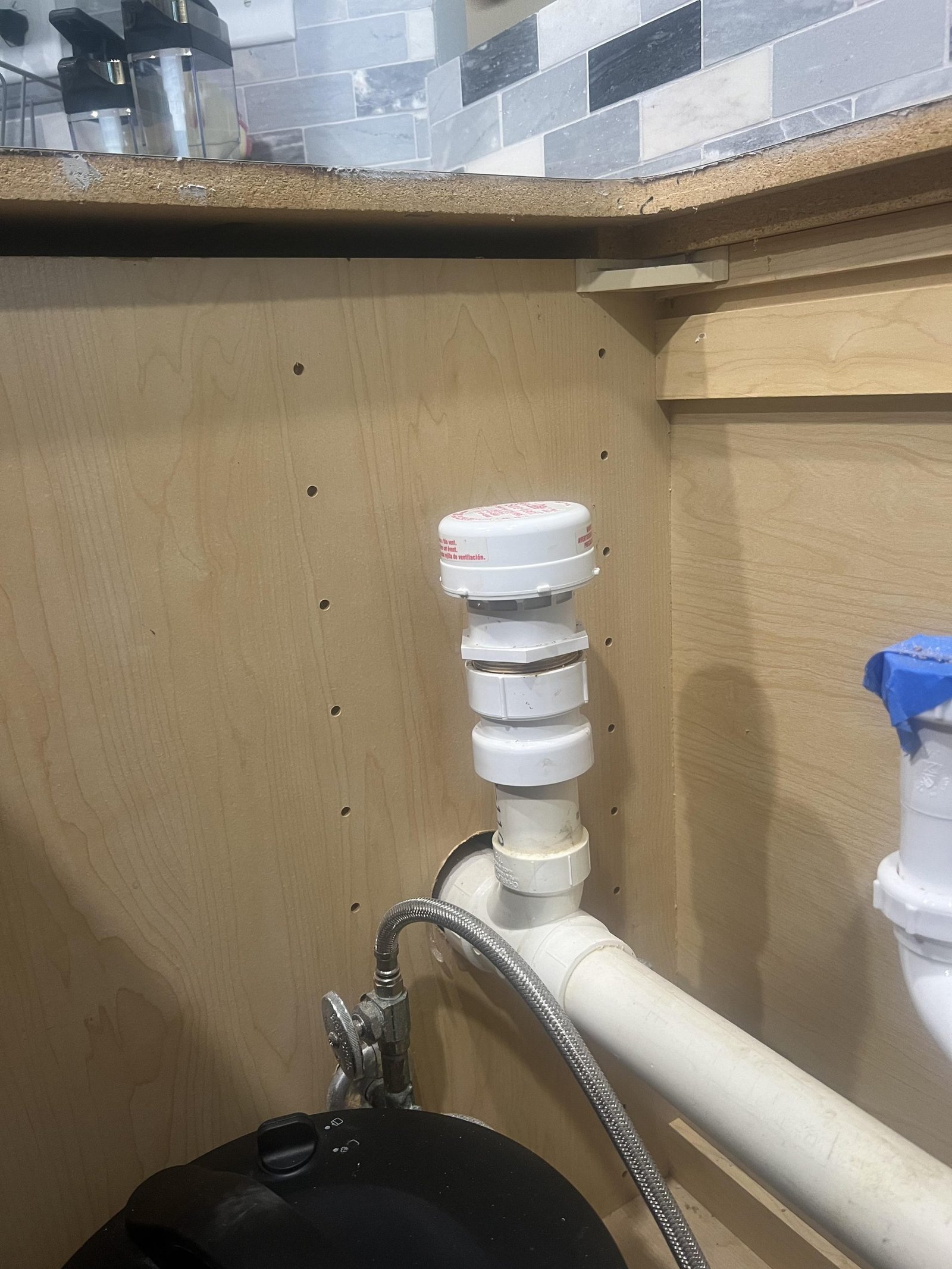
AAVs are compact mechanical devices that sit on the drain line under the sink. When water drains, negative pressure pulls a diaphragm open to let air in. Once flow stops, the diaphragm seals shut, trapping sewer gases below. These are popular in remodels where running a pipe through the roof isn’t practical.
Pros: Easy to install, no roof penetration, space-saving.
Cons: Mechanical seals can wear out (typically every 5–10 years); not allowed by all local codes; can freeze in unheated spaces.

An AAV opens to allow air in during drainage, then reseals to block gases.
Image source: familyhandyman.com
A common mistake is installing an AAV in a dusty cabinet where debris can clog the diaphragm. Keep the area clean and replace the valve if you hear a persistent gurgle or notice odors.
Traditional Roof Vent Systems
These systems use a network of pipes that run from each fixture up through the walls and out the roof. They’re the gold standard for reliability—no moving parts, no mechanical failure points. The two main components are:
- Branch vents: Dedicated pipes that serve a single sink or a small group of fixtures.
- Stack vents: Main vertical pipes that collect air from multiple branches and exit through the roof.
Traditional vents are more expensive to install and require access to walls and roofing, but they rarely need maintenance beyond occasional cleaning. If you need to visualize how all the pipes connect, a clear plumbing diagram can be a huge help when diagnosing problems.
Loop Vents
A loop vent is a less common but effective design where the vent pipe rises from the drain, loops back down, and connects to a standpipe or main vent. It’s often used when a sink is far from the main stack. The loop creates a secondary air pathway that prevents siphoning. However, if the loop isn’t sloped correctly or is installed in an unheated area, condensation or freezing can block airflow. In practice, loop vents are most reliable in warm climates or insulated cabinets.
Signs Your Vent Needs Attention
Vent problems often mimic simple drain clogs. Use this table to narrow down the cause.
| Symptom | Likely Cause | What to Do |
|---|---|---|
| Gurgling sounds when draining | Air struggling to enter the pipe (vent blockage) | Check AAV or clean vent opening |
| Persistent sewer smell | Failed P-trap seal due to vent issue | Inspect vent for clogs or replace AAV |
| Slow drainage (no visible clog in trap) | Vacuum lock from blocked vent | Clear vent line or snake from roof |
| Water backing up into sink | Severe vent clog or combined drain/vent issue | Call a plumber if snaking doesn’t help |
If you also notice musty odors lingering, it may be more than just a vent issue—see our article on dealing with musty smells for additional troubleshooting steps.
Diagnosing Vent Problems Step by Step
Before you call a professional, you can often confirm a vent blockage with a few simple checks.
- Listen while draining. Run hot water for 30 seconds. Gurgling or a sucking sound points to a vent issue, not a clogged trap.
- Check the AAV (if present). Remove the valve carefully (it usually unscrews or unclips). Shake it—you should hear the internal flapper move. If it’s stuck or full of debris, clean it or replace it.
- Run water from an upstairs fixture. If the kitchen sink gurgles when a bathroom upstairs drains, the blockage is likely in the shared vent stack.
- Inspect the roof vent. Safely (or from a ladder) look at the vent pipe opening on your roof. Leaves, bird nests, or ice can block it. Never attempt roof work without proper safety gear—call a professional if you’re unsure.
How to Fix Common Vent Issues
Many vent problems are DIY-friendly. Here’s how to handle the most frequent ones.
Clearing a Blocked Vent (DIY Steps)
For a traditional vent pipe that’s clogged near the sink:
- Locate the vent connection (usually a tee or wye fitting above the sink drain).
- Disconnect the vent pipe from the drain (use a wrench, but be prepared for a small amount of water).
- Insert a plumber’s snake into the vent opening and rotate it to break up debris.
- Flush with a bucket of hot water mixed with a cup of baking soda and vinegar to dissolve grease.
- Reconnect the pipe and test drainage.
If the blockage is higher up (above the sink cabinet), you may need to access the attic or roof. For that, it’s safer to hire a plumber.
Replacing a Faulty Air Admittance Valve
AAVs are designed to be replaced easily. Purchase a valve rated for kitchen sinks (usually 2-inch or 1½-inch pipe size). Turn off the water supply and disconnect the old valve. Clean the pipe end with a rag, apply pipe thread sealant (if threaded) or push-fit the new valve into place. Turn the water back on and test. If you’re unsure which shutoff valves to use, our guide on water shutoff valves explains the different types and how to operate them safely.
When to Call a Professional
Call a licensed plumber if:
- You suspect a blockage in the main stack that requires roof access or snaking from above.
- You’ve replaced the AAV and the problem persists.
- You see water damage or leaks around vent pipes in walls or ceilings.
- Your local code requires permits for vent work (many municipalities enforce this strictly).
Maintenance Tips for a Trouble-Free Vent
A little preventive care goes a long way. Follow these habits to keep your vent system working for years.
- Use a sink strainer. Catching food scraps before they go down the drain reduces grease buildup that can clog vents.
- Flush with hot water weekly. Run hot water for one minute after each dishwashing session to keep pipes flowing.
- Check the AAV annually. Look for cracks, debris, or signs of wear. Replace every 5–8 years as a precaution.
- Avoid pouring grease down the drain. Even small amounts solidify over time and can block vent openings.
- Inspect under-sink storage. If you keep cleaning supplies under the sink, make sure they don’t obstruct vent access or the AAV. Organized under-sink storage solutions can help keep the area clear.
If your sink drains slowly even after clearing the vent, the issue may be in the drain line itself. A guide on proper pipe installation can help you understand how the pieces fit together.
Frequently Asked Questions About Kitchen Sink Vents
Can I install an AAV myself?
Yes, if you’re comfortable with basic plumbing tools. Check your local code first—some areas require a licensed plumber for vent modifications.
How do I know if my AAV is bad?
Listen for a gurgle, smell sewer gas, or notice slow drainage. Remove the valve and shake it; if it’s silent or stuck, replace it.
Is a vent required for every sink?
Yes. Modern plumbing codes (based on the International Plumbing Code) require all sinks to be vented. Older homes may have grandfathered systems, but upgrades are recommended.
What’s the difference between a vent and a drain?
Drains carry wastewater downward; vents carry air upward to equalize pressure. They are separate pipes that connect at specific points.
Can a blocked vent cause a leak?
Indirectly. A blocked vent can cause pressure buildup that weakens pipe joints or forces water out of traps, leading to leaks over time. If you suspect a leak when the water is off, check our guide on leaks with water turned off.
How often should a roof vent be inspected?
Once a year, especially before winter. Look for leaves, nests, or ice. A professional can clean it during routine maintenance.
Conclusion
The vent under your kitchen sink is one of those parts of your home you never think about—until something goes wrong. By understanding how it works, recognizing the warning signs, and performing simple checks, you can avoid the frustration of slow drains, foul odors, and costly repairs. Whether you maintain a traditional roof-vent system or rely on a modern AAV, a few minutes of preventive care each season will keep your kitchen plumbing running smoothly. If you’re facing a persistent issue that you can’t solve, don’t hesitate to call a licensed plumber—your nose (and your sink) will thank you.
