
Have you ever struggled with a dull kitchen knife that just won’t cut through your favorite ingredients? The secret to keeping your knives sharp lies in the right sharpening angle.
Getting this angle wrong can make your blades less effective or even damage them over time. You’ll discover the best sharpening angle for your kitchen knives and how it can transform your cooking experience. Keep reading to unlock the simple yet powerful tip that will make every slice effortless and precise.
Choosing The Right Angle
Choosing the right sharpening angle can transform your kitchen knife from a dull tool to a precision instrument. The angle you select affects how sharp your knife becomes and how long it stays sharp. Understanding these angles helps you match your sharpening technique to your cooking style and knife type.
Common Sharpening Angles
Kitchen knives typically sharpen between 15 and 20 degreesper side. Japanese-style knives often use a sharper angle, around 15 degrees, giving a finer edge for delicate slicing. Western-style knives usually sit closer to 20 degrees, offering more toughness for heavier tasks.
Some knives, like outdoor or survival knives, may use angles as wide as 25 degrees for extra durability. But for kitchen use, sticking within the 15-20 degree range usually works best. What angle does your favorite knife hold, and have you ever noticed how it affects your cutting?
Impact On Sharpness And Durability
A smaller angle creates a sharper edge, but it also means the edge is thinner and more fragile. This sharpness makes slicing vegetables or filleting fish easier but requires more frequent sharpening. On the other hand, a larger angle gives you a tougher edge that resists chipping but won’t feel as razor-sharp.
Choosing the right balance depends on how you use your knife daily. If you prefer a sharp edge and don’t mind regular maintenance, go for a 15-degree angle. If you want durability and less upkeep, a 20-degree angle might suit you better. Have you ever tested how different angles affect your knife’s performance in the kitchen?
Types Of Kitchen Knives
Kitchen knives come in many shapes and styles. Each type serves a specific purpose in cooking. Choosing the right sharpening angle depends on the knife type. Understanding the main types helps you keep knives sharp and effective.
Western-style Knives
Western-style knives usually have a thicker blade. They are strong and durable, made for heavy tasks. These knives use a sharpening angle between 20 and 22 degrees per side. The wider angle gives the blade more strength. Common examples include chef’s knives, paring knives, and serrated knives. They handle tough cutting jobs well.
Japanese-style Knives
Japanese-style knives have thinner, sharper blades. They focus on precision and fine cuts. These knives often use a sharpening angle between 15 and 18 degrees per side. A sharper angle allows for cleaner slicing. Popular types are Santoku, Nakiri, and Yanagiba knives. These knives work great for delicate tasks like slicing fish and vegetables.
Recommended Angles For Different Knives
Choosing the right sharpening angle for your kitchen knives can make a huge difference in how they perform. Each type of knife is designed for specific tasks and requires a tailored edge angle to work best. Knowing these angles helps you keep your knives sharp, safe, and effective in your daily cooking.
Chef’s Knives
Chef’s knives are the workhorses of the kitchen. They usually benefit from a sharpening angle between 15 to 20 degreesper side. A sharper angle around 15 degrees gives you precision for slicing vegetables and meats, but it may dull faster.
If you use your chef’s knife for tougher tasks like cutting through bones or hard squash, a 20-degree angle provides more durability. Think about how you use your knife most often and adjust accordingly. Have you noticed your chef’s knife getting dull quickly or chipping? That might mean your angle is too sharp for your cooking style.
Paring Knives
Paring knives need a very sharp edge for detailed work like peeling and trimming. A sharpening angle of 12 to 15 degreesis ideal here. This creates a fine edge that lets you work with precision and control.
If the edge is too blunt, you’ll struggle with delicate tasks and may even injure yourself due to extra force. Remember, a paring knife’s edge wears down quickly, so keeping that angle consistent during sharpening is key. How often do you sharpen your paring knife? Regular touch-ups will keep it ready for those small, exact cuts.
Santoku Knives
Santoku knives, popular for their versatility, usually perform best with an edge angle of about 15 degrees. This balance offers a sharp yet sturdy edge suitable for chopping, dicing, and slicing.
If your Santoku knife feels dull or less responsive, check if the angle matches the original factory setting. Many users find 15 degrees hits the sweet spot between sharpness and edge strength. Do you use your Santoku for different types of food? Adjusting the angle slightly can optimize performance for veggies versus meats.

Credit: www.ebay.com
Tools For Measuring Sharpening Angles
Measuring the sharpening angle of your kitchen knives is key to getting a precise edge every time. Without the right tools, it’s easy to guess and end up with a blade that’s too dull or too sharp for your needs. Using specialized devices takes the guesswork out and helps you maintain consistent angles, improving both the knife’s performance and lifespan.
Angle Guides And Jigs
Angle guides and jigs are simple tools that clamp onto your knife or sharpening stone, holding the blade at a fixed angle while you sharpen. They come in various designs, from basic plastic wedges to adjustable metal frames.
These tools are great if you want a hands-on way to control your angle without relying on measuring devices. I’ve found that using a jig with clear angle markings helps me avoid the common mistake of sharpening too steep or too shallow.
Angle guides are especially useful for beginners or anyone who prefers a tactile approach. They give you a physical reference point, making it easier to reproduce the same angle with every pass.
Digital Angle Finders
Digital angle finders offer a more high-tech solution. These devices use sensors to measure the exact angle between your knife and sharpening surface, displaying the result on a screen.
They provide accuracy down to a fraction of a degree, which is great if you’re aiming for precision or working with specialized knives. I once used a digital angle finder to fine-tune my chef’s knife and noticed an immediate improvement in slicing performance.
While they can be more expensive than simple guides, digital angle finders save time and reduce errors. If you sharpen knives frequently, investing in one can make your sharpening routine more efficient and effective.
Sharpening Techniques
Sharpening kitchen knives requires the right technique to maintain the blade’s edge. Choosing the correct sharpening angle depends on the tool used. Different methods offer varied control and results. Understanding each technique helps keep knives sharp and safe to use.
Using Whetstones
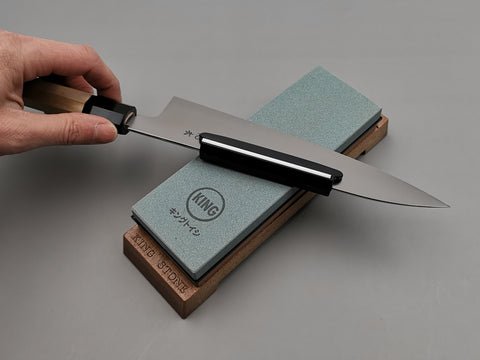
Whetstones allow precise control over the sharpening angle. Soak the stone in water before use to prevent damage. Hold the knife at the desired angle, usually between 15° and 20°. Slide the blade across the stone in smooth, even strokes. Repeat on both sides to create a sharp edge. Whetstones work best for skilled users who want fine results.
Electric Sharpeners
Electric sharpeners provide quick and consistent sharpening. They have built-in guides that keep the blade at the correct angle. Simply pull the knife through the slots a few times. These sharpeners are easy to use and save time. They suit users who want fast sharpening with less effort.
Manual Sharpeners
Manual sharpeners use abrasive surfaces to sharpen blades. They often have preset angles for simplicity. Hold the sharpener firmly on a flat surface. Pull the knife through the slots slowly and evenly. This method is affordable and user-friendly. It works well for maintaining knives between major sharpening sessions.

Credit: www.coolinastore.com
Maintaining Sharpness After Sharpening
Keeping your kitchen knives sharp after sharpening is just as important as the sharpening process itself. Sharp knives make cooking safer and more enjoyable, but dullness creeps in quickly without proper care. Let’s look at practical ways to maintain that sharp edge so you don’t have to sharpen your knives too often.
Honing Vs Sharpening
Many confuse honing with sharpening, but they serve different purposes. Honing realigns the blade’s edge without removing metal, which helps maintain sharpness between sharpenings.
Sharpening actually grinds away metal to create a new edge. You don’t need to sharpen your knife every time it feels dull; regular honing can extend the time between sharpenings.
Try honing your knives with a steel rod before or after each use. It only takes a minute and can keep your blade performing like new.
Proper Knife Storage
How you store your knives affects their sharpness more than you might expect. Tossing knives loosely in a drawer causes blades to rub against other utensils and dull quickly.
Use a knife block, magnetic strip, or blade guards to protect edges. These options keep blades separated and reduce damage.
Consider your kitchen setup: a magnetic strip keeps knives visible and accessible, while a knife block helps organize and protect.
Common Mistakes To Avoid
Sharpening your kitchen knives might seem straightforward, but many make avoidable mistakes that harm blade performance and longevity. Understanding what to steer clear of can save you time, money, and frustration.
Sharpening At Incorrect Angles
Maintaining the right sharpening angle is crucial. Many sharpeners guess or use inconsistent angles, which weakens the edge rather than improving it.
Imagine trying to cut with a knife sharpened at a too-steep angle—it won’t glide through food smoothly. Too shallow, and the edge becomes fragile and chips easily.
Ask yourself: Are you consistently holding your knife at the recommended angle? Using angle guides or markers can help you stay precise.
Over-sharpening Risks
Sharpening often feels like a good habit, but overdoing it can wear down your blade quickly. Each sharpening session removes metal, shortening your knife’s life.
I once sharpened my favorite chef’s knife every week and noticed it became thinner and less balanced over a few months. Now, I sharpen only when I genuinely feel the edge dull.
Watch out for shiny bevels or excessively thin edges—these signs indicate you might be over-sharpening. Focus on sharpening only when needed to keep your knives in top shape.

Credit: www.tiktok.com
Frequently Asked Questions
What Is The Best Sharpening Angle For Kitchen Knives?
The best sharpening angle for kitchen knives is typically between 15 and 20 degrees per side. This angle balances sharpness with durability, providing a keen edge ideal for most kitchen tasks and maintaining the blade longer.
Why Does Sharpening Angle Matter For Knife Performance?
Sharpening angle affects the blade’s sharpness and edge retention. A smaller angle offers a sharper edge but wears faster. A larger angle is more durable but less sharp. Choosing the right angle ensures optimal cutting efficiency and blade longevity.
How Often Should I Sharpen Kitchen Knives?
Sharpen kitchen knives every 3 to 6 months, depending on usage. Frequent sharpening keeps edges sharp and safe. Regular honing between sharpening sessions helps maintain the blade’s edge longer.
Can I Sharpen All Kitchen Knives At The Same Angle?
No, different knives require different angles. Western-style knives use 20 degrees, while Japanese knives often need 15 degrees. Always check the manufacturer’s recommendations to avoid damaging the blade.
Conclusion
Choosing the right sharpening angle keeps your kitchen knives sharp longer. Angles between 15 and 20 degrees work best for most knives. Sharper edges cut better and make cooking easier. Too steep or too flat angles wear blades faster. Regular sharpening with the proper angle saves time and effort.
Your knives will slice cleanly and stay safe to use. Keep this simple rule in mind for better kitchen results. Sharp knives make cooking more enjoyable every day.
