
Replacing or installing pipes under your kitchen sink is one of the most rewarding DIY plumbing projects you can tackle. A slow leak or a corroded trap can cost hundreds in emergency repairs, but with the right preparation and a methodical approach, you can handle the job yourself in an afternoon. This guide draws on years of hands-on plumbing work to walk you through every step — from choosing the best materials to testing for leaks like a pro. Whether you’re swapping out an old P-trap or building a whole new drain assembly for a double sink, you’ll find the detailed, practical advice you need to get it right the first time.
Tools and Materials
Having everything within arm’s reach before you start prevents frustrating trips to the hardware store and reduces the chance of mistakes. Below is a complete list, with notes on what actually works best in the tight space under a sink.
Essential Tools
Two adjustable wrenches – 8-inch and 10-inch sizes let you hold one nut steady while turning another. This is critical for slip nuts on drain pipes.
Slip-joint pliers – The angled jaw grips slip nuts without damaging plastic. Use them for hand-tightening and final quarter-turns.
Pipe cutter – A rotary cutter for plastic (PVC/ABS) gives a perfectly square, burr-free cut. A hacksaw with a 32-tpi blade works but requires more cleanup.
Plumber’s tape (PTFE) – ½-inch wide, high-density tape seals threaded connections on supply lines. Avoid cheap, thin tape that shreds.
Bucket and towels – Even after draining, water hides in traps and supply lines. A drywall bucket paired with an old bath towel catches everything.
Flashlight or headlamp – Under-sink cabinets are notoriously dark. A headlamp keeps both hands free.
Deburring tool – Removes plastic shavings from cut pipe ends. A utility knife also works if you’re careful.
Plumbing Materials
| Component | Recommended Material | Notes |
|---|---|---|
| Drain pipes | Schedule 40 PVC (white) or ABS (black) | PVC is more common; ABS is allowed in some areas. Both are easy to cut and glue. |
| P-trap assembly | PVC with slip-joint connections | Pre-formed traps are faster than building from elbows. |
| Water supply lines | Braided stainless steel | More durable than PEX or copper in tight spaces; resists kinking. |
| Shut-off valves | ¼-turn ball valve (brass or chrome) | More reliable than multi-turn compression valves. |
| Pipe hangers | Plastic pipe straps with rubber lining | Prevents metal-on-plastic abrasion. |
Safety Gear
- Safety glasses – Water splashes and plastic shavings are common.
- Work gloves – Cut-resistant gloves protect hands from sharp edges on cut pipe and metal fittings.
- Knee pads – A cheap pair will save your knees during the 30–60 minutes you’ll spend under the cabinet.
Choosing the Right Pipe Material
Modern plumbing standards have shifted away from copper supply lines in favor of flexible options that are easier to install and less prone to pinhole leaks. For drain lines, PVC remains the dominant choice, but differences matter.
PVC (polyvinyl chloride) – White, rigid, and glued with solvent cement. It handles hot water up to 140°F, making it fine for kitchen drains. It’s the most widely stocked material at home centers.
ABS (acrylonitrile butadiene styrene) – Black, slightly more impact-resistant than PVC, but can become brittle in direct sunlight. Some local codes restrict ABS in residential DWV applications; check before buying.
PEX (cross-linked polyethylene) – Flexible, color-coded (red for hot, blue for cold), and requires crimp rings or push-fit fittings. Excellent for supply lines, but not for drains.
Braided stainless steel supply lines – The gold standard for faucet connections. They come in standard lengths (12–30 inches) and include pre-attached nuts. Avoid unbraided vinyl or rubber lines — they degrade faster.
Push-fit fittings – Brands like SharkBite let you connect copper, PEX, or CPVC without soldering or glue. They’re expensive but ideal for DIYers who want a removable connection.
For a complete visual reference, the standard plumbing diagram at KitchenBucks shows how each part fits together.
Preparing Your Workspace
A clean, well-lit workspace reduces errors and protects your new plumbing from dirt.
Clear the Cabinet
Remove everything stored under the sink — cleaning supplies, trash cans, storage bins. Lay down a drop cloth or cardboard to catch drips and protect the cabinet floor. Wipe out any accumulated dust or grime; debris can interfere with slip-nut washers.
Shut Off Water Supply
Locate the shut-off valves — usually two small valves attached to the pipes that come up from the floor. Turn each handle clockwise until it stops. Then open the kitchen faucet (hot and cold) to relieve pressure and drain any water left in the lines. Leave the faucet open while you work.
If you need to replace old or leaking shut-off valves, the guide on shutting off water under sink provides step-by-step instructions for this critical safety step.
Protect the Floor
Place your bucket directly under the P-trap. Even after draining, the trap holds about a cup of water. Have towels on hand for splashes.
Removing the Old Sink Pipes
Removing old plumbing is usually the dirtiest part of the job. Work slowly and be prepared for surprises like corroded nuts or hidden debris.
Disconnecting the Drain Assembly
Start at the P-trap. Loosen the two slip nuts (one on the vertical tailpiece, one on the horizontal wall pipe) by hand or with slip-joint pliers. The trap may still contain water — tilt it into your bucket. Once the trap is free, disconnect the tailpiece from the sink strainer by loosening the nut just below the sink.
Removing Supply Lines
Use an adjustable wrench to loosen the nuts connecting each supply line to its shut-off valve. Have your bucket ready — a few ounces of water may dribble out. Then disconnect the other end from the faucet shanks. Label the lines (hot and cold) if you plan to reuse them.
Handling Stubborn Connections
Old galvanized steel or brass nuts often seize due to corrosion. If a nut won’t budge:
- Apply penetrating oil (WD-40 Specialist or PB Blaster) and wait 15 minutes.
- Tap the nut gently with a wrench handle to break the rust bond.
- Use a pipe wrench with a longer handle for extra leverage — but be careful not to crush plastic pipes.
If you have to cut a drain pipe, use a hacksaw and deburr the edge before installing new fittings.
Installing New Drain Pipes
The drain system relies on gravity and a water seal (the P-trap) to work properly. Every connection must be aligned and tight.
Understanding the Drain Layout
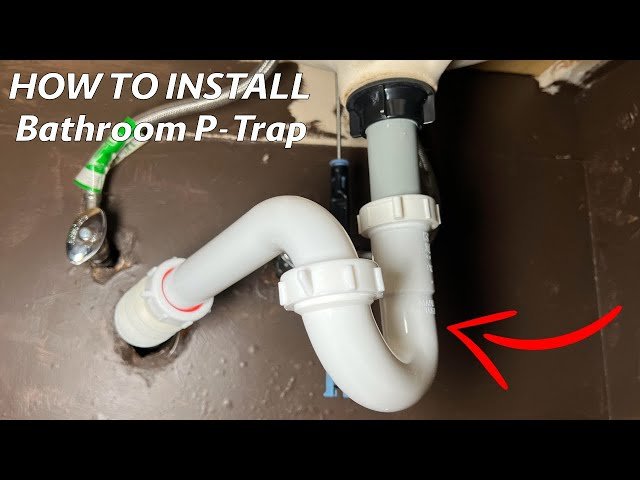
A typical single-basin sink has a tailpiece dropping from the strainer, connected to a P-trap, which then exits into a waste pipe in the wall. For double sinks, two tailpieces merge into a T-fitting before the trap. The plumbing under sink diagram with dishwasher connection helps visualize how everything fits together, especially if you also have a dishwasher drain line to integrate.
Assembling the P-Trap
Attach the tailpiece to the sink strainer using the slip nut and rubber washer that came with the drain kit. Hand-tighten, then snug with pliers — do not overtighten or the washer will deform.
Connect the trap bend to the tailpiece. The curved section must face downward so it can hold water.
Attach the trap to the wall pipe using another slip nut and washer. Ensure the horizontal pipe slopes slightly downward (¼ inch per foot) toward the wall.
Measuring and Cutting
Measure the distance between the sink strainer and the trap inlet, then between the trap outlet and the wall pipe. Mark the pipe with a pencil, cutting with a rotary cutter for a clean edge. After cutting, remove burrs inside and outside the pipe using a deburring tool or utility knife. A rough edge will tear the rubber washer and cause a leak.
Sealing Threaded Connections
Wrap plumber’s tape clockwise around male threads on any metal-to-metal or metal-to-plastic threaded joints (e.g., the tailpiece connection on some brass sink strainers). Three to four wraps are sufficient. Do not use tape on slip-nut connections — those rely on the rubber washer alone.
Connecting Water Supply Lines
Supply lines carry pressurized water, so any poor connection here will result in a spray leak.
Choosing Supply Lines
Measure the distance from the shut-off valve to the faucet shank. Add a few inches of slack — lines that are stretched tight can pull loose over time. Braided stainless steel lines in standard lengths (12, 20, 30 inches) are easiest. For tight cabinets, flexible PEX supply lines with push-fit ends work well.
Attaching to Shut-Off Valves
Hand-thread the nut onto the valve’s compression fitting. Once hand-tight, give it a quarter-turn with an adjustable wrench. Be careful not to overtighten — the rubber gasket inside the nut will compress adequately with moderate force.
Attaching to Faucet
Repeat the process at the faucet shank. Make sure you connect hot (red) to hot and cold (blue) to cold. If your faucet uses flexible leads with pre-attached nuts, simply screw them on.
Additional Plumbing Configurations
Many kitchens have more than a single sink. Here’s how to handle common variations.
Double-Basin Sink Setup
Two tailpieces connect to a tee fitting (sanitary tee) before the P-trap. The tee must be oriented so the branch lines slope slightly downward. Use a center outlet tee if you have a symmetrical sink; otherwise, offset the tee toward the side where the trap exits. You’ll likely need to cut and glue additional 1½-inch PVC pipe between the tee and the trap.
Connecting a Dishwasher Drain
The dishwasher drain hose typically connects to a wye fitting on the tailpiece or directly into the garbage disposal. Install a high-loop or air gap on the dishwasher line to prevent backflow — most local codes require it. The dishwasher drain connection should be above the P-trap to avoid siphoning. Properly cleaning a dishwasher filter regularly keeps that drain line clear and free of obstructions.
Working with a Garbage Disposal
If you have a disposal, the dish drain tailpiece attaches to the disposal’s discharge outlet, and the P-trap connects directly below it. Use a 90-degree elbow if the wall pipe is offset. Ensure the disposal is securely mounted to the sink flange before connecting drain pipes.
Securing and Finalizing
Loose pipes can shift and put stress on joints, eventually causing leaks.
Using Pipe Clamps and Straps
Drain pipes – Use plastic pipe straps with rubber liners spaced every 18–24 inches. Screw them into the cabinet floor or wall studs. Do not overtighten — the strap should hold the pipe without crushing it.
Supply lines – Generally don’t need clamps, but if they are longer than 30 inches, use a single strap to keep them from contacting other pipes (which can cause noise and wear).
Check alignment – Make sure the P-trap is not twisted or pulled to one side. A misaligned trap will leak at the slip nuts.
Ensuring Watertight Seals
Before turning the water on, hand-tighten every slip nut, then give each a gentle quarter-turn with pliers. If you’re using threaded connections with plumber’s tape, make sure the tape is smooth and not bunched.
Testing Your New Plumbing
Never assume the job is done until you’ve tested every connection under pressure.
Slow Water Turn-On
Open the shut-off valves slowly — a sudden surge can blow out a loose washer. Listen for hissing or drips as the lines fill. Once the valves are fully open, wait 30 seconds.
Leak Inspection
Run water down the drain – Fill the sink halfway, then pull the plug. Watch each slip nut on the P-trap and tailpiece. Wipe joints with a dry paper towel; any moisture means a leak.
Check supply lines – Feel around each nut at the valve and faucet. Look for small puddles forming on the cabinet floor.
Check the dishwasher connection – If you have a dishwasher, run a short cycle and inspect the drain hose joint.
Fixing Minor Leaks
Small drain leaks usually require tightening the slip nut another eighth of a turn. If the leak continues, the rubber washer may be misaligned — disassemble, reseat the washer, and retighten. Supply line leaks often mean the nut is slightly loose; tighten gently. If the leak persists, the washer inside the nut may be damaged and the supply line should be replaced.
Troubleshooting Common Issues
Even with careful installation, problems can surface after a few weeks. Here’s how to diagnose and fix them.
Persistent Leaks
- Overtightened slip nuts – Plastic washers crack when compressed too much. Replace the washer and tighten only until snug.
- Damaged pipe end – A cut that wasn’t deburred will tear the washer. Re-cut and deburr.
- Cross-threaded nut – Back it off completely and start threading by hand. If the nut feels rough, replace it.
Slow Drains
- Misaligned P-trap – Water pools in the trap if the entry and exit aren’t level. Adjust the trap height or add an extension tailpiece.
- Improper slope – Horizontal drain pipes must slope ¼ inch per foot. Check with a level; add shims under pipe straps if needed.
- Debris in wall pipe – Use a drain snake to clear blockages beyond the trap. For mild buildup, a baking soda and vinegar flush followed by hot water can help. Avoid chemical drain cleaners — they damage PVC over time.
Odors from the Drain
- Dry P-trap – Run water for 30 seconds to refill the seal. If the sink is used infrequently, pour a cup of water down the drain weekly.
- Leaking trap – A damp connection allows sewer gases to escape. Tighten or replace the washer.
- Vent blockage – Gurgling sounds and slow drainage indicate a blocked vent pipe. This requires clearing the vent from the roof or calling a plumber.
Gurgling Sounds
If you hear gurgling when the sink drains, the plumbing vent is likely clogged. Try running water from other fixtures to see if the gurgle shifts. A blocked vent can siphon the P-trap dry, so address it promptly.
Dealing with Musty Smells
Persistent odors that aren’t coming from the drain itself often indicate trapped moisture or organic buildup. If you notice a musty smell under kitchen sink, inspect for slow leaks, mold growth on the cabinet floor, or decomposing debris caught around pipe connections.
Ongoing Maintenance
Regular care keeps your under-sink plumbing in top shape and prevents emergency call-outs.
Regular Inspections
Every three months, open the cabinet and check for:
- Moisture or water stains on pipe surfaces or the cabinet floor.
- Corrosion on metal parts (green or white residue).
- Loose slip nuts — gently try to turn them; they should feel snug.
- Signs of rodent activity (droppings, chewed pipes).
Preventing Clogs
- Use a mesh strainer in the sink basket to catch food scraps. Clean it after each use.
- Never pour grease or oil down the drain. Wipe greasy pans with a paper towel and dispose in the trash.
- Flush with hot water weekly to clear soap and grease buildup.
Seasonal Checks
Before winter, ensure pipes are not exposed to freezing temperatures under the sink — insulate if necessary. After a freeze, check supply lines for cracks by turning on the water slowly.
Code Compliance and Safety
Most residential plumbing work must meet local building codes, which are based on the Uniform Plumbing Code (UPC) or International Plumbing Code (IPC). Key requirements:
- P-trap depth – The trap arm must be between 2 and 4 inches below the fixture outlet.
- Vent connection – The drain pipe must connect to a vent within certain distance limits.
- Dishwasher air gap – In many jurisdictions, a high-loop or air gap is mandatory.
- Permits – Minor repairs like replacing a P-trap usually don’t require a permit, but replacing a significant section of drain or supply pipe may. Check with your local building department.
For detailed code information, the International Association of Plumbing and Mechanical Officials (IAPMO) publishes the UPC standard.
When to Call a Professional
While this guide covers most DIY situations, some issues are best left to a licensed plumber:
- Main sewer line clogs – If multiple fixtures drain slowly, the problem is beyond the sink.
- Removing cast iron or galvanized drain pipes – These require special tools and techniques.
- Relocating drain or supply lines – Moving pipes inside walls involves structural work and permits.
- No shut-off valves – If your home lacks modern valves, consider having a plumber install them before you attempt any work.
Frequently Asked Questions
What size are standard kitchen sink drain pipes?
Most kitchen sink drains use 1½-inch diameter pipe for the tailpiece and P-trap. The wall connection is typically 1½ or 2 inches. Supply lines are usually ⅜-inch compression.
How long does it take to install pipes under a kitchen sink?
For a straightforward single-sink replacement, plan on 1–2 hours. Adding a dishwasher drain or working with a double sink can take 2–3 hours.
Do I need glue for PVC drain pipes?
Yes, if you are adding long straight runs or custom fittings. Slip-nut connections on the P-trap and tailpiece are mechanical (no glue), but any glued joint requires PVC primer and solvent cement.
Can I use push-fit fittings on drain pipes?
Push-fit fittings are designed for supply lines, not drain lines. For drains, stick with PVC or ABS solvent-welded joints or mechanical slip nuts.
Why does my under-sink plumbing keep leaking?
The most common cause is overtightening, which cracks washers or distorts seals. The second is misaligned pipes that put sideways pressure on slip-nut connections.
How do I prevent smells from under the sink?
Make sure the P-trap holds water. If it’s dry, run water. Also check for leaks and clean any debris from the trap or tailpiece. For persistent odors, consider a baking soda and vinegar flush followed by hot water.
Conclusion
Installing or replacing pipes under your kitchen sink is a highly achievable DIY project that saves money and builds confidence. By choosing the right materials, preparing your workspace, and following each connection step carefully, you can create a leak-free, code-compliant plumbing system. The key is patience — never rush a slip nut, always test with water before declaring the job done, and don’t hesitate to revisit a joint if it feels wrong. Start by reviewing the plumbing under kitchen sink diagram, gather your tools, and give yourself a full afternoon to work. With practice, you’ll find that under-sink plumbing becomes one of the most satisfying repairs you can handle yourself.
