
That sour, musty, or outright sewage-like smell drifting from under your kitchen sink isn’t just embarrassing when guests visit — it’s a sign that something needs attention. The good news: most causes are simple to diagnose and fix yourself, often with supplies you already own. Below you’ll find the exact steps to identify the source, eliminate the odor, and keep it from coming back.
What’s Causing That Smell?
Before you grab a cleaner, take a minute to sniff and inspect. The type of odor tells you where to look.
Musty, Damp Smell — Mold or Mildew
A wet, earthy smell almost always means mold or mildew has taken hold in the dark, humid cabinet. Leaks or condensation on pipes create the perfect environment. Check for black or green spots on the cabinet floor, behind the pipes, or on the underside of the sink basin. Mold spores can aggravate allergies and damage wood over time. Fix the moisture source, then clean thoroughly.
Rotten, Sour Smell — Trapped Food Waste
If it smells like spoiled food, the culprit is likely in the drain or garbage disposal. Bits of produce, grease, and starch build up on the blades and inside the drainpipe. Over days they decompose, creating a foul odor. A deep clean of the disposal and drain line usually solves this.
Sewage or Rotten-Egg Smell — Dry P‑Trap or Sewer Gas
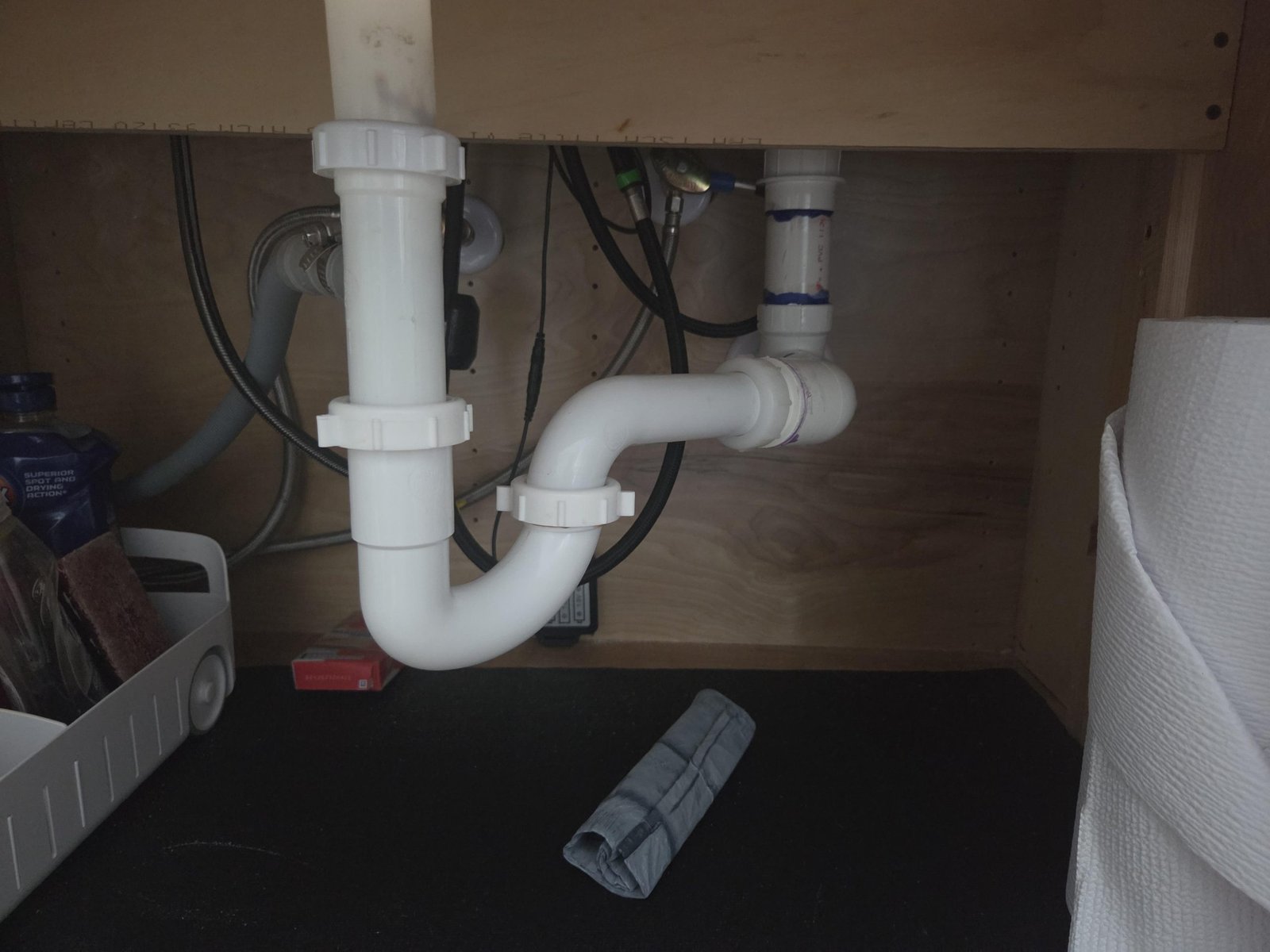
That unmistakable “sewer” smell means gases from the main drain line are escaping into your cabinet. The P‑trap (the curved pipe under the sink) is designed to hold a small amount of water that seals out these gases. If the trap dries out — common in a guest bathroom or a sink that isn’t used often — the seal breaks. Running water for a few seconds refills it. If the smell persists, the trap may be cracked or improperly installed.
Chemical or Bleach-Like Smell — Cleaning Product Residue
Sometimes an odd chemical smell is just leftover cleaning product that wasn’t rinsed away. This is harmless but unpleasant. Rinse all surfaces thoroughly after cleaning.
Step‑by‑Step Cleaning Solutions
Start with the simplest fix and move to more involved steps only if the odor remains.
1. Deep‑Clean the Drain and Garbage Disposal
- Pour ½ cup baking soda directly into the drain.
- Add 1 cup white vinegar — it will foam vigorously.
- Let it sit for 15 minutes, then flush with boiling water.
- For the disposal: grind a few ice cubes with lemon peels and a handful of salt. This scours the blades and leaves a fresh scent.
Do this every two weeks to prevent buildup.
2. Scrub the Cabinet Interior
Remove everything from under the sink. Wipe down the cabinet walls, floor, and all pipes with a solution of warm water and a few drops of dish soap. For stubborn mold spots, use a 1:10 bleach‑water solution (1 part bleach, 10 parts water) — but wear gloves and ensure good ventilation. Let the cabinet air dry completely before restocking.
3. Fix a Dry P‑Trap
Simply run the faucet for 30 seconds. If you haven’t used that sink in a while, the trap probably just needs water. For a sink that’s rarely used, pour a small amount of mineral oil into the trap — it won’t evaporate as quickly as water.
If the problem returns, inspect the P‑trap for cracks or loose joints. Tightening the slip nuts by hand can often fix small leaks. For a detailed guide on replacing a faulty trap, check out the instructions on how to install a P‑trap under a kitchen sink.
 Mold growth on the cabinet floor indicates a persistent moisture problem that must be fixed first.
Checking for Hidden Leaks
Even a tiny, slow drip can create a damp environment that feeds mold and bacteria. Inspect thoroughly:
- Look for water stains, rust, or white residue on pipe joints.
- Feel the cabinet floor for dampness, especially in corners.
- Listen for a faint drip when the faucet is off.
- Use a flashlight to check behind the P‑trap and the shut‑off valves.
If you find a leak, tighten loose connections with a wrench (don’t overtighten on plastic fittings). For small leaks at threaded joints, apply plumber’s tape. If a pipe is cracked, you’ll need to replace that section. Our guide on replacing the pipes under a kitchen sink walks you through the process step by step. For more complex plumbing, knowing the layout of the plumbing under the kitchen sink diagram can help you identify each part.
Improving Ventilation and Moisture Control
Good airflow is the cheapest long‑term solution. Without it, even a dry cabinet can develop odors.
Simple Passive Steps
- Leave the cabinet doors open for a few hours each week.
- Place a small container of activated charcoal or baking soda in the cabinet. Replace the charcoal every two months, the baking soda monthly.
- Use a dehumidifier nearby if your kitchen is naturally humid.
Active Ventilation
If odors persist, consider installing a small ventilation fan or a vent panel that connects to the kitchen exhaust. This is especially useful in kitchens with no windows. A simpler option: drill a few small holes in the cabinet toe kick (the bottom panel) to allow air circulation — a trick many cabinet makers recommend.
Odor Absorbers That Actually Work
Natural Options
- Activated charcoal – traps odor molecules without added fragrance. Use a breathable bag.
- Baking soda – open a box or fill a small bowl. Replace every 30 days.
- Coffee grounds – dry used grounds in a shallow dish. They absorb odors and release a mild coffee scent.
Commercial Products
- Gel‑based odor eliminators – last 30–60 days, fragrance‑free options available.
- Moisture absorbers (like DampRid) – pull humidity from the air, preventing mold before it starts.
- Enzymatic cleaners – break down organic waste in drains and garbage disposals. Pour down the drain overnight once a month.
Preventive Maintenance Schedule
A consistent routine is the easiest way to avoid smells. Set a recurring reminder on your phone.
| Task | Frequency |
|---|---|
| Flush drain with hot water | Weekly |
| Run baking soda + vinegar through drain | Every 2 weeks |
| Wipe down cabinet floor and pipes | Monthly |
| Check for leaks and tighten fittings | Monthly |
| Replace baking soda or charcoal absorber | Monthly |
| Deep‑clean garbage disposal (ice + lemon) | Monthly |
| Inspect P‑trap for cracks or dry seal | Every 3 months |
Also, never pour grease or oil down the drain. Use a sink strainer to catch food scraps, and empty it into the trash. Treat your disposal as a tool for small scraps, not a garbage can.
When to Call a Professional
Some problems go beyond DIY. Call a plumber if:
- The smell is still strong after you’ve cleaned, dried, and checked for leaks.
- You find standing water that doesn’t go away.
- The drain is consistently slow or gurgles.
- You see widespread mold covering more than a square foot.
- The P‑trap is cracked or you can’t stop a leak after tightening.
A professional can scope the drain to find blockages or broken pipes you can’t see. Ignoring a persistent sewer‑gas smell could mean a broken vent pipe or a damaged main line — both expensive if left too long.
Frequently Asked Questions
Why does my kitchen sink smell even after cleaning?
The odor may be coming from a dry P‑trap, a hidden leak, or mold behind the cabinet wall. Check the trap first, then inspect all pipes for moisture.
Can I use bleach to clean under the sink?
Yes, but only on non‑porous surfaces. Use a 1:10 bleach‑water solution, wear gloves, and ventilate the area. Never mix bleach with vinegar or ammonia.
How often should I replace the P‑trap?
PVC traps last many years unless they crack. Replace them if you see any hairline cracks, constant leaks, or if the smell returns after refilling.
What’s the best way to clean a garbage disposal?
Grind ice cubes with coarse salt and lemon peels. Avoid chemical drain cleaners — they can damage the disposal’s rubber seals.
Is mold under the sink dangerous?
Yes, especially for people with allergies or asthma. The EPA recommends cleaning small patches (less than 3 feet) yourself, but for larger areas, hire a professional. For official guidance, see the EPA’s mold cleanup resources.
Conclusion
A smell under the kitchen sink is almost always fixable without a plumber or expensive products. Identify the odor type, start with a deep clean of the drain and cabinet, check for leaks, and keep the area dry. Add a simple routine of monthly maintenance, and you’ll never have to apologize for a stinky kitchen again.
Bookmark this guide for your next deep clean — and share it with anyone who’s tired of that musty smell. A fresh, odor‑free space under your sink makes the whole kitchen feel better.
