
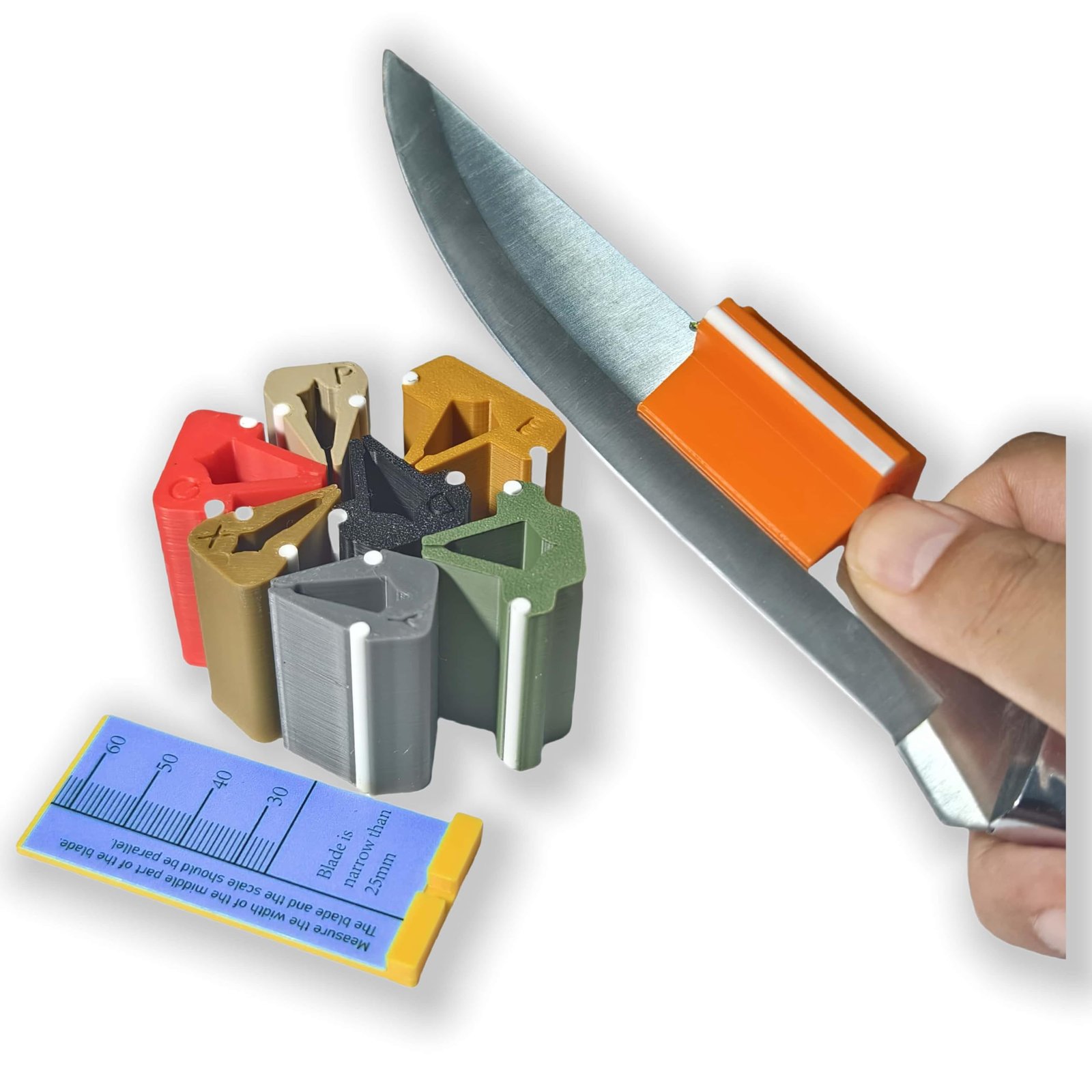
Are your knives not cutting as smoothly as they used to? The secret to a razor-sharp blade lies in the angle you use when sharpening.
Getting this angle right can transform your dull knife into a precision tool that feels like new. In this guide, you’ll learn exactly which sharpening angle suits your knife and how it affects performance. Keep reading to unlock the simple trick that will make every slice effortless and keep your knives lasting longer than ever.
Choosing The Right Angle
Choosing the right sharpening angle is crucial to keep your knife performing at its best. The angle you select affects how sharp your knife becomes and how long that sharpness lasts. Understanding the different angles and their uses helps you make the right choice for your specific knife and cutting tasks.
Common Sharpening Angles
Most kitchen knives sharpen between 15° and 25°. A smaller angle, around 15°, creates a sharper but more delicate edge. A larger angle, near 25°, gives a stronger edge that lasts longer but might not be as razor-sharp.
- 15° to 20°:Ideal for fine slicing and precision cutting.
- 20° to 25°:Better for general kitchen use and tougher tasks.
- 25° and above:Used for heavy-duty or outdoor knives.
Have you noticed how your favorite chef’s knife feels different from your camping knife? That’s because they’re sharpened at different angles to suit their purpose.
Angle Selection By Knife Type
Different knives need different angles to perform well. Japanese knives usually have sharper edges, so they use smaller angles around 15°. Western knives often use angles closer to 20° or 22° for more durability.
| Knife Type | Recommended Angle | Purpose |
|---|---|---|
| Japanese Chef’s Knife | 15° – 17° | Precision slicing, delicate tasks |
| Western Chef’s Knife | 20° – 22° | General kitchen use, durability |
| Outdoor/Survival Knife | 25° – 30° | Heavy-duty cutting, toughness |
Think about the knives you use most. Do they match the angle recommendations? Adjusting your sharpening angle could improve your cutting experience dramatically.
Effect Of Angle On Edge Durability
A smaller angle sharpens the edge finer, but it also makes it more vulnerable to chips and dulling. A wider angle strengthens the edge, making it last longer under tough use.
If you cut soft vegetables, a sharper angle might be better. But if you often chop through bones or tough materials, a stronger angle protects your blade from damage.
What’s your main use for your knife? Aligning the angle with your needs saves you time and effort sharpening in the long run.

Credit: www.amazon.com
Tools For Measuring Angles
Measuring the correct sharpening angle is essential for maintaining your knife’s edge and performance. The right angle ensures your blade stays sharp longer and cuts more efficiently. Various tools can help you measure and maintain these angles with precision.
Using Angle Guides
Angle guides are simple, physical tools designed to help you hold your knife at a consistent angle while sharpening. They often clip onto the blade or rest against the sharpening surface, providing a reliable reference point.
These guides come in different fixed angles, like 15°, 20°, or 25°, so you can choose one that matches your knife’s ideal sharpening angle. Using an angle guide takes the guesswork out of sharpening and helps you build muscle memory for future sessions.
Have you noticed how your edges last longer when you sharpen with a steady angle? That’s the power of a good angle guide.
Digital Angle Finders
Digital angle finders offer a high-tech approach to measuring sharpening angles. These devices use sensors to display the exact angle on a digital screen, often with accuracy down to a single degree.
They’re especially useful if you own knives with unusual or very specific angles, or if you want to experiment with sharpening angles to optimize cutting performance. Although pricier, digital angle finders can save time and improve precision.
If you’ve ever struggled to match angles between sharpening sessions, a digital angle finder might be the tool you need to standardize your process.
Diy Angle Measuring Techniques
If you don’t have specialized tools, you can still measure sharpening angles with items around your home. Using a protractor app on your smartphone or printing a simple angle template can work well.
Another method is to compare your knife’s bevel to a folded piece of paper or card, marked with the desired angle. This hands-on approach keeps costs low and encourages you to pay closer attention to your sharpening technique.
What everyday items do you think could help you maintain a precise sharpening angle? Sometimes, creativity in the kitchen or workshop pays off just as much as fancy gadgets.
Sharpening Techniques By Angle
Sharpening your knife at the right angle is key to restoring its edge efficiently. The angle you choose impacts how sharp and durable your blade will be. Understanding different techniques by angle helps you get the most out of every sharpening session.
Maintaining Consistent Angles
Keeping a steady angle while sharpening is crucial. Even slight variations can dull your blade faster or create an uneven edge. Using a guide or practicing with visual cues can improve your consistency.
Try placing a small piece of tape on your sharpening stone as a reference point. This simple trick helped me sharpen my chef’s knife evenly after struggling with uneven edges for months.
Handheld Vs. Stationary Sharpeners
Handheld sharpeners give you control over the angle but require practice to hold it steady. Stationary sharpeners often have preset angles, which can be helpful if you want quick, consistent results.
Ask yourself: Do you prefer more control or convenience? If control wins, handheld might suit you better. If speed and ease are priorities, a stationary sharpener is worth considering.
Angle Adjustments For Different Blades
Not all blades need the same sharpening angle. For example, Japanese knives often sharpen at 15 degrees per side for a finer edge. Western knives usually use 20 degrees per side for durability.
Adjust your angle based on the blade’s purpose. A fillet knife may need a sharper angle for precision, while a heavy-duty outdoor knife benefits from a wider angle to resist chipping.

Credit: www.amazon.com
Common Mistakes And How To Avoid Them
Knife sharpening requires attention to detail, especially with angles. Mistakes in angle choice or consistency can ruin a blade’s edge. Avoiding these errors keeps your knives sharp longer and safer to use. Understanding common mistakes helps prevent damage and ensures a clean, effective cut every time.
Inconsistent Angle Issues
Holding the knife at different angles during sharpening causes uneven edges. This inconsistency leads to dull spots and weak points on the blade. Maintaining a steady angle is key. Use angle guides or markers to keep your blade stable while sharpening. Practice helps build muscle memory for consistent angles.
Over-sharpening Risks
Sharpening too often or applying too much pressure wears down the blade quickly. It reduces the knife’s lifespan and weakens its structure. Sharpen only when the knife starts to lose its edge. Light, gentle strokes extend the blade’s durability. Restoring sharpness is better than grinding metal away.
Signs Of Incorrect Angles
Blades sharpened at wrong angles show certain signs. The edge might feel rough or jagged instead of smooth. Cutting becomes difficult, with the knife slipping or tearing food. Visible damage, like chips or unevenness, indicates wrong angle use. Adjust your sharpening angle if these problems appear to protect your blade.
Advanced Tips For Perfect Edges
Perfect edges require more than just basic sharpening. Advanced techniques refine the blade for better performance. These tips help achieve a sharper, longer-lasting edge. Focus on precision and care during each step. Small adjustments make a big difference in sharpness and durability.
Micro-beveling Techniques
Micro-beveling adds a tiny secondary angle at the blade edge. This small angle strengthens the edge without losing sharpness. It also makes sharpening faster in the future. Use a fine stone or strop for micro-beveling. Keep the angle consistent, usually 1-2 degrees higher than the main bevel.
Using Honing Rods Effectively
Honing rods realign the blade edge after use. They don’t sharpen but keep the edge straight and smooth. Hold the rod vertically with the tip on a stable surface. Swipe the blade down the rod at the correct sharpening angle. Alternate sides evenly to maintain balance and sharpness.
Edge Polishing For Sharpness
Polishing removes tiny burrs and rough spots on the edge. Use very fine stones or leather strops with polishing compound. Polishing improves cutting smoothness and reduces blade drag. Work slowly and check the blade often. A polished edge slices cleaner and lasts longer.
Maintaining Your Knife’s Edge
Maintaining your knife’s edge is key to keeping it sharp and safe. A well-maintained knife cuts smoothly and lasts longer. It also reduces the risk of accidents during use. Simple habits help preserve the edge and improve your knife’s performance.
Regular Sharpening Schedule
Set a routine for sharpening your knives. Frequent sharpening keeps the edge clean and effective. Use the correct angle guide to maintain the blade’s shape. A dull knife requires more force, which can be dangerous. Sharpen small amounts often rather than waiting for a very dull blade.
Proper Storage Practices
Store knives carefully to avoid damage to the edge. Use a knife block, magnetic strip, or blade guard. Avoid tossing knives in drawers with other utensils. This can cause chips and dull the blade quickly. Keep knives dry and clean before storage to prevent rust.
When To Re-sharpen Or Replace
Notice when your knife struggles to cut or slips often. These signs mean it needs re-sharpening or replacing. If sharpening does not restore the edge, consider a new knife. Look for chips or bends in the blade that hurt performance. Proper care extends knife life but some wear is normal over time.

Credit: www.messermeister.com
Frequently Asked Questions
What Is The Ideal Knife Sharpening Angle?
The ideal knife sharpening angle ranges between 15° and 20°. This angle ensures a sharp, durable edge suitable for most kitchen knives. Lower angles provide sharper edges but dull faster, while higher angles offer durability but less sharpness.
How Do Sharpening Angles Affect Knife Performance?
Sharpening angles impact sharpness and edge durability. Smaller angles create sharper edges but wear out quickly. Larger angles produce sturdier edges but can reduce cutting precision. Choosing the right angle balances sharpness and longevity based on knife use.
Can I Use One Angle For All Knives?
No, different knives require different angles. For example, Japanese knives usually need 15°, while Western knives use 20°. Using the correct angle enhances performance and prolongs the knife’s lifespan.
How To Measure The Knife Sharpening Angle Accurately?
Use an angle guide or protractor to measure angles. Hold the knife and sharpening tool steadily. Align the tool to the desired angle and maintain consistency during sharpening for best results.
Conclusion
Understanding the right angle for knife sharpening is essential. It helps maintain the edge and prolongs the knife’s life. Practice makes the process easier and more efficient. Each knife type may require a different angle. Use this guide to find the best sharpening angle for your tools.
With patience, your knives will be sharper and safer. Enjoy cooking and crafting with well-sharpened knives. A sharp knife is a joy to use. Keep learning and refining your technique for the best results. Remember, a good angle ensures a good cut.
