
Choosing the best flooring for your kitchen isn’t just about looks—it’s about finding the perfect balance between style, comfort, and durability. Your kitchen sees a lot of action every day, from spilled drinks to heavy foot traffic, so the floor you pick needs to stand up to all of it.
But with so many options out there, how do you know which one fits your lifestyle and budget? Keep reading, and you’ll discover the top flooring choices that can transform your kitchen into a beautiful, practical space you’ll love spending time in.
Durability Factors For Kitchen Flooring
Choosing the best flooring for a kitchen means focusing on durability. Kitchens face heavy use and spills daily. Floors must stand up to these challenges without losing their look or function. Understanding durability factors helps pick materials that last longer and save money.
Wear And Tear Resistance
Kitchen floors see constant foot traffic, dropped utensils, and moving chairs. Materials like ceramic tile, vinyl, and hardwood offer strong wear resistance. They resist scratches and dents better than soft flooring options. Durable floors maintain their surface and color despite daily use.
Moisture And Stain Protection
Spills and splashes are common in kitchens. Flooring must resist water damage and stains. Waterproof or water-resistant options like vinyl and tile prevent warping and mold growth. Stain-resistant surfaces keep floors looking clean longer. This reduces the need for harsh cleaning chemicals.
Maintenance Requirements
Easy-to-clean floors save time and effort. Materials that need minimal upkeep work best for busy kitchens. Smooth surfaces like vinyl and tile allow quick wiping. Floors that require frequent sealing or polishing may not suit all homes. Choose options that fit your cleaning routine and lifestyle.

Credit: www.arkoflooring.com
Top Flooring Materials For Kitchens
Choosing the right flooring for your kitchen affects not just the look but also the durability and comfort of the space. Kitchens face spills, heavy foot traffic, and frequent cleaning, so the flooring needs to stand up to these challenges. Here’s a detailed look at some top flooring materials that could work well in your kitchen.
Ceramic And Porcelain Tiles
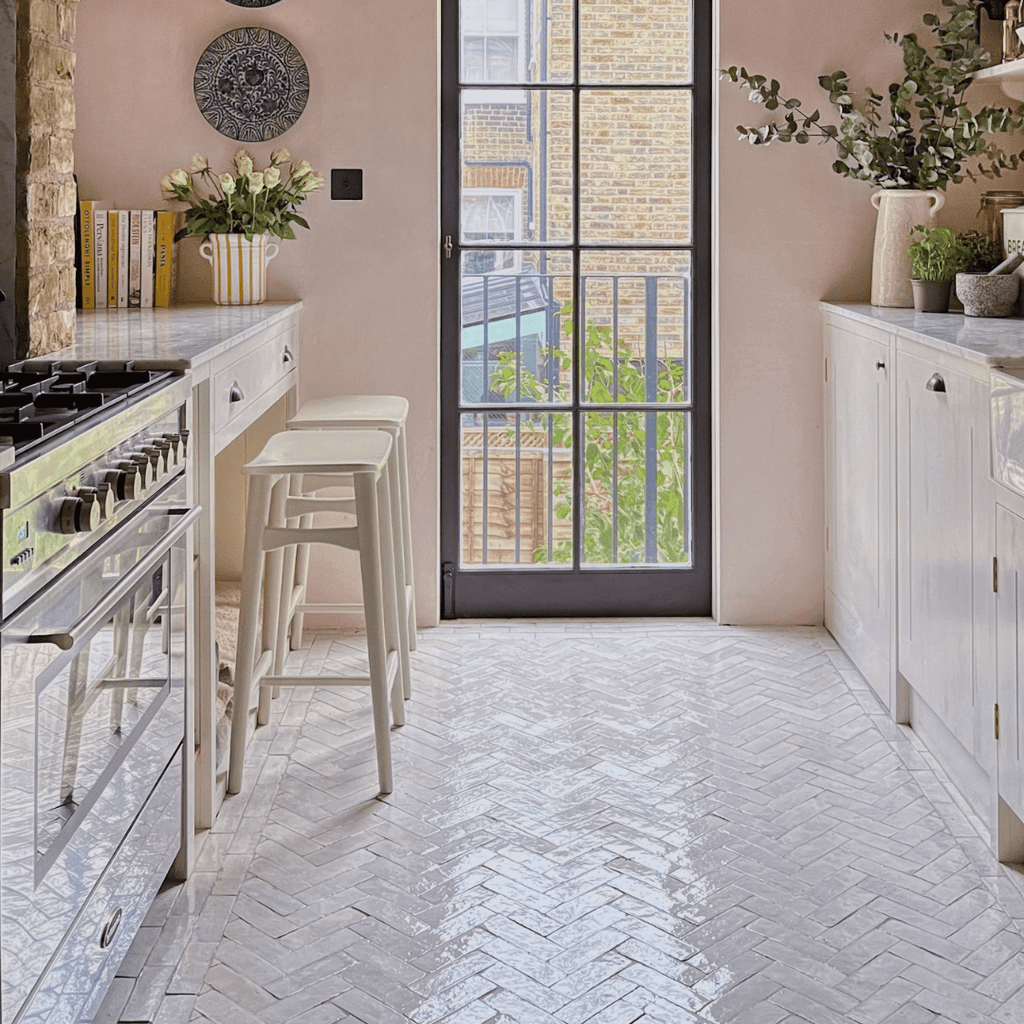
Ceramic and porcelain tiles offer great durability and water resistance. They come in many styles and colors, giving you plenty of options to match your kitchen’s theme. Plus, they are easy to clean, which is perfect for busy kitchens.
One thing to consider is that tiles can be hard and cold underfoot. Adding a rug or mat in work areas can help with comfort.
Natural Stone Options
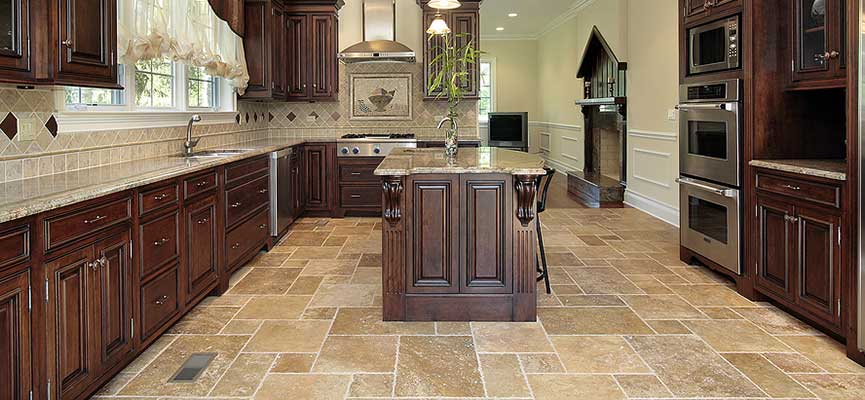
Natural stone, such as granite, marble, or slate, adds a unique and elegant touch to kitchens. Each stone has its own pattern, making your floor truly one-of-a-kind. Stone floors are strong but may require sealing to prevent stains.
If you like a rustic or high-end look, natural stone is worth considering. However, keep in mind it can be slippery when wet and may feel cold.
Hardwood Varieties
Hardwood brings warmth and charm into the kitchen. It’s comfortable to stand on and can last for decades with proper care. Engineered hardwood is a good choice if you want wood in a moisture-prone area.
Remember, hardwood can scratch and stain, so you’ll need to wipe up spills quickly. Are you ready to embrace the natural wear that comes with hardwood?
Luxury Vinyl Planks
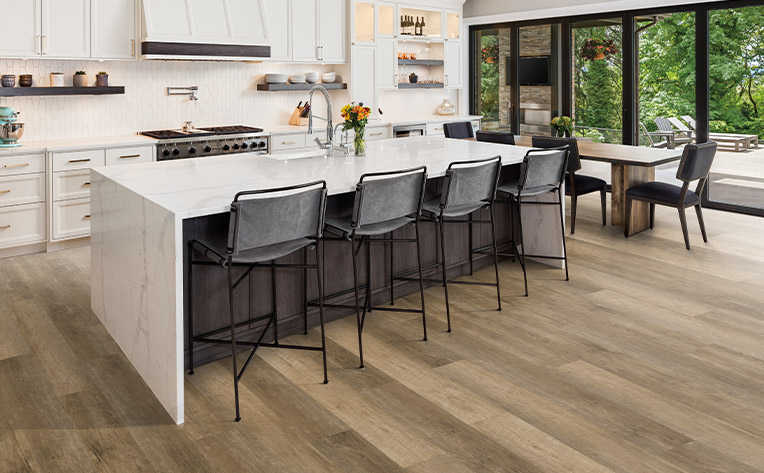
Luxury vinyl planks (LVP) mimic the look of wood or stone but offer superior water resistance. LVP is soft underfoot and quiet, making it a practical choice for families. Installation is often easier and less expensive than hardwood or tile.
This flooring is tough and easy to clean, but not all vinyl products are created equal. Check for high-quality brands that offer good warranties.
Laminate Flooring
Laminate flooring provides a budget-friendly way to achieve the look of wood or stone. It’s scratch-resistant and simple to maintain, which is great for active households. Modern laminates have improved water resistance but still require caution around moisture.
Consider laminate if you want style without a big investment, but be prepared to replace it sooner than other options if water damage occurs.
Concrete Floors
Concrete floors offer an industrial and modern vibe. They are incredibly durable and can be customized with stains or patterns. Concrete feels cool and hard, so adding rugs can improve comfort.
Sealing is essential to prevent stains and make cleaning easier. Would you like a minimalist look that’s easy to maintain?
Comparing Pros And Cons
Choosing the best flooring for your kitchen means weighing the pros and cons carefully. Each material comes with its own set of benefits and drawbacks that affect your budget, comfort, and kitchen style. Understanding these factors helps you make a choice that fits your lifestyle and design goals.
Cost Considerations
Kitchen flooring varies widely in price, from budget-friendly vinyl to high-end hardwood or natural stone. Vinyl and laminate options often cost less upfront, making them attractive if you’re working with a tight budget.
However, think about long-term costs too. Some cheaper floors may need replacing sooner, while durable options like tile or hardwood might save money over time despite a higher initial price.
Installation Ease
How easy it is to install your kitchen floor can affect both cost and stress levels. Floating floors like laminate or click-lock vinyl are often DIY-friendly and quick to put down.
Tile and hardwood usually require professional installation, which adds to the overall expense but ensures a polished look. Consider your skill level and willingness to hire help before deciding.
Comfort And Warmth
Standing on hard surfaces for long periods can tire your feet and legs. Materials like cork and vinyl offer a bit of cushioning, making them more comfortable in busy kitchens.
Tiles and stone tend to feel cold underfoot, especially in winter. Adding area rugs or heated flooring can help, but these add extra cost and maintenance.
Appearance And Style
Your kitchen floor sets the tone for the entire room. Hardwood floors bring warmth and timeless appeal, while tiles offer endless patterns and colors to match any design.
Vinyl and laminate have improved greatly in mimicking natural materials, giving you stylish options at lower prices. What kind of atmosphere do you want to create? Classic, modern, cozy, or bold? Your choice here impacts the kitchen’s overall vibe.
Credit: www.flooringamerica.com
Choosing Based On Kitchen Use
Choosing the best flooring for your kitchen depends greatly on how you use the space. Different kitchens need different types of floors based on traffic, family needs, and environmental concerns. The right floor can make your kitchen safer, cleaner, and more comfortable. Consider what fits your daily routine and lifestyle to find the perfect match.
High Traffic Kitchens
Kitchens with heavy foot traffic need floors that are tough and long-lasting. Materials like ceramic tile and luxury vinyl plank handle wear and tear well. These floors resist scratches and stains, making cleaning easy. They keep their look even after years of use. Non-slip surfaces also reduce accidents in busy kitchens. Durability and safety are key in these spaces.
Family-friendly Floors
Families benefit from floors that are soft and safe for kids. Cork and rubber flooring provide cushioning to protect little feet. These materials absorb sound, creating a quieter kitchen environment. Easy-to-clean floors help manage spills and messes. Avoid floors that crack or chip easily. Comfort and safety matter most when children play or learn in the kitchen.
Eco-friendly Choices
Eco-conscious homeowners want floors made from natural, renewable materials. Bamboo and reclaimed wood offer beauty with a smaller environmental footprint. These floors are biodegradable and often sourced sustainably. Low-VOC finishes improve indoor air quality. Natural stone can also be eco-friendly if harvested responsibly. Choosing green flooring supports a healthier home and planet.
Tips For Maintaining Kitchen Floors
Maintaining kitchen floors keeps them looking fresh and lasting longer. Regular care stops dirt buildup and prevents costly damage. Small efforts can save big repair bills and keep floors safe and clean. Follow simple tips for daily cleaning, damage prevention, and timely repairs.
Cleaning Best Practices
Use a soft broom or vacuum to remove loose dirt daily. Mop floors with a mild cleaner suited for the floor type. Avoid harsh chemicals that can dull or damage the surface. Wipe up spills immediately to prevent stains and water damage. Use microfiber cloths or mops for gentle, effective cleaning.
Preventing Damage
Place mats at entry points to catch dirt and moisture. Use felt pads under furniture legs to avoid scratches. Avoid dragging heavy objects across floors. Keep pet nails trimmed to reduce scratches. Control humidity to prevent warping in wood floors. Limit exposure to direct sunlight to reduce fading.
Repair And Refinishing
Fix small scratches and chips promptly to prevent further damage. Use wood filler or floor repair kits for minor repairs. Sand and refinish hardwood floors every few years for a fresh look. Replace damaged tiles quickly to avoid cracks spreading. Consult professionals for deep cleaning and major repairs.
Credit: www.cypresscab.com
Frequently Asked Questions
What Is The Most Durable Kitchen Flooring?
The most durable kitchen flooring options include ceramic tile, vinyl, and natural stone. These materials withstand heavy foot traffic and spills effectively. Their durability ensures longevity and reduces the need for frequent replacements, making them ideal for busy kitchen environments.
Is Waterproof Flooring Necessary For Kitchens?
Waterproof flooring is highly recommended for kitchens due to frequent exposure to water and spills. Materials like vinyl, tile, and laminate are excellent choices. They prevent water damage, ensuring your kitchen floor remains pristine and functional for years.
How Does Kitchen Flooring Affect Home Value?
Quality kitchen flooring can significantly enhance home value. Prospective buyers often prefer stylish, durable options like hardwood or tile. Investing in high-quality flooring can make your kitchen more appealing and increase overall property value.
Are Eco-friendly Flooring Options Available For Kitchens?
Eco-friendly kitchen flooring options include bamboo, cork, and linoleum. These materials are sustainable and offer a stylish, durable finish. Choosing eco-friendly flooring can reduce environmental impact and contribute to a healthier living space.
Conclusion
Choosing the best kitchen flooring depends on your needs and style. Durability and ease of cleaning matter most. Materials like tile, vinyl, and hardwood each offer unique benefits. Think about comfort and how much foot traffic your kitchen gets. Don’t forget moisture resistance for spills and messes.
Take time to compare options before deciding. The right floor makes your kitchen look great and work well. Simple choices lead to lasting satisfaction and a happy cooking space.
