
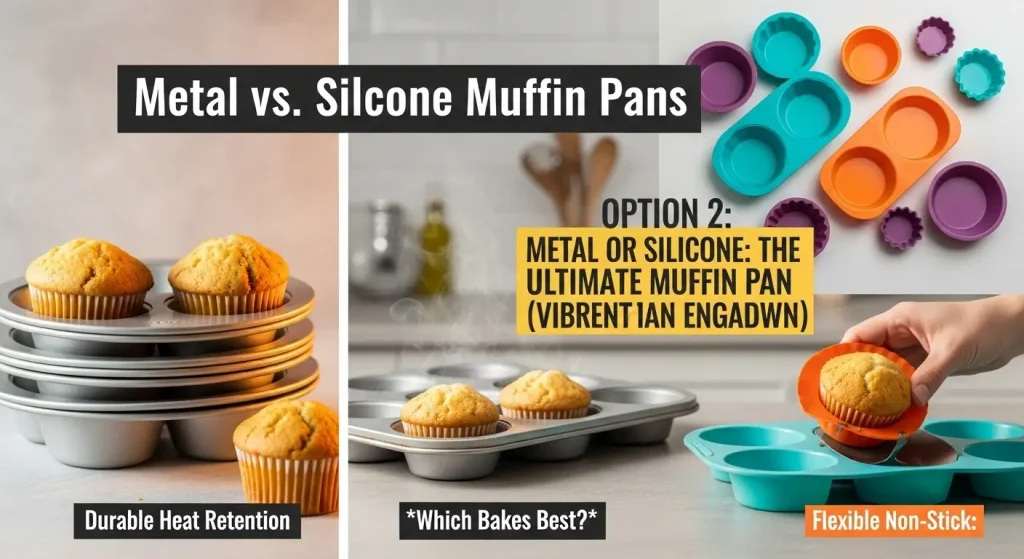
Choosing the right muffin pan can make or break your baking. Metal and silicone pans each have unique features. Understanding material differences can help you decide. This section explores three key aspects: heat conductivity, durability, and weight and handling.
Heat Conductivity
Metal pans heat up quickly. They distribute heat evenly. This results in evenly baked muffins. Silicone pans heat slower. This can lead to uneven baking. In metal pans, muffins cook faster. This requires careful monitoring. With silicone, baking time may be longer.
Durability
Metal pans are sturdy. They often last many years. They resist scratches and dents well. Silicone pans are flexible. They are less prone to breaking. However, they can tear if not handled gently. Both materials have their strengths. Choose based on your usage.
Weight And Handling
Metal pans are heavier. They offer stability in the oven. This makes them less likely to tip. Silicone pans are light. They are easy to carry. This can make handling hot muffins tricky. Consider your comfort level with each material.
Baking Performance
Choosing between metal and silicone muffin pans affects baking quality. Metal pans heat quickly, producing a crispy exterior. Silicone pans provide even heat, ensuring moist muffins. Each material offers unique benefits for perfect results.
When choosing between metal and silicone muffin pans, their baking performance is a crucial factor. Imagine pulling out a batch of muffins and finding half are overcooked while others are barely done. The right pan can make all the difference in achieving that perfect bake. Let’s explore how metal and silicone pans stack up in terms of evenness of cooking, release of baked goods, and browning and crispness.
Evenness Of Cooking
Metal pans are known for their superior heat conductivity. They heat up quickly, ensuring your muffins bake evenly. This is great for achieving a consistent texture across your batch. Silicone pans, on the other hand, may not distribute heat as evenly. They often require longer baking times.
This can lead to some parts being undercooked if you’re not careful. Have you ever noticed how the edges of your muffins turn out? With metal pans, you get a consistent bake throughout. If you’re aiming for uniformity, metal might be your go-to.
Release Of Baked Goods
Silicone pans shine in the easy release of baked goods. They have a naturally non-stick surface, allowing muffins to pop out effortlessly without needing much oil or butter. Metal pans can sometimes be tricky. Without proper greasing, your muffins might stick, leading to broken tops or crumbled sides.
This could be frustrating, especially when you’re in a rush. Consider how often you bake. If you bake frequently and value convenience, silicone might save you time during clean-up. But, if you enjoy the ritual of preparing your pans, metal can be just as rewarding.
Browning And Crispness
Do you love the golden-brown tops of muffins? Metal pans excel in creating that perfect browning and crispness. They allow muffins to form a delightful crust, adding texture to every bite. Silicone pans, however, may not achieve the same level of browning. Muffins baked in silicone often have softer tops. This can be ideal if you prefer a more tender muffin. Think about your personal preference.
Do you crave that crispy edge, or do you favor a softer texture? Your choice of pan can help you bake your ideal muffin. Ultimately, the decision between metal and silicone pans hinges on what you value most in your baking experience. Whether it’s the evenness of cooking, ease of release, or the perfect browning, knowing what each material offers can help you make an informed choice. So, which pan aligns with your baking style?
Ease Of Use
Choosing between metal and silicone muffin pans can be a bit tricky, especially when it comes to ease of use. You want something that makes baking fun, not frustrating. Imagine effortlessly popping out perfectly shaped muffins without a hitch. But can both metal and silicone offer this seamless experience?
Cleaning And Maintenance
After baking, cleaning is often the least enjoyable part. Metal pans can be a bit stubborn, sometimes requiring a little elbow grease to get rid of stuck-on bits. Non-stick coatings help, but they can wear out over time.
Silicone pans, on the other hand, are a breeze to clean. A quick rinse with soapy water usually does the trick. They don’t hold on to food as fiercely as their metal counterparts. This ease might make you wonder: is it worth compromising on durability for convenience?
Storage Considerations
Space can be a luxury in your kitchen. Metal pans can be bulky, stacking them neatly often turns into a game of Tetris. They tend to hog shelf space, leaving you less room for other essentials.
Silicone pans are flexible, literally. You can bend and squeeze them into tight spots without a fuss. Ever tried rolling up a pan to fit it into a drawer? With silicone, it’s possible. Could this space-saving feature be the game-changer you’ve been looking for?
Versatility In Recipes
Metal pans offer quick, even heating, perfect for traditional muffin recipes. They excel in giving your muffins that golden crust. But, they might not always be the best choice for delicate treats.
Silicone pans are great for trying out new recipes. You can bake, freeze, and even microwave them, opening up a world of possibilities. Imagine experimenting with a creative breakfast muffin or a unique dessert. Does versatility spark your culinary curiosity?
Ultimately, the best choice depends on your priorities. Is it ease of cleaning and storage, or do you lean towards classic baking results? As you weigh these factors, consider your baking style and kitchen dynamics to find your perfect match.
Safety Aspects
When choosing between metal and silicone muffin pans, safety is a crucial factor. Understanding safety aspects helps ensure a smooth baking experience. This section delves into the temperature limits, material reactions, and non-stick properties of these pans.
Temperature Limits
Metal muffin pans withstand high temperatures efficiently. They maintain stability under intense heat. Silicone pans have a lower temperature threshold. Exceeding it might lead to damage. Knowing these limits ensures safe baking without mishaps.
Material Reactions
Metal pans react with acidic ingredients. This might affect the taste or appearance. Silicone remains inert, not reacting with food. Metal can warp under extreme conditions. Silicone retains its shape, ensuring consistent results.
Non-stick Properties
Metal pans often need a coating for non-stick functionality. This might wear off over time. Silicone naturally offers non-stick benefits. It reduces the need for added fats. Cleaning is easier with silicone. Metal requires more effort to maintain its non-stick surface.
Cost And Availability
Muffin pans come in various materials, each with unique benefits. Cost and availability are key factors in choosing between metal and silicone muffin pans. Let’s dive into these aspects to help you make an informed choice.
Price Comparison
Metal muffin pans often cost less than silicone ones. They are usually more affordable due to material and manufacturing costs. Silicone pans can be pricier because they are flexible and non-stick. Consider your budget when selecting between these options.
Market Availability
Metal muffin pans are widely available in most stores. They are a staple in baking sections. Silicone muffin pans may be less common, but they are gaining popularity. Specialty stores and online platforms often offer a wider selection of silicone pans. Choose based on where you shop and what fits your needs.
Environmental Impact
Choosing the right muffin pan impacts not just baking quality, but also the environment. Understanding the environmental footprint of metal and silicone pans can guide eco-friendly decisions.
Recyclability
Metal muffin pans usually consist of aluminum or stainless steel. These materials are highly recyclable. Recycling metal helps conserve natural resources. It also reduces landfill waste. Metal recycling processes are widely available and efficient. Silicone muffin pans, on the other hand, pose recycling challenges. Many recycling facilities do not accept silicone. This means they often end up in landfills.
Sustainability
Metal pans offer durability and long life. This contributes to sustainability as they need less frequent replacement. They can withstand high temperatures and repeated use. Silicone pans are often praised for flexibility. They require less energy to produce than metal. But, their long-term environmental impact is still debated. Some silicone products may degrade over time. This could result in environmental harm if not disposed of properly.
User Preferences
The choice between metal and silicone muffin pans often boils down to personal preference. Your experience, cooking style, and the type of muffins you make can all influence your decision. Do you find yourself reaching for the same pan every time you bake? Let’s explore how user preferences shape this choice.
Professional Vs. Home Use
Professionals usually prefer metal pans. They offer consistent heat distribution, crucial for achieving perfectly browned muffins. If you bake at home, you might value convenience. Silicone pans are easy to clean and flexible, making it simple to pop out your muffins without sticking.
Are you a professional baker looking for reliability or a home cook prioritizing ease of use? Your needs might differ significantly based on your environment. Metal pans might seem intimidating, but they offer reliability. On the other hand, silicone pans provide ease, perfect for casual baking sessions.
Consumer Reviews
Consumer reviews offer valuable insights into real-world performance. Many users rave about silicone pans for their non-stick features and simple storage. A friend of mine once shared that her silicone muffin pan saved her from countless cleanup hassles after a baking marathon. How important is hassle-free cleanup to you?
Metal pans, however, are praised for durability. They withstand high temperatures and are less prone to wear and tear. However, some consumers note that muffins can stick if not properly greased. Have you considered how much time you’re willing to spend on prep versus cleanup?
Ultimately, the choice between metal and silicone muffin pans is personal. Think about your priorities and how each type aligns with them. Whether you’re chasing the perfect muffin or seeking a stress-free baking experience, the right pan can make all the difference.

Frequently Asked Questions
What Are The Benefits Of Metal Muffin Pans?
Metal muffin pans heat quickly and evenly, providing a nice golden crust. They’re durable and typically non-stick, making them easy to clean. Metal pans are perfect for achieving a crispy, well-baked muffin base. They’re also versatile, ideal for other baking needs, and usually dishwasher safe.
Are Silicone Muffin Pans Easier To Clean?
Yes, silicone muffin pans are generally easier to clean. Their non-stick surface allows muffins to release effortlessly, leaving minimal residue behind. They’re dishwasher safe, saving time on washing up. Silicone pans are also flexible, making them easy to store and maintain, enhancing their convenience.
Do Muffins Bake Faster In Metal Pans?
Muffins tend to bake faster in metal pans due to their excellent heat conductivity. Metal pans distribute heat evenly, promoting uniform baking and browning. This quality ensures muffins cook thoroughly and achieve the desired texture, making them a popular choice for baking enthusiasts seeking efficiency.
Can Silicone Pans Withstand High Temperatures?
Yes, silicone pans can withstand high temperatures, often up to 450°F. Their heat resistance makes them suitable for various baking needs. Silicone maintains its shape and flexibility under heat, ensuring safe and reliable use in the oven. This versatility is a key advantage for many bakers.
Conclusion
Choosing between metal and silicone muffin pans depends on your needs. Metal pans heat quickly. They offer a crispy texture. Silicone pans are non-stick. They provide easy release. Consider storage space too. Metal pans stack easily. Silicone pans can be flexible.
Both have pros and cons. Think about what you bake most. Consider cleaning needs as well. Metal can require more scrubbing. Silicone often washes easily. Decide based on your baking style. Both options can produce delicious muffins. Make the choice that suits your kitchen best.
Enjoy baking with your preferred pan.

Hi, I’m Daniel Harper, a senior editor here at KitchenBucks.com. For over 10 years, I’ve been exploring kitchen gadgets and appliances to help people find tools that truly add value without breaking the bank. I love simplifying product choices so you can focus more on cooking and less on worrying about what to buy. When I’m not reviewing the latest gadgets, you’ll usually find me experimenting with coffee brewing or firing up the grill for a weekend barbecue.