
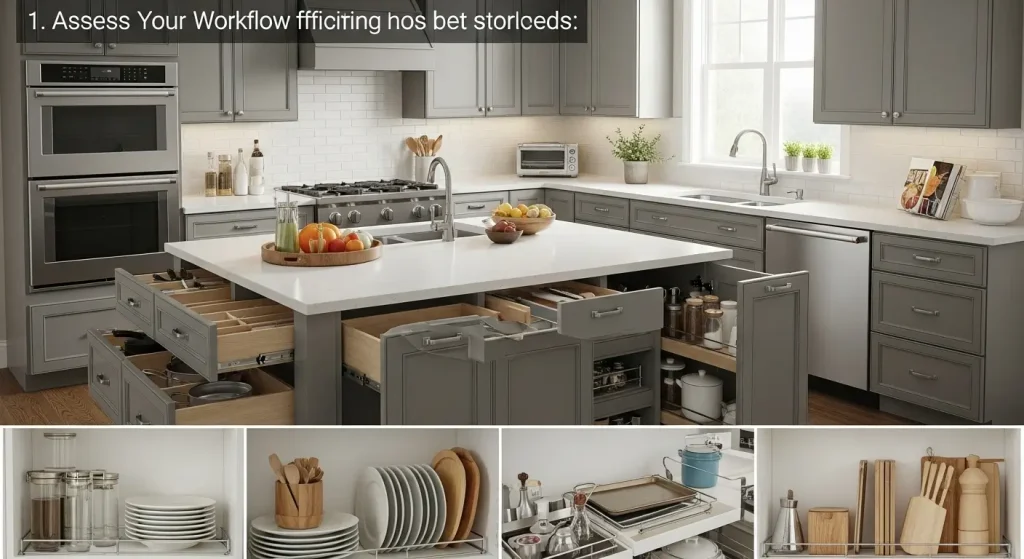
Are you tired of digging through cluttered kitchen cabinets every time you cook? Imagine opening your cabinets and instantly finding exactly what you need.
The best way to arrange kitchen cabinets can transform your cooking space from chaotic to calm. When your kitchen is organized well, meal prep becomes faster, stress melts away, and your whole day feels smoother. You’ll discover simple, effective tips that make your cabinets work for you not against you.
Keep reading to unlock the secret to a kitchen that’s both beautiful and highly functional.
Planning Your Kitchen Layout
Planning your kitchen layout is the foundation of a well-organized cooking space. It shapes how efficiently you move, store, and access everything you need. Thoughtful planning helps avoid frustration and turns your kitchen into a place where tasks flow smoothly.
Assessing Your Space
Start by measuring your kitchen carefully. Note the location of doors, windows, and any fixed appliances like sinks or stoves. This helps you understand the available space and avoid surprises later.
Look for areas that might restrict movement or limit cabinet placement. Does your kitchen have awkward corners or narrow walkways? Recognizing these challenges early allows you to plan around them effectively.
Choosing A Functional Work Triangle
The work triangle connects your sink, stove, and refrigerator. This arrangement reduces unnecessary steps while cooking. Have you noticed how much easier meal prep feels when these three spots are close but not crowded?
A good rule is to keep each leg of the triangle between 4 and 9 feet. Too far apart wastes time; too close can feel cramped. Think about your own cooking habits—do you tend to prep more at the stove or the sink?
Balancing Storage And Accessibility
Having plenty of cabinets is great, but their placement matters more. Store frequently used items in easy-to-reach spots. For example, keep pots near the stove and plates near the dishwasher.
Use taller cabinets for items you rarely use, like seasonal appliances. Have you ever struggled to find your baking pans buried behind everyday dishes? Planning storage with accessibility in mind saves time and frustration.
Types Of Kitchen Cabinets
Kitchen cabinets come in various types, each serving a unique purpose. Choosing the right cabinets helps organize your kitchen efficiently. It also enhances the room’s look and usability. Understanding the main types simplifies the process of arranging them to fit your needs.
Base Cabinets
Base cabinets sit on the floor and support countertops. They store heavy items like pots, pans, and appliances. These cabinets often include drawers and shelves for easy access. Their height makes them perfect for preparing food comfortably.
Wall Cabinets
Wall cabinets are mounted above the countertop. They keep dishes, glasses, and spices within reach but off the counter. These cabinets save floor space and create a clean look. Their placement helps keep frequently used items handy.
Tall Cabinets And Pantry Units
Tall cabinets extend from floor to ceiling. They offer large storage for cleaning supplies and bulk food. Pantry units fall under this category, ideal for storing dry goods. These cabinets maximize vertical space in smaller kitchens.
Organizing Cabinets For Efficiency
Organizing your kitchen cabinets for efficiency can transform how you cook and clean. When everything has its place, you save time and reduce frustration. Think about your daily kitchen habits and arrange your cabinets to support those routines.
Grouping Similar Items
Keeping like items together makes sense and speeds up your workflow. Store all baking supplies in one cabinet, spices in another, and pots and pans nearby. This way, you won’t waste time searching for what you need.
Ask yourself: where do you reach most often, and what do you grab first? Place frequently used items in easy-to-reach spots. Less-used items can go higher or lower.
Using Drawer Dividers And Inserts
Drawer dividers keep utensils and small gadgets neat and accessible. Without them, drawers become a jumbled mess, making it hard to find what you want. Inserts let you customize the space based on your tools.
Think about your cutlery drawer. Separators for knives, forks, and spoons make grabbing what you need quick. For larger drawers, use adjustable inserts for measuring cups, peelers, or cooking thermometers.
Maximizing Corner Cabinets
Corner cabinets often become black holes in the kitchen. Use lazy Susans or pull-out shelves to make these spaces usable. They help you reach items without awkward bending or stretching.
Consider storing bulky items like mixing bowls or small appliances here. This keeps your main cabinets free for daily essentials. How much easier would your kitchen be if every corner was fully functional?
Cabinet Placement Tips
Arranging your kitchen cabinets thoughtfully can transform your cooking experience. How you place items affects convenience, safety, and even the kitchen’s flow. Use these cabinet placement tips to make your space work harder for you, not the other way around.
Placing Frequently Used Items
Keep everyday essentials like plates, glasses, and coffee mugs within easy reach. Position these items in lower or middle cabinets near your prep area or sink. This saves time and effort, letting you grab what you need without stretching or bending.
Think about your daily routine. Do you reach for spices while cooking? Store them close to the stove. This simple change can speed up your meal prep and reduce clutter on countertops.
Storing Heavy Items
Heavy pots, pans, and small appliances belong in lower cabinets. This placement protects your back and prevents accidents from dropping items from high shelves. Place them near the cooking zone for quick access.
Have you ever struggled lifting a heavy mixer from a high shelf? Lower cabinets solve this problem and make your kitchen safer. Use sturdy organizers or pull-out drawers to keep these items stable and easy to reach.
Optimizing Upper Cabinet Height
Upper cabinets are perfect for storing items you use less frequently, such as seasonal dishes or specialty cookware. Position these cabinets high enough to maximize space but not so high that you need a step stool constantly.
If your cabinets feel out of reach, consider adding a small, portable step stool nearby. It’s a simple fix that gives you access without cluttering your kitchen. Are your upper cabinets set at a height that fits your daily needs, or are you stretching too much?
Incorporating Modern Storage Solutions
Modern storage solutions can transform your kitchen cabinets from cluttered to clever. They help you use every inch wisely and keep your cooking space neat. Imagine opening a cabinet and instantly finding the spices or pots you need without digging around.
These smart additions don’t just improve storage—they make your kitchen more enjoyable to work in. You’ll save time and reduce frustration during meal prep. Think about how much smoother your cooking routine could be with easy access to everything.
Pull-out Shelves And Racks
Pull-out shelves slide out smoothly, giving you full access to items at the back. This eliminates the need to bend or reach awkwardly, which can be a real back-saver. You can organize pots, pans, or pantry goods on these shelves for better visibility and accessibility.
Try using pull-out racks for baking sheets or cutting boards. They keep everything upright and easy to grab. Installing these in lower cabinets can turn wasted deep space into functional storage.
Lazy Susans And Carousel Units
Lazy Susans spin around, making corner cabinets much more useful. Instead of losing items in hard-to-reach spots, you simply turn the tray to find what you need. Carousel units are similar but often come with multiple rotating tiers for more storage layers.
These work great for storing spices, oils, or small jars. Have you ever struggled to find that one spice hidden behind others? A Lazy Susan can solve that problem with a simple turn.
Built-in Trash And Recycling Bins
Hiding your trash and recycling bins inside a cabinet keeps your kitchen looking clean and tidy. Built-in bins also save floor space and reduce odors spreading around. You can even separate recycling from trash in adjacent pull-out compartments.
Consider placing these bins near your prep area for easy disposal while cooking. It’s a small change that can make your kitchen feel more organized and less cluttered every day.

Credit: cabinetselect.com
Styling And Finishing Touches
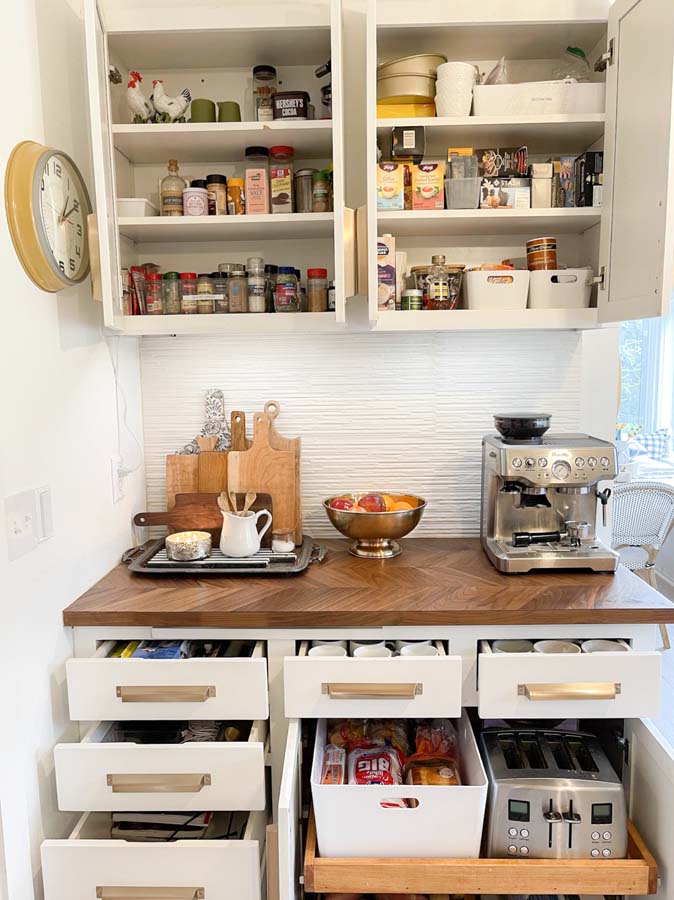
Styling and finishing touches bring personality to your kitchen cabinets. They create a balance between function and beauty. Thoughtful choices in materials, lighting, and hardware can transform the space. These details help make your kitchen both practical and inviting.
Choosing Cabinet Materials And Colors
Material choice affects durability and style. Wood offers warmth and classic appeal. Laminates provide a budget-friendly, easy-to-clean option. Painted surfaces brighten the space with a smooth finish.
Colors set the mood of your kitchen. Light shades open up small areas. Dark tones add depth and elegance. Neutral colors match most decor styles. Consider the overall kitchen theme before deciding.
Adding Lighting Inside Cabinets
Lighting inside cabinets improves visibility and highlights items. LED strip lights fit well under shelves. They shine evenly and use little energy. Motion sensor lights turn on automatically when cabinets open.
Soft lighting enhances the kitchen ambiance. It also helps locate items quickly. Choose warm white bulbs for a cozy feel. Cool white bulbs work well in modern kitchens.
Hardware Selection For Function And Style
Cabinet hardware combines usability and design. Handles and knobs come in various shapes and finishes. Brushed nickel offers a sleek, modern look. Bronze adds a rustic or vintage charm.
- Choose hardware that feels comfortable to grip
- Match hardware style with cabinet design
- Consider ease of cleaning and maintenance
Small changes in hardware can refresh your kitchen’s look. Balance style with the functionality you need.
Credit: www.hallstromhome.com
Frequently Asked Questions
What Is The Best Layout For Kitchen Cabinets?
The best layout depends on your kitchen size and workflow. Popular options include L-shaped, U-shaped, and galley layouts. They maximize space, accessibility, and storage efficiency for a smooth cooking experience.
How To Organize Kitchen Cabinets For Easy Access?
Group items by usage frequency and type. Store daily essentials at eye level, less-used items higher up, and heavy items lower down. Use organizers and pull-out shelves for better visibility and accessibility.
What Is The Best Layout For Kitchen Cabinets?
Durable materials like solid wood, plywood, and MDF are popular. Choose finishes based on style and maintenance needs. Quality materials ensure longevity and enhance your kitchen’s overall look.
How To Maximize Storage In Small Kitchen Cabinets?
Use vertical space with stackable shelves and hooks. Install pull-out drawers and door racks. Declutter regularly to keep only essentials, making the best use of limited space.

KitchenbuckEdit Profile
Conclusion
Arranging kitchen cabinets well makes cooking easier and faster. Keep items you use most close at hand. Group similar things together for quick access. Use shelves and drawers smartly to save space. A neat kitchen feels more comfortable and inviting.
Small changes can make a big difference every day. Try these tips to create your perfect kitchen setup. Enjoy a tidy, organized space that works for you. Simple steps lead to a kitchen you love to use.
Hi, I’m Daniel Harper, a senior editor here at KitchenBucks.com. For over 10 years, I’ve been exploring kitchen gadgets and appliances to help people find tools that truly add value without breaking the bank. I love simplifying product choices so you can focus more on cooking and less on worrying about what to buy. When I’m not reviewing the latest gadgets, you’ll usually find me experimenting with coffee brewing or firing up the grill for a weekend barbecue.