
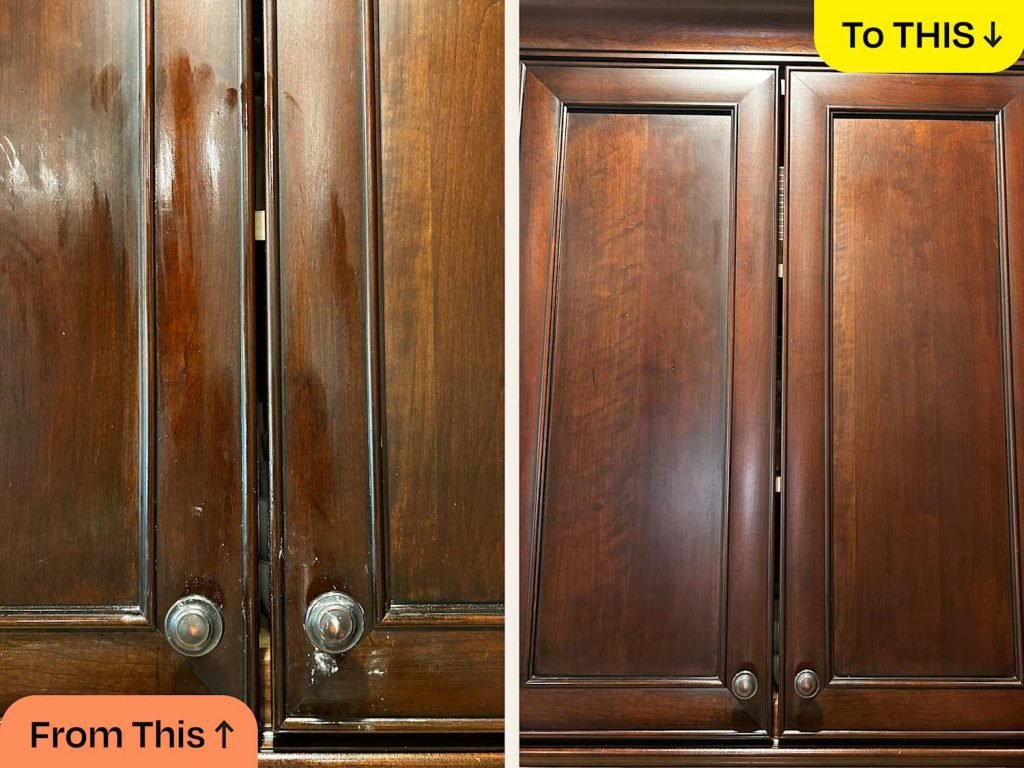
Have you ever opened your kitchen cupboards only to cringe at the sight of stubborn grease stains? You’re not alone.
Grease build-up is a common kitchen woe that can make even the cleanest kitchen feel grimy. But don’t worry. Cleaning grease off your kitchen cupboards doesn’t have to be a daunting task. You’ll discover the best ways to tackle that sticky mess and restore your cupboards to their former glory.
Imagine the satisfaction of seeing your kitchen sparkle again, and the peace of mind knowing every surface is as clean as it looks. So, if you’re ready to say goodbye to grease and hello to a fresher kitchen, keep reading. Your spotless cupboards await!
Common Causes Of Grease Build-up
Grease build-up on kitchen cupboards is a common problem. It can make your kitchen look dirty and uninviting. Understanding the causes can help in managing it better. Grease comes from several everyday kitchen activities. Let’s explore some common reasons behind this sticky situation.
Cooking Without A Range Hood
Cooking produces steam and grease. Without a range hood, they settle on surfaces. This leads to a greasy film on cupboards. A range hood can help reduce this problem.
Frying Foods
Frying releases tiny grease particles into the air. These particles stick to nearby surfaces. Cupboards close to the stove are most affected. Regular cleaning can prevent severe build-up.
Poor Ventilation
Good ventilation is key in a kitchen. Without it, grease particles linger in the air. They eventually settle on cupboards and other surfaces. Ensure your kitchen has proper airflow.
Overcrowded Cooking Space
An overcrowded kitchen limits cleaning access. Grease can accumulate unnoticed. Keep your cooking area organized. This makes cleaning easier and more effective.
Irregular Cleaning Habits
Skipping regular cleaning allows grease to build up. Grease becomes harder to clean over time. Establish a routine to keep cupboards grease-free.
Essential Cleaning Supplies
Grease can be stubborn, but the right cleaning supplies make it manageable. Use a mixture of vinegar and water for effective cleaning. Apply it with a soft cloth to avoid scratches.
Cleaning grease off kitchen cupboards is a task that requires the right tools. Grease can be stubborn, making it essential to use supplies that are effective yet gentle. With the right cleaning supplies, your cupboards can look fresh and clean without much hassle. Let’s explore the essentials needed for this task.Vinegar
Vinegar is a natural cleaning agent. Its acidity helps break down grease. Mix equal parts of vinegar and water in a spray bottle. Spray the mixture on your cupboards. Wipe with a clean cloth. It’s safe and effective.Baking Soda
Baking soda is a gentle abrasive. It can tackle tough grease spots. Make a paste with water. Apply it to greasy areas. Let it sit for a few minutes. Then scrub with a sponge. Rinse with water.Dish Soap
Dish soap cuts through grease easily. Mix a few drops with warm water. Use a sponge to scrub the cupboards. Rinse with clean water. Dish soap is gentle on surfaces.Microfiber Cloth
Microfiber cloths are excellent for cleaning. They trap dust and grease efficiently. Use them to wipe cupboards after applying cleaners. They leave surfaces shiny and clean.Soft Bristle Brush
A soft bristle brush helps remove grease from corners. Dip it in your cleaning solution. Scrub gently in circular motions. This ensures thorough cleaning without damaging surfaces.Spray Bottle
Spray bottles help distribute cleaning solutions evenly. Fill them with your chosen mixture. Spray on greasy spots for easy cleaning. They’re convenient and reduce waste.Natural Cleaning Solutions
Kitchen cupboards often bear the brunt of daily cooking, accumulating unsightly grease over time. While commercial cleaners promise quick fixes, many are laden with harsh chemicals. Natural cleaning solutions offer an effective and eco-friendly alternative, allowing you to restore shine to your cupboards without compromising your health or the environment. Are you ready to dive into your pantry for some powerful cleaning agents?
Vinegar And Baking Soda
Vinegar is a household staple with impressive cleaning prowess. Combine it with baking soda, and you create a foaming powerhouse perfect for tackling grease.
- Mix equal parts vinegar and water in a spray bottle.
- Sprinkle baking soda on stubborn greasy spots.
- Spray the vinegar solution over the baking soda and watch the fizz work its magic.
- Wipe clean with a damp cloth.
This duo not only cuts through grease but also deodorizes your kitchen, leaving it smelling fresh.
Lemon Juice And Salt
Lemon juice is a natural degreaser with a fresh scent, while salt acts as a gentle abrasive to scrub away grime.
- Cut a lemon in half and dip the cut side in salt.
- Use the lemon as a scrubber, applying it directly to the greasy surfaces.
- Allow the mixture to sit for a few minutes for tougher stains.
- Rinse with warm water and dry with a clean cloth.
This method not only cleans but also leaves a citrusy aroma that invigorates your space.
Why settle for chemicals when your kitchen already holds the key to cleanliness? Try these natural solutions and enjoy a spotless kitchen with ingredients you trust.

Credit: www.facebook.com
Commercial Cleaning Products
Grease on kitchen cupboards can be stubborn to remove. Commercial cleaning products offer a reliable solution for tackling this issue. These products are designed specifically to cut through tough grease and grime. They make cleaning easier and more efficient. Below, we explore two popular types of commercial cleaners: degreasing sprays and foaming cleaners.
Degreasing Sprays
Degreasing sprays are effective for quick and easy cleaning. They are made to dissolve grease without much effort. Simply spray the product on the affected area. Let it sit for a few minutes. Then wipe off with a clean cloth. This method saves time and energy. Many degreasing sprays are non-toxic. They are safe for kitchen use. Check the label for ingredients before purchasing.
Foaming Cleaners
Foaming cleaners work well on vertical surfaces. They cling to the surface, allowing the foam to penetrate the grease. Apply the foam evenly over the cupboard. Let it sit for a while to break down the grease. Then wipe off with a damp cloth. Foaming cleaners often contain additional agents. These agents help lift dirt and grime. They are perfect for stubborn stains and sticky residue.
Step-by-step Cleaning Process
Remove grease from kitchen cupboards using a mixture of warm water and dish soap. Apply with a soft cloth, gently scrubbing until clean. Rinse with a damp cloth and dry thoroughly.
Cleaning grease off kitchen cupboards can feel like a daunting task, but with a clear step-by-step process, it becomes manageable. Whether you’re preparing for a deep clean or tackling a quick touch-up, knowing the right steps can make all the difference. Here’s a breakdown of the essential stages to ensure your kitchen cupboards are spotless and grease-free.Preparation And Safety Tips
Before you start cleaning, gather your supplies. You’ll need a soft cloth, sponge, dish soap, white vinegar, baking soda, and warm water. Ensure proper ventilation in your kitchen by opening windows or turning on a fan to avoid inhaling any fumes. Also, consider wearing gloves to protect your hands from drying out due to cleaning agents.Applying Cleaner
Begin by mixing a solution of equal parts water and vinegar in a spray bottle. Spray the solution generously on the greasy areas of your cupboards. Let it sit for a few minutes to break down the grease. Use a sponge or cloth to gently scrub the surface, focusing on stubborn spots.Rinsing And Drying
Once the grease is removed, rinse the cupboards with a clean damp cloth to eliminate any residual cleaner. It’s crucial to remove all traces of vinegar to prevent any lingering smell. Finally, dry the cupboards thoroughly with a soft towel to avoid water spots and ensure a streak-free finish. Have you ever noticed how a clean kitchen can transform your entire cooking experience? Implementing these steps not only enhances your kitchen’s appearance but also contributes to a more inviting and hygienic space.
Credit: www.facebook.com
Preventive Measures
Cleaning grease off kitchen cupboards requires simple yet effective methods. Use a mix of vinegar and warm water. Scrub gently with a soft cloth to avoid damage. Regular cleaning prevents buildup, keeping cupboards fresh and grease-free.
Preventive Measures are crucial in keeping your kitchen cupboards free from stubborn grease. Regular attention and small adjustments can prevent buildup, saving you time and effort in the long run. It’s like brushing your teeth daily instead of waiting for cavities to form.Regular Maintenance
Regular maintenance is your first line of defense against greasy cupboards. Wipe down your cabinets weekly using a damp cloth with mild dish soap. This simple habit prevents grease accumulation, making deep cleaning sessions less frequent and easier. Consider setting a reminder on your phone or calendar to keep this routine consistent. It’s a small task that pays off significantly over time. Imagine having more time to enjoy cooking rather than scrubbing cabinets.Using Grease Traps
Installing grease traps is another effective preventive measure. They capture grease before it settles on your cupboards, reducing the need for constant cleaning. You can easily find affordable grease traps online or at local home improvement stores. Choose a design that suits your kitchen style, ensuring it doesn’t disrupt your cooking flow. If you’ve ever been frustrated by sticky residue on your cabinets, grease traps could be your game-changer. Have you considered how much easier cooking could be without the worry of greasy messes? Implementing these measures can transform your kitchen experience.Tips For Different Cabinet Materials
Consider using a mixture of dish soap and warm water for wooden cabinets. For laminate cabinets, vinegar and water can effectively cut through grease. A simple baking soda paste works wonders on metal cabinets, tackling grease without causing damage. Always test cleaning solutions on a small area first.
Cleaning kitchen cupboards can be tricky. Each cabinet material needs special care. Using the right method ensures your cabinets stay clean and last longer. Here are some tips for different cabinet materials.Wood Cabinets
Wood cabinets need a gentle touch. Use a mild dish soap mixed with warm water. Dip a soft cloth into the soapy water. Wring out excess water. Gently wipe the cabinets with the cloth. Follow the wood grain for the best results. Avoid soaking the wood. Too much water can damage it. After cleaning, dry the cabinets with a clean towel. This prevents water stains. For tough grease, mix vinegar and water equally. Use this solution to wipe the affected areas.Laminate Cabinets
Laminate cabinets are easier to clean. Use a mixture of mild dish soap and warm water. Apply with a soft sponge. Wipe in circular motions for best results. Rinse the sponge often to avoid spreading grease. For stubborn spots, use a baking soda paste. Mix baking soda with water to form a paste. Apply it to tough stains with a soft cloth. Gently scrub the area, then rinse with clean water. Dry the surface with a soft towel. This keeps the laminate looking new.
Credit: www.facebook.com
Troubleshooting Stubborn Grease
Cleaning grease off kitchen cupboards can be simple with a few steps. Use a mixture of warm water and dish soap. Apply with a soft cloth to gently scrub away stubborn grease.
Grease on kitchen cupboards can be incredibly persistent, clinging on despite your best cleaning efforts. You might feel like you’ve tried everything, but some grease stains just won’t budge. If you’re facing this sticky situation, it’s time to look at different ways to tackle these stubborn stains and restore your cupboards to their original shine.Alternative Methods
Sometimes, the usual cleaning solutions just don’t cut it. One effective alternative is using a paste made from baking soda and water. Apply this paste to the greasy areas, let it sit for a few minutes, then scrub gently with a soft cloth or sponge. Another method involves using vinegar, which is excellent for cutting through grease. Mix equal parts of vinegar and warm water in a spray bottle. Spray the solution onto the cupboards and wipe with a clean cloth. You may need to repeat this process a few times for the best results. You could also try using lemon juice, which acts similarly to vinegar. The acidity helps break down grease. Simply squeeze some fresh lemon juice onto a cloth and wipe down your cupboards.Professional Help
If home remedies fail, or if you’re dealing with a large area, it might be time to consider professional help. Hiring a cleaning service ensures that your cupboards get the thorough cleaning they need without you having to lift a finger. Professionals have access to industrial-strength cleaning products that aren’t available to the general public. These products are more effective at cutting through tough grease without damaging your cupboards. Before hiring a service, ask about their cleaning methods and the products they use. Make sure they’re safe for your specific cupboard material. Wouldn’t it be great to have spotless cupboards without the hassle? Whether you opt for DIY solutions or professional help, tackling stubborn grease requires patience and persistence. Have you tried all the tricks in your cleaning arsenal? Maybe it’s time to test a new method or call in the pros for a sparkling kitchen.Frequently Asked Questions
What Is The Best Thing To Clean Grease Off Kitchen Cabinets?
Use a mixture of vinegar and water to clean grease off kitchen cabinets. Mix equal parts in a spray bottle, apply, and wipe with a microfiber cloth. This solution effectively breaks down grease, leaving cabinets clean and fresh. Regular cleaning prevents grease buildup, maintaining cabinet appearance.
What Is The Best Homemade Degreaser For Kitchen Cabinets?
Mix equal parts of vinegar and water for an effective homemade degreaser. Add a few drops of dish soap for extra cleaning power. Apply with a soft cloth or sponge, then wipe clean. This solution effectively cuts through grease on kitchen cabinets, leaving them fresh and spotless.
Does Murphy’s Oil Soap Remove Grease From Kitchen Cabinets?
Yes, Murphy’s Oil Soap effectively removes grease from kitchen cabinets. It cleans surfaces gently without damaging finishes. Mix with warm water for best results. Use a soft cloth to wipe the cabinets. Always test on a small area first to ensure compatibility with your cabinet finish.
How To Get Greasy Fingerprints Off Kitchen Cupboards?
Use a mixture of warm water and dish soap to clean greasy fingerprints. Apply with a soft cloth, then rinse. For stubborn stains, try vinegar diluted with water. Ensure cupboards are dry after cleaning to prevent damage. Regular cleaning helps maintain cupboard appearance and hygiene.
Conclusion
Cleaning grease off kitchen cupboards can be simple with the right steps. Regular cleaning helps keep them shiny and fresh. Use mild soap and warm water for light stains. Baking soda works well on tougher spots. Try vinegar for deep cleaning without harsh chemicals.
Wipe down surfaces regularly to prevent buildup. These methods ensure your kitchen stays clean and inviting. Remember, consistent upkeep saves time and effort. Keep your cupboards looking new with these easy tips. Enjoy cooking in a clean and tidy space.
Your kitchen deserves the best care.

Hi, I’m Daniel Harper, a senior editor here at KitchenBucks.com. For over 10 years, I’ve been exploring kitchen gadgets and appliances to help people find tools that truly add value without breaking the bank. I love simplifying product choices so you can focus more on cooking and less on worrying about what to buy. When I’m not reviewing the latest gadgets, you’ll usually find me experimenting with coffee brewing or firing up the grill for a weekend barbecue.