

Have you ever pulled out your trusty cast iron skillet, only to find it marred by rust? It’s a common kitchen woe, but don’t worry—your beloved skillet isn’t beyond saving.
Restoring a rusty cast iron skillet might seem like a daunting task, but with the right approach, you can bring it back to its former glory. Imagine the satisfaction of cooking with a perfectly seasoned skillet that not only enhances flavors but also stands the test of time.
In this guide, you’ll discover the best way to restore your rusty cast iron skillet, ensuring it remains a staple in your kitchen for years to come. Let’s dive into the simple steps that will transform your skillet and elevate your cooking game.
Identifying Rust On Cast Iron
Spotting rust on a cast iron skillet involves checking for red or orange patches. Removing rust ensures your skillet’s longevity. Use vinegar and baking soda for effective restoration.
When you first notice that your trusty cast iron skillet isn’t as shiny as it once was, it might be time to check for rust. Rust can sneak up on you, especially if your skillet has been sitting unused or improperly stored. Identifying rust early can save you a lot of time and effort down the road. But how can you spot rust before it becomes a problem?Visual Signs Of Rust
Rust often appears as reddish-brown spots on the surface of your skillet. These spots can be small and speckled or larger and more pronounced. Sometimes, you’ll notice a dull, flaky texture when you run your fingers over the pan. Check the edges and the bottom of the skillet, as rust tends to develop in these areas first. If you see any signs of discoloration or flaking, it’s time to take action. Ignoring these early signs can lead to more extensive damage, making restoration a more challenging task.Impact Of Rust On Cooking
Rust doesn’t just affect the appearance of your skillet; it can also impact your cooking. A rusty surface can cause food to stick, making it difficult to achieve that perfect sear or crust. It can also impart an unpleasant metallic taste to your dishes. Cooking on a rusty skillet can lead to uneven heating, which affects the quality of your meals. You might find that your favorite recipes don’t turn out as expected. Is it worth compromising the taste and texture of your food by overlooking these rust issues? By being vigilant and addressing rust promptly, you can ensure that your cast iron skillet remains a reliable kitchen companion. Have you checked your skillet recently? A quick inspection might just save your next meal from disappointment.Gathering Essential Cleaning Tools
Restoring a rusty cast iron skillet can feel daunting. Yet, with the right tools, the task becomes manageable. You need a few essential cleaning tools to start. These tools will help bring your skillet back to life.
Scrubbers And Brushes
Begin with a sturdy scrubber. Choose one that can tackle tough rust without damaging the skillet. A stainless steel scrubber works well. It’s strong and effective. You may also need a stiff brush. It can reach into the skillet’s crevices. Nylon brushes are excellent for this. They clean without scratching the iron.
Natural Cleaners
Consider using natural cleaners for a gentle approach. Baking soda is a top choice. It lifts rust and grime effortlessly. Mix it with a bit of water to form a paste. Another option is white vinegar. It breaks down rust quickly. Soak the skillet in vinegar for a few hours. Rinse thoroughly afterward. Both options are safe and effective. They restore your skillet without harsh chemicals.
Effective Rust Removal Techniques
Easily restore a rusty cast iron skillet using simple techniques. Scrub the rust with steel wool until it’s gone. Season the skillet with oil, then heat it to create a protective layer.
Restoring a rusty cast iron skillet can feel like reviving a cherished heirloom. Rust may seem daunting, but with effective removal techniques, you can breathe new life into your skillet. Whether you’ve stumbled upon a vintage piece at a garage sale or inherited your grandmother’s favorite pan, knowing the right methods to tackle rust is crucial. Let’s dive into two proven strategies for removing rust from your cast iron: vinegar and baking soda, and the salt scrub method.Using Vinegar And Baking Soda
Vinegar and baking soda are kitchen staples that work wonders on rust. Begin by soaking your skillet in a mixture of equal parts water and vinegar. This acidic bath will loosen the rust without damaging the metal. After a few hours, check the skillet. If you see the rust breaking away, it’s time to scrub. Sprinkle baking soda liberally on the skillet. Use a brush or a cloth to scrub the surface. The gentle abrasiveness of baking soda helps lift the rust off without scratching the iron. This method is not only effective but also economical. You likely have these ingredients in your kitchen already. Have you tried this method before? If not, it’s worth a shot to see the transformation.Salt Scrub Method
For those who prefer a natural and tactile approach, the salt scrub method is perfect. Grab coarse sea salt and pour it generously over the skillet. The salt acts as a mild abrasive to help remove rust without harming the skillet. Add a few drops of vegetable oil to the salt. This combination lubricates the surface, aiding the scrubbing process. Use a cloth or a sponge to work the salt into the rusty areas. This technique is ideal for minor rust spots or regular maintenance. It’s satisfying to feel the texture change as you scrub away the rust. Have you ever felt the joy of seeing a skillet’s surface shine again? It’s like uncovering a hidden gem. Both methods offer practical ways to restore your cast iron skillet. Choose the one that suits your style and resources. Which technique will you try first?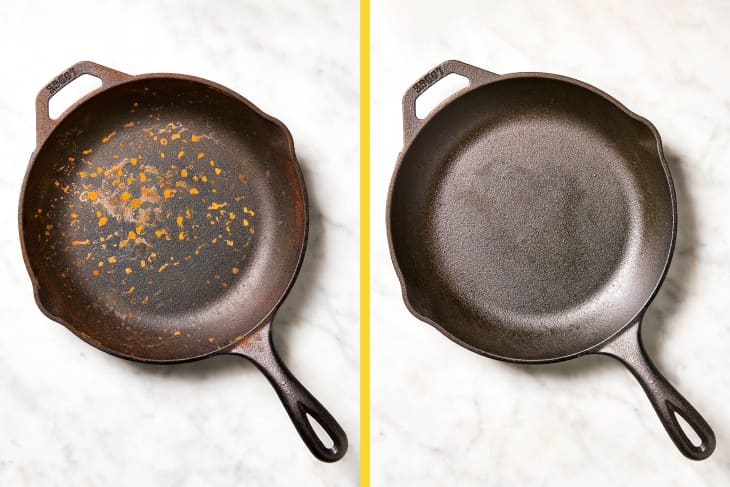
Credit: www.thekitchn.com
Proper Cleaning And Drying
Restoring a rusty cast iron skillet requires attention to detail. Proper cleaning and drying are crucial steps in this process. These steps ensure your skillet regains its functionality and charm. They protect the skillet from further rusting and maintain its quality. Let’s dive into the essential steps of thorough washing and ensuring complete dryness.
Thorough Washing Steps
Start by rinsing the skillet with warm water. Scrub it gently using a soft brush. This removes loose rust and debris. Use mild dish soap to clean the skillet. Avoid harsh chemicals to prevent damage. Once clean, rinse thoroughly to remove soap residues. Inspect the skillet for stubborn rust patches. Use a mixture of baking soda and water to tackle these areas. Apply the paste and scrub gently. Rinse again to ensure all residue is gone.
Ensuring Complete Dryness
Drying is a vital step in preventing rust. Use a clean towel to pat the skillet dry. Ensure no water remains on the surface. Place the skillet on a stove burner. Turn the burner to low heat. Let the skillet heat for a few minutes. This removes any remaining moisture. Check the skillet to ensure it is completely dry. Store it in a dry place, away from humidity. Proper drying keeps rust at bay and prolongs your skillet’s life.
Seasoning The Cast Iron Skillet
Restoring a rusty cast iron skillet involves removing rust and re-seasoning. Start by scrubbing the skillet with steel wool to eliminate rust. Apply a thin layer of vegetable oil and bake at 350°F for an hour to create a protective coating.
Restoring a rusty cast iron skillet is like reviving a culinary companion, and one of the most crucial steps is seasoning. Seasoning is the process of creating a natural, non-stick layer on your skillet, which enhances its cooking performance and prevents rust. It’s your skillet’s invisible armor, protecting it from the elements while making it more efficient in the kitchen. So, what’s the secret to a perfectly seasoned cast iron skillet? Let’s dive into it.Choosing The Right Oil
The choice of oil is paramount in seasoning your cast iron skillet. You want an oil that has a high smoke point, as this will ensure that the oil bonds with the skillet’s surface without burning. Common choices include vegetable oil, canola oil, and flaxseed oil. Flaxseed oil is often recommended for its ability to polymerize and create a strong bond, giving your skillet a durable, shiny finish. However, if flaxseed oil isn’t readily available, vegetable or canola oil are excellent alternatives. Consistency is key here. You should apply a thin, even layer of oil to the entire surface of the skillet. This means the inner cooking area, the outer sides, and even the handle. Ever tried seasoning a skillet with too much oil? It’s a sticky mess you don’t want to experience. Just a thin, glossy layer is enough to get the job done.Baking Technique For Seasoning
The baking technique is where the magic happens. Once you’ve applied the oil, it’s time to bake your skillet. Preheat your oven to around 375°F (190°C). Place your skillet upside down on the oven rack to prevent excess oil from pooling. Allow it to bake for about an hour. This process will bond the oil to the skillet, creating a protective layer. As the oil heats up, it transforms into a polymerized coat, which is your skillet’s new non-stick surface. Don’t rush this step. The baking time is crucial for ensuring the oil sets properly. You might wonder, why upside down? It’s simple. This prevents oil from collecting inside the skillet, ensuring an even coating. Repeat this process two or three times for the best results. This layering technique builds up a robust coating, making your skillet ready to tackle everything from crispy pancakes to sizzling steaks. Remember, seasoning is not just a one-time task. Regular maintenance and reseasoning will keep your skillet in top shape. Why not make this a monthly ritual? Your skillet will thank you with years of reliable service and delicious meals.
Credit: www.youtube.com
Maintaining The Restored Skillet
Restoring a rusty cast iron skillet ensures its longevity and performance. Regularly apply a thin layer of oil to maintain the seasoned surface. Avoid soaking in water and dry thoroughly after each use.
Maintaining a restored cast iron skillet ensures it stays rust-free and efficient. A well-maintained skillet will last for generations. It delivers delicious meals with every use. Follow these simple steps to keep your skillet in top condition.Regular Cleaning Routine
Clean your skillet after every use. Use warm water and a soft brush. Avoid soap which can strip the seasoning. For stubborn food, use coarse salt as a gentle abrasive. Rinse and dry thoroughly with a towel. Moisture is the enemy of cast iron. After drying, heat the skillet on a stovetop to remove any remaining moisture. This step is crucial.Preventing Future Rust
Apply a thin layer of oil after each cleaning. This keeps the skillet seasoned and rust-free. Store your skillet in a dry place. Avoid leaving it in damp areas. If stacking with other cookware, place a paper towel between them. This absorbs moisture and prevents scratches. Regularly check for signs of rust. Treat immediately to prevent spread. Small maintenance steps go a long way.Common Mistakes To Avoid
Avoid using metal scrubbers to clean a rusty cast iron skillet. They can scratch and damage the surface. Remember to dry the skillet thoroughly after cleaning to prevent further rusting.
Restoring a rusty cast iron skillet can be a rewarding task, bringing back to life a piece of kitchen history. However, the process can be fraught with pitfalls that could ruin your skillet if you’re not careful. Understanding common mistakes is crucial to ensuring your skillet is as good as new and ready for cooking once again.Using Harsh Chemicals
One common mistake is resorting to harsh chemicals. You might think they will speed up the rust removal process, but they can damage the skillet’s surface. Chemicals can strip away the protective seasoning, leaving the skillet prone to further rusting. Instead, opt for natural solutions like vinegar or baking soda. These are effective and gentle on the iron. You want to preserve the skillet’s integrity, not strip it away.Neglecting Drying Process
After cleaning, it’s tempting to let the skillet air dry. This is a big mistake. Leaving water on cast iron invites rust to make a comeback. Always dry your skillet thoroughly. Use a towel to wipe it down immediately. Then, place it on a stovetop over low heat to ensure all moisture evaporates. Remember, every drop of water is an invitation for rust. Are you willing to take that risk? By avoiding these common mistakes, you’ll ensure your cast iron skillet remains a staple in your kitchen for years to come. Have you made any of these mistakes before? Share your experiences and let’s learn together.
Credit: www.reddit.com
Benefits Of Restoring Cast Iron
Restoring a rusty cast iron skillet brings back its non-stick surface and extends its lifespan. This process saves money and reduces waste by reviving old cookware instead of replacing it. Enjoy improved cooking results with a well-maintained skillet.
Restoring a rusty cast iron skillet not only brings back its original charm but also offers numerous benefits that enhance your kitchen experience. Have you ever wondered why chefs swear by cast iron? It’s not just about the old-world aesthetics; it’s about the unparalleled functionality and durability that comes with a well-maintained skillet.Enhanced Cooking Experience
Imagine the even heat distribution that a seasoned cast iron skillet offers. You can achieve perfectly seared steaks or crispy-skinned chicken without the worry of uneven cooking. This reliability transforms your cooking, making every dish a success. Plus, once you restore your skillet, you’ll find that its non-stick properties improve. You can cook delicate fish or sunny-side-up eggs with ease. The joy of cooking becomes palpable when your food releases effortlessly from the pan.Longevity Of Kitchenware
Restoring your cast iron skillet ensures it remains a part of your kitchen arsenal for decades. Unlike modern non-stick pans that wear out over time, a well-cared-for cast iron can last a lifetime. This means you won’t be wasting money replacing cookware every few years. A restored skillet also stands up to high heat, making it perfect for oven use or open-fire cooking. You can take it camping or use it to bake cornbread without worrying about damaging it. This versatility is unmatched and adds value to your investment. Restoring cast iron isn’t just about fixing rust; it’s about reclaiming its legacy. You regain a reliable companion that elevates your cooking and withstands the test of time. Isn’t it time you gave your cast iron the love it deserves?Frequently Asked Questions
How Do You Remove Rust From Cast Iron?
To remove rust from cast iron, scrub it with steel wool. Use warm water and mild soap to clean the surface. Dry thoroughly and apply a thin layer of vegetable oil. Heat the skillet on the stove until the oil is absorbed.
Repeat if necessary for better results.
Can Vinegar Restore A Rusty Cast Iron?
Yes, vinegar can help restore rusty cast iron. Soak the skillet in a mixture of equal parts vinegar and water. Let it sit for an hour or two. Scrub off the rust with a brush. Rinse thoroughly and dry completely to prevent more rust.
What Oil Is Best For Seasoning Cast Iron?
Vegetable oil is ideal for seasoning cast iron. It has a high smoke point, which is perfect for creating a non-stick surface. Apply a thin layer evenly, bake the skillet upside-down in the oven at 375°F for one hour. Let it cool completely before use.
How Often Should I Season My Cast Iron Skillet?
Season your cast iron skillet after each use. Regular seasoning maintains a smooth surface and prevents rust. If you notice food sticking, or the skillet appears dull, it’s time for another seasoning. This ensures optimal performance and longevity.
Conclusion
Restoring a rusty cast iron skillet is simple and satisfying. Start with removing the rust using salt or vinegar. Then, scrub gently and rinse thoroughly. Dry the skillet completely to prevent rust. Season it with oil to create a protective layer.
Regular maintenance keeps your skillet in good shape. Use it often to maintain its seasoned surface. A well-cared-for skillet lasts for generations. With these steps, your cast iron skillet will be ready for delicious meals again. Keep it clean and seasoned for best results.
Enjoy cooking with your restored cookware!
Hi, I’m Daniel Harper, a senior editor here at KitchenBucks.com. For over 10 years, I’ve been exploring kitchen gadgets and appliances to help people find tools that truly add value without breaking the bank. I love simplifying product choices so you can focus more on cooking and less on worrying about what to buy. When I’m not reviewing the latest gadgets, you’ll usually find me experimenting with coffee brewing or firing up the grill for a weekend barbecue.