
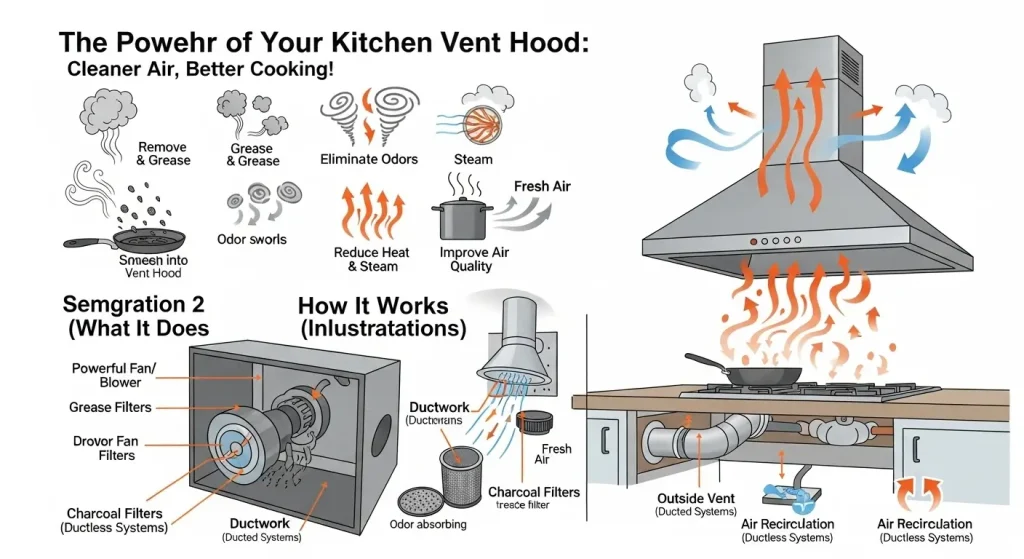
Have you ever wondered what happens to all the smoke and odors when you’re cooking up a storm in your kitchen? That’s where your kitchen vent hood comes into play.
It’s more than just a stylish addition above your stove; it’s a powerhouse that keeps your kitchen fresh and your air clean. Understanding how kitchen vent hoods work can transform the way you think about your cooking space. Imagine preparing a delicious meal without the lingering smells or smoke alarms interrupting your culinary flow.
Sounds great, right? Let’s dive into the mechanics behind these essential appliances and discover how they can enhance your cooking experience. You might be surprised by how this simple piece of equipment can make such a big difference in your kitchen. Stick around and uncover the secrets to a cleaner, healthier kitchen environment.
Types Of Kitchen Vent Hoods
When you think about maintaining a clean and fresh kitchen, the type of vent hood you choose plays a crucial role. Kitchen vent hoods are designed to remove smoke, odors, and grease from your cooking area, ensuring a healthier environment. But with various types available, how do you know which one suits your needs best? Let’s explore the different types of kitchen vent hoods and how they can make your cooking experience more pleasant.
Ducted Vent Hoods
Ducted vent hoods, also known as vented hoods, are a popular choice for homeowners who do a lot of cooking. These hoods are connected to a duct system that leads the air outside, effectively removing smoke and odors from your kitchen. If you’re a passionate cook who often uses high heat, a ducted vent hood might be your best ally.
Imagine cooking your favorite spicy dish without worrying about lingering smells. These hoods are especially effective in larger kitchens or open-plan spaces. However, they do require a bit of planning and installation, as you need to connect them to an external vent.
Ductless Vent Hoods
Ductless vent hoods, also referred to as recirculating hoods, offer a different approach. They use a fan and filters to clean the air and then recirculate it back into the kitchen. This type of hood is ideal if you lack the space or setup for ductwork.
They are easy to install and can be a great option for apartments or smaller kitchens. You will need to replace the filters regularly to maintain efficiency. Have you ever considered how a simple switch to ductless could simplify your kitchen setup?
Convertible Vent Hoods
Convertible vent hoods provide the flexibility of both ducted and ductless systems. They can be used with an external duct system or as a recirculating hood, depending on your kitchen’s layout. This type of hood is perfect if you anticipate changes in your kitchen in the future.
Perhaps you’re planning a renovation or might move to a new home. A convertible hood ensures you have options without needing a new installation. Are you intrigued by the idea of adaptability in your kitchen?
Choosing the right kitchen vent hood involves understanding your cooking habits and kitchen setup. Whether you go for ducted, ductless, or convertible, the key is to enhance your kitchen’s air quality effectively. What kind of cooking environment do you envision for yourself?
Components Of A Vent Hood
Kitchen vent hoods use fans, filters, and ductwork to remove smoke and odors. The fan pulls air through filters, capturing grease. Ductwork channels clean air outside, ensuring a fresh kitchen environment.
When you’re cooking up a storm in the kitchen, your vent hood is quietly working to keep your space fresh and smoke-free. But have you ever wondered what makes it tick? Understanding the components of a vent hood can demystify this essential kitchen appliance and help you maintain it better. Let’s break down the key parts that keep your kitchen air clean and your cooking experience pleasant.
Fan Or Blower
The fan or blower is the heart of your vent hood. Its primary job is to pull smoke, steam, and odors away from your cooking area. Imagine it as a vacuum cleaner for the air above your stove. The fan’s power is measured in cubic feet per minute (CFM). A higher CFM rating indicates a more powerful fan, capable of clearing more air quickly. But do you need the most powerful option? It depends on your cooking habits. If you’re a fan of sizzling stir-fries, a stronger fan might be your best friend.
Filters
Filters play a crucial role in trapping grease and particles. They ensure that your vent hood isn’t just moving dirty air around but actually cleaning it. There are two main types: mesh filters and baffle filters. Mesh filters are made of aluminum or stainless steel. They’re easy to clean and great for catching grease.
Baffle filters, often found in professional-grade hoods, are more efficient and durable but can be slightly harder to clean. Regular maintenance of your filters can extend the life of your vent hood. When was the last time you cleaned yours? A simple reminder can keep your kitchen fresh and your appliance running smoothly.
Control Panel
The control panel is your interface with the vent hood. It allows you to adjust the fan speed, turn on lights, or even set a timer. A straightforward control panel makes using your vent hood intuitive and hassle-free. Some modern vent hoods come with touch controls and digital displays. These are not just about aesthetics; they offer precise control over settings. However, simplicity can be just as effective. Consider what features are important to you.
Do you prefer a sleek, digital touchpad or a classic knob? Each component of a vent hood plays a vital role in ensuring your kitchen remains a pleasant place to cook. Understanding these elements can help you make informed decisions, whether you’re purchasing a new hood or maintaining your current one. So next time you fire up the stove, take a moment to appreciate the quiet, efficient work happening above your head.
Ventilation Process
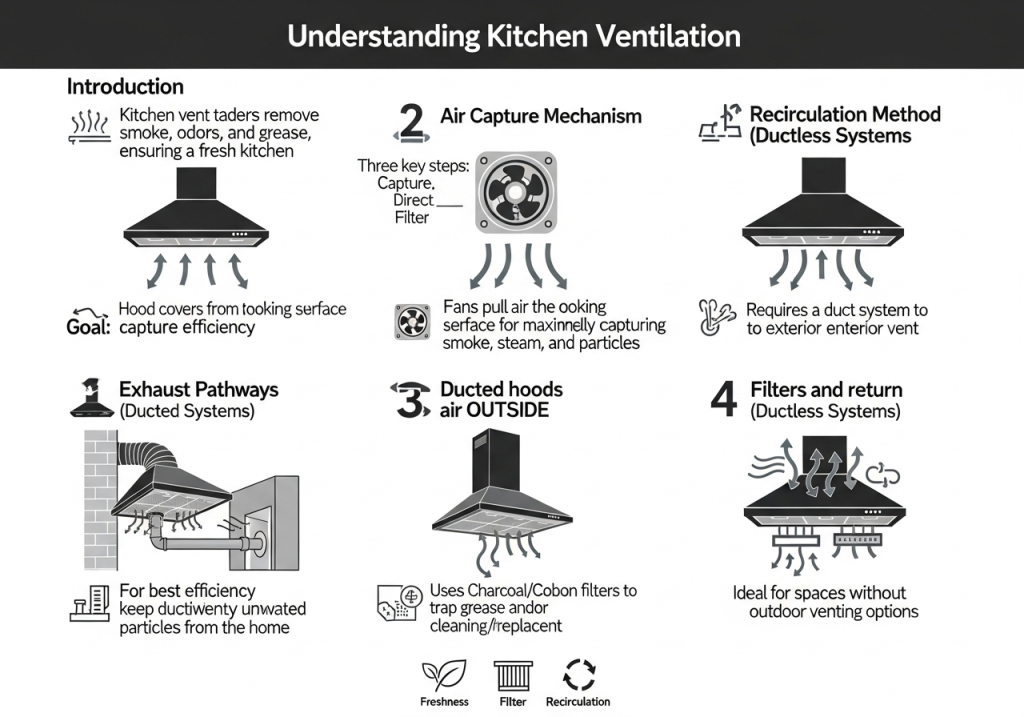
Kitchen vent hoods play a vital role in maintaining a fresh kitchen. They remove smoke, odors, and grease from the air. The ventilation process involves capturing, directing, and filtering air efficiently. Understanding each step helps in choosing the right kitchen vent hood.
Air Capture Mechanism
The first step in the ventilation process is capturing air. Kitchen vent hoods use fans to pull in air from the cooking area. This air contains smoke, steam, and airborne particles. The hood is designed to cover the cooking surface, ensuring maximum air capture. The more efficient the capture, the cleaner the kitchen air.
Exhaust Pathways
After capturing, the air needs a pathway for exhaust. Ducted vent hoods channel the captured air outside. This requires a duct system that leads to an exterior vent. The ductwork should be short and straight for better efficiency. This setup removes unwanted particles from your home.
Recirculation Method
Some kitchens use a recirculation method instead of exhausting air outside. This involves filtering the air and returning it to the kitchen. Charcoal or carbon filters trap grease and odors. These filters need regular cleaning or replacement. Recirculating hoods are ideal for spaces without outdoor venting options.
Benefits Of Kitchen Vent Hoods
Kitchen vent hoods are more than just a stylish addition to your cooking space. They offer significant benefits that can transform your kitchen experience. From improving air quality to managing heat and steam, these appliances play a crucial role in maintaining a comfortable and healthy environment. Let’s dive into the specific advantages of having a kitchen vent hood.
Air Quality Improvement
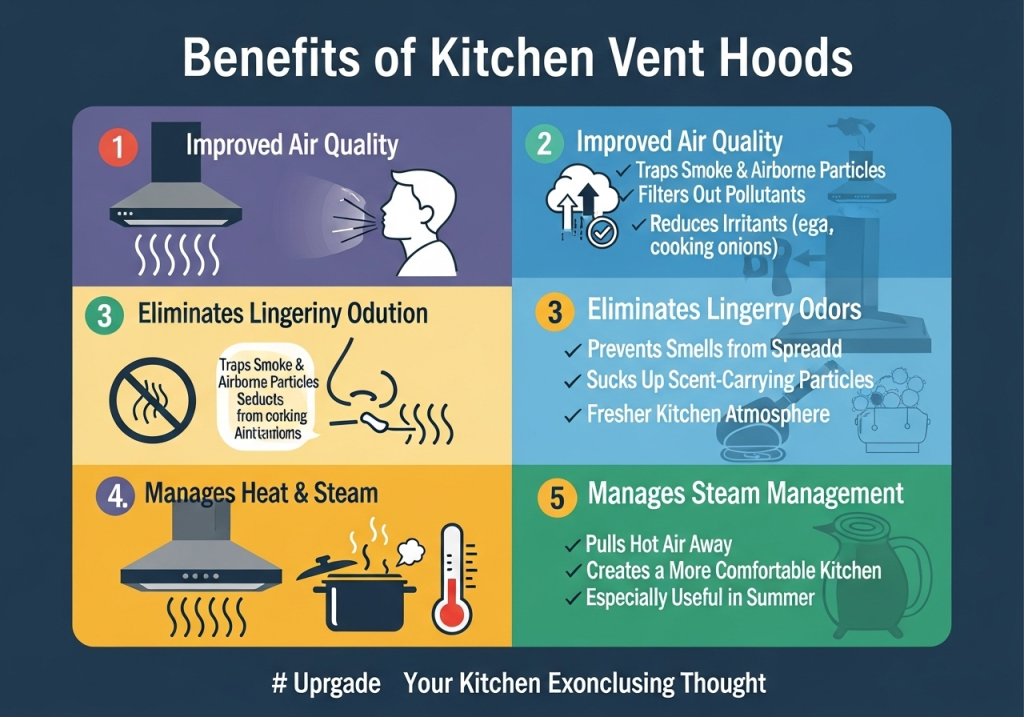
Ever noticed how cooking can fill your home with smoke and airborne particles? A vent hood tackles these issues head-on. It captures and filters out pollutants, ensuring cleaner air for you and your family. You can breathe easier knowing that harmful particles are being efficiently removed.
Imagine sautéing onions without tearing up or coughing. A vent hood makes it possible by swiftly pulling away irritants. It’s like having a personal air purifier dedicated to your cooking area.
Odor Reduction
Cooking smells can linger long after the meal is finished. Vent hoods help prevent odors from permeating your home. They suck up steam and particles that carry scents, reducing their spread.
Remember that time you cooked fish, and the smell stuck around for days? With a vent hood, those lingering odors can be a thing of the past. You’ll enjoy a fresher kitchen atmosphere, even after cooking aromatic dishes.
Heat And Steam Management
Kitchen vent hoods are great at managing heat and steam. They pull hot air away from your stove, making your kitchen more comfortable. This can be especially beneficial during summer months when cooking can turn your kitchen into a sauna.
Picture yourself cooking a big family dinner. Without a vent hood, the heat can become unbearable. A vent hood helps maintain a cooler environment, so you can focus on your culinary creations without breaking a sweat.
Have you considered how a kitchen vent hood could enhance your cooking experience? Investing in one might just be the upgrade your kitchen needs.
Installation Considerations
Installing a kitchen vent hood is not just about picking the right model; it involves a careful consideration of several factors to ensure optimal performance. Before you dive into the installation process, it’s essential to understand the space requirements, power sources, and decide whether you’ll tackle the project yourself or call in a professional. Each of these elements plays a crucial role in ensuring your vent hood operates efficiently and effectively.
Space Requirements
Your kitchen’s layout will largely dictate the kind of vent hood you can install. Measure the space above your cooking area carefully. A vent hood should ideally match or be slightly larger than your cooking surface to capture smoke and odors effectively.
Think about clearance, too. For safety, a range hood should be installed at least 24 inches above a gas stove, and 20 inches for electric ranges. Consider not just the width but the depth of the hood. A deeper hood can offer better coverage.
Have you ever wished you had more room in your kitchen? A compact design might be tempting, but ensure it doesn’t compromise functionality. Balancing space with efficiency is key.
Power Sources
Most vent hoods require a dedicated power source. Check if your kitchen’s wiring supports the electrical demands of the vent hood you choose. A model with higher CFM (cubic feet per minute) may require more power.
If your kitchen lacks the necessary wiring, you’ll need to factor in the cost and logistics of installing it. Some hoods also have lighting features that add to the power requirement.
Imagine the frustration of installing a hood only to find it’s underpowered. Ensuring the right power source is vital to avoid this hassle. Are you prepared for possible electrical upgrades?
Professional Vs Diy Installation
Are you comfortable with DIY projects, or would you prefer the assurance of a professional installation? DIY can save money but demands time and skills.
Professionals bring expertise, ensuring the vent hood is installed correctly and safely. They can troubleshoot and handle unexpected issues, like structural challenges or complex wiring.
Consider your comfort level and the complexity of your kitchen setup. If you’re handy and confident, DIY might be rewarding. If not, professional installation could save you from costly mistakes.
In the end, installation considerations for kitchen vent hoods require a thoughtful approach. As you plan, weigh your options carefully to ensure your kitchen remains a functional and safe space. What installation path will you take to enhance your cooking environment?
Maintenance Tips
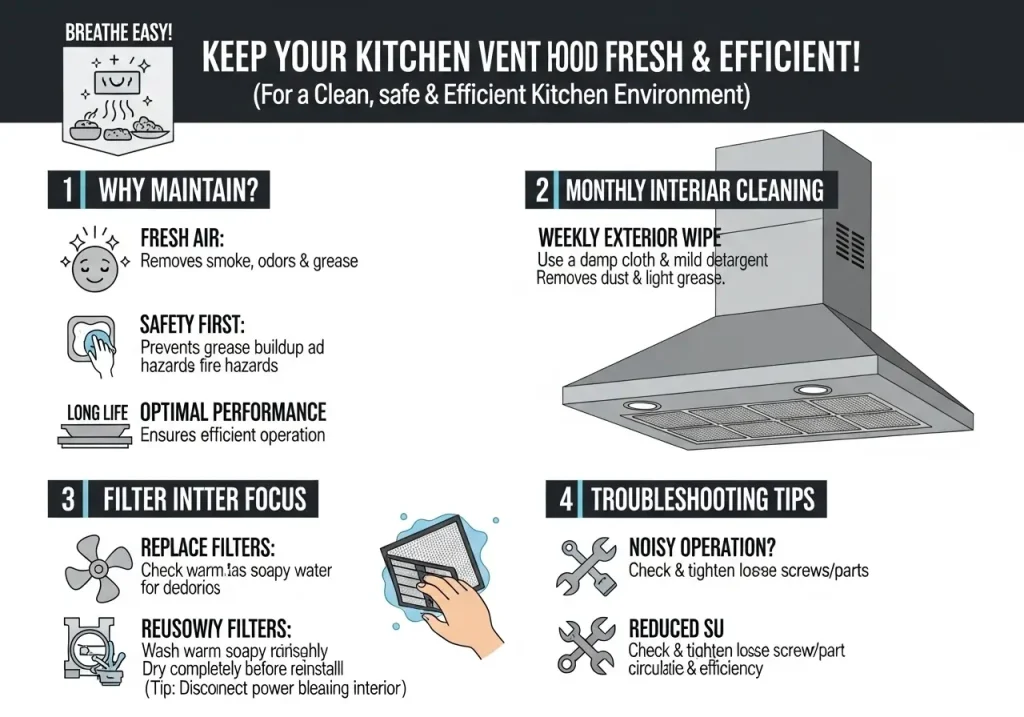
Kitchen vent hoods are vital for maintaining a fresh environment. They remove smoke, odors, and grease from cooking. Proper maintenance ensures efficient operation and extends the hood’s lifespan. Regular upkeep keeps your kitchen clean and safe.
Regular Cleaning
Cleaning your vent hood regularly is crucial. Grease and dust accumulate over time. Wipe the exterior weekly with a damp cloth. Use a mild detergent to remove stubborn stains. Interior cleaning requires more attention. Check the fan blades and motor for debris. Clean these parts monthly for optimal performance.
Filter Replacement
Filters play a key role in trapping grease and particles. Replace them every six months. Some hoods have reusable filters. Wash them with warm water and soap. Rinse thoroughly and dry before reinstalling. New filters improve air circulation and efficiency.
Troubleshooting Common Issues
Common issues include noisy operation or reduced suction. Check for loose screws or parts. Tighten them to eliminate noise. Reduced suction might indicate clogged filters. Replace or clean them promptly. Inspect the ductwork for obstructions. Ensure proper airflow to maintain efficiency.
Innovations In Vent Hood Technology
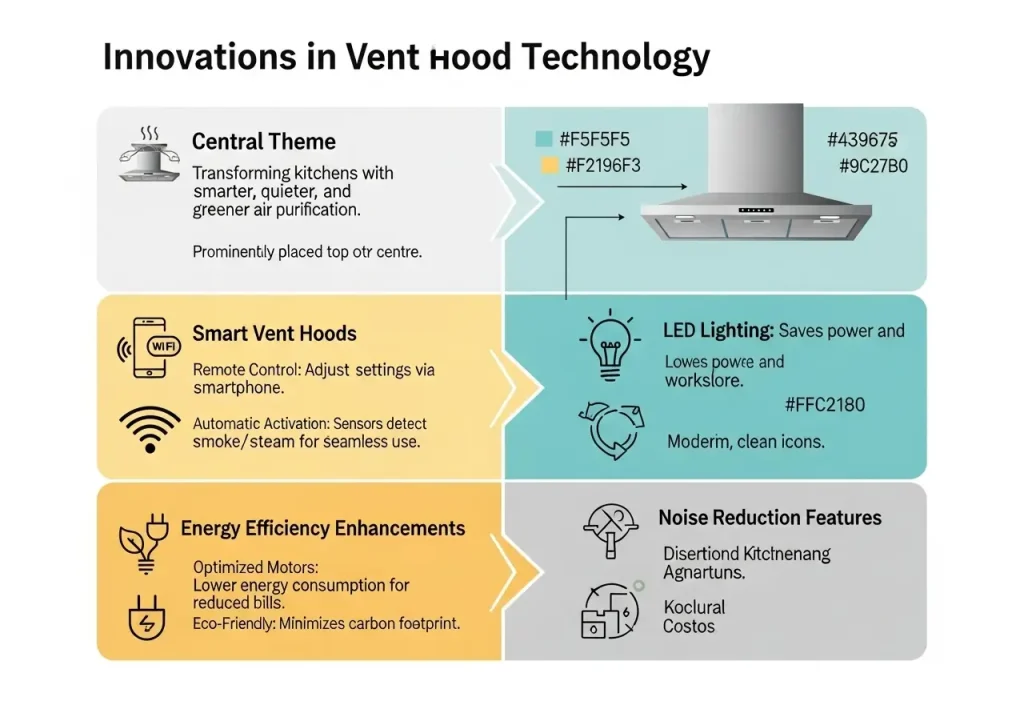
Innovations in vent hood technology have transformed kitchen experiences. Modern vent hoods are more than just air filters. They offer smart features, energy-saving designs, and reduced noise. These advancements improve functionality and comfort in kitchens.
Smart Vent Hoods
Smart vent hoods connect to home networks. This allows remote control with smartphones. Users can adjust fan speeds and lighting easily. Some models have sensors that detect smoke or steam. They automatically activate to clear the air. This ensures a safer cooking environment.
Energy Efficiency Enhancements
Energy-efficient vent hoods minimize electricity use. New designs include LED lighting to save power. Motors in these hoods are optimized for lower energy consumption. This helps reduce utility bills. Efficient designs also reduce carbon footprint, benefiting the environment.
Noise Reduction Features
Noise reduction is a key focus in modern vent hoods. Manufacturers use quieter motors and sound-absorbing materials. This makes them less disruptive during cooking. Some hoods offer adjustable fan speeds for quieter operation. This allows enjoying conversations without loud fan noise.
Frequently Asked Questions
Do Range Hoods Have To Be Vented Outside?
Range hoods can be vented outside or recirculated indoors. Venting outside removes smoke, odors, and moisture effectively. Recirculating models use filters to clean the air but may be less efficient. Choose based on kitchen layout and personal preference. Ensure compliance with local building codes for installation.
What Is The Disadvantage Of A Range Hood?
Range hoods can be noisy and may not effectively remove all odors. Installation can be complex and costly. Regular maintenance is needed to ensure efficiency, and they may consume significant energy. Some models can be bulky and disrupt kitchen aesthetics.
Does A Kitchen Exhaust Fan Bring In Outside Air?
A kitchen exhaust fan does not bring in outside air. It removes indoor air, odors, and smoke. It improves ventilation by expelling air to the outside. Ensure proper ducting for effective operation.
What Is The Difference Between A Range Hood And A Vent Hood?
Range hoods and vent hoods are essentially the same, both used for kitchen ventilation. They remove smoke, odors, and grease. The terms are often used interchangeably. Some may argue minor design or function differences, but both serve the same primary purpose.
Always check product specifications for exact features.
Conclusion
Kitchen vent hoods are essential for clean air. They remove smoke, grease, and odors. This keeps your kitchen fresh and healthy. Choosing the right vent hood matters. Consider size, type, and power. Regular cleaning ensures efficient performance. Proper use enhances safety and comfort.
Vent hoods also add style to your kitchen. They blend function with design. A good vent hood makes cooking more enjoyable. Invest in quality for long-term benefits. Your kitchen deserves the best care. Enjoy a cleaner, safer cooking space every day.
Vent hoods are more than a kitchen accessory. They are a necessity.

Hi, I’m Daniel Harper, a senior editor here at KitchenBucks.com. For over 10 years, I’ve been exploring kitchen gadgets and appliances to help people find tools that truly add value without breaking the bank. I love simplifying product choices so you can focus more on cooking and less on worrying about what to buy. When I’m not reviewing the latest gadgets, you’ll usually find me experimenting with coffee brewing or firing up the grill for a weekend barbecue.