

Are you tired of cooking smells lingering in your kitchen long after dinner is over? Or maybe you’re concerned about the smoke and grease settling on your pristine cabinets and walls?
The solution might be simpler than you think: the right placement of your range hood. Knowing how high above the range your hood should be can make all the difference in keeping your kitchen fresh and clean. We’ll unravel the perfect height for your kitchen hood to maximize its efficiency and ensure your cooking space remains inviting and odor-free.
Get ready to discover how a small adjustment can transform your kitchen experience.
Optimal Hood Placement
Ensuring the proper placement of your kitchen hood is crucial. It enhances both functionality and safety. The hood’s height affects its efficiency in capturing smoke and odors. Proper placement ensures your kitchen remains a pleasant space. But how high should a range hood be placed?
Factors Influencing Height
Several factors determine the right height for a range hood. The type of stove is important. Gas stoves produce more heat than electric ones. This means they need a higher hood. The size of the hood also matters. Larger hoods can be placed higher. Smaller hoods might need to be closer. Your kitchen’s layout is another consideration. A sloped ceiling might limit placement options. Lastly, personal preferences play a role. Some people prefer a higher hood for more headroom.
Common Standards
Common standards provide a guideline for hood placement. For electric stoves, the hood is typically 20 to 24 inches above the range. For gas stoves, it should be 24 to 30 inches above. These measurements ensure optimal performance. They help capture smoke and steam effectively. Always check the manufacturer’s instructions. They may have specific recommendations for height. Following these standards ensures safety and efficiency.
Safety Considerations
Ensuring the right height for your range hood is crucial. It’s about more than just aesthetics; safety plays a significant role. Proper installation enhances fire safety and ensures efficient ventilation. Prioritizing these elements can help create a safer cooking environment.
Fire Safety Measures
Correct hood height reduces fire hazards. Too low, and grease might ignite. Too high, and smoke spreads. Maintain a gap between 24 to 30 inches above the range. This prevents accidental flare-ups. It also allows easy access to extinguishers if needed.
Ventilation Efficiency
Proper hood placement enhances airflow. This controls smoke and odors effectively. A height of 24 to 30 inches is ideal. It ensures the hood captures steam and vapors efficiently. This placement minimizes lingering smells and maintains kitchen air quality.
Impact On Cooking Performance
Positioning a hood 24 to 30 inches above the range boosts cooking efficiency. This height ensures effective smoke and odor removal. It also maintains a clear view while cooking, enhancing overall kitchen experience.
When setting up your kitchen, the height at which you install your range hood can significantly impact your cooking performance. It’s not just about aesthetics; it affects how well your kitchen functions. A well-placed hood can make cooking a joy, while a poorly placed one can turn it into a smoky, uncomfortable chore. Understanding how the height of your hood impacts cooking can help you make informed decisions for a better culinary experience.Heat And Smoke Management
The primary role of a range hood is to manage heat and smoke. If your hood is too high, it might not effectively capture smoke and steam. This could lead to a kitchen filled with smoke after cooking a simple steak. Imagine the annoyance of smoke detectors going off every time you cook. Keeping the hood at an optimal height ensures smoke is swiftly captured and vented out, keeping your kitchen clear and comfortable. Typically, experts recommend installing the hood between 24 to 30 inches above the range. This height allows for efficient capture of heat and smoke without hindering your movement as you cook.Effect On Air Quality
Air quality is crucial for a healthy kitchen environment. A hood placed too high might fail to remove airborne grease and odors effectively. This can lead to a lingering smell of last night’s dinner in your kitchen. Do you ever notice a greasy film settling on your cabinets? This might be due to improper air filtration caused by a hood that’s not optimally placed. By maintaining the recommended height, you ensure that your kitchen air remains fresh. This is especially important if you have an open kitchen layout that connects to your living space. Don’t underestimate the importance of air quality—it can transform your cooking space into a more pleasant place to spend time in. Consider these insights when installing your range hood, and you’ll likely find cooking a more enjoyable experience.Aesthetic Considerations
Choosing the right height for your range hood involves more than function. The aesthetic appeal of your kitchen plays a crucial role. It’s not just about removing smoke and odors. The hood should complement your kitchen’s design. Proper placement enhances the visual flow and harmony.
Design Harmony
Your kitchen design should feel cohesive. The range hood is a key element. Its height can affect the overall look. Too high, and it feels detached. Too low, and it may overwhelm the space. Aligning the hood with cabinets creates balance. A well-placed hood integrates smoothly with other elements. Consider color and material compatibility. These factors impact the room’s aesthetic. A stainless steel hood may suit modern kitchens. Wooden finishes match rustic designs. Every detail should work together.
Space Utilization
Efficient use of space is essential in kitchen design. The range hood’s height impacts this. Proper positioning allows for easy access. It ensures enough clearance for cooking activities. Placing the hood at the right height prevents crowded spaces. It should not interfere with overhead cabinets. A well-placed hood enhances the kitchen’s functionality. It allows for practical use of space. Consider the size of your kitchen. Smaller spaces need careful planning. Larger kitchens offer more flexibility.
Installation Challenges
Determining the ideal height for a range hood can be tricky. Too low can hinder cooking space, while too high may reduce effectiveness. Most experts suggest placing the hood between 24 to 30 inches above the range for optimal performance.
Ensure proper ventilation and avoid common installation errors for best results.
Installing a range hood can be a surprisingly intricate task. It’s not just about picking a stylish design or ensuring it matches your kitchen decor. The real challenge lies in the installation process itself. Many homeowners encounter unexpected obstacles that can complicate what might initially seem like a straightforward job. So, what should you consider to overcome these installation challenges?Structural Requirements
Before you start, assess the structural requirements of your kitchen. The walls and ceiling must be sturdy enough to support the weight of your new hood. If your kitchen layout doesn’t align perfectly with the specifications of the hood, you might need to make structural adjustments. These can include reinforcing the wall or ceiling or even rerouting ductwork. This can be daunting, especially if you’re tackling this alone.Professional Installation
Hiring a professional can save you time and stress. They bring expertise that ensures your range hood is installed safely and effectively. Professionals can navigate complex situations, like making sure the ventilation system is correctly aligned. This not only optimizes performance but also prevents potential issues such as smoke and grease buildup. Have you ever tried a DIY project and realized halfway through that you needed a pro? With range hoods, starting with professional help can prevent costly mistakes. Would you rather spend a few extra dollars now or risk a kitchen filled with smoke and lingering odors? These are important considerations when pondering the installation of your range hood. Remember, investing in quality installation is just as crucial as choosing the right appliance. Ultimately, the choice between doing it yourself or hiring a professional hinges on your comfort and confidence in handling the task. What matters most is ensuring that your hood functions flawlessly, enhancing your kitchen experience.
Credit: www.pinterest.com
Maintenance And Adjustments
Determining the ideal height for a kitchen hood involves careful consideration. Typically, it should be 24 to 30 inches above the range. This ensures effective ventilation and safe cooking conditions. Proper installation and adjustment can enhance kitchen efficiency.
Maintaining your range hood and making necessary adjustments is crucial for its optimal performance. Regular upkeep ensures it efficiently removes smoke, odors, and grease from your kitchen. Whether you’re cleaning or adjusting the height, understanding these aspects can enhance your cooking environment significantly.Regular Cleaning Tips
Cleaning your range hood regularly is essential. A dirty hood not only looks unappealing but can also become less effective. Start by removing the filters. Most modern hoods have dishwasher-safe filters, making cleaning a breeze. If yours isn’t dishwasher-friendly, soak it in warm soapy water and scrub gently. Don’t forget to wipe down the exterior and interior surfaces. Use a mild detergent or a dedicated kitchen cleaner. Avoid abrasive materials to prevent scratching. Make it a habit to check for grease build-up weekly. This simple routine can prolong the life of your hood and keep your kitchen fresh.Height Adjustments
Is your hood at the right height? The ideal distance between your cooktop and hood is crucial for efficiency. Generally, a hood should be installed 20 to 24 inches above an electric range and 24 to 30 inches above a gas range. But what if you’re not sure about the height? Measure the distance and adjust if necessary. Many hoods allow for easy modification. Consult your hood’s manual for guidance, or consider hiring a professional if the task seems daunting. Have you ever noticed smoke lingering longer than expected? It might be time to rethink your hood’s height. Adjusting it could make all the difference in keeping your kitchen air crisp and clean. Engage with your kitchen setup. Maintenance and adjustments aren’t just chores; they’re opportunities to improve your cooking space. What changes will you make today for a cleaner, more efficient kitchen?Expert Recommendations
Ideal hood height above range enhances kitchen efficiency. Experts suggest maintaining a distance of 24 to 30 inches. This ensures optimal airflow and effective smoke removal, contributing to a cleaner cooking environment.
When installing a kitchen hood, ensuring the right height above the range is crucial for optimal performance and safety. Expert recommendations can guide you in making the best decision for your kitchen setup. This section provides insights from professionals and highlights the importance of custom solutions tailored to your needs.Consulting Professionals
Reaching out to kitchen design experts can make a big difference. They have the experience and knowledge to recommend the ideal height for your specific range and hood type. Most professionals suggest a height of 24 to 30 inches above the cooking surface for electric ranges and 27 to 36 inches for gas ranges. Have you ever wondered why these measurements matter? Placing the hood too low can hinder your cooking space, while too high may reduce its effectiveness in capturing smoke and odors. Consulting with professionals helps you strike the perfect balance.Custom Solutions
Every kitchen is unique, and what works for one might not suit another. Custom solutions ensure your kitchen hood is tailored to your specific cooking habits and kitchen layout. Consider a friend who loves to cook elaborate meals. She found that adjusting her hood slightly higher than average allowed better ventilation without disrupting her cooking flow. Have you thought about what custom adjustments might enhance your kitchen experience? By assessing your cooking style and space, you can find the perfect hood height that meets your needs. Incorporating expert advice and custom solutions can transform your kitchen into a more functional and enjoyable space. Making these informed decisions will benefit your cooking experience and the overall ambiance of your kitchen.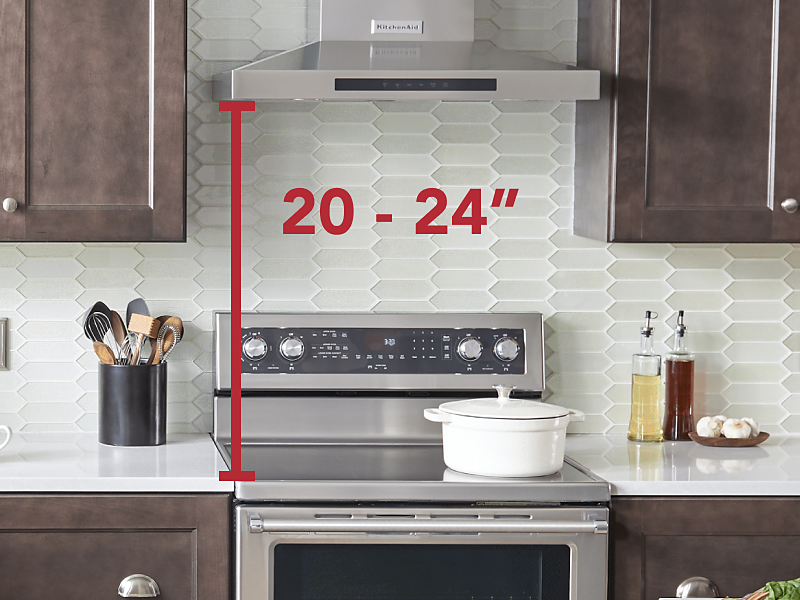
Credit: www.kitchenaid.com

Credit: www.whirlpool.com
Frequently Asked Questions
How High Should A Range Hood Be Above A Stove?
Install the range hood 20-24 inches above an electric stove. For a gas stove, position it 24-30 inches high. This ensures optimal ventilation and safety. Always consult the manufacturer’s guidelines for specific models, as recommendations can vary. Proper installation enhances kitchen air quality and appliance efficiency.
What Is The Code For A Range Hood Above Stove?
Check local building codes and manufacturer’s instructions for range hood installations above stoves. Typically, maintain a minimum clearance of 24 to 30 inches from the stovetop. Ensure proper ventilation and electrical connections. Consult professionals for compliance and safety.
What Is The Ideal Distance For A Range Hood?
The ideal distance for a range hood is typically between 24 to 30 inches above the cooking surface. This ensures optimal ventilation efficiency, effectively removing smoke, grease, and odors. Always refer to the manufacturer’s guidelines for specific recommendations, as they may vary based on the model and type of your range hood.
How Does Hood Height Affect Kitchen Ventilation?
The hood height significantly affects kitchen ventilation efficiency. A hood installed too low may obstruct cooking, while too high may reduce its effectiveness in capturing smoke and odors. Proper placement, as recommended by the manufacturer, ensures optimal performance and maintains a clean, odor-free kitchen environment.
Conclusion
Choosing the right hood height is crucial. It ensures efficiency and safety. Measure carefully before installation. Always follow the manufacturer’s guidelines. They provide the best advice for your specific model. An ideal hood height enhances kitchen functionality. It prevents smoke and odors from spreading.
Your kitchen remains fresh and pleasant. Consider consulting a professional for accurate measurements. They can offer valuable insights. A well-installed hood adds value to your home. It improves cooking experience and air quality. Keep these tips in mind for a better kitchen setup.
