
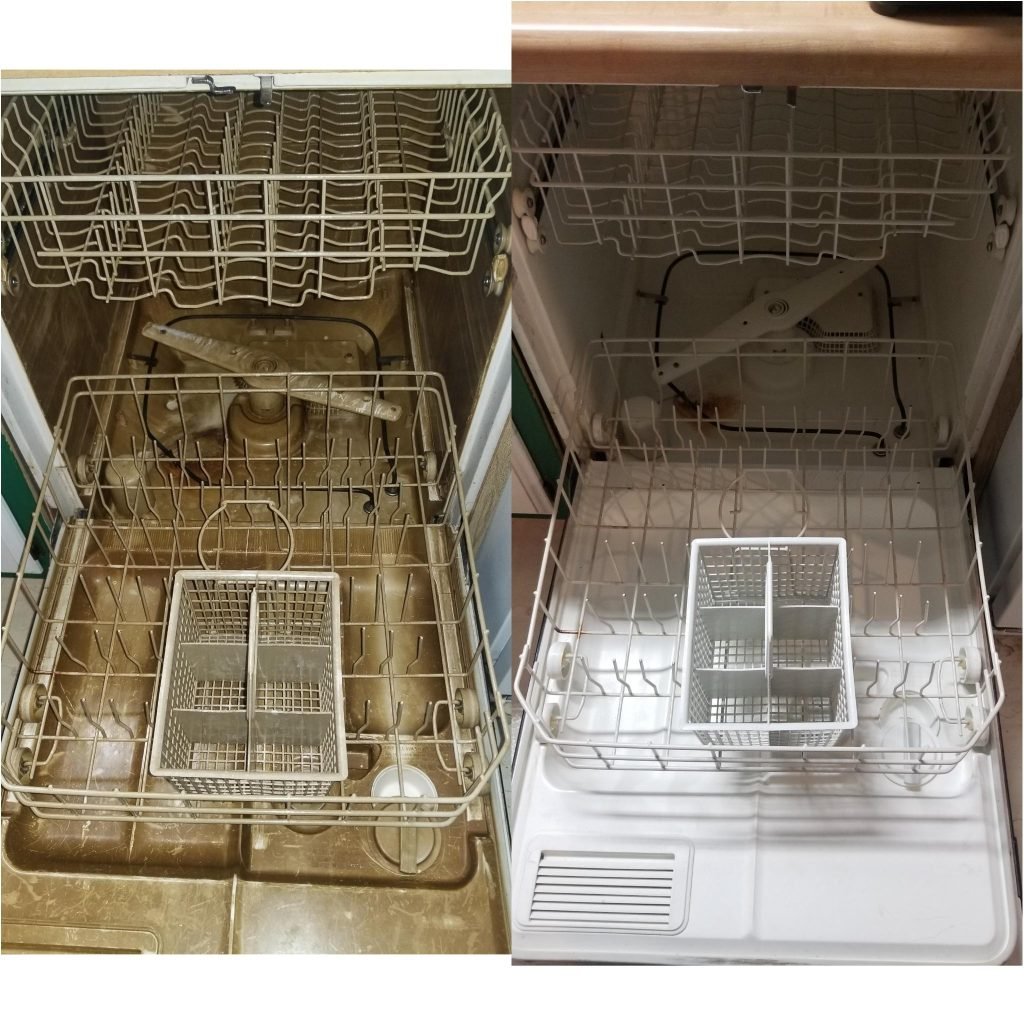
Are you tired of opening your dishwasher only to find cloudy glassware and a machine that doesn’t seem as efficient as it used to be? Hard water might be the culprit.
It leaves mineral deposits that not only dull the sparkle of your dishes but can also affect the performance of your dishwasher. Imagine the satisfaction of seeing your dishes gleam again and knowing your appliance is in top shape. You’ll discover simple, effective steps to banish those stubborn mineral deposits for good.
Get ready to transform your dishwasher from grimy to gleaming, ensuring every wash leaves your dishes spotless. Let’s dive in and reclaim the shine and efficiency you deserve.

Credit: rehabitathome.com
Identifying Hard Water Effects
Hard water can leave stains and reduce your dishwasher’s efficiency. Regular cleaning helps maintain performance. Use vinegar or a commercial cleaner to dissolve mineral deposits, ensuring your dishes come out spotless and your appliance stays in top condition.
Cleaning a dishwasher is a task often overlooked, but understanding the effects of hard water can make a world of difference. Hard water is water that contains a high concentration of minerals, primarily calcium and magnesium. These minerals can leave your dishwasher underperforming. You might wonder how to spot the signs of hard water in your dishwasher. Let’s dive into the details.Signs Of Hard Water In Dishwashers
Have you ever opened your dishwasher only to find cloudy glasses staring back at you? This is a common sign of hard water. Mineral deposits can cling to your dishes, leaving them looking dull and unclean. White or chalky residue on the interior surfaces of your dishwasher is another telltale sign. If your dishwasher door and racks have a powdery film, hard water might be the culprit. Check your dishwasher’s spray arms too; mineral buildup can clog them, leading to less effective cleaning.Common Issues Caused By Hard Water
Hard water doesn’t just affect your dishes. It can also cause long-term problems for your dishwasher. Mineral buildup can clog and damage the machine’s components over time, leading to costly repairs or replacements. Your detergent might not dissolve properly in hard water. This can reduce its cleaning power, leaving your dishes less clean and even promoting the growth of bacteria. In some cases, hard water can even shorten the lifespan of your dishwasher. Have you experienced any of these issues? If so, it’s time to take action. Regular maintenance can prevent these problems and keep your dishwasher running smoothly. Start by using a water softener or a specially formulated dishwasher cleaner. What steps will you take to tackle hard water in your dishwasher? Remember, a little effort now can save you from bigger headaches down the line.Essential Cleaning Supplies
Maintaining a dishwasher’s efficiency requires regular cleaning. Hard water stains can build up over time. Using the right cleaning supplies is crucial. These supplies help remove deposits and keep the dishwasher running smoothly.
Natural Ingredients For Cleaning
Natural ingredients offer an eco-friendly solution. White vinegar is a powerful cleaner. It breaks down mineral deposits effectively. Simply fill a cup with vinegar and place it on the top rack. Run a hot water cycle for the best results.
Baking soda is another natural option. Sprinkle it on the bottom of the dishwasher. Run a short hot water cycle. This will help remove stains and odors.
Commercial Cleaners And Products
Commercial cleaners are designed for tough stains. They are easy to use and effective. Dishwasher cleaning tablets are popular. Place one in the bottom of the machine. Run a normal cycle for optimal cleaning.
Limescale removers are also available. They target hard water deposits specifically. Follow the instructions on the package for safe use.
Both natural and commercial options are effective. Choose the one that suits your needs best. Regular cleaning will extend the life of your dishwasher.
Cleaning The Filter And Drain
Cleaning hard water stains from a dishwasher involves maintaining the filter and drain. Remove and rinse the filter to clear debris. Check the drain for any blockages that might affect performance. Regular cleaning helps ensure efficient operation and prolongs the appliance’s life.
Cleaning the filter and drain is crucial for dishwasher maintenance. Hard water can cause build-up that affects performance. A clean filter and drain ensure your dishwasher runs smoothly. Regular maintenance prevents blockages and extends the appliance’s life. Let’s explore how to clean these essential parts effectively.Removing And Cleaning The Filter
Start by turning off the dishwasher. Remove the bottom rack to access the filter. The filter is usually at the bottom of the machine. Twist it counterclockwise to unlock it. Pull the filter out carefully. Rinse the filter under warm water. Use a soft brush to scrub away debris. Ensure all particles are removed from the mesh. If necessary, soak it in vinegar to dissolve stubborn deposits. Rinse thoroughly after soaking. Dry the filter before placing it back.Unclogging The Drain
Locate the drain at the bottom of the dishwasher. Check for visible debris blocking the drain. Use a soft cloth to remove any particles. For deeper clogs, a mixture of baking soda and vinegar can help. Pour half a cup of baking soda into the drain. Follow with half a cup of vinegar. Let it sit for 15 minutes. After the reaction stops, pour hot water down the drain. This will help clear any remaining blockages. Repeat if the water does not drain freely. Regular checks prevent future clogs.
Credit: www.reddit.com
Descaling The Interior
Battling hard water stains in dishwashers? Vinegar and baking soda can help. Just run a hot cycle with vinegar, then sprinkle baking soda and run again. Regular cleaning keeps your dishwasher spotless and efficient.
Cleaning your dishwasher from hard water deposits is crucial for maintaining its efficiency and longevity. Over time, minerals like calcium and magnesium can build up, impacting your dishwasher’s performance. Descaling the interior not only enhances its cleaning power but also extends its lifespan. So, how do you effectively descale your dishwasher? Let’s dive into some practical solutions.Using Vinegar For Descaling
Vinegar is a natural and effective descaling agent. It’s likely sitting in your pantry right now. To use vinegar, simply pour two cups into a dishwasher-safe bowl. Place the bowl on the top rack of your dishwasher. Run a hot water cycle without any dishes. The vinegar will break down mineral deposits and leave your dishwasher sparkling. Have you tried this simple trick before?Alternative Descaling Solutions
If vinegar isn’t your thing, there are other options. Citric acid is another powerful descaling agent. Available at most grocery stores, it’s easy to use. Sprinkle a few tablespoons into the bottom of your dishwasher. Run a hot water cycle and watch it work its magic. You could also consider commercial dishwasher cleaners. These are specially formulated to tackle hard water buildup. They’re easy to use and can be found in the cleaning aisle. Have you considered trying a commercial cleaner? Descaling your dishwasher can seem like a chore, but it’s worth the effort. These methods are simple, effective, and affordable. Which solution will you try next time your dishwasher needs a little TLC?Cleaning Spray Arms And Racks
Cleaning spray arms and racks in your dishwasher is crucial for maintaining its efficiency and ensuring your dishes come out spotless every time. Hard water can leave mineral deposits that clog spray arms and accumulate on racks, hindering the dishwasher’s performance. Addressing these issues will not only improve your dishwasher’s functionality but also extend its lifespan. Let’s dive into the steps for detaching and washing spray arms and removing buildup from racks.
Detaching And Washing Spray Arms
First, let’s talk about spray arms. These are the components that distribute water throughout the dishwasher, making them essential for a thorough clean. To begin, check your dishwasher’s manual for instructions on how to detach the spray arms. This step is usually straightforward and involves unscrewing or unclipping them from the base.
Once detached, inspect the spray arms for visible blockages or mineral deposits. These can often be removed by rinsing under warm water or using a toothbrush to scrub away stubborn debris. If the buildup is significant, soaking the spray arms in a mixture of vinegar and water can dissolve hard water deposits effectively.
After cleaning, reattach the spray arms securely. Test their movement to ensure they’re spinning freely. This ensures water is evenly distributed during the wash cycle, resulting in cleaner dishes. Have you ever noticed a difference in the cleanliness of your dishes after cleaning the spray arms? It’s usually quite remarkable!
Removing Buildup From Racks
Now, let’s focus on the racks, which often bear the brunt of hard water stains. These stains can make your dishwasher appear aged and neglected, but they are easy to remove. Begin by removing the racks from the dishwasher. This provides better access for cleaning and helps you see where the worst buildup is.
For the racks, a simple solution of vinegar and baking soda works wonders. Apply the mixture directly onto the stains and let it sit for a few minutes. Scrub with a soft brush to lift off the residue. If the stains are persistent, repeating the process can yield better results. Have you tried this method before? It might surprise you how effective it is.
Once cleaned, rinse the racks thoroughly and allow them to dry before putting them back into your dishwasher. This not only ensures a sparkling clean appearance but also prevents future buildup from hard water. Are your racks looking refreshed and ready for another round of dishwashing?
Cleaning the spray arms and racks regularly can make a significant difference in the performance of your dishwasher. It’s a simple task that pays off in the long run. Next time you notice your dishes aren’t as clean as they should be, consider giving these components a good clean. You might find it’s just what your dishwasher needed!

Credit: www.reddit.com
Preventing Future Hard Water Buildup
Regular cleaning can prevent hard water buildup in dishwashers. Use vinegar to dissolve mineral deposits. Run an empty cycle with vinegar for thorough cleaning. This keeps your dishwasher efficient and prevents future issues.
Preventing future hard water buildup in your dishwasher is crucial. It ensures long-lasting performance and sparkling clean dishes. By taking simple steps, you can keep your dishwasher in top condition. Let’s explore some effective methods.Using Rinse Aids
Rinse aids help reduce water spots on dishes. They work by breaking down the water’s surface tension. This allows water to slide off dishes easily. Use a rinse aid in every wash cycle. It protects your dishwasher and enhances cleaning performance. Choose a rinse aid suitable for hard water conditions. Look for products with added benefits like limescale prevention. Following this routine will minimize hard water issues.Regular Maintenance Tips
Regular maintenance keeps your dishwasher running smoothly. Clean the filter monthly to remove trapped food particles. Wipe the door seals to prevent mold and mildew buildup. Inspect and clean the spray arms for blockages. Use a damp cloth to remove residue from the dishwasher’s interior. Run an empty cycle with vinegar to break down mineral deposits. This simple maintenance routine will extend your dishwasher’s life. And keep it free from hard water damage.When To Call A Professional
Calling a professional might be necessary if stubborn hard water stains persist after cleaning your dishwasher. Experts can effectively tackle mineral buildup and improve appliance efficiency. Regular maintenance prevents issues, but professionals ensure thorough cleaning and optimal performance.
Cleaning a dishwasher affected by hard water might seem straightforward, but sometimes the task requires a professional touch. You may start with DIY solutions, but how do you know when it’s time to call in the experts? Recognizing the right moment to seek professional help can save you time, money, and frustration. It’s not just about knowing your limits—it’s about ensuring your dishwasher performs efficiently.Signs You Need Expert Help
Persistent water spots on your dishes despite regular cleaning might be one of the first signs. If you’ve tried the vinegar and baking soda trick without success, it’s a red flag. Another indicator is a buildup of mineral deposits visible around the dishwasher’s spray arms or filter. Strange noises or a dishwasher that simply doesn’t clean as effectively as it used to can also suggest underlying issues. Have you noticed a funky smell that doesn’t go away despite your best cleaning efforts? This could mean mineral deposits are lurking in hard-to-reach areas, requiring professional equipment to fully address.Choosing A Professional Service
Start by researching services with strong customer reviews. You want someone with a proven track record of handling hard water issues. Ask friends or family for recommendations—they might have a trusted expert they’ve used before. Check if the service offers a comprehensive inspection and cleaning package. You’ll want someone who can diagnose the problem and not just treat the symptoms. Consider the cost, but don’t let it be the sole deciding factor. Paying a bit more for quality service can save you more money in the long run. Have you ever called a professional who made the problem worse? Choose a service with clear communication and guarantees for their work. This ensures peace of mind and protects your investment in your home appliances. Remember, when in doubt, it’s often better to call a professional sooner rather than later. Why risk further damage when an expert can provide a lasting solution?Frequently Asked Questions
How Do You Get Hard Water Buildup Out Of A Dishwasher?
Remove hard water buildup by running a dishwasher cycle with white vinegar. Place a cup of vinegar in the top rack. Clean filters regularly. Use commercial dishwasher cleaners monthly to prevent mineral deposits. Ensure salt is filled if your dishwasher has a water softener feature.
How To Remove Thick Limescale From A Dishwasher?
To remove thick limescale from a dishwasher, run a cycle with white vinegar. Sprinkle baking soda on the bottom afterward and run another cycle. Clean filters and spray arms regularly. Use commercial dishwasher cleaner monthly to prevent buildup.
What Is The Best Way To Decalcify A Dishwasher?
Use white vinegar to decalcify your dishwasher effectively. Pour one cup into the bottom and run a hot cycle. Repeat monthly to prevent buildup and maintain efficiency. Regular cleaning ensures optimal performance and longevity of your appliance.
Will Vinegar Unclog My Dishwasher?
Vinegar can help unclog a dishwasher by breaking down mineral deposits and residue. Use white vinegar in a cup on the top rack. Run a hot water cycle to clear blockages. Avoid excessive use, as it may damage rubber seals over time.
Always check your dishwasher’s manual for compatibility.
Conclusion
Keeping your dishwasher free from hard water stains is simple. Regular cleaning is key. Use vinegar and baking soda for best results. These natural cleaners prevent buildup. They also keep your dishwasher smelling fresh. Don’t forget to wipe the door seals.
Clean the filter often. This improves dishwasher efficiency. Saves energy too. Your dishes will come out spotless. No more cloudy glassware. Follow these steps regularly. Enjoy a clean, well-functioning dishwasher. You’ll be glad you did. A little effort goes a long way.
Happy cleaning!
