
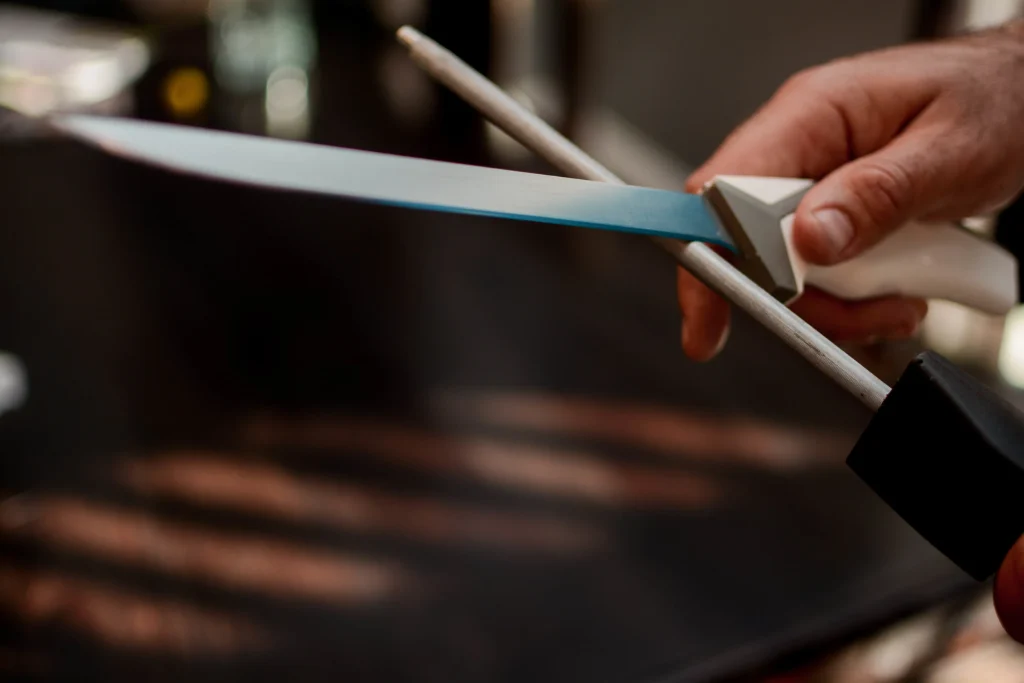
Is your knife feeling dull and frustrating to use? You’re not alone.
A sharp knife makes every kitchen task easier and safer, but over time, even the best blades lose their edge. The good news is you don’t need to buy a new knife or spend a fortune to fix this. By learning how to hone your knife properly, you can bring back that sharpness quickly and confidently.
Keep reading, and you’ll discover simple steps to sharpen your knife like a pro—making your cooking smoother and more enjoyable from now on.

Credit: www.youtube.com
Importance Of Sharp Knives
Sharp knives are essential tools in any kitchen. They make cutting food easier and safer. A dull knife requires more force, increasing the chance of slipping and causing injury. Sharp knives provide cleaner cuts, which helps food cook evenly and look better on the plate.
Using a sharp knife saves time and effort. It reduces hand fatigue during food preparation. The quality of your meals improves because ingredients retain their texture and flavor better. Sharp knives also help maintain the knife’s lifespan by reducing wear from excessive pressure.
Safety Benefits Of Using Sharp Knives
A sharp knife cuts precisely, reducing slipping risks. Less force is needed, so hands stay safer. Dull knives often cause accidents due to uneven cuts or slips. Keeping knives sharp protects both the user and the food.
Improved Cooking Results With Sharp Knives
Sharp knives create clean slices that cook evenly. This preserves the texture and taste of ingredients. Vegetables, fruits, and meats look more appealing when cut properly. Sharp knives help maintain the quality of your dishes.
Efficiency And Comfort In Food Preparation
Sharp knives reduce the effort needed to cut. This speeds up meal preparation and cuts down stress. Your hands feel less tired after chopping or slicing. A sharp blade makes cooking more enjoyable and less tiring.
How Sharp Knives Extend Their Lifespan
- Less force means less damage to the blade edge
- Proper maintenance prevents chips and bends
- Regular honing keeps the edge aligned and ready
- Sharp knives require less frequent sharpening, saving time
Credit: www.thechoppingblock.com
Identifying A Dull Knife
Knowing how to spot a dull knife is the first step to keeping your kitchen efficient and safe. A dull blade doesn’t just slow you down—it can make cutting tasks frustrating and even dangerous. Let’s look at simple ways to tell if your knife needs honing.
Visual Signs Of A Dull Knife
Look closely at your knife’s edge. A sharp blade has a smooth, straight edge that reflects little light. If you see tiny nicks, chips, or a rounded edge, your knife is losing its sharpness.
Sometimes, a dull knife also shows discoloration or rust spots along the blade. These can affect performance and indicate the need for maintenance.
Testing Sharpness Safely
One easy test is the paper slice test. Hold a piece of paper and try slicing it with your knife. A sharp blade will cut cleanly without tearing. If the knife struggles or tears the paper, it’s time to hone it.
You can also try gently running the blade over a tomato’s skin. A sharp knife will pierce the skin with little effort, while a dull one will squash the tomato.
How Cutting Feels In Your Hand
Pay attention to how your knife feels while chopping vegetables or meat. If you find yourself pressing down hard to cut through food, the knife is dull. A sharp knife slices with minimal pressure, reducing fatigue and improving safety.
Have you noticed your knife slipping off food or requiring extra force? These are clear signals that your knife’s edge needs attention.
Why Ignoring A Dull Knife Can Hurt You
Dull knives slip more easily, increasing the risk of accidental cuts. You might think a sharp knife is dangerous, but ironically, dull blades cause more injuries in the kitchen. Taking the time to identify dullness helps you prevent accidents and work confidently.
Tools For Honing
Honing a dull knife requires the right tools to restore its sharp edge. Different tools serve various purposes, making the honing process easier and more effective. Choosing the correct tool depends on your skill level and the knife type.
Sharpening Stones
Sharpening stones are traditional tools for knife honing. They come in different grits, from coarse to fine. Coarse stones remove metal quickly, fixing deep dullness. Fine stones polish the blade and refine the edge. Use water or oil on the stone to reduce friction. This tool demands practice for best results but offers great control.
Honing Rods
Honing rods, also called honing steels, realign the blade’s edge. They don’t remove metal but smooth out small bends. Use a honing rod regularly to maintain sharpness between sharpenings. Stainless steel and ceramic rods are common choices. They are simple, quick, and safe for daily use.
Electric Sharpeners
Electric sharpeners offer a fast and easy way to sharpen knives. They have built-in sharpening angles and multiple grinding wheels. These tools remove metal efficiently and provide consistent edges. Ideal for beginners or those short on time. Use them with care to avoid over-sharpening.
Honing Techniques
Honing a dull knife requires the right techniques to restore its sharp edge effectively. Honing methods vary, but mastering them ensures your knife performs well and lasts longer. Let’s explore practical ways to hone your knife, so you can choose the one that fits your kitchen routine.
Using A Sharpening Stone
A sharpening stone is a classic tool that offers precise control over the edge of your knife. Start by soaking the stone in water for about 10 minutes if it’s a water stone. This helps reduce friction and prevents damage to the blade.
Place the knife at a 15 to 20-degree angle against the stone. Slide the blade across the surface, moving from the heel to the tip in smooth, even strokes. Repeat this on both sides until you feel the edge has regained its sharpness.
Many people rush this step, but patience is key. Have you noticed how a slow, steady pace often yields better results than quick, forceful strokes? Try it and see how your knife’s edge improves.
Proper Use Of A Honing Rod
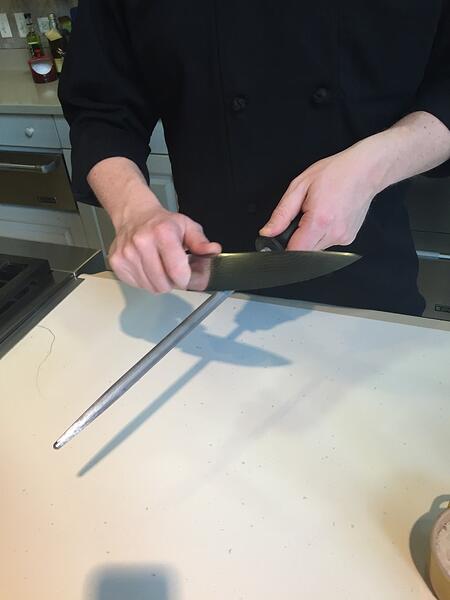
A honing rod doesn’t sharpen but realigns the blade’s edge, making your knife cut cleaner. Hold the rod vertically with the tip resting on a cutting board. Keep the knife at about a 20-degree angle to the rod.
Draw the blade down the rod, moving from heel to tip with gentle pressure. Alternate sides with each stroke, usually about 5 to 10 times per side. You’ll notice how this simple tool quickly improves cutting performance.
Ask yourself: how often do you skip honing because it seems unnecessary? Regular use can extend the time between full sharpening sessions, saving you effort in the long run.
Electric Sharpener Methods
Electric sharpeners offer convenience and speed, especially when you’re short on time. They usually have preset angles, so you don’t need to worry about holding the knife correctly. Just insert the blade into the slot and pull it through steadily.
Most electric sharpeners have multiple stages, from coarse grinding to fine honing. Follow the manufacturer’s instructions to avoid over-sharpening or damaging your blade. It’s a great option for busy cooks who want quick results without manual effort.
Have you tried an electric sharpener and wondered if it’s worth it? Consider how much time and consistency matter in your kitchen before deciding which honing method suits you best.
Maintaining Sharpness
Maintaining the sharpness of your knife is key to safe and efficient cutting. A sharp knife reduces effort and prevents accidents. Proper care extends the blade’s life and keeps it ready for any kitchen task.
Sharpness does not last forever. Regular upkeep is essential. Simple habits make a big difference in how long your knife stays sharp.
Regular Honing
Honing realigns the knife’s edge. It does not remove metal but straightens the blade. Use a honing steel before or after each use. Hold the steel vertically and swipe the knife at a 20-degree angle. Alternate sides with gentle pressure. This keeps the edge smooth and sharp.
Proper Storage
Store knives carefully to avoid dulling. Use a knife block, magnetic strip, or blade guards. Avoid tossing knives loosely in drawers. Contact with hard objects damages the edge. Keep knives dry to prevent rust and corrosion. Proper storage protects your blade’s quality.
Safe Handling Practices
Cut on soft surfaces like wood or plastic. Hard surfaces like glass or stone dull blades quickly. Use a proper grip to control the knife. Avoid twisting or prying with the blade. Clean knives gently by hand; avoid harsh scrubbing. Dry knives immediately to prevent moisture damage. Safe handling maintains sharpness and safety.
Common Mistakes
Honing a dull knife is a skill that can save you time and frustration in the kitchen. However, many people unknowingly make mistakes that damage their blades instead of sharpening them. Understanding these common errors can help you maintain your knives effectively and extend their lifespan.
Over-sharpening
It might seem logical to keep sharpening your knife until it feels razor-sharp, but over-sharpening can wear down the blade quickly. Every time you sharpen, you remove a thin layer of metal. If you do this too often or with too much pressure, you risk shortening the knife’s life.
Think about how often you really need to sharpen. Sometimes, regular honing is enough to keep the edge aligned. Ask yourself: Are you sharpening because the knife is truly dull, or just out of habit?
Incorrect Angles
Maintaining the correct angle when honing or sharpening is crucial. Most kitchen knives require an angle between 15 and 20 degrees. Holding the knife too flat or too steep can either dull the edge faster or fail to sharpen it properly.
If you struggle to keep the angle consistent, consider using a guided sharpener or watch tutorial videos with slow demonstrations. You’ll notice a big difference in your knife’s performance when the angle is right.
Neglecting Knife Care
Honing alone won’t save a knife that’s been neglected. Proper knife care includes cleaning, drying, and storing your knives correctly. Leaving knives wet or throwing them into a drawer with other utensils causes damage and dulls edges faster.
Do you clean your knife immediately after use? Storing knives in a block or on a magnetic strip can protect the blade. Small habits like these reduce the need for frequent sharpening and make honing more effective.
Benefits Of A Sharp Knife
A sharp knife makes a big difference in the kitchen. It helps cut food cleanly and quickly. Cooking becomes easier and more enjoyable. Sharp knives also keep you safe and improve how your food looks on the plate. Understanding these benefits shows why honing your knife is important.
Improved Cooking Efficiency
A sharp knife slices through food with less effort. You spend less time cutting and more time cooking. Ingredients stay intact, so dishes turn out better. Less pressure on the knife means less hand fatigue. This speeds up meal prep and helps you cook like a pro.
Enhanced Safety
Dull knives require more force, which can cause slips. Sharp knives cut smoothly, reducing accidents. You have better control and can make precise cuts. Keeping your knife sharp lowers the risk of injuries. Safety improves, even for beginners in the kitchen.
Better Food Presentation
Sharp knives create clean, even cuts. Food looks more attractive and appetizing. Uniform slices cook evenly, improving taste and texture. Neat presentation impresses guests and makes meals enjoyable. A sharp knife helps show off your cooking skills.

Credit: www.timesnownews.com
Frequently Asked Questions
How Often Should I Hone My Dull Knife?
Hone your knife every 2 to 3 uses to maintain its sharpness. Regular honing realigns the blade edge, preventing dullness. This keeps your knife efficient and safe for cutting tasks in the kitchen.
What Tools Do I Need To Hone A Knife?
You need a honing steel or ceramic rod to hone a knife. These tools realign the blade’s edge without removing metal. They are affordable, easy to use, and essential for maintaining sharp knives.
Can Honing Fix A Very Dull Or Damaged Knife?
Honing cannot fix very dull or damaged knives. It realigns the edge but does not sharpen a blade. For dull or chipped knives, professional sharpening or using a sharpening stone is necessary.
What Is The Difference Between Honing And Sharpening?
Honing realigns a blade’s edge, while sharpening removes metal to create a new edge. Honing is done regularly to maintain sharpness. Sharpening is less frequent and restores dull knives to a sharp state.
Conclusion
Honing a dull knife keeps it sharp and safe to use. Regular honing helps you cut food smoothly and quickly. It also extends your knife’s life and saves money. Practice the steps slowly and carefully. Soon, you will feel more confident in the kitchen.
Sharp knives make cooking easier and more enjoyable. Keep your honing steel handy for quick touch-ups anytime. A sharp knife is a small tool with big benefits. Try honing today and notice the difference yourself.
Hi, I’m Daniel Harper, a senior editor here at KitchenBucks.com. For over 10 years, I’ve been exploring kitchen gadgets and appliances to help people find tools that truly add value without breaking the bank. I love simplifying product choices so you can focus more on cooking and less on worrying about what to buy. When I’m not reviewing the latest gadgets, you’ll usually find me experimenting with coffee brewing or firing up the grill for a weekend barbecue.