
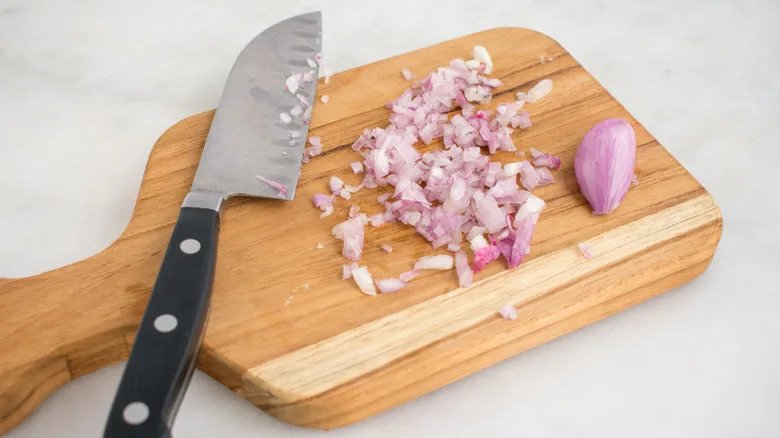
If you want to take your cooking to the next level, mastering how to mince shallots is a must. Knowing the right knife skills can save you time, make your dishes taste better, and keep your kitchen safe.
Whether you’re a beginner or looking to sharpen your technique, this guide will show you simple steps to mince shallots like a pro. By the end, you’ll feel confident handling your knife and adding that perfect touch to your meals.
Ready to improve your kitchen skills? Let’s get started!

Credit: www.aol.com
Choosing The Right Knife
Choosing the right knife is crucial for mincing shallots effectively. The knife you select impacts not only your speed but also the texture and consistency of the mince. A well-suited knife can make this task smoother and safer, turning a potentially frustrating chore into an enjoyable part of your cooking process.
Types Of Knives For Mincing
Not every knife is designed for mincing shallots. A chef’s knife is often the best choice due to its broad blade and sharp edge, which allows for precise control and fast chopping.
Other good options include:
- Paring knife:Great for smaller shallots or detailed work, but can slow you down for larger batches.
- Santoku knife:Popular for its versatility and slightly shorter blade, offering excellent balance.
- Utility knife:Useful if your chef’s knife is too large, though it might not provide the same cutting power.
Think about how much shallot you mince regularly. Do you need a heavy-duty knife or something lighter? The right fit depends on your comfort and the job size.
Maintaining Sharpness
A dull knife makes mincing shallots frustrating and dangerous. Sharp blades glide through the shallot smoothly, giving you cleaner cuts and reducing the chance of slipping.
Keep your knife sharp by:
- Using a honing steel regularly to realign the blade’s edge.
- Sharpening your knife with a whetstone or professional service when it starts to dull.
- Cleaning your knife properly after each use to prevent corrosion.
Have you noticed how a sharp knife changes your cooking experience? It’s not just about efficiency; it’s about enjoying the process more and keeping your fingers safe.
Preparing Shallots For Mincing
Preparing shallots for mincing is the first essential step for great flavor. Proper preparation ensures even cooking and releases the shallot’s natural sweetness. It also makes the mincing process easier and safer. Begin with fresh shallots, firm and dry, free from spots or sprouts.
Clean and prepare the shallots carefully to get the best texture. Removing the outer layers and trimming the ends will help you mince quickly and evenly. This preparation helps avoid tears and prevents uneven pieces.
Peeling Techniques
Start by cutting off the outer skin of the shallot. Use a sharp knife to make a shallow cut along the length. Peel the papery skin away with your fingers. If the skin is stubborn, soak the shallot in warm water for a minute. This loosens the skin for easy removal. Avoid peeling too deep to keep the flesh intact.
Trimming Ends
Trim both the root and the tip ends of the shallot. Cut just enough to remove the dry root base and the stem tip. This makes the shallot easier to hold and chop. Keep the root end intact if you want to halve the shallot first. This holds the layers together for better control while mincing.
Mincing Techniques
Mincing shallots is a key skill for many recipes. It releases flavor and ensures even cooking. Proper mincing makes dishes taste better and look neat. Different techniques suit different skill levels and kitchen tools. Choose a method that feels comfortable and safe for you.
Basic Mince Method
Start by peeling the shallot and cutting off the ends. Slice it in half lengthwise to create a flat surface. Place the flat side down on the cutting board for stability.
Make thin, vertical cuts toward the root, but do not cut through it. Then, slice horizontally across the shallot. Finally, chop across the shallot to create small, even pieces.
Keep your fingers curled inward to avoid injury. Use a sharp knife for clean cuts and less slipping. This method works well for most home cooks.
Advanced Mince Method
Peel and halve the shallot, then remove the root end. Thinly slice the shallot lengthwise without cutting through the root. Make several horizontal cuts from the side, keeping the slices connected at the root.
Hold the shallot firmly, then slice down vertically to mince finely. This technique creates very small pieces quickly. It requires good knife control and a sharp blade.
Use the tip of the knife to guide the cuts precisely. Practice on larger vegetables before trying on shallots. The advanced method is great for recipes needing a fine texture.
Improving Precision
Improving your precision when mincing shallots can change the way you cook and the taste you get from your dishes. Precision helps you avoid uneven cooking and ensures that flavors blend smoothly. It’s not just about chopping fast; it’s about controlling each cut with care.
Controlling Knife Movement
Your knife movement is the foundation of precise mincing. Instead of rushing, focus on small, deliberate cuts. Let your knife do the work by rocking it gently back and forth rather than hacking down hard.
Keep your fingers curled and use your knuckles to guide the blade. This simple trick keeps your cuts even and protects your fingers. Have you noticed how a steady rhythm in your knife movement can turn a frustrating job into a satisfying task?
Consistent Mince Size
Consistency in mince size affects both cooking time and texture. Tiny uneven pieces can burn or stay raw, ruining your dish. Aim for uniform pieces by repeatedly gathering your shallots into a pile and mincing again.
Try using the tip of your knife to gently tap the shallots into smaller bits after your initial cuts. This little extra step makes a big difference in the final result. How often do you check your mince size mid-process to adjust your technique?
Enhancing Speed
Speed is key when mincing shallots efficiently. Enhancing your speed saves time and effort in the kitchen. It also helps maintain a steady rhythm, which leads to cleaner cuts and consistent pieces.
Small changes in your technique can make a big difference. Focus on hand positioning and regular practice to build muscle memory. These help you cut faster without losing control or safety.
Efficient Hand Positioning
Keep your non-dominant hand steady to hold the shallot. Curl your fingertips inward, using knuckles as a guide for the knife. This protects your fingers from accidental cuts.
Hold the knife handle firmly but relaxed. Let your index finger and thumb grip the blade near the base. This improves balance and control while chopping quickly.
Move the knife in a rocking motion. The tip stays on the cutting board, while the blade slices through the shallot. This minimizes wasted movement and speeds up each cut.
Practice Drills
Repeat mincing drills regularly to build speed and confidence. Start slow, focusing on accuracy and safe movements. Gradually increase your pace as you get comfortable.
- Set a timer for 30 seconds and mince as many pieces as possible.
- Count the number of uniform pieces you create in each session.
- Try mincing with different knife types to find what feels best.
Consistent practice trains your hands to move quickly and precisely. Over time, your speed will naturally improve without sacrificing quality.

Credit: www.yahoo.com
Safety Tips
Mastering knife skills is essential, especially when mincing delicate ingredients like shallots. However, safety should always be your top priority in the kitchen. Paying attention to how you handle your knife can prevent injuries and make your cooking experience more enjoyable.
Proper Hand Placement
Your non-dominant hand plays a crucial role in guiding the knife safely. Curl your fingers inward, forming a claw shape, so your knuckles act as a barrier between the blade and your fingertips.
This technique keeps your fingertips out of the blade’s path and gives you better control. Have you noticed how much steadier your chopping becomes when you use this grip?
Avoiding Injuries
Always make sure your knife is sharp. A dull knife requires more force, which increases the chance of slipping and cutting yourself.
Keep your cutting board stable by placing a damp towel underneath it. This simple trick prevents the board from moving and helps you maintain precision.
Take your time when mincing shallots—rushing leads to accidents. Focus on each cut and keep your eyes on the blade to stay safe.
Common Mistakes
Mincing shallots might seem simple but can easily go wrong. Common mistakes affect texture and flavor. Avoid these errors to improve your knife skills.
Over-mincing
Over-mincing creates a mushy texture that loses crunch. Shallots release more juice and can taste bitter. The dish may become watery and less appetizing. Stop mincing once pieces are small and even.
Uneven Cuts
Uneven pieces cook unevenly, causing some to burn and others to stay raw. Large chunks overpower flavor, small bits disappear. Aim for uniform pieces for balanced taste and texture. Practice steady, controlled cuts to achieve this.
Applications Of Minced Shallots
Minced shallots have many uses in cooking. Their fine texture and mild flavor make them a favorite ingredient. They blend well with many dishes, adding depth and aroma. Understanding their applications helps improve your cooking skills.
Culinary Uses
- Mix into salad dressings for a subtle onion taste
- Use in sauces to add sweetness and complexity
- Include in marinades to tenderize and flavor meats
- Sprinkle over roasted vegetables for extra aroma
- Stir into soups and stews for a gentle onion base
- Combine with herbs in compound butters for rich flavor
Flavor Enhancement
Minced shallots enhance dishes without overpowering them. Their mild sweetness balances strong flavors. They release a delicate aroma when cooked gently. Adding them at the right time boosts taste and smell.
Their fine texture lets them melt into dishes. This creates a smooth flavor layer. Raw minced shallots add a fresh, crisp bite. Cooked minced shallots bring out sweetness and soften sharpness.

Credit: www.youtube.com
Frequently Asked Questions
How Do You Properly Mince Shallots?
To mince shallots, peel and halve them first. Slice thinly, then chop finely using a sharp knife. Keep your fingers curled for safety. Minced shallots add a mild, sweet onion flavor to dishes.
What Knife Is Best For Mincing Shallots?
A sharp chef’s knife or paring knife works best. Choose one with a comfortable grip and a sharp blade. This ensures precise cuts and safety while mincing shallots quickly and efficiently.
How To Avoid Tears When Mincing Shallots?
Chill shallots before cutting to reduce eye irritation. Cut near a running fan or ventilated area to disperse fumes. Use a sharp knife to minimize cell damage that releases tear-inducing compounds.
How Fine Should Shallots Be Minced?
Mince shallots finely but not into a paste. Aim for small, even pieces about 1-2 mm in size. This ensures they cook evenly and release balanced flavor in your recipes.
Conclusion
Mincing shallots is easier than it seems. With practice, your knife skills will improve. Always keep your fingers safe and use a sharp knife. Small, even pieces cook better and taste great. Try these steps next time you cook. Enjoy fresh flavors and save time in the kitchen.
Simple skills make a big difference in cooking. Keep chopping, and your meals will shine.
Hi, I’m Daniel Harper, a senior editor here at KitchenBucks.com. For over 10 years, I’ve been exploring kitchen gadgets and appliances to help people find tools that truly add value without breaking the bank. I love simplifying product choices so you can focus more on cooking and less on worrying about what to buy. When I’m not reviewing the latest gadgets, you’ll usually find me experimenting with coffee brewing or firing up the grill for a weekend barbecue.