
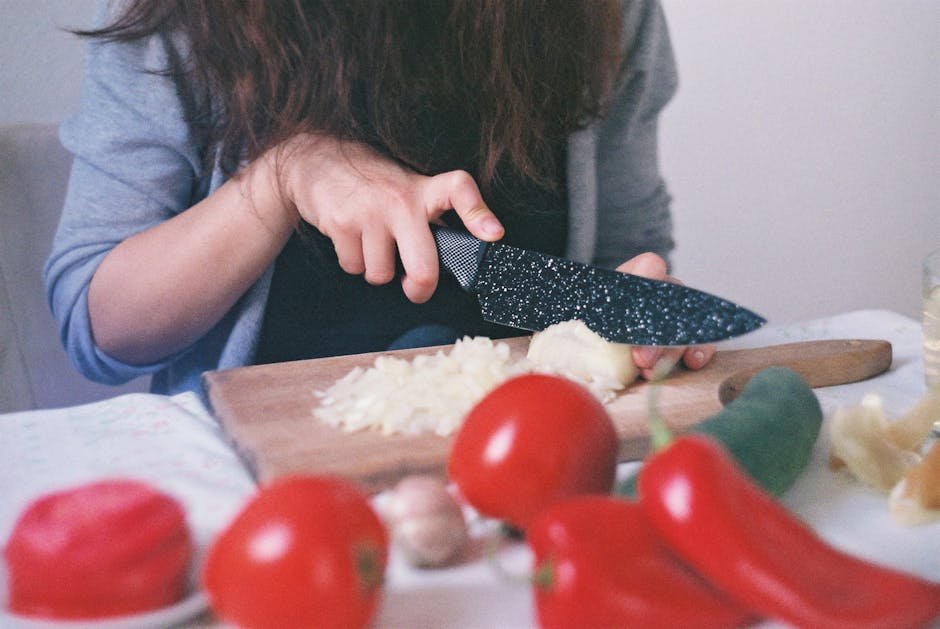
Mastering knife skills can transform your cooking experience, and knowing how to slice and dice an onion is one of the most essential techniques you need. Imagine effortlessly chopping onions without tears, uneven pieces, or wasted time.
This skill not only makes your meals look better but also helps your dishes cook evenly and taste amazing. You’ll discover simple, step-by-step methods to handle onions like a pro. Ready to boost your kitchen confidence and make meal prep quicker and safer?
Let’s get started!

Credit: www.tiktok.com
Choosing The Right Knife
Choosing the right knife is key for slicing and dicing onions safely and quickly. The right knife improves control and reduces the chance of accidents. It also helps create clean, even cuts that cook evenly and look professional. Understanding the best knife types and their features can boost your kitchen confidence.
Types Of Knives For Onions
Not all knives work well with onions. Some knives fit the task better than others.
- Chef’s Knife:Versatile and perfect for onions. It has a wide blade for easy chopping.
- Santoku Knife:A Japanese-style knife. It offers precision and a sharp edge.
- Paring Knife:Small and handy for peeling or trimming onion skin.
Choose a knife that feels comfortable and balanced in your hand.
Knife Size And Sharpness
The size of your knife affects your cutting speed and control.
- A blade between 6 to 8 inches works best for onions.
- Too big can be hard to control; too small slows you down.
Sharp knives cut smoothly and reduce onion juice release.
Dull knives crush the onion and increase tears. Regular sharpening is essential.

Credit: www.tiktok.com
Preparing The Onion
Preparing the onion properly sets the foundation for clean, precise cuts. Taking a moment to prep your onion right makes slicing and dicing easier and safer. You’ll find that a well-prepared onion also helps reduce tears and mess.
Peeling Techniques
Start by cutting off the dry, papery outer skin. You can gently score the skin with your knife to loosen it if it feels stubborn. Sometimes, peeling under a little running water helps remove thin layers without wasting the onion.
Try to remove only the outermost skin and avoid peeling away too many layers. Each layer has flavor and moisture that you want to keep. If you’ve ever wasted too much onion just trying to peel it, you know how important this step is.
Removing The Ends
Next, trim the root and stem ends but leave the root intact if you want to hold the onion together while you cut. This small detail makes your slicing and dicing much more controlled.
Cutting off the ends cleanly also prevents bits of tough, fibrous onion from ending up in your dish. Have you noticed how much easier chopping is when the onion feels stable under your knife? That’s the difference this step makes.
Safe Holding Methods
Holding an onion safely is key to cutting it well and avoiding accidents. Proper grip helps keep your fingers away from the blade. It also gives you better control over the knife. This section covers two important ways to hold an onion securely.
Claw Grip
The claw grip keeps your fingers curled under and away from the blade. Hold the onion with your fingertips bent inward like a claw. The knife blade should rest against your knuckles. This acts as a guide and protects your fingers from cuts. Keep your thumb behind your fingers to avoid slipping. This grip offers stability and safety when slicing and dicing.
Stabilizing The Onion
Stabilizing the onion prevents it from rolling or moving. Start by cutting the onion in half from root to tip. Place the flat side down on the cutting board. This creates a steady base for cutting. Hold the onion firmly but not too tight. Pressing gently ensures the onion stays still without squashing it. A stable onion makes slicing easier and safer.

Credit: www.tiktok.com
Slicing Techniques
Slicing an onion might seem straightforward, but mastering the right techniques can make your cooking safer and more efficient. Slicing affects not only the appearance but also the texture and cooking time of your dishes. Let’s break down two essential slicing techniques you can use to get consistent results every time.
Vertical Slices
Vertical slicing means cutting the onion from root to tip, keeping the slices aligned with the natural grain. This technique helps create long, thin pieces that cook evenly and soften quickly.
To do this, first peel the onion and trim the ends while leaving the root intact. Holding the onion firmly, slice downward from top to bottom, spacing your cuts evenly.
Vertical slices are perfect for caramelizing or using in stir-fries where you want the onion to melt into the dish. Have you noticed how vertical slices hold their shape better in salads or sandwiches?
Horizontal Slices
Horizontal slicing involves cutting across the onion’s layers, perpendicular to the root. This method produces shorter, chunkier pieces that add texture to your recipes.
Start with the peeled onion resting on its side. Slice horizontally into the onion, stopping just before you reach the root to keep the layers together. Then, cut downward to dice or leave as slices.
Horizontal slices bring out a stronger onion flavor and are great for grilling or roasting. Have you tried horizontal slices in fajitas or kebabs? They hold up better to high heat and add a nice bite.
Dicing Techniques
Dicing an onion requires precision and care to achieve neat, even pieces. Good dicing helps cook the onion evenly and improves the dish’s texture. Focus on the knife’s angle and your hand movements for the best results.
Creating Uniform Cubes
Start by cutting the onion in half from root to tip. Peel off the skin and place the flat side down. Make horizontal cuts parallel to the board, stopping before the root. Then, make vertical cuts from top to bottom, again not cutting through the root. Finally, slice across these cuts to form small cubes. Keeping the knife steady and the cuts even creates consistent onion pieces.
Controlling Dice Size
The size of the dice depends on how close your cuts are. For small dice, make thin, close cuts. For larger pieces, space the cuts farther apart. Use the tip of the knife to guide smaller slices. Adjust the knife speed for better control. Practicing helps improve both speed and accuracy over time.
Speed And Efficiency Tips
Improving speed and efficiency while slicing and dicing an onion comes down to control and practice. Fast chopping is safe only when you keep the knife steady and your movements precise. Quick cuts without control can lead to accidents and uneven pieces.
Focus on smooth, consistent motions. Find a rhythm that fits your comfort. This helps save time and reduces hand fatigue. Small changes in how you hold the knife can make a big difference.
Maintaining Knife Control
Hold the knife firmly but not too tight. Your thumb and index finger should grip the blade’s base. The other fingers wrap around the handle. Keep the tip of the knife on the cutting board for stability.
Use your non-cutting hand to guide the onion. Curl your fingers inward. This “claw” shape protects your fingertips. Move your hand slowly forward as you cut. The knife should brush against your knuckles for control.
Practice Drills
Practice makes perfect. Try these drills to build speed and accuracy:
- Slice thin, even pieces of onion repeatedly.
- Dice onions into small cubes, focusing on uniform size.
- Time yourself to track progress.
- Practice cutting other vegetables for variety.
Regular drills build muscle memory. Your hands learn the motion without thinking. This leads to faster, safer chopping over time.
Common Mistakes To Avoid
Cutting an onion looks simple but many common mistakes can cause problems. These errors affect the texture, taste, and safety of your cooking. Avoiding these mistakes leads to better dishes and safer kitchen work.
Uneven Cuts
Uneven onion pieces cook at different speeds. Some parts become mushy while others stay raw. This spoils the dish’s texture and flavor. Uneven cuts also make presentation less appealing.
Using a dull knife or rushing the process often causes uneven slices. Taking time to cut with a sharp knife helps keep pieces the same size. Consistent cuts improve cooking results and appearance.
Injury Risks
Onion cutting can cause cuts or injuries. Holding the onion incorrectly increases the risk. Fingers too close to the blade are dangerous. A slippery onion can also lead to accidents.
Use the “claw grip” to protect fingers. Keep the knife sharp to reduce slipping. Cut slowly and focus on the task. These habits lower injury chances and make slicing safer.
Cleaning And Knife Care
Proper cleaning and care of your knife keep it safe and sharp. A clean knife cuts better and lasts longer. Regular maintenance prevents rust and damage. Handling knives with care protects both the blade and your fingers.
Washing Tips
Wash knives by hand immediately after use. Use warm, soapy water and a soft sponge. Avoid harsh scrubbing or abrasive pads.
Never put knives in the dishwasher. The heat and detergent can dull and damage the blade. Dry knives thoroughly with a clean towel right after washing. Store knives in a dry place to prevent rust.
Sharpening Basics
Keep your knife sharp for safer and cleaner cuts. Use a sharpening stone or a honing rod regularly. Hold the blade at a 20-degree angle to the sharpener.
Draw the blade smoothly across the sharpener from heel to tip. Repeat on both sides evenly. Test sharpness by slicing a piece of paper or a tomato. Stop sharpening once the knife cuts smoothly without tearing.
Frequently Asked Questions
How Do You Safely Slice An Onion?
To safely slice an onion, first cut off the top and peel the skin. Keep the root intact. Use a sharp knife and hold the onion firmly. Slice downward with controlled, even strokes to avoid slipping and injury.
What Is The Best Knife For Dicing Onions?
A sharp chef’s knife is best for dicing onions. It offers control and precision for clean cuts. Avoid dull knives, as they increase the risk of slipping and uneven pieces. Keep the blade well-maintained for optimal results.
How Can I Prevent Tears While Cutting Onions?
To prevent tears, chill the onion before cutting. Use a sharp knife to reduce cell damage. Cut near an open flame or ventilated area to disperse irritants. These tips minimize the release of sulfur compounds that cause eye irritation.
What Is The Easiest Way To Dice An Onion Quickly?
To dice quickly, slice the onion vertically, then horizontally, keeping the root intact. Finally, slice across the cuts to create uniform cubes. This method speeds up dicing and ensures even pieces for cooking.
Conclusion
Mastering onion slicing is easier than you think. With practice, your skills improve. Start with the right knife. Safety matters, so keep fingers away. Practice makes cutting faster and cleaner. Use sliced onions in your favorite dishes. Enhance flavors with well-cut onions.
Cooking gets better with good knife skills. Try different techniques and find your style. Slicing onions can be fun. Enjoy the process and experiment. Soon, you slice onions like a pro. Keep practicing and stay safe. Happy cooking!
