
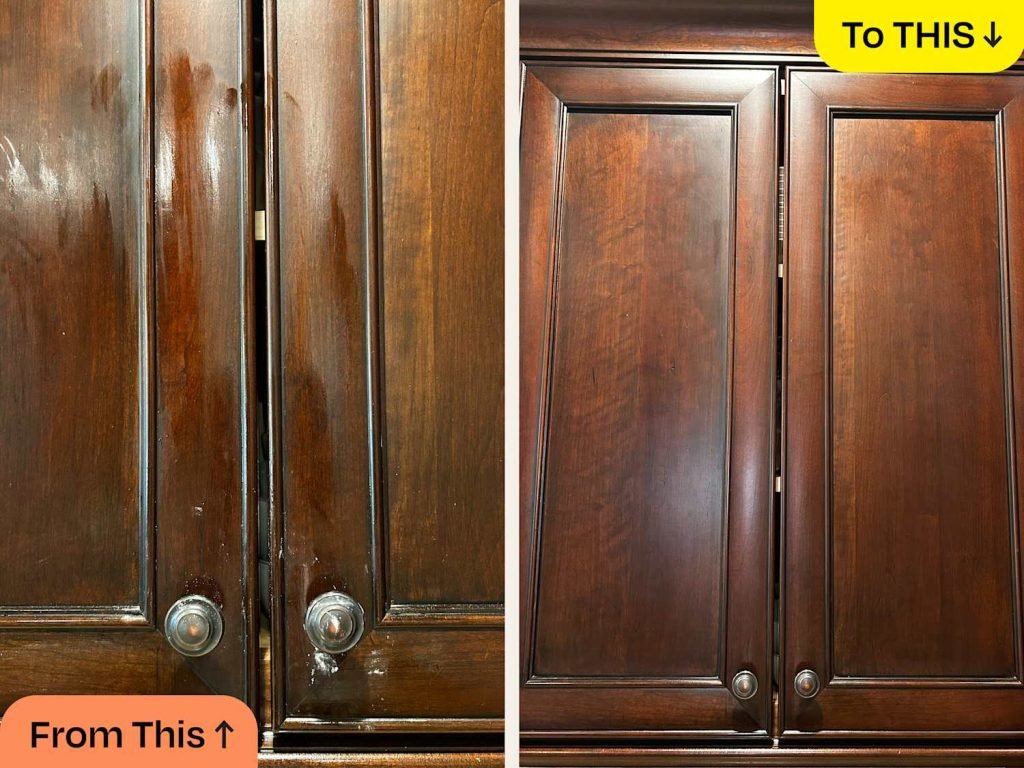
You know that sticky, stubborn layer of grease clinging to your kitchen cabinets? It’s not just an eyesore; it’s a magnet for dust and grime, turning your culinary haven into a cleaning nightmare.
How many times have you wiped those cabinets only to find the grease defiantly clinging on? You’re not alone. Many people struggle to find the perfect solution to this greasy problem. But imagine walking into your kitchen and seeing cabinets that shine like new, feeling the satisfaction of a spotless space.
The secret to achieving this is simpler than you think, and it doesn’t involve harsh chemicals or hours of scrubbing. Ready to discover what truly cleans grease off kitchen cabinets and transforms your kitchen into the pristine heart of your home? Keep reading. You’re just a few steps away from unlocking the secret to a sparkling, grease-free kitchen.

Credit: www.facebook.com
Causes Of Grease Buildup
Grease buildup on kitchen cabinets often comes from cooking oils, food splatters, and steam. These everyday activities create a sticky residue on surfaces. Regular cleaning with suitable degreasers helps maintain a clean kitchen environment.
Grease buildup on kitchen cabinets is a common nuisance that can make even the most spotless kitchen appear grimy. This sticky mess accumulates over time, often without you even noticing, until one day the cabinets look and feel unpleasant. Understanding the root causes of grease buildup is crucial for maintaining a clean and welcoming kitchen.Cooking Methods
Cooking is an art, but it can be a messy one. Frying, grilling, and sautéing release tiny grease particles into the air. These particles eventually settle on your cabinets. The more you cook, especially without proper ventilation, the more likely you are to see grease buildup.Lack Of Ventilation
Good ventilation is key in any kitchen. Without it, grease particles linger in the air and settle on surfaces. Ensure your kitchen has a reliable range hood or exhaust fan to minimize this issue. Regularly using these can help keep your cabinets cleaner for longer.Infrequent Cleaning
It’s easy to overlook cabinet cleaning during your regular kitchen chores. Grease hardens over time, making it more difficult to remove. Regular cleaning can prevent grease from becoming a stubborn problem.Type Of Cooking Oils
Different oils behave differently when heated. Oils with low smoke points, like olive oil, tend to release more grease into the air. Consider using oils with higher smoke points to reduce airborne grease.Spills And Splashes
Cooking can be a dynamic activity. Spills and splashes are bound to happen. However, leaving them unattended can contribute to buildup. Wiping spills immediately can prevent them from becoming permanent stains. Do you notice any of these factors in your kitchen? Addressing them might just be the key to keeping those cabinets sparkling clean. Remember, a little prevention goes a long way in maintaining a fresh and inviting kitchen space.
Credit: www.facebook.com
Natural Cleaning Solutions
Cleaning grease off kitchen cabinets can be challenging. Natural solutions offer effective and safe methods. They are environmentally friendly and gentle on surfaces. These solutions use common household items. Here are some powerful natural cleaning options.
Vinegar And Baking Soda
Vinegar is a strong cleaner. Combine it with baking soda for extra power. Mix equal parts vinegar and water. Add a spoonful of baking soda. Apply the mixture to greasy spots. Scrub gently with a sponge. Rinse with warm water. Vinegar’s acidity breaks down grease. Baking soda adds scrubbing power. This combo leaves cabinets sparkling clean.
Lemon Juice And Salt
Lemon juice is another natural cleaner. Its acidity dissolves grease effectively. Mix lemon juice with salt for a powerful scrub. Salt adds texture to the cleaning process. Cut a lemon in half. Sprinkle salt on the cut side. Use it to scrub greasy areas. Rinse with warm water. Lemon leaves a fresh scent behind. It’s both clean and refreshing.
Castile Soap Mix
Castile soap is gentle yet effective. It’s made from vegetable oils. Mix it with warm water for a cleaning solution. Use a sponge to apply the mixture to cabinets. Scrub gently until the grease is gone. Rinse with clean water. Castile soap is safe for most surfaces. It cleans without harsh chemicals. This solution is perfect for everyday cleaning needs.
Commercial Cleaners
Commercial cleaners are effective for removing grease from kitchen cabinets. They cut through stubborn grease easily, leaving surfaces clean. Use a soft cloth to apply, ensuring a spotless finish without damaging the cabinet’s surface.
Grease buildup on kitchen cabinets can be a real eyesore. It not only affects the aesthetics of your kitchen but can also be stubborn to remove. While homemade solutions are great, sometimes you need the power of commercial cleaners to tackle those tough stains. These cleaners are specifically formulated to break down grease effectively and are a go-to for many households.Degreasing Sprays
Degreasing sprays are convenient and easy to use. They come in handy bottles that allow you to spray directly onto the greasy surfaces. Simply spray, let it sit for a few minutes, and wipe away the grease with a clean cloth. Popular brands like Method and Simple Green offer non-toxic options, making them safer for you and your family. These sprays are perfect for quick clean-ups and regular maintenance. Have you ever tried a degreasing spray and noticed how effortlessly it worked?Heavy-duty Cleaners
For those really stubborn grease stains, heavy-duty cleaners might be the answer. These cleaners are designed to tackle the toughest of kitchen messes. They usually contain stronger chemicals, so it’s important to follow the instructions carefully. Brands like Krud Kutter and Zep have been praised for their effectiveness against stubborn grease. Remember to wear gloves and ensure proper ventilation when using these powerful products. What has been your experience with heavy-duty cleaners—did they solve your grease problems?Cleaning Techniques
Vinegar mixed with water effectively cuts through grease on kitchen cabinets. Baking soda paste also tackles stubborn spots. For tougher stains, dish soap and warm water can work wonders, leaving surfaces clean and fresh.
Cleaning grease off kitchen cabinets requires effective techniques. Grease can stubbornly cling to surfaces, making it essential to use the right methods. Different techniques offer various benefits to ensure your cabinets look pristine and maintain their quality. Discover gentle scrubbing and the use of microfiber cloths to effectively tackle grease.Gentle Scrubbing
Gentle scrubbing is effective for removing grease without damaging cabinets. Use a soft-bristled brush or a sponge. These tools help lift grease while being kind to the cabinet surface. Start by mixing warm water with a mild dish soap. Dip the brush or sponge into the solution. Gently scrub the greasy areas in circular motions. This method breaks down grease, making it easier to wipe away. Avoid using harsh scrubbers to prevent scratches.Use Of Microfiber Cloths
Microfiber cloths are ideal for cleaning grease off cabinets. They are soft and absorbent, making them perfect for delicate surfaces. Start by dampening the cloth with warm water. Wipe the cabinet gently, focusing on greasy spots. Microfiber cloths trap dirt and grease effectively. Their fibers lift residue without leaving scratches. Rinse the cloth regularly to remove collected grease. Finish by drying the cabinets with a clean, dry microfiber cloth. This prevents water stains and keeps cabinets looking fresh.Preventive Measures
Kitchen cabinets can be a magnet for grease and grime, especially if you love cooking up a storm. While cleaning is essential, wouldn’t it be great if you could avoid the buildup in the first place? Let’s explore some preventive measures that can help keep your cabinets looking pristine.
Regular Maintenance
Consistency is key when it comes to maintaining the cleanliness of your kitchen cabinets. A quick wipe down after cooking can prevent grease from settling. Use a damp microfiber cloth to gently clean the surfaces. The soft texture helps avoid scratches while effectively removing any residue.
Consider setting a weekly schedule for deeper cleaning. Mix warm water with a few drops of dish soap, and gently scrub the cabinets with a soft sponge. This routine helps tackle any stubborn spots before they become a bigger problem.
Have you noticed areas that accumulate more grease than others? Pay special attention to those spots during your regular maintenance. Tackling them early can save you time and effort down the road.
Protective Coatings
Applying protective coatings can be a game changer in the battle against grease. Products like cabinet sealants or wax can create a barrier that makes it harder for grease to adhere. They’re often easy to apply and can add a subtle shine to your cabinets.
Think of protective coatings as an investment in your kitchen’s longevity. While they might require some initial effort, the benefits of reduced cleaning time and better-looking cabinets are worth it.
Have you ever tried using natural alternatives like beeswax polish? They’re not only effective but also add a pleasant aroma to your kitchen. Plus, they are eco-friendly and safe for you and your family.
So, what preventive measures will you adopt to protect your kitchen cabinets from grease? Regular maintenance and protective coatings can make a significant difference in maintaining their beauty and functionality. Give it a try and enjoy a cleaner, fresher kitchen every day!

Credit: www.facebook.com
Expert Tips And Tricks
Grease on kitchen cabinets can be removed using a mixture of vinegar and water. Baking soda combined with dish soap also effectively tackles stubborn stains. Regular cleaning prevents buildup and keeps cabinets looking fresh.
Cleaning grease off kitchen cabinets can be a daunting task, but with the right approach, it doesn’t have to be. Over the years, I’ve discovered some expert tips and tricks that can make this chore much easier. These insights ensure that your cabinets stay spotless without damaging their finish.Frequency Of Cleaning
Regular maintenance is key to keeping grease at bay. Aim to clean your cabinets every couple of weeks. This prevents grease from building up and becoming harder to remove. Consider wiping down cabinets after cooking sessions that involve frying or grilling. This simple habit can save you a lot of elbow grease down the line.Avoiding Harsh Chemicals
Using harsh chemicals might seem like an easy solution, but it can damage your cabinets in the long run. Opt for natural cleaners like vinegar and baking soda. They are effective against grease and gentle on your cabinet’s finish. A mixture of warm water and dish soap can also work wonders. It’s a safe and easy solution that most people already have at home. Remember, the goal is to clean without causing harm. What other natural ingredients could you try in your cleaning routine?Frequently Asked Questions
How Do You Get Stubborn Grease Off Kitchen Cabinets?
Use a mixture of vinegar and water to clean grease. Apply baking soda for stubborn spots. Wipe with a damp cloth. Dry thoroughly to prevent moisture damage. Repeat if necessary for tough stains.
What Is The Best Degreaser For Kitchen Cabinets?
Krud Kutter Original Concentrated Cleaner Degreaser is highly recommended for kitchen cabinets. It effectively removes grease, grime, and stains. This non-toxic formula is safe for various surfaces, ensuring a clean and fresh kitchen. For best results, follow the instructions on the label.
Does Murphy’s Oil Soap Remove Grease From Kitchen Cabinets?
Yes, Murphy’s Oil Soap effectively removes grease from kitchen cabinets. It’s gentle and safe for wood surfaces. Use a soft cloth for best results. Regular cleaning helps maintain cabinet appearance and cleanliness.
What Is The Best Product To Remove Kitchen Grease?
The best product to remove kitchen grease is a degreasing spray with natural ingredients like vinegar or lemon. These solutions effectively cut through grease and grime, leaving surfaces clean. Brands like Simple Green or Method offer eco-friendly options for a sparkling kitchen.
Conclusion
Cleaning grease off kitchen cabinets doesn’t have to be hard. Use natural solutions like vinegar or baking soda. They work well and are gentle on surfaces. Regular cleaning helps keep cabinets fresh and shiny. Remember, a clean kitchen makes cooking more enjoyable.
Try these simple tips to tackle grease effectively. You’ll see a big difference with little effort. Happy cleaning!
