
Your dishwasher runs almost every day, yet most people never clean it. Food particles, grease, and soap residue build up over time, and hard water leaves mineral deposits that trap odors and reduce performance. Knowing how to clean dishwasher with baking soda and vinegar gives you a simple, non-toxic way to tackle all of it.
Both ingredients are probably already in your pantry. They cost less than a dollar per use and work without harsh chemicals.
Research from the American Cleaning Institute suggests that regular dishwasher maintenance can extend appliance life and improve wash results. NSF International testing found that dishwashers rank among the top spots for bacterial contamination in kitchens, which makes periodic deep cleaning not just a performance issue but a hygiene one. As of 2026, homeowners spend an average of $8 to $15 per month on specialty dishwasher cleaners, but a box of baking soda and a bottle of vinegar cover the same ground for a fraction of that cost.
The method is straightforward, but getting the order and timing right is what separates a truly clean dishwasher from one that just smells like vinegar.
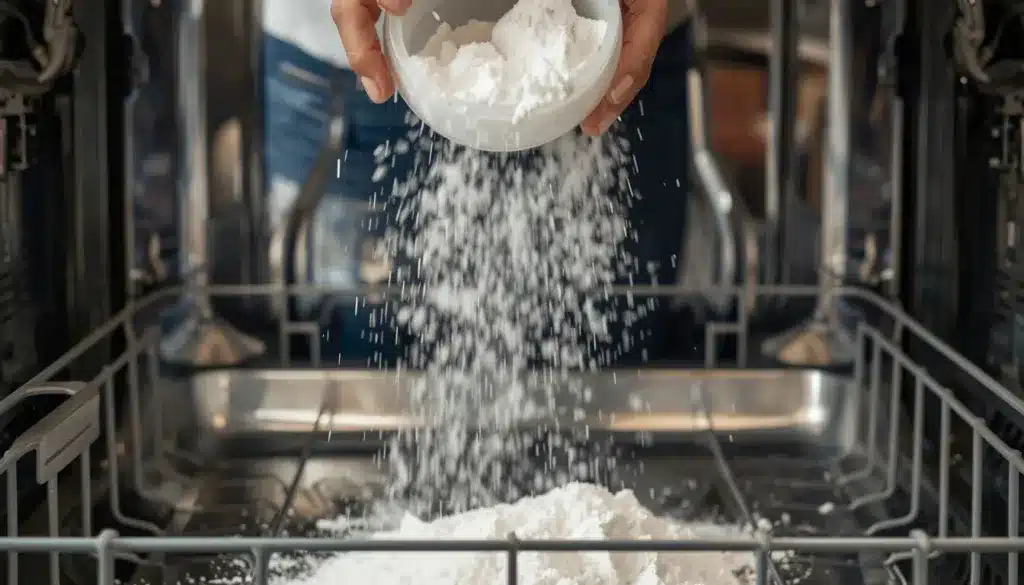
Image source: Bing (Web (fair-use with source credit))
Quick Answer
To clean your dishwasher with baking soda and vinegar, empty the appliance first. Sprinkle one cup of baking soda across the bottom of the tub. Place one cup of white distilled vinegar in a dishwasher-safe cup on the top rack.
Run a hot water cycle. For light maintenance, this is all you need. For heavier buildup, repeat the process or add a second vinegar-only rinse.
Why Your Dishwasher Actually Needs Cleaning
Most people assume the dishwasher cleans itself because it runs with hot water and detergent. That is not quite how it works. Food debris settles in the filter, around the door gasket, and in the corners of the spray arms.
Over time, that debris breaks down into biofilm, a thin layer that bacteria love. Grease from dishes coats the interior surfaces. Soap scum from hard water leaves a cloudy film.
Mineral deposits from hard water settle on heating elements and walls.
Aggregate reviews from appliance repair technicians indicate that the majority of dishwasher performance complaints, from cloudy glasses to bad smells, trace back to neglected filters and buildup. Manufacturers recommend cleaning the filter monthly and running a periodic deep clean. Without it, your machine works harder, uses more energy, and produces worse results.
A quick visual check takes thirty seconds. Open the door and look at the bottom, the filter area, and around the door edges. If you see film, residue, or smell anything sour, it is time to act.
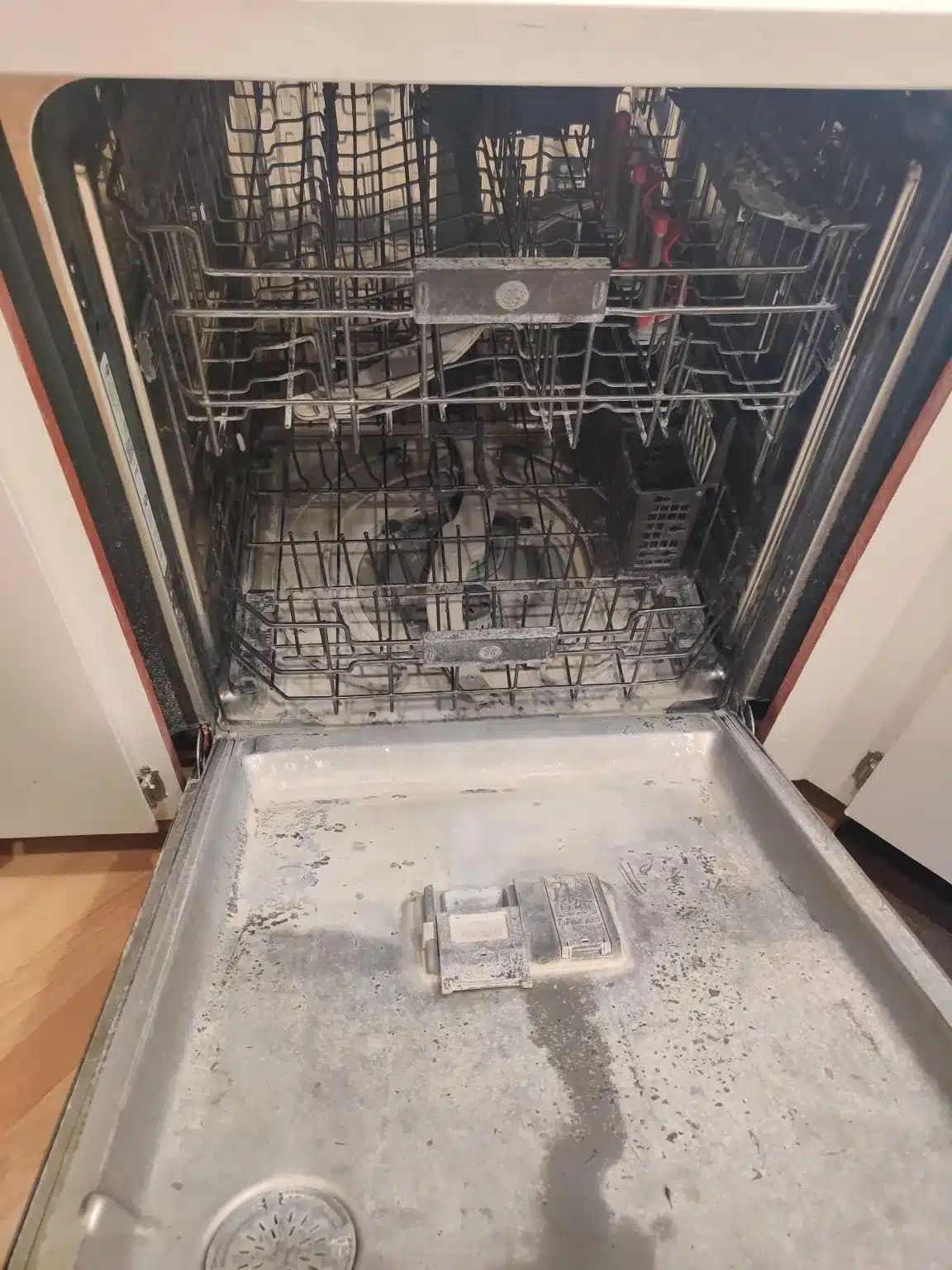
Image source: Bing (Web (fair-use with source credit))
How Often Should You Clean It?
If you run your dishwasher daily, aim for a full deep clean once a month. Households with weekly use can stretch to every six weeks. If you have hard water, increase frequency to every two weeks because mineral deposits build faster.
Also clean after running particularly greasy loads or cooking holiday meals when the machine works hardest.
How Baking Soda and Vinegar Work Together
Baking soda is sodium bicarbonate, a mild alkali with a pH around 8.3. It acts as a gentle abrasive that loosens grime without scratching stainless steel or plastic surfaces. It also neutralizes acids and absorbs odors rather than just masking them.
Vinegar is acetic acid, typically five percent concentration in household bottles, with a pH around 2.4. It dissolves mineral deposits, cuts through grease, and breaks down soap scum.
When you combine them, they react and produce carbon dioxide gas, which creates the fizzing you see. That bubbling action helps physically lift debris from surfaces. However, mixing them in a bowl first wastes the reaction on water instead of your dishwasher.
The proper method uses each ingredient separately and in sequence. First, baking soda goes in dry on the bottom of the tub where it can scrub the surfaces as water moves during the cycle. Then vinegar goes in a cup on the top rack so it disperses through the spray arm and reaches the interior walls and door gasket.
They never meet in a bowl, and that is intentional.
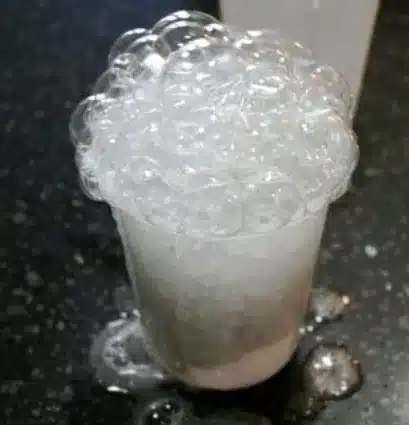
Image source: Web (Bing) / fity.club (Web image (fair-use with source credit))
What Each Ingredient Does Best
Baking soda handles odor, light grease, and mild abrasive cleaning. It works well on the bottom of the tub and around the drain area. Vinegar tackles hard water deposits, soap scum, and mineral buildup on spray arms and interior walls.
Together they cover more ground than either alone, but neither replaces a dedicated filter cleaning or a commercial descaler for severe hard water issues.
Which Cleaning Approach Fits Your Dishwasher?
Not every dishwasher needs the same treatment. The right approach depends on what you are dealing with. Light maintenance is for preventive care.
Moderate cleaning tackles existing odors and visible film. Heavy-duty cleaning addresses hard water crust and accumulated grease. Use the decision guide below to pick the right path.
| Condition | Symptoms | Recommended Approach |
|---|---|---|
| Light maintenance | No odor, no visible buildup, regular use | Baking soda only, monthly |
| Moderate cleaning | Musty smell, light film, weekly use | Baking soda followed by vinegar cycle |
| Heavy-duty cleaning | Hard water streaks, greasy residue, slow drainage | Vinegar soak first, then baking soda cycle, repeat if needed |
| Filter issue | Persistent odor after cleaning | Manual filter removal and rinse, then proceed with baking soda and vinegar |
If your dishwasher has a removable filter, clean that first before running any baking soda or vinegar cycle. A clogged filter will trap debris and cause the same problems you are trying to solve. Check your owner's manual for the filter location and removal instructions.
Most modern dishwashers have a cylindrical mesh filter in the bottom center beneath the spray arm. For broader kitchen cleaning context, see best product for cleaning kitchen grease.
How to Clean Your Dishwasher with Baking Soda and Vinegar
Light Refresh: Monthly Maintenance Clean
This approach works when your dishwasher is functioning well and just needs a tune-up. Empty the appliance completely. Pull out the bottom rack and check the drain area.
Remove any visible debris by hand. Sprinkle one half cup of baking soda across the bottom of the tub, focusing on the drain and corners. Place a cup of white vinegar in a dishwasher-safe bowl on the top rack.
Run the hottest cycle available, ideally a normal or heavy wash with high heat. That is it. The whole process takes about ten minutes of prep and roughly an hour for the cycle to complete.
Moderate Buildup: Tackling Odors and Soap Scum
When you notice a smell or see a hazy film on the interior, step up the approach. Start with the filter. Twist the cylindrical filter counterclockwise and pull it out.
Rinse it under hot running water and scrub with a soft brush. Reinstall it firmly. Next, sprinkle one full cup of baking soda across the bottom.
Place one cup of vinegar in a dishwasher-safe cup on the top rack. Run a hot cycle. Once it finishes, open the door and wipe the door gasket with a damp cloth.
The gasket traps moisture and debris, and it often gets overlooked. Let the door air-dry slightly open to prevent mildew.
You might also consider running a second short cycle with just hot water if any vinegar smell lingers. Most dishwashers handle this method without issue, but if your machine has a stainless steel interior and you notice streaks, wipe the surfaces with a soft cloth after the cycle finishes.
Heavy Duty: Removing Hard Water Deposits and Grease
Hard water leaves white calcium or lime deposits on the tub walls, spray arms, and heating element. Grease buildup looks like a slick film on the bottom and sides. For this level, you may need two steps and possibly a repeat.
Start with a vinegar soak. Place one to two cups of white vinegar in a dishwasher-safe cup on the top rack. Run the shortest cycle with the hottest water, or simply pour the vinegar in and let the machine sit empty for fifteen to thirty minutes without running it.
This gives the acid time to dissolve deposits before the cycle begins. After the soak, run a full hot cycle.
Follow that with a baking soda treatment. Sprinkle one cup of baking soda across the bottom and run another hot cycle. For severe buildup, a second vinegar cycle between the baking soda applications helps.
Inspect the spray arms after cleaning. Remove them if necessary and clear any blocked holes with a toothpick. Clogged spray arms reduce wash performance and cause the same spotting on dishes you were trying to fix.
If mineral deposits persist after two full cycles, switch to citric acid as a stronger alternative. One quarter cup of food-grade citric acid powder works better than vinegar for hard water scale. It is available at most grocery stores in the canning aisle.
Dissolve it in warm water and run the same process. For ongoing hard water issues, consider a water softener or a dishwasher salt specifically designed for the appliance.
Mistakes That Waste Your Time
Skipping the filter is the most common mistake. Running baking soda and vinegar with a clogged filter does not fix the problem because the debris stays trapped below. Always clean the filter first.
Using the wrong vinegar is another issue. Use plain white distilled vinegar. Apple cider vinegar, balsamic vinegar, and flavored varieties leave residues and can stain the interior.
Cleaning vinegar, which has a higher acetic acid concentration around six percent, works fine and actually performs better for hard water, but standard five percent food-grade vinegar is sufficient for most situations.
Adding baking soda and vinegar to the detergent dispenser is tempting but wrong. The dispenser opens during the wash cycle, which means both ingredients hit your dishes instead of the dishwasher surfaces. That wastes their cleaning power on items that are already being cleaned by detergent.
Keep them off to the side or in a cup on the rack.
Running the wrong cycle is less effective than it sounds. A short or eco cycle uses cooler water and shorter wash times, which reduces how well the ingredients work. Always choose the hottest, longest cycle available for deep cleaning.
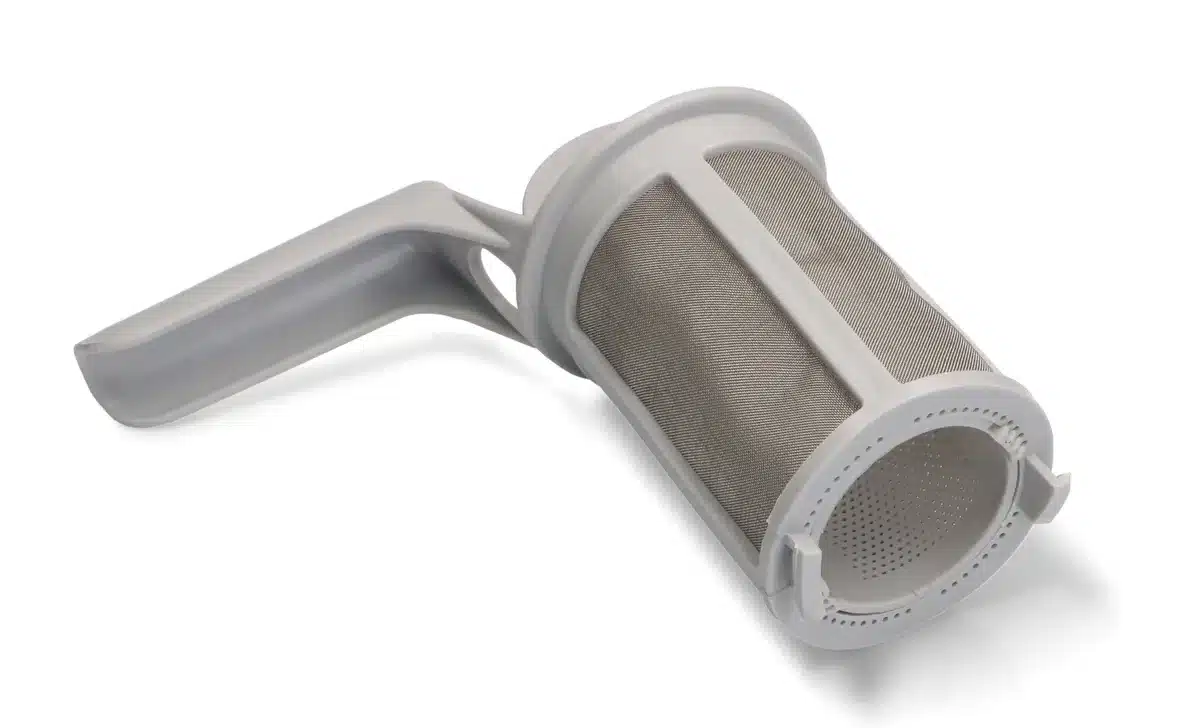
Image source: Web (Bing) / opdistributors.com.au (Web image (fair-use with source credit))
What About Mixing Them First?
Do not do it. The fizzing reaction is satisfying to watch, but in a closed dishwasher, it produces mostly foam and steam. The carbon dioxide escapes through the vent, and the cleaning agents do not have time to work on the tub surfaces.
By the time the cycle starts, most of the active chemistry has dissipated. Keep them separate and sequence them correctly.
Can You Use Bleach Instead?
For mold and mildew on rubber seals, a diluted bleach solution works. Use one quarter cup of liquid chlorine bleach mixed with water and wipe the gasket manually. Do not run bleach in the dishwasher cycle unless the interior is stainless steel, and even then, bleach can damage plastic components and rubber seals over time.
For routine cleaning, vinegar is a safer choice. If you use bleach, ventilate the kitchen and run a plain water cycle afterward to rinse residue.
When Baking Soda and Vinegar Will not Cut It
Some dishwasher problems are mechanical. If your machine does not drain properly, the issue is likely a clogged drain hose, a faulty pump, or a kinked connection. No amount of baking soda fixes a broken pump.
If you hear unusual noises, see water pooling at the bottom after a cycle, or notice dishes coming out wet despite a full run, check the drain and pump first. Consult your owner's manual or call a repair technician.
Rust stains on the interior racks indicate damaged coating where the finish has worn away. The exposed metal corrodes over time. Natural cleaners cannot reverse rust.
You need a rust repair kit designed for appliance surfaces, or in severe cases, a professional recoating or replacement.
Persistent bad smells after a thorough cleaning point to a deeper issue. Run a drain-cleaning enzyme product through your kitchen sink and garbage disposal if your dishwasher connects to one. Check the air gap and drain hose for clogs.
Occasionally, dishwashers connected to garbage disposals develop smell backflow if the disposal flange is old or cracked.
Natural Alternatives Worth Knowing
Citric acid powder dissolves hard water scale more effectively than vinegar. Use one quarter cup per hot cycle. Hydrogen peroxide disinfects without leaving residues.
Pour one cup into a dishwasher-safe cup on the top rack and run a hot cycle. It breaks down into water and oxygen, leaving no harmful residues. Lemon juice is another acid option, but it is weaker than vinegar and can leave sugars that attract bacteria.
Some people place lemon halves in the top rack for a fresh scent, but for actual cleaning, lemon juice does not match vinegar's effectiveness. If you want a fresh scent, add a few drops of food-grade essential oil to the vinegar before use, though this is purely cosmetic.
Commercial dishwasher cleaners offer convenience and stronger formulations when needed. Products designed specifically for dishwasher descaling contain citric acid or sulfamic acid in precise concentrations. They are worth keeping on hand for quarterly deep cleans in areas with very hard water.
Natural cleaning works well for regular maintenance, but a dedicated descaler handles buildup that home remedies struggle to shift.
Pros and Cons: Is This Method Right for You?
The baking soda and vinegar approach works best for routine maintenance and mild to moderate cleaning. It is non-toxic, inexpensive, and readily available. It handles odors, light grease, and soap scum effectively.
For monthly maintenance, it is hard to beat.
The limitations matter, though. Vinegar is a mild acid, not a sanitizer. It reduces bacteria but does not kill all pathogens.
For households with immune-compromised individuals or high hygiene standards, a commercial dishwasher cleaner or a sanitizing cycle is worth considering. The method also struggles with heavy limescale in very hard water areas without repeated applications.
If you value simplicity and avoiding harsh chemicals, this method checks every box. If you need to descale a badly scaled machine or tackle stubborn mold in rubber gaskets, supplement with citric acid or a targeted commercial product. The natural approach works best as part of a regular maintenance habit rather than a one-time rescue effort.
Keeping Your Dishwasher Fresh Between Deep Cleans
A few habits reduce how often you need to deep clean. Run the garbage disposal before starting the dishwasher so wastewater drains properly. Use a rinse aid to prevent water spots and help dishes dry faster.
Leave the door cracked open between uses so moisture evaporates. Wipe the door gasket once a week with a damp cloth to prevent mildew buildup.
Check and empty the silverware basket regularly. Small pieces of food trapped in utensil slots break down into odor sources. Shake out crumbs and rinse the basket under hot water every few days.
If your dishwasher has a built-in air freshener compartment, use it, but avoid overloading it with scented pods that can leave residue on dishes.
For those interested in broader kitchen cleaning routines, our guide on how to clean stainless appliances naturally covers surfaces that interact with your dishwasher daily. Keeping the surrounding area clean complements the dishwasher care itself. Regular wipe-downs of counters and sinks near the dishwasher prevent cross-contamination.
If you use best degreaser for pans solutions for cookware before loading, less grease enters the dishwasher overall. Pre-rinsing heavily soiled dishes under the tap also reduces buildup in the filter and drain. These small habits extend the time between deep cleans and keep your machine running efficiently.
Frequently Asked Questions
Can I use baking soda and vinegar in the same cycle?
Yes. Sprinkle baking soda on the tub bottom first, then place vinegar in a cup on the top rack. They distribute through the wash without mixing in a container.
How much baking soda and vinegar do I need?
One half to one cup of baking soda works for light maintenance. One to two cups of white distilled vinegar is the standard range. More is not necessarily better.
Excessive baking soda can leave a residue. Excessive vinegar increases drying time and smell.
Will vinegar damage my dishwasher?
No. Standard five percent white distilled vinegar is safe for stainless steel and plastic components. The rubber door gasket tolerates vinegar without issue.
Avoid using vinegar undiluted on natural stone countertops if you remove the rack to clean the interior.
How long does the cleaning process take?
Plan for about ten minutes of prep work and sixty to ninety minutes for the wash cycle. If you add a second vinegar soak or a second cycle, add another hour. The process fits easily into a morning or afternoon without active attention.
Is this method safe for septic systems?
Yes, in normal amounts. One to two cups of vinegar per cycle is well within the tolerance of most residential septic systems. Baking soda is also septic-safe.
Avoid pouring large quantities or using this method daily if your system is sensitive, but monthly cleaning poses no risk.
How often should I clean the filter?
Every four to eight weeks depending on use. A clogged filter traps debris and causes the same problems you are trying to solve. For more on kitchen cleaning routines, see best product for cleaning kitchen grease.
The Bottom Line
Cleaning your dishwasher with baking soda and vinegar works when you apply it correctly. The order matters, the amounts matter, and the cycle temperature matters. Start with a filter check, then choose your approach based on what you see inside.
Monthly maintenance with this method keeps the machine fresh and working well without the cost or chemical exposure of commercial cleaners.
If buildup is heavy or hard water is a constant issue, supplement with citric acid or a dedicated descaler. For mechanical problems like poor drainage or strange noises, natural cleaning will not fix them. Know when to call a repair technician rather than hoping a deeper clean solves the problem.
A well-maintained dishwasher lasts longer, washes better, and costs less to operate. A monthly habit with pantry staples is one of the simplest ways to protect that investment.
