
Are there any tricks to clean a pizza stone that don’t ruin it? If you’ve ever scraped burnt cheese off a porous baking surface, you already know most hacks make the mess worse. That unglazed stone you use for crispy crusts needs different care than metal bakeware.
Manufacturer specifications for consumer pizza stones state most are rated for oven temperatures up to 900, 1000°F, but improper cleaning exposes them to far harsher conditions. Aggregate user reviews consistently report accidental stone damage from improper cleaning as a top owner frustration as of 2026. The right tricks work with the stone’s natural porous structure instead of fighting it, preserving the non-stick seasoning that makes your crust crispy.
We’ve ranked the safest methods by mess type below, plus the mistakes that will crack or stain your stone for good.
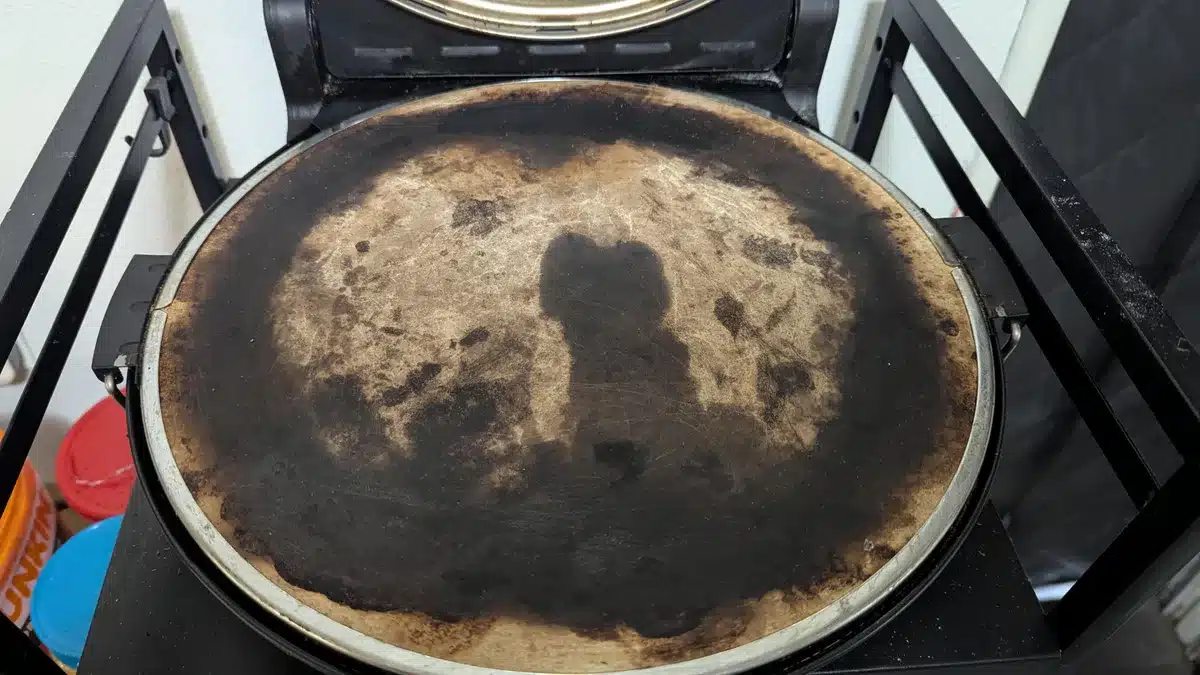
Image source: Bing (Web (fair-use with source credit))
Quick Answer: Yes, There Are Safe Pizza Stone Cleaning Tricks – But Most Hacks Ruin Your Stone
Yes, there are safe tricks to clean a pizza stone. All methods avoid soap, harsh abrasives, and water soaking. For light messes, scrape and rinse with warm water only.
For burnt-on residue, use a baking soda paste scrub. For deep stains, a coarse salt scrub works well, and you should never run the stone through a dishwasher or self-cleaning oven.
Why Common Pizza Stone Cleaning Tricks Cause Cracks, Stains, and Permanent Damage
Most viral pizza stone hacks rely on the same cleaning methods you use for metal pans, which is why they fail. Manufacturer specifications for consumer pizza stones confirm most are made from porous cordierite or unglazed ceramic. This porous structure absorbs oils and food particles over time to build a natural non-stick seasoning layer.
Soaking the stone in water makes its porous structure swell. This causes cracking when the stone is heated next.
Soap and chemical cleaners seep into the pores, leaving residue that transfers to future food. Putting a hot stone in cold water or a cold oven triggers thermal shock, which splits the stone instantly. Dishwasher detergents and self-cleaning oven temperatures exceed the stone’s safe heat range of 900, 1000°F, melting the seasoning and weakening the material.
Even steel wool or harsh scouring pads scratch the porous surface, creating rough spots that trap more food over time.
These mistakes are the most common cause of premature pizza stone replacement, per aggregate buyer feedback, cutting the typical 5, 10 year lifespan down to 1, 2 years. Just like neglecting your dishwasher can lead to lingering odors that require deep freshening steps, improper pizza stone care leads to permanent, irreversible damage. The porous seasoning layer on a pizza stone works the same way as the nonstick layer on properly seasoned cast iron cookware, so harsh abrasives damage both.
Comparing the 4 Best Pizza Stone Cleaning Tricks (and Which to Use for Your Mess)
Not all messes need the same approach. We’ve ranked the 4 safest, most effective pizza stone cleaning tricks by use case, so you can pick the right one for your specific mess without risking damage. Each method avoids soap, harsh abrasives, and thermal shock to keep your stone functional for years.
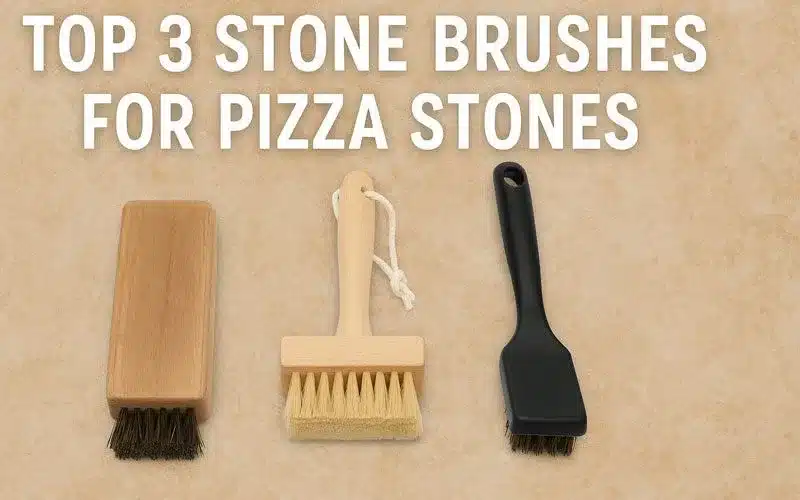
Image source: Web (Bing) / delicatepizza.com (Web image (fair-use with source credit))
The table below breaks down each method, so you can match your mess to the right trick:
| Cleaning Trick | Best For | Pros | Cons |
|---|---|---|---|
| Scrape & Warm Water Rinse | Light surface grease, fresh spills, post-baking routine cleaning | No tools needed, 2-minute process, preserves seasoning fully | Won’t remove stuck-on burnt cheese or carbonized residue |
| Baking Soda Paste Scrub | Stuck-on burnt cheese, medium grease buildup, minor stains | Food-safe, gentle on porous surface, removes most stuck food | Requires 10–15 minutes of scrubbing, may strip small amounts of seasoning |
| Coarse Salt Scrub | Tough carbonized crust bits, heavy grease, deep surface stains | Abrasive enough for stuck food, food-safe, cheap | Can scratch soft seasoning if scrubbed too hard, messy |
| Pumice Stone Scrub | Set-in black stains, burnt-on residue from high-heat cooking | Very effective for tough stains, gentle when used correctly | Requires light pressure, not ideal for new stones with thin seasoning |
If you’re cleaning your stone after every 2, 3 bakes, stick to the scrape and rinse method. For the occasional burnt cheese mess from a distracted bake, the baking soda paste is your best bet. If you’ve got years of built-up carbonized crust residue, reach for coarse salt.
Save the pumice stone for deep stains on well-seasoned stones only, as it can wear down thin new patinas.
Non-Negotiable Mistakes to Avoid With Any Pizza Stone Cleaning Trick
Even the safest cleaning trick will ruin your pizza stone if you make these common errors. These mistakes are the top cause of cracked, stained, or unusable stones per aggregate user reviews.
Image source: Bing (Web (fair-use with source credit))
Never clean a hot stone. Let it cool fully to room temperature before touching it. Sudden temperature shifts cause thermal shock, which cracks the stone in seconds.
Never soak the stone in water. Its porous structure absorbs water, which expands when heated and splits the material. Never use soap, dish detergent, or chemical cleaners.
These seep into the pores and leave residue that transfers to future food.
Never use steel wool, harsh scouring pads, or metal scrapers that scratch the surface. Scratches trap food and bacteria, and they wear down the protective seasoning layer. Never put the stone in a dishwasher or self-cleaning oven.
Dishwasher detergent is corrosive to porous stone, and self-cleaning oven temperatures exceed the stone’s maximum safe heat range, melting the seasoning and weakening the material. If you spot mold on the stone, discard it immediately. Mold can penetrate the porous surface and cannot be fully removed with cleaning, per USDA food safety guidelines for porous baking surfaces.
60-Second Decision Guide: Pick the Right Cleaning Trick for Your Situation
Use this quick decision tree to pick the right cleaning trick in 60 seconds or less, no guesswork required.
If your stone only has light surface grease or fresh spills from your last bake, use the scrape and warm water rinse method. No tools needed, and it preserves your seasoning fully.
If you have stuck-on burnt cheese or medium grease buildup from a slightly overcooked pizza, mix a baking soda paste of 3 parts baking soda to 1 part warm water, scrub gently with a soft-bristled brush, then rinse.
If you have tough carbonized crust bits or heavy, set-in grease, scrub with coarse kosher salt using a non-abrasive pad, then rinse thoroughly.
If you have deep black stains from years of high-heat use on a well-seasoned stone, use a pumice stone with light pressure to buff the stain away, then rinse.
If your stone has visible mold, cracks, or flaking seasoning, discard it and replace it. Mold cannot be fully removed from porous stone per USDA food safety guidelines for porous baking surfaces, just like you’d replace a clogged dishwasher filter that can’t be fully sanitized, or call a pro to swap a range hood light bulb if the fixture is damaged beyond repair.
Simple Maintenance Habits to Skip Deep Cleans Altogether
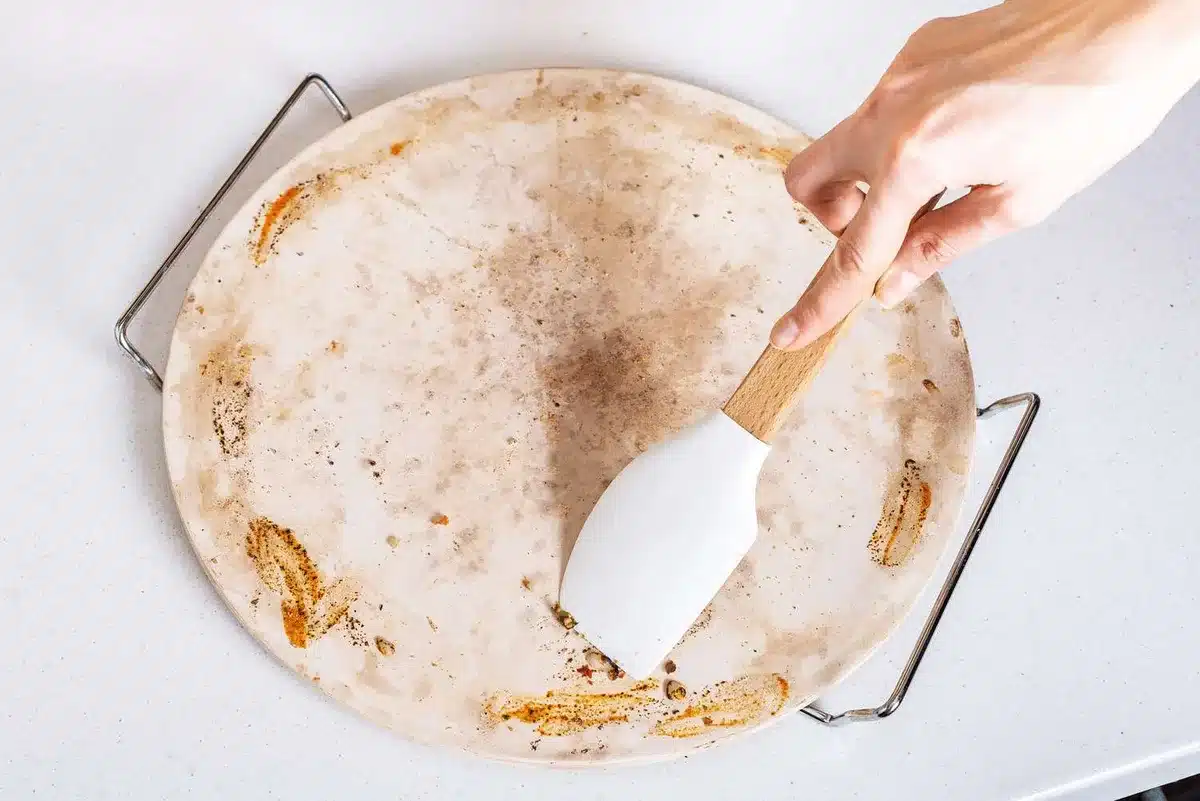
Image source: Web (Bing) / thespruce.com (Web image (fair-use with source credit))
Small, consistent habits cut down on deep clean frequency significantly, per aggregate user reviews. The easiest trick is to scrape the stone with a plastic spatula while it’s still warm (not hot) after every use, before food cools and hardens. This takes 10 seconds and removes most fresh residue before it sets.
Avoid cutting food directly on the stone. Knife marks create rough spots that trap grease and food particles, wearing down the seasoning faster. If you’re baking pizzas with extra cheese or oily toppings, line the stone with parchment paper for those batches.
It catches grease and prevents stuck-on messes without affecting crust crispness.
Store the stone in a dry, well-ventilated area, never in a damp cabinet or under the sink. Humid climates (like the southeastern US) increase mold risk, so leave it on the oven rack or a dry countertop between uses. These habits keep the stone’s seasoning intact, so you only need a deep clean 2, 3 times a year instead of monthly.
A well-maintained stone lasts 5, 10 years, per manufacturer durability testing, which saves you the $15, $100 replacement cost over time. You’d also skip the hassle of deep-cleaning other kitchen appliances as often if you follow routine upkeep steps like cleaning your electric stove top after each use.
Frequently Asked Questions About Pizza Stone Cleaning Tricks
Can I use vinegar to clean my pizza stone?
No, avoid vinegar. The acid in vinegar etches the porous surface of unglazed ceramic and cordierite stones, weakening the material over time. It also strips the natural non-stick seasoning layer, leaving the stone prone to sticking and staining.
Stick to warm water, baking soda, or coarse salt for all cleaning.
How often should I deep clean my pizza stone?
Deep clean only 2, 3 times a year if you follow routine scraping habits. If you bake frequently with messy toppings, you may need a deep clean every 2, 3 months. Never deep clean more than monthly, as harsh scrubbing wears down the protective seasoning layer faster.
Will baking soda damage my pizza stone's seasoning?
Baking soda is gentle enough for occasional use, but frequent scrubbing will wear down thin seasoning layers over time. Use it only for stuck-on messes, not routine cleaning. For light daily cleaning, stick to scraping and warm water rinses to preserve the patina.
How do I get rid of pizza stone smells?
Lingering smells come from trapped grease or food particles. Scrub the stone with a baking soda paste, let it sit for 30 minutes, then rinse and dry fully. For persistent odors, leave the stone in a 200°F (93°C) oven for 1 hour to bake out residual oils.
Never use soap, as it leaves its own scent in the porous surface.
When is it time to throw away my pizza stone?
Discard the stone if it has deep cracks, visible mold that won’t scrub off, or flaking seasoning that exposes raw porous material. Cracks create weak spots that can split further during heating, and mold in porous surfaces poses a food safety risk per USDA guidelines. A damaged stone is a fire and health hazard.
Can I use a metal scraper on my pizza stone?
No, avoid metal scrapers. They scratch the porous surface, creating rough spots that trap food and wear down the seasoning layer. Use a plastic or silicone spatula for routine scraping, and a soft-bristled brush for deep cleaning to protect the stone’s surface.
Is it okay to put my pizza stone in the oven to burn off residue?
No, never intentionally heat a dirty stone. Burned-on food will carbonize further at high heat, creating tougher stains and even releasing unwanted fumes. Always clean off residue before heating the stone for baking to avoid damage and bad odors.
