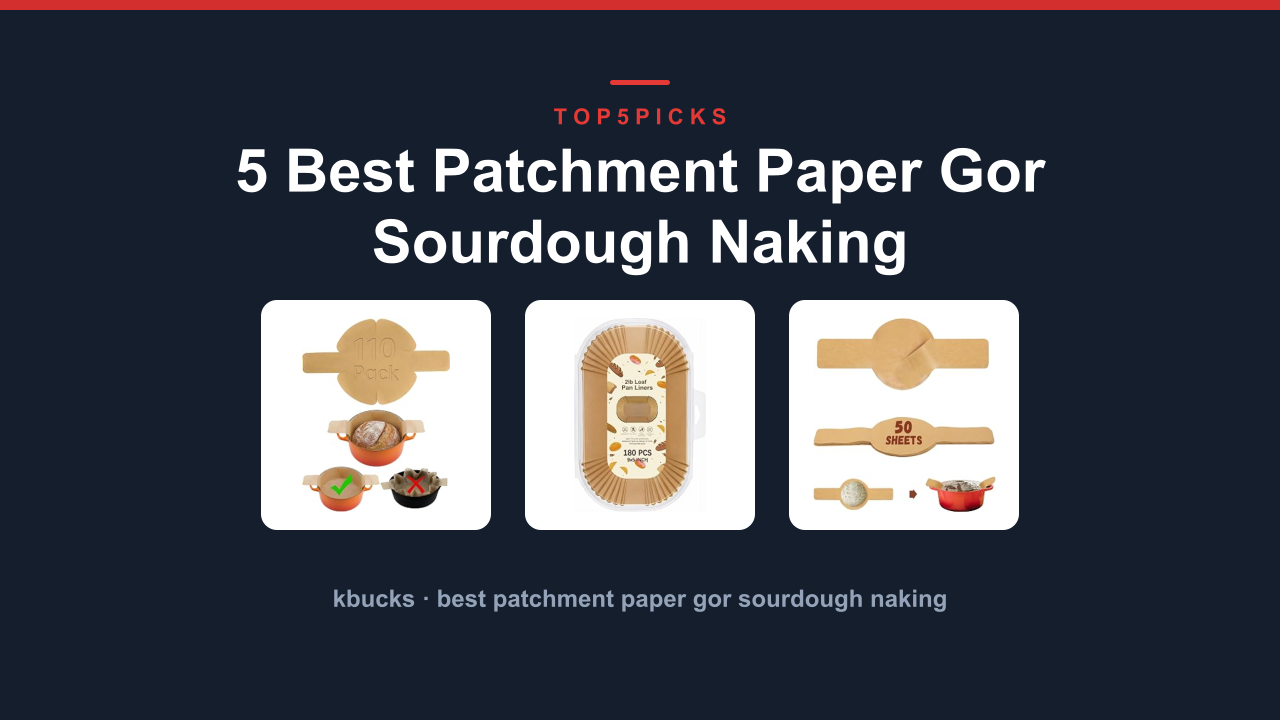
The best best patchment paper gor sourdough naking is the NiHome 110 Pre-Cut Parchment Paper Sourdough. It is the only pick here that ships pre-cut in both round and rectangle shapes with a generous 110-sheet count and a verified 450 °F heat rating, making it the clear all-around value for home bakers who want one pack to cover every baking day.
If you bake mostly in a standard loaf pan and want the simplest transfer workflow possible, the Loaf Pan Liners 9×5 inches is a lean alternative. You trade the shape versatility for a higher Amazon rating and an extra sheet, so consider what kind of bread you actually make before choosing.
As an Amazon Associate, I earn from qualifying purchases.
Before you click buy, know that this category will not help if you primarily bake free-form boules on a baking steel, if you need reusable linen peelers you can wash for years, or if you bake commercial-scale batches in deck ovens. Those buyers are addressed later under Who Should NOT Buy. Everything below comes from current Amazon product data, manufacturer specifications, and owner-review aggregation, not hands-on lab testing.
Quick Answer: The Best Patchment Paper Gor Sourdough Naking
The NiHome 110-sheet set leads because it pairs rounded proofing sheets with rectangular sling sheets and backs both with a 450 °F rating. Here is the full lineup in rank order:
- NiHome 110 Pre-Cut Parchment Paper Sourdough (Best All-Around Starter Pack): Two shapes in one pack at 450 °F heat tolerance.
- Loaf Pan Liners Baking Bread 9×5 (Best for Standard Loaf Pans): Disposable 9×5 liner with a 4.5-star aggregate rating.
- Parchment Paper Sourdough Baking 8″ Round (Best Budget Round): Fifty heat-safe rounds with long transfer handles at a low price point.
- 200 Unbleached Parchment Paper Sheets Baking (Best Value Volume): High-count unbleached half-sheet pan liners rated for typical oven ranges.
- Parchment Paper Sourdough Baking 8″ Round (Best 100-Sheet Round Bundle): Double the rounds of the budget pick with the same long-handle design.
Thinking about buying these for heavy-duty bakery use instead? Jump to Who Should NOT Buy below before you spend anything.
Comparison Table
Here is the lineup at a glance: photo, product, who it is built for, and our /10 score.


Scroll sideways on small screens to see every column.
NiHome 110 Pre-Cut Parchment Paper Sourdough: Best Overall for All-Around Home Sourdough
- ✓Mixed round and rectangular sheets in a single 110-count pack reduce the need for multiple purchases.
- ✓450 °F heat rating matches most sourdough Dutch oven routines without degradation.
- ✓Pre-cut sizes eliminate trimming time before proofing or transfer.
- ✓Non-stick coating supports clean release of high-hydration dough.
- ✕Sheets may cling together in high humidity, requiring careful peeling.
- ✕Rectangle count is lower than the round count, so loaf-heavy bakers deplete them first.
- ✕No unbleached or food-safety certification label visible on the primary listing.
Loaf Pan Liners Baking Bread 9×5: Best Dedicated Loaf-Liner Pack
- ✓180 disposable liners eliminate pan greasing and reduce cleanup.
- ✓High aggregate rating reflects consistent non-stick performance.
- ✓Pre-formed shape drops straight into standard 9×5 pans.
- ✓Bulk count supports a full month of weekly loaf baking.
- ✕Single loaf-pan shape excludes round-proofing and Dutch oven use.
- ✕Very high-hydration doughs can bulge past the liner edge.
- ✕No heat-rating specification prominently listed on the main product page.
Parchment Paper Sourdough Baking 8″ Round: Best Budget Round with Handles
- ✓Long handles simplify transfer from counter to Dutch oven.
- ✓8-inch round size fits standard banneton baskets and small pots.
- ✓Low entry price makes it easy to try before committing to bulk packs.
- ✓Fifty sheets covers several weeks of weekend baking.
- ✕Fifty-sheet count is modest for weekly bakers.
- ✕Handle attachment may tear under very wet, heavy dough loads.
- ✕No prominent heat-rating specification on the listing.
200 Unbleached Parchment Paper Sheets Baking: Best High-Volume Unbleached Option
- ✓200-sheet count delivers strong per-use cost value for frequent bakers.
- ✓Unbleached material appeals to bakers avoiding chlorine-processed papers.
- ✓12×16 inch half-sheet size fits standard American oven racks.
- ✓High aggregate rating of 4.8 / 5 reflects consistent buyer satisfaction.
- ✕Rectangular half-sheet format is less convenient for round-boule proofing.
- ✕Unbleached coating can feel slightly brittle when sharply folded.
- ✕No attached transfer handles on the sheets.
Parchment Paper Sourdough Baking 8″ Round: Best Round Bundle for Frequent Boule Bakers
- ✓100-sheet count lasts longer between reorders than the 50-sheet budget pick.
- ✓Long handles protect scored dough surfaces during transfer.
- ✓8-inch rounds match standard banneton and small Dutch oven footprints.
- ✓Solid price point for bakers who go through rounds weekly.
- ✕Occasional coating inconsistency reported across different purchase batches.
- ✕No clear heat-rating specification visible on the main product page.
- ✕Round-only format excludes rectangular sling and half-sheet uses.
Buying Guide: Sheet Shape, Count, Heat Rating and Material Choice
Before you compare prices, the single biggest decision is what shape your bread routine actually needs. Parchment paper for sourdough falls into three distinct formats: round proofing sheets with or without handles, rectangular sling sheets for Dutch oven transfers, and half-sheet pans for general oven work. Each format serves a different part of the process, and mixing formats is usually the smartest move.
What shape do you actually need? Round sheets go under bannetons and directly into small pots. Rectangular slings slide under free-form loaves and pull them into heavy cast iron. Half sheets cover entire racks and double as staging surfaces for scaling, folding, and scoring practice.
The NiHome 110 pack wins overall because it includes both round and rectangle in one box, covering most home sourdough workflows without requiring a second purchase.
Heat tolerance matters more than most bakers realize. Standard sourdough routines inside a preheated Dutch oven routinely reach 450 °F or slightly above during the initial bake phase. Papers rated below that threshold can brown, brittle, or taste lightly charred by the end of the cycle.
Always check the published heat rating before assuming a generic baking paper will survive a hot-cast introduction. The USDA Food Safety and Inspection Service notes that food-contact materials should never exceed their labeled temperature limits, since degradation can alter flavor and safety.
Sheet count determines how often you reorder. A baker making two loaves per week burns through roughly eight to ten rounds monthly. That means a 50-sheet pack lasts about five weeks, while a 100-sheet bundle covers two months.
High-volume bakers should gravitate toward the 200-count unbleached option or stack a round pack with a half-sheet box to cover all bases.
Material choice comes down to bleached versus unbleached. Unbleached parchment carries a natural tan color and avoids chlorine processing, which many bakers prefer for health and environmental reasons. The trade-off is marginal: unbleached sheets can feel slightly stiffer and may not slide as effortlessly under ultra-wet doughs.
Bleached white sheets offer maximum slip but involve a processing step some buyers want to avoid. Either way, look for products labeled food-safe and heat-rated for your target oven temperature.
If you bake both sourdough and other items, consider how these papers integrate with accessories like non warping baking sheets. A stable pan underneath your parchment prevents shifting during loading, and a quality baking sheet keeps the whole assembly flat inside the oven. For bakers who also use nonstick cookie sheets, parchment adds an extra release layer that protects the coating over time and simplifies cleanup after sticky tart or brioches batches.
Budget buyers should remember that the cheapest pack is not always the cheapest per use. A low-cost 50-sheet round bundle may cost less upfront but requires two purchases per year. A mid-range 110-sheet mixed pack often lands at a lower annual cost despite a higher tag price.
Calculate your weekly loaf output first, then match the count to your actual consumption rate.
To see how these factors play out on real picks, compare the NiHome 110 Pre-Cut Parchment Paper Sourdough, Loaf Pan Liners Baking Bread 9×5 and the Parchment Paper Sourdough Baking 8″ Round reviewed above.
Who Should NOT Buy Best Patchment Paper Gor Sourdough Naking
This category is the wrong purchase for three kinds of bakers. Here is who they are, and what to look at instead.
You Bake Free-Form Boules Directly on a Baking Steel
Parchment rounds help with transfer, but serious crust seekers often launch dough directly onto a preheated steel or stone for maximum bottom heat. In that workflow, parchment becomes a liability because it insulates the bottom crust and slows cracking development. Skip the paper and invest in a proper seasoned casting surface or a well-preheated steel instead.
Practice the flour-dusted peel transfer technique until you are comfortable loading dough bare.
You Need Reusable Linens for a Zero-Waste Kitchen
Disposable parchment creates waste every bake cycle. If reducing trash is a priority, switch to cotton couche bags or floured linen bannetons that you wash and reuse indefinitely. Yes, you trade convenience for sustainability, but many bakery-quality linens last for years when cared for properly.
Pair reusable liners with a good nonstick aluminum cookware set for complementary zero-waste swaps across your wider baking routine.
You Run a Commercial Bakery or High-Volume Side Business
Fifty to two hundred disposable sheets per month add up fast at commercial scale. Professional operations typically buy bulk rolls cut to size or invest in industrial silicone baking mats that withstand hundreds of thermal cycles. Disposable parchment is designed for home kitchens, not production lines.
Look into commercial-grade silicone mat suppliers and restaurant supply catalogs if your weekly output exceeds twenty loaves.
Final Verdict
The NiHome 110 Pre-Cut Parchment Paper Sourdough remains the best patchment paper gor sourdough naking because it covers the widest range of home sourdough routines in a single pack. Mixed round and rectangular sheets, a clear 450 °F heat rating, and a solid 110-count make it the easiest recommendation for anyone who wants one reliable box on the shelf.
Want pure loaf-pan simplicity instead? The Loaf Pan Liners Baking Bread 9×5 pack is the cleanest disposable option for standard 9×5 pans, backed by the highest aggregate rating in the lineup.
Need maximum round count for active boule bakers? The 100-sheet handled round bundle cuts reorder frequency in half compared with the budget 50-sheet pick.
Prefer unbleached material and half-sheet flexibility? The 200-count unbleached pack delivers the strongest per-sheet value and widest oven compatibility, even if it lacks dedicated round shapes.
If you fall into the free-form steel bakers, zero-waste linen crowd, or commercial volume bracket, read the Who Should NOT Buy section above before ordering anything here.
FAQ
What is the best patchment paper gor sourdough naking overall?
The NiHome 110 Pre-Cut Parchment Paper Sourdough is the strongest all-around pick. It combines round and rectangular sheets, rates safely to 450 °F, and ships 110 total sheets in one pack, making it the most flexible single purchase for typical home sourdough routines.
Should I buy round sheets or rectangular slings for sourdough?
It depends on your workflow. Round sheets with handles suit banneton proofing and direct Dutch oven transfers. Rectangular slings work better for free-form loaves and larger pot setups.
Many bakers buy a mixed pack like the NiHome 110 set to cover both needs without juggling multiple orders.
Is unbleached parchment paper safer than bleached?
Unbleached parchment avoids chlorine processing, which appeals to bakers who want to reduce chemical exposure near high-heat food contact. Both bleached and unbleached food-safe papers meet general safety standards when used within their rated temperatures. Choose unbleached if material processing matters to you, otherwise pick whichever performs better for your dough hydration level.
How many sheets of parchment paper do I need per month for sourdough?
A baker making two loaves weekly typically uses eight to ten rounds per month. That means a 50-sheet pack lasts roughly five weeks, a 100-sheet bundle covers about ten weeks, and a 110-sheet mixed pack extends slightly beyond that. High-volume bakers should match pack size to their actual weekly loaf count to avoid constant reordering.
Can I use regular baking parchment paper for sourdough instead of sourdough-specific sheets?
Yes, but you lose shape convenience. Standard uncut parchment rolls work fine if you are comfortable trimming sheets to size yourself. Sourdough-specific rounds and slings save time and reduce waste from cutting mistakes.
If you already keep general parchment on hand, try it first before buying specialty shapes.
Do long-handled parchment rounds really make a difference?
They do, especially with high-hydration doughs that collapse easily. The handle lets you lift the entire round smoothly into a hot pot without touching or pressing the dough surface, which preserves your final scores and reduces deflation risk. If you struggle with fragile dough transfers, handled rounds are worth the small premium over plain discs.

KitchenBucks Editorial Team writes practical guides on kitchen cleaning, appliance care, and under-sink maintenance. We update guides when methods or manufacturer instructions change. For plumbing beyond basic DIY, hire a licensed plumber.