
Are your kitchen cabinets looking a little worse for wear? You’re not alone.
Over time, grease, grime, and fingerprints can build up, making your cabinets look dull and dirty. But don’t worry; you’ve got the power to bring them back to life! Imagine opening your kitchen to the fresh scent of cleanliness and the gleam of spotless surfaces.
It’s easier than you think, and you don’t need a cupboard full of expensive cleaners to do it. We’ll reveal the best materials and methods to wipe down your kitchen cabinets, ensuring they shine like new. Stay with us, and soon you’ll be armed with simple, effective strategies that make cleaning feel less like a chore and more like a transformation. Ready to see what a difference a good wipe can make? Let’s get started!
Effective Cleaning Solutions
For sparkling kitchen cabinets, mix water and dish soap. Wipe gently with a soft cloth. Finish with a dry towel for a clean, streak-free look.
Cleaning kitchen cabinets effectively requires choosing the right solutions that can cut through grease and grime without damaging the surfaces. Whether you prefer natural alternatives or trust commercial products, each option offers unique benefits that cater to different cleaning needs. Let’s explore some effective cleaning solutions that will leave your kitchen cabinets sparkling and fresh.Natural Cleaners
Using natural cleaners is a great way to keep your kitchen eco-friendly and safe from harsh chemicals. A simple mixture of vinegar and water can work wonders on greasy cabinet surfaces. Mix equal parts of white vinegar and warm water in a spray bottle, and you’re ready to tackle those sticky spots. Another effective natural solution is baking soda. This versatile kitchen staple can be used to create a gentle scrub. Just mix a few tablespoons with water to form a paste, apply it to a soft cloth, and gently scrub the cabinets. Have you ever considered the power of lemon? Its natural acidity helps break down grease, while its fresh scent leaves your kitchen smelling great. Simply squeeze fresh lemon juice onto a cloth and wipe down the surfaces for a natural shine.Commercial Products
If you prefer ready-made solutions, commercial cleaning products offer convenience and specialized formulas. Look for multi-surface cleaners designed specifically for kitchen cabinets, as these are formulated to handle grease without harming the finish. Products like Murphy Oil Soap are well-known for their ability to clean wood surfaces effectively. They not only clean but also nourish the wood, preserving its natural beauty. Think about the finish of your cabinets. Are they wood, laminate, or painted? Choosing the right product for the specific material ensures the best results. Always follow the manufacturer’s instructions to avoid any damage. What solutions have you found most effective for maintaining your kitchen cabinets? Share your thoughts or try these suggestions to see which works best for you.Tools For Cabinet Cleaning
Microfiber cloths effectively remove dust and grime from kitchen cabinets. A mixture of mild dish soap and warm water ensures a gentle clean. For stubborn stains, baking soda can be a helpful addition.
Cleaning kitchen cabinets might seem straightforward, but using the right tools can make a world of difference. The wrong tool can scratch surfaces or leave residues, while the right one can transform your cabinets into sparkling clean masterpieces. Are you ready to dive into effective tools for cabinet cleaning? Let’s explore how microfiber cloths and soft sponges can be your best allies.Microfiber Cloths
Microfiber cloths are a game-changer for cleaning cabinets. They are soft yet highly effective in picking up dust and grime without scratching surfaces. These cloths are designed to trap dirt, making them ideal for cabinets where grease can accumulate. You can use them dry for dusting or dampen them slightly for a more thorough clean. Have you ever felt the frustration of smudges left behind after cleaning? Microfiber cloths are known for their streak-free finish, ensuring your cabinets look pristine without additional effort.Soft Sponges
Soft sponges are another excellent tool for cabinet cleaning, especially when dealing with stubborn spots. Their gentle texture is perfect for scrubbing without damaging the cabinet finish. Pair a soft sponge with a mild detergent to tackle greasy buildups that resist a simple wipe-down. The sponge’s absorbency helps in effectively applying cleaning solutions and rinsing away residues. Ever noticed sticky residues that seem impossible to remove? A soft sponge can work wonders in loosening up those tricky spots, giving your cabinets a fresh and clean appearance.Techniques For Cleaning Cabinets
To wipe down kitchen cabinets, use a mix of warm water and mild dish soap. Apply this solution with a soft cloth. For tough spots, a baking soda paste works well.
Cleaning kitchen cabinets might seem like a mundane task, but it’s essential for maintaining a fresh and inviting cooking space. Different types of cabinets require varying techniques to ensure they remain unscathed while achieving that spotless look. Whether you’re dealing with greasy fingerprints or general dust, using the right techniques will make the cleaning process efficient and effective.Wiping Methods
Use a microfiber cloth for best results. Its soft texture is gentle on surfaces and great for picking up dust and grime without scratching. Warm water mixed with a few drops of dish soap creates a simple cleaning solution. Dip your cloth into the solution, wring it out well, and start wiping from top to bottom. This prevents dirty water from dripping onto already cleaned areas. For stubborn spots, baking soda can be your best friend. Make a paste with a little water and apply it to the stain. Gently rub with your cloth and watch the spot disappear.Avoiding Damage
Never use abrasive pads or harsh chemicals. They might seem like a quick fix, but they can strip the finish off your cabinets, leaving them looking dull. Always test your cleaning solution on a hidden spot first. This ensures it won’t discolor or damage the finish. Ensure cabinets are completely dry after cleaning. Moisture can seep into the wood or finish, causing damage over time. Are you guilty of using the same cloth for multiple tasks? Avoid cross-contamination by dedicating specific cloths for kitchen use only. Keeping your cabinets clean not only enhances their appearance but also prolongs their lifespan. What techniques do you find most effective for your kitchen?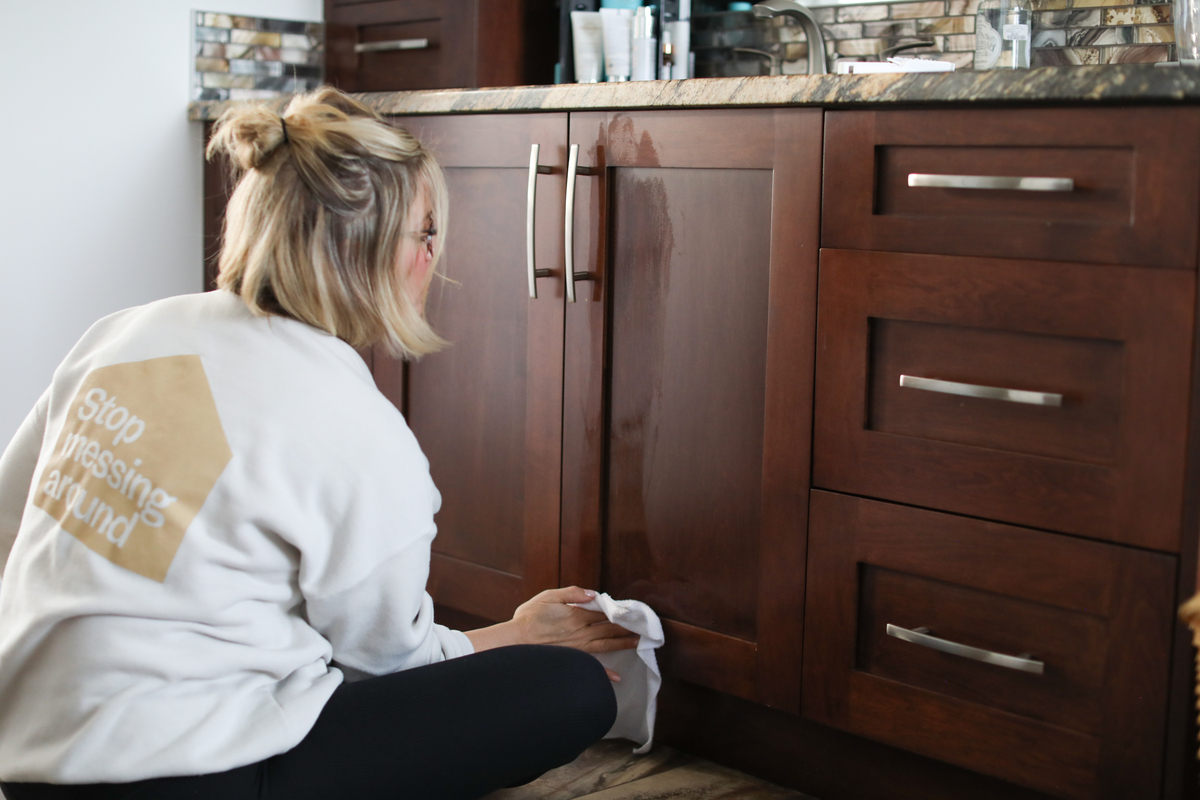
Credit: www.housework.com
Dealing With Stubborn Stains
Warm water and mild dish soap work well for wiping down kitchen cabinets. For tougher stains, a mix of vinegar and water can be effective. Always use a soft cloth to avoid scratching the surface.
Dealing with stubborn stains on kitchen cabinets can be challenging. The splatter from cooking or water spots can make cabinets look old. But the right approach can make them shine again.Grease And Grime Removal
Grease builds up fast on cabinet surfaces. Use a solution of vinegar and water. Mix equal parts in a spray bottle. Spray on cabinets and let it sit for five minutes. The acid in vinegar cuts through grease. Wipe with a soft cloth. For tough stains, add a drop of dish soap. Scrub gently with a non-abrasive sponge.Water Spots Elimination
Water spots leave ugly marks on cabinets. Use a paste of baking soda and water. Make a thick paste and apply it to the spots. Let it sit for ten minutes. Baking soda absorbs moisture and lifts stains. Wipe with a damp cloth. For stubborn spots, use a mixture of lemon juice and water. Lemon juice breaks down minerals in water spots. Wipe thoroughly with a clean, dry cloth.Maintaining Cabinet Finish
Use a soft cloth dampened with warm, soapy water to gently wipe down kitchen cabinets. This method removes dirt and grease without damaging the finish. For extra care, dry the surface with a clean towel immediately after cleaning.
Maintaining the finish on your kitchen cabinets is essential for keeping them looking fresh and clean. Regular cleaning not only enhances their appearance but also extends their lifespan. The finish acts as a protective layer, so it’s crucial to choose the right materials and techniques to preserve it. Whether your cabinets are wood, laminate, or painted, understanding the best ways to care for them will ensure they remain a beautiful focal point in your kitchen.Polishing Techniques
Polishing your cabinets is more than just about shine. It’s about protecting and reviving the finish to keep them looking new. Use a soft microfiber cloth to apply a small amount of furniture polish or a cabinet-specific product. Work in circular motions to avoid streaks and enhance the natural grain of wooden cabinets. Remember to test any new product on a small, inconspicuous area first. This precaution can prevent potential damage or unwanted results.Protective Measures
Protecting your cabinet finish involves more than just cleaning. Consider applying a protective sealant if your cabinets are made of wood. This can help guard against moisture and stains that could otherwise degrade the finish. Avoid using abrasive cleaners or scrubbing pads, as these can scratch and dull the surface over time. Always wipe up spills immediately, especially those from acidic substances like vinegar or lemon juice. These can eat away at the finish if left unattended. Have you thought about the impact of sunlight? Direct sunlight can fade your cabinet finish, so consider using curtains or blinds to limit exposure. Simple measures like these can make a significant difference in maintaining the beauty and integrity of your kitchen cabinets.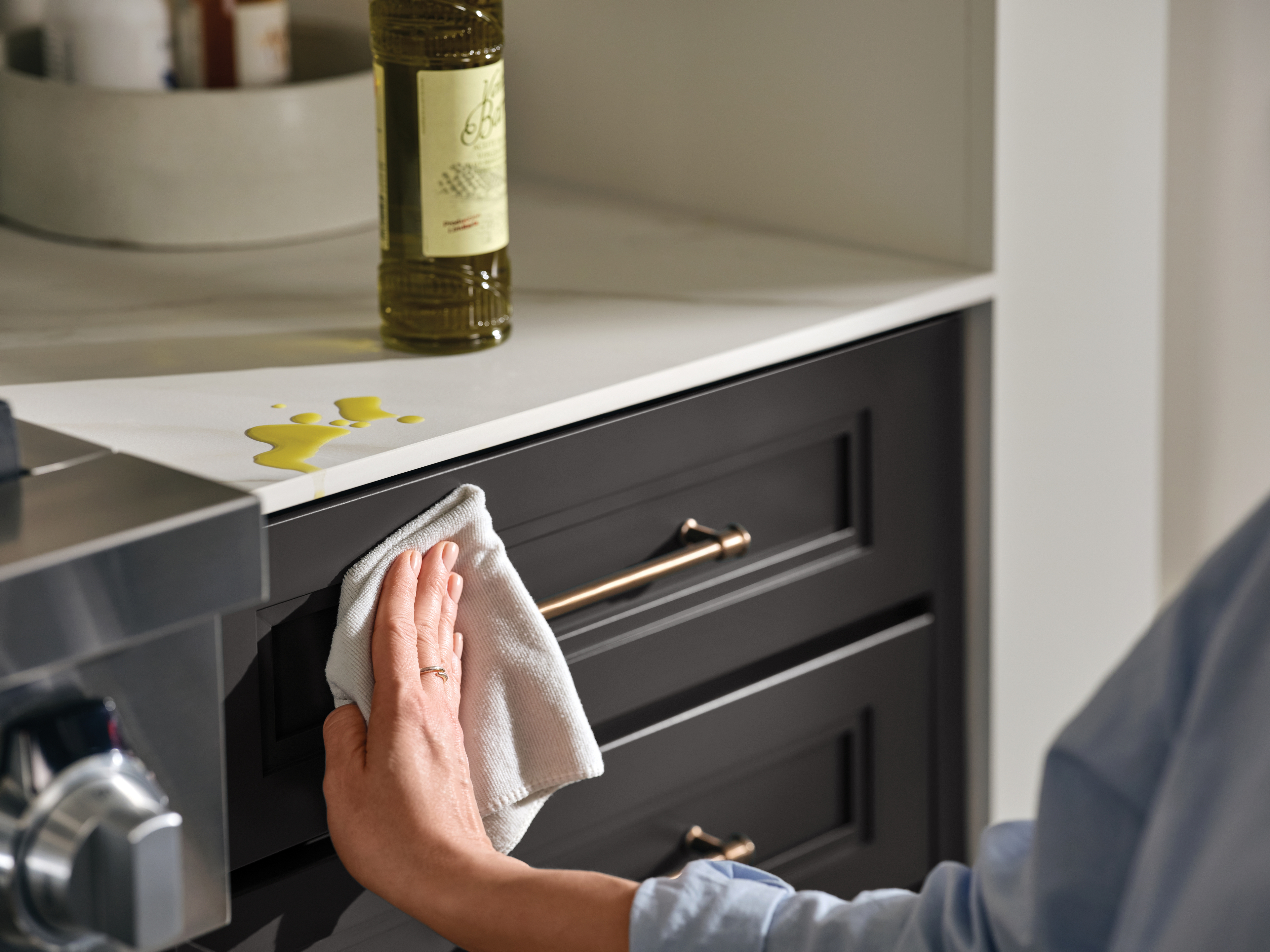
Credit: www.kraftmaid.com
Safety Considerations
Choose a gentle cleaner to protect kitchen cabinets while wiping down surfaces. Avoid harsh chemicals that can damage finishes. Use a soft cloth or sponge for effective and safe cleaning.
When wiping down kitchen cabinets, safety should be a top priority. You want to ensure that the cleaning process is effective without compromising your health or the integrity of your cabinets. This involves being mindful of the chemicals you use, as well as taking precautions to protect your skin.Handling Chemicals
When selecting cleaning products, it’s crucial to read the labels carefully. Look for products that are specifically designed for kitchen use, as they are often less abrasive. Avoid mixing different cleaning agents, as this can create harmful fumes. Make sure the area is well-ventilated. Open windows or turn on a fan to minimize inhalation of any chemical vapors. If possible, opt for natural cleaning solutions like vinegar and baking soda, which are generally safer alternatives.Skin Protection
Your skin is your first line of defense against irritants. Wearing gloves is a simple yet effective way to protect your skin from harsh chemicals. Choose gloves that fit well and are resistant to the cleaning agents you plan to use. Be mindful of any skin sensitivities or allergies you might have. Even natural cleaners can cause reactions in some people. Consider testing a small area of your skin with the cleaning solution before proceeding with the entire task. Remember, safety doesn’t mean you have to compromise on cleanliness. With the right precautions, you can keep your kitchen cabinets spotless without any risk to your health. What measures do you take to ensure your safety while cleaning?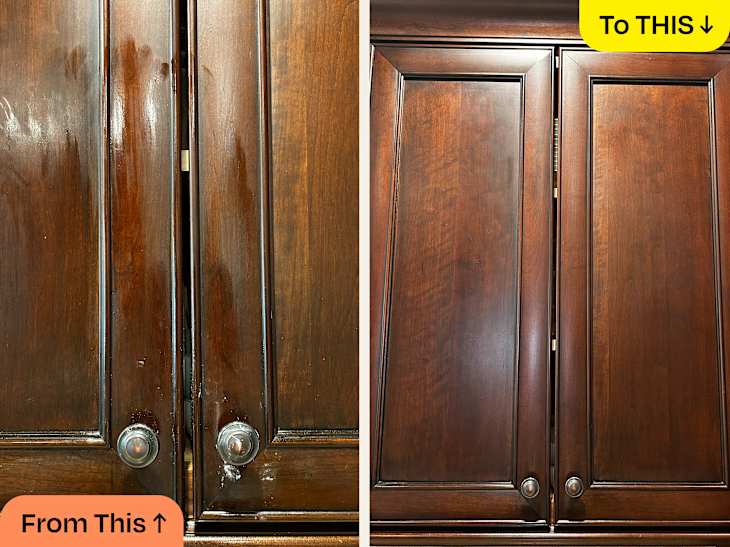
Credit: www.thekitchn.com
Frequently Asked Questions
How Do You Clean Kitchen Cabinets Without Removing Finish?
Use a mild dish soap mixed with warm water. Dampen a soft cloth in the solution and gently wipe cabinets. Rinse with clean water and dry thoroughly with a soft towel. Avoid harsh chemicals and abrasive scrubbers to protect the finish.
Regularly clean to maintain the cabinet’s appearance.
What Not To Use To Clean Kitchen Cabinets?
Avoid using bleach, ammonia, and abrasive cleaners on kitchen cabinets. These can damage finishes and surfaces. Use gentle, non-abrasive cleaners instead. Harsh chemicals can strip paint and cause discoloration. Always test on a small area first to ensure safety.
Can I Use Dawn To Clean My Wood Cabinets?
Yes, you can use Dawn to clean wood cabinets. Mix a few drops with warm water. Use a soft cloth to gently wipe the cabinets. Rinse and dry immediately to avoid damage. Always test on a small area first to ensure compatibility.
How To Stop Fingerprints On Kitchen Cabinets?
Clean cabinets regularly with a microfiber cloth. Apply a furniture polish or wax to create a protective layer. Use handles or knobs to avoid direct contact. Install touchless cabinet systems for high-tech solutions. Regular maintenance keeps fingerprints at bay.
Conclusion
Clean kitchen cabinets feel amazing. They create a welcoming space. Regular wiping keeps them fresh and shiny. Choose gentle cleaners to prevent damage. Microfiber cloths work best for dust and grime. Avoid harsh chemicals for wood surfaces. A mix of water and mild soap cleans most dirt.
Vinegar helps with sticky spots. Don’t forget cabinet handles. Wiping them often is important too. Enjoy cooking in a clean kitchen. A tidy space boosts your mood and creativity. Keep your cabinets in great shape with these simple tips. Happy cleaning!
