
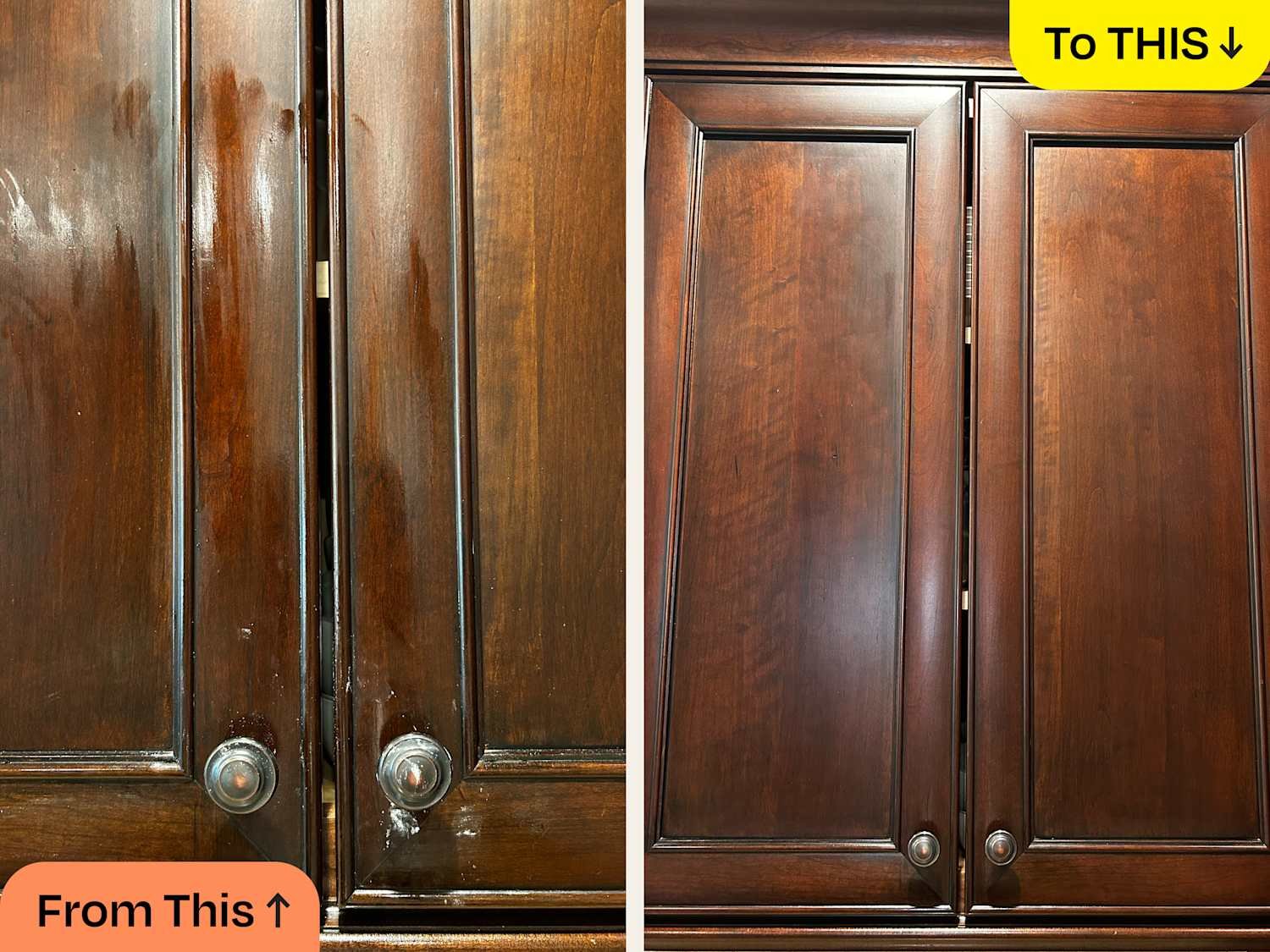
Is your kitchen feeling a bit sticky? Greasy kitchen cabinets are a common problem that can make your entire cooking space look dull and uninviting.
You might be surprised at how much grime can accumulate over time, turning your once sparkling cabinets into a greasy mess. But don’t worry—you’re not alone, and you’re definitely not stuck with it! Imagine opening those cabinet doors to find them spotless and fresh, ready to inspire your next culinary masterpiece.
In this guide, we’ll reveal simple yet effective methods to transform your greasy cabinets into gleaming beauties. You’ll discover easy tricks that not only clean but also protect your cabinets, making them look like new again. Ready to dive in and give your kitchen the refresh it deserves? Keep reading to learn how you can achieve this in just a few steps!

Credit: www.facebook.com
Identifying Grease Buildup
Grease often appears as a sticky film on kitchen cabinets. It feels tacky and makes surfaces look dull. Spotting these signs helps in planning a thorough cleaning strategy.
Identifying grease buildup in your kitchen cabinets is essential. This ensures a clean, healthy cooking space. Recognizing the signs early can save time and effort. Grease buildup makes cabinets look dull and sticky. It can also attract dust and pests.Signs Of Greasy Cabinets
Greasy cabinets often look shiny and feel sticky. You might notice a yellowish tint on the surfaces. If your cabinets smell musty, grease could be the culprit. Dust sticking to cabinet surfaces is another clear sign. Regular inspection helps catch these signs early.Common Sources Of Kitchen Grease
Cooking oils are a major source of kitchen grease. Frying and sautéing release grease into the air. It settles on cabinets and other surfaces. Grease splatters from cooking meat can also contribute. Even baking can produce grease vapors. Over time, these accumulate, forming a stubborn layer. Cleaning after cooking helps reduce buildup.Preparing For Cleaning
Gather supplies like vinegar, baking soda, and a microfiber cloth. Remove items from cabinets for easy access. Prepare a cleaning solution by mixing warm water with vinegar to cut through grease.
Cleaning greasy kitchen cabinets begins with the right preparation. A well-organized approach sets the stage for a smoother cleaning process. Start by readying your supplies and protecting the surrounding surfaces. This step ensures efficiency and minimizes mess.Gathering Cleaning Supplies
Select the right products for tackling grease. Use mild dish soap, vinegar, and baking soda. These are effective and safe for most surfaces. A soft sponge or cloth is ideal for scrubbing without scratching. A bucket for mixing solutions is handy. Microfiber cloths are perfect for wiping down cabinets. Gather all supplies before you start to save time.Protecting Kitchen Surfaces
Safeguard your kitchen’s surfaces to prevent damage. Cover countertops with old towels or newspapers. This catches drips from cleaning solutions. Move items away from the cabinets to avoid splashes. Use plastic wrap or painter’s tape to shield areas around the cabinets. Protect floors with a drop cloth or old sheet. Ensuring surfaces are protected makes cleaning stress-free.Natural Cleaning Solutions
Tackle greasy kitchen cabinets using natural cleaning solutions. Mix vinegar and warm water for a powerful degreaser. Wipe surfaces with a soft cloth, gently removing stubborn grease.
Natural cleaning solutions are a great way to tackle greasy kitchen cabinets. They are safe, effective, and eco-friendly. These methods use common household items. You can easily find them in your pantry. Below are two popular natural cleaning methods.Using Vinegar And Baking Soda
Vinegar and baking soda make a powerful cleaning duo. Start by mixing equal parts of vinegar and water in a spray bottle. Shake well to combine. Spray the solution onto the greasy cabinet surfaces. Let it sit for a few minutes. This helps to break down the grease. While the vinegar solution works, prepare a baking soda paste. Mix baking soda with a small amount of water. Stir until it forms a thick paste. Apply the paste to stubborn grease spots. Use a soft cloth or sponge to scrub gently. The mild abrasiveness of baking soda helps lift the grease. Rinse with a clean damp cloth. Dry with a towel to prevent streaks.Lemon Juice And Salt Method
Lemon juice and salt are another natural cleaning option. The acidity of lemon juice cuts through grease. Start by slicing a lemon in half. Squeeze the juice into a bowl. Add a few tablespoons of salt to the juice. Mix to combine. Dip a sponge or cloth into the lemon-salt mixture. Gently scrub the greasy areas on the cabinets. The salt acts as a gentle abrasive. It helps remove stubborn grime. Rinse the cabinets with a damp cloth to remove any residue. Dry thoroughly to avoid water spots. This method leaves your kitchen smelling fresh and clean.
Credit: www.msn.com
Commercial Cleaners
Commercial cleaners can be a powerful ally in tackling greasy kitchen cabinets. They are specially formulated to break down stubborn grease and grime, making cleaning easier and more effective. With a variety of products available, it’s important to know which one to choose and how to use them safely.
Choosing The Right Product
Not all commercial cleaners are created equal. Some are designed for heavy-duty grease removal, while others are suitable for lighter tasks. Check the labels for kitchen-friendly options. Look for products that specify grease removal. Consider eco-friendly options for less chemical exposure. Avoid cleaners with harsh abrasives to protect cabinet surfaces. Test a small area to ensure no damage occurs.
Safety Tips For Use
Safety should be a priority when using commercial cleaners. Ensure proper ventilation in the kitchen by opening windows or using fans. Wear gloves to protect your skin from chemical exposure. Follow the instructions on the product label carefully. Avoid mixing different cleaners to prevent toxic reactions. Store cleaners out of reach from children and pets. Rinse the cabinets thoroughly with water after cleaning to remove residue.
Step-by-step Cleaning Process
Begin by removing items from the cabinets. Mix warm water with dish soap. Use a sponge to scrub surfaces gently, then rinse with clean water. Dry with a towel to prevent water stains. For stubborn grease, apply baking soda paste, scrub, and rinse thoroughly.
Finish by wiping with a damp cloth for a polished look.
Cleaning greasy kitchen cabinets can transform your cooking space, making it a more pleasant and hygienic environment. Tackling this task might seem overwhelming, but breaking it down into manageable steps can make it surprisingly straightforward. Let’s dive into the process, ensuring your cabinets shine like new.Pre-cleaning Preparation
Before you start scrubbing, take a moment to prepare your kitchen. Remove all items from the cabinets to ensure you have a clear surface to work on. Place a towel or sheet on the floor to catch any drips or debris. This will save you time on additional cleaning later. Make sure you have all necessary supplies on hand, such as sponges, microfiber cloths, and a bucket of warm water. Having everything ready will help maintain your momentum.Applying Cleaning Solutions
Choosing the right cleaning solution is crucial. A mixture of equal parts vinegar and water works wonders for cutting through grease. Dip a sponge in your cleaning solution and wring it out until damp, not soaked. Apply it to the cabinets, focusing on one section at a time to ensure thorough cleaning. Wipe in a circular motion to lift grease effectively. This technique helps in breaking down grease without harming the cabinet surface.Removing Stubborn Grease
Sometimes, grease doesn’t give up easily. For stubborn spots, try a paste made from baking soda and water. It’s gentle yet powerful against tough stains. Apply the paste with a soft cloth, letting it sit for a few minutes. This allows the baking soda to break down the grease further. Scrub gently with a toothbrush for precision cleaning in grooves and corners. Rinse with a damp cloth and dry immediately to prevent water damage. Have you ever tackled a seemingly impossible cleaning task and realized it was easier than you thought? With these steps, greasy cabinets are no longer a daunting challenge. Enjoy the satisfaction of a clean, fresh kitchen ready for your next culinary adventure!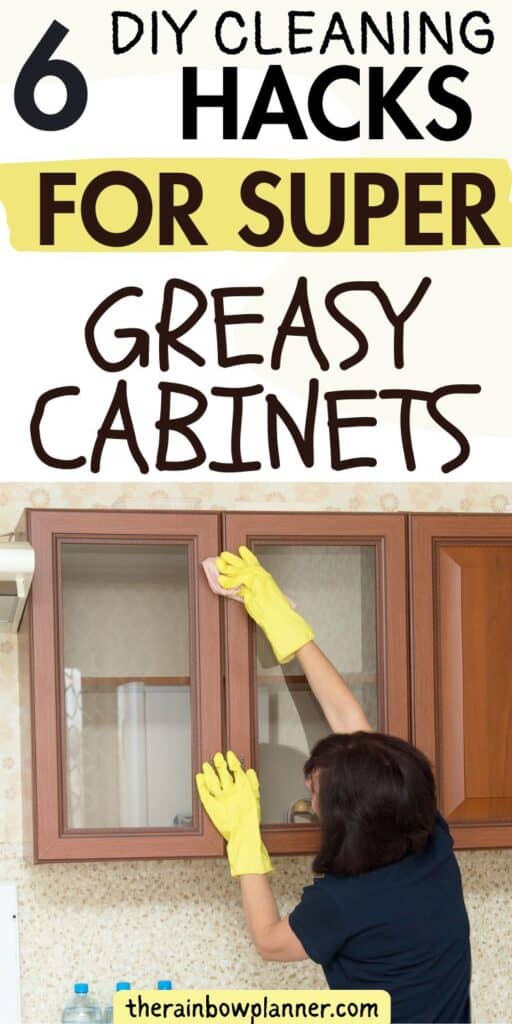
Credit: therainbowplanner.com
Maintaining Clean Cabinets
Maintaining clean kitchen cabinets is essential for a pleasant cooking environment. Grease can build up quickly, making your kitchen look unappealing. Regular cleaning prevents stubborn stains and keeps cabinets looking fresh. Consistent care also extends the life of your cabinets, saving you money in the long run. With simple habits, you can keep your kitchen inviting and hygienic.
Regular Cleaning Routine
Establish a routine to tackle grease before it becomes stubborn. Wipe down cabinets weekly using a damp cloth and mild soap. Focus on areas near the stove where grease accumulates. Always dry the surfaces to prevent water damage. Use a soft cloth to avoid scratches. Regular attention ensures grime doesn’t build up.
Preventing Future Grease Buildup
Prevention is key to maintaining clean cabinets. Use kitchen range hoods to minimize grease spread. Keep lids on pots and pans to reduce splatters. Consider lining cabinets with paper to catch any drips. Regularly check and clean filters in the hood. This reduces the grease that settles on surfaces.
Handling Different Cabinet Materials
Cleaning greasy kitchen cabinets requires different methods for each material. Use a gentle dish soap solution on wooden cabinets. For laminate, a mix of vinegar and water works best.
Handling different cabinet materials requires distinct approaches, ensuring you not only remove grease effectively but also preserve the quality and longevity of your cabinets. Whether your kitchen cabinets are wooden, metal, or laminate, using the right cleaning technique is crucial. Let’s dive into how to handle each material with care and precision.Cleaning Wooden Cabinets
Wooden cabinets add warmth and elegance to any kitchen. However, they are susceptible to damage if not cleaned properly. Start by mixing a gentle solution of warm water and mild dish soap. Use a soft cloth or sponge to wipe down the surfaces, making sure to follow the grain of the wood. This helps in maintaining the natural texture and prevents scratches. After cleaning, dry the cabinets thoroughly with a clean towel to prevent moisture from seeping into the wood. For stubborn grease, consider adding a small amount of baking soda to your cleaning solution. It acts as a mild abrasive without harming the wood.Cleaning Metal Cabinets
Metal cabinets are known for their durability and sleek appearance. However, they can show fingerprints and grease more easily. To clean metal surfaces, mix equal parts of water and vinegar in a spray bottle. Spray the solution onto the cabinets and wipe with a microfiber cloth. The vinegar helps cut through grease while leaving a streak-free shine. For tougher spots, sprinkle a little baking soda on a damp cloth and gently rub the area. Always dry the surface after cleaning to avoid any water marks or potential rusting.Cleaning Laminate Cabinets
Laminate cabinets are popular due to their affordability and variety of designs. They require a different approach to avoid damaging the finish. Use a solution of warm water and a small amount of non-abrasive cleaner. Dampen a soft cloth with the solution and gently clean the surfaces. Avoid using excess water as it can seep into the seams and cause damage over time. To remove stubborn grease, a mixture of baking soda and water can be applied with a soft sponge. Rinse and dry thoroughly to maintain the laminate’s glossy finish. Have you ever noticed how a clean kitchen can transform your cooking experience? Taking the time to clean your cabinets not only improves your kitchen’s appearance but also enhances your culinary space’s overall functionality.Frequently Asked Questions
What Is The Best Degreaser For Kitchen Cabinets?
The best degreaser for kitchen cabinets is a mixture of vinegar and baking soda. This natural solution effectively removes grease. Use a soft cloth for wiping. For stubborn stains, commercial degreasers like Krud Kutter or Simple Green are highly recommended.
Always test on a small area first to ensure compatibility.
Does Magic Eraser Work On Greasy Cabinets?
Magic erasers effectively clean greasy cabinets by breaking down grime. Use gently to avoid damaging surfaces. Test on a small area first.
Does Murphy’s Oil Soap Clean Greasy Kitchen Cabinets?
Murphy’s Oil Soap effectively cleans greasy kitchen cabinets. Its natural formula breaks down grime and grease. Simply apply, scrub gently, and rinse for shiny, fresh surfaces. It’s safe on wood and leaves no residue, making it a popular choice for maintaining clean, beautiful cabinets.
What Is The Best Product To Remove Kitchen Grease?
The best product to remove kitchen grease is Dawn dish soap. It effectively cuts through tough grease stains. Combine it with warm water for optimal results. For stubborn spots, consider using a degreaser like Krud Kutter. Both options are safe and efficient for kitchen surfaces.
Conclusion
Cleaning greasy kitchen cabinets can feel overwhelming. But it’s doable. Start by gathering simple cleaning tools. Dish soap and vinegar work wonders. Use a soft cloth for gentle scrubbing. Avoid harsh chemicals; they can damage surfaces. Regular cleaning keeps grease at bay.
Clean cabinets once a month for best results. A tidy kitchen feels welcoming and fresh. Take small steps. Enjoy the process. Your kitchen deserves care and attention. With these tips, your cabinets will shine. Embrace the clean and enjoy cooking in a fresh space.
Happy cleaning!
