
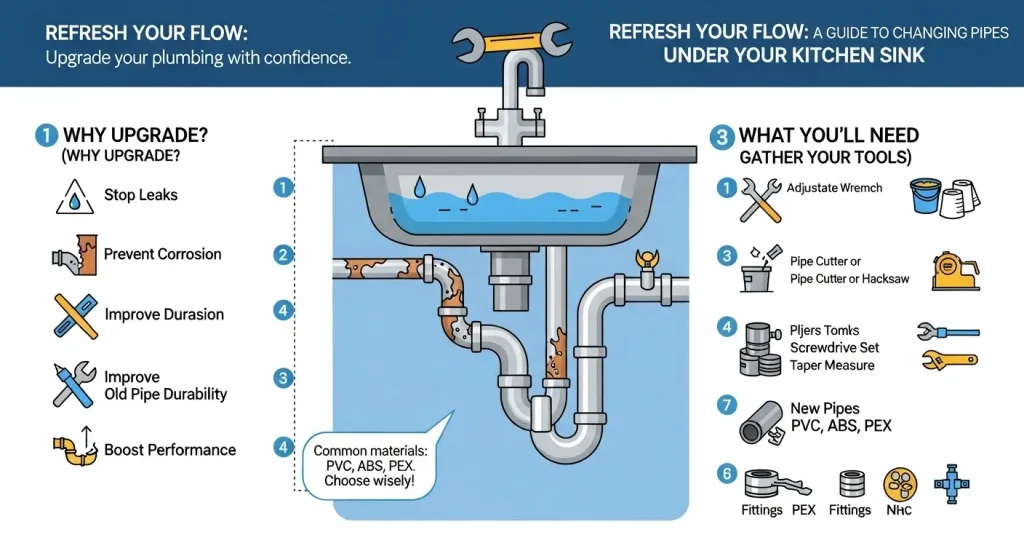
Is your kitchen sink leaking or draining slowly? Changing the pipes under your kitchen sink might be the simple fix you need.
You might think it’s a tough job, but with the right steps, you can do it yourself and save money. You’ll learn exactly how to replace those pipes quickly and safely. Keep reading, and soon your kitchen will be working like new again.
Tools And Materials Needed
Changing pipes under the kitchen sink needs the right tools and materials. Using proper items makes the job easier and safer. Prepare all tools before starting. This saves time and avoids frustration. Here is a list of what to have on hand.
Essential Tools
- Adjustable wrench for loosening pipe connections
- Pipe wrench for gripping and turning pipes
- Bucket to catch water spills
- Pipe cutter or hacksaw to cut pipes
- Plumber’s tape to seal threaded joints
- Slip-joint pliers for tight spaces
- Flashlight to see under the sink clearly
Types Of Pipes And Fittings
Common pipes include PVC, copper, and PEX. Each has different fittings and tools needed. PVC pipes use solvent cement for joints. Copper pipes require soldering or compression fittings. PEX pipes connect with crimp rings or push-fit fittings.
| Pipe Type | Common Fittings | Connection Method |
|---|---|---|
| PVC | Slip joints, couplings | Solvent cement |
| Copper | Compression, soldered joints | Soldering or compression nuts |
| PEX | Push-fit, crimp rings | Crimping or push-fit |
Safety Gear
- Gloves to protect hands from sharp edges
- Safety glasses to shield eyes from debris
- Mask to avoid inhaling dust or fumes
- Knee pads for comfort while working low

Credit: www.reddit.com
Preparing The Workspace
Preparing the workspace is a key part of changing pipes under the kitchen sink. A clean and organized area makes the job easier and safer. It helps prevent water damage and keeps tools within reach. Take time to set up before starting any work.
Shutting Off Water Supply
Turn off the water supply to stop leaks during the repair. Locate the valve under the sink and close it tightly. Open the faucet to drain any water left in the pipes. This step protects your kitchen from flooding and keeps the area dry.
Clearing The Area
Remove all items stored under the sink. Clear cleaning supplies, trash bins, and other objects. This creates enough space to work comfortably. A clear area also prevents accidents and makes it easy to access pipes.
Protecting Cabinets And Floors
Place a waterproof mat or towels on the cabinet floor. This protects the wood from water spills and stains. Use painter’s tape or cardboard to shield cabinet edges. Protecting surfaces saves you time cleaning and costly repairs.
Removing Old Pipes
Removing old pipes under the kitchen sink requires care and patience. The process starts with loosening pipe connections. Proper tools and steady hands make this job easier. Some pipes may be tight or stuck, needing extra effort to remove. After removal, disposing of old pipes safely is important. This step keeps your workspace clean and ready for new installations.
Loosening Connections
Begin by turning off the water supply. Use a wrench or pliers to grip the pipe fittings. Turn the fittings counterclockwise to loosen. Avoid forcing the pipes too hard to prevent damage. If the pipes spin together, hold one pipe steady while turning the other. Work slowly to avoid stripping the threads.
Dealing With Stubborn Parts
Rust and mineral buildup can cause parts to stick. Apply a lubricant like WD-40 to loosen the joints. Let it sit for a few minutes before trying again. Tap gently with a rubber mallet if needed. Heat the pipe slightly with a hairdryer to expand the metal. Never use excessive force that might break the pipes.
Disposing Of Old Pipes
Separate metal and plastic pipes for recycling. Check local recycling rules for pipe disposal. Wrap sharp edges with tape to avoid injury. Place pipes in a safe spot away from children and pets. Dispose of old pipes quickly to clear space for new plumbing.

Installing New Pipes
Installing new pipes under your kitchen sink requires careful planning and precision. Good installation helps prevent leaks and ensures smooth water flow. Focus on choosing the right materials, cutting the pipes correctly, and securing all connections tightly.

Choosing The Right Pipe Type
Select pipes that fit your kitchen’s plumbing system. Common types include PVC, copper, and PEX. PVC is affordable and easy to work with. Copper lasts long and handles heat well. PEX is flexible and resists freezing. Consider water temperature, pressure, and local codes before deciding.
Cutting And Fitting Pipes
Measure the pipe length carefully before cutting. Use a pipe cutter or a fine-toothed saw for clean cuts. Remove burrs to avoid blockages. Dry fit the pipes first to check alignment. Adjust as needed to ensure a snug fit without forcing parts together.
Securing Connections
Use the correct fittings for your pipe type. Apply pipe primer and cement for PVC joints. Solder copper pipes with a propane torch and flux. For PEX, use crimp rings or push-fit connectors. Tighten all connections firmly, but avoid overtightening to prevent damage.
Testing For Leaks
After replacing the pipes under your kitchen sink, testing for leaks is crucial to avoid water damage and costly repairs later. This step ensures every connection is secure and water flows as it should. Skipping this test can leave you with hidden leaks that only show up when it’s too late.
Turning Water Back On
Start by slowly turning the main water valve back on. This lets you control the pressure and watch for any immediate leaks. If you hear hissing or notice dripping as soon as the water flows, shut it off quickly to prevent flooding.
Pay attention to how the water fills the pipes. Is there any sudden drop in pressure or strange noises? These signs might indicate a loose connection or blockage.
Checking Joints And Seals
Look closely at every joint and seal where pipes connect. Use a flashlight to see into tight spaces. Even small drops of water can signal trouble.
Feel around the seals with your fingers for moisture. Sometimes leaks are so slow you only notice dampness or a musty smell. Have a dry cloth handy to wipe the area and monitor if it gets wet again.
Fixing Common Leak Issues
If you find leaks, tightening the slip nuts gently with a wrench often solves the problem. Avoid over-tightening—it can crack fittings or strip threads.
For worn-out washers or seals, replacing them usually stops leaks immediately. Keep extra washers and plumber’s tape nearby for quick fixes.
Have you checked if the pipe alignment is perfect? Misaligned pipes stress seals and cause leaks over time. Adjusting the pipes slightly can save you headaches down the road.
Maintenance Tips
Keeping your kitchen sink pipes in good shape saves you from unexpected leaks and costly repairs. Regular maintenance helps you spot small issues before they turn into big problems. Here are some practical tips to keep your pipes running smoothly and extend their lifespan.
Regular Inspections
Check under your kitchen sink at least once a month. Look for any signs of moisture, corrosion, or unusual smells around the pipes. Even a tiny drip can lead to mold or water damage if ignored.
Touch the pipes to feel for any unusual warmth or cold spots, which might indicate a leak or blockage. Tighten loose fittings gently, but don’t overtighten—this can cause damage. Have a flashlight handy to spot cracks or rust that aren’t easy to see at first glance.
Preventing Clogs
Clogs are one of the most common problems in kitchen sink pipes. Avoid pouring grease, coffee grounds, or food scraps down the drain. These materials build up over time and cause blockages.
Use a drain strainer to catch debris before it goes down the pipe. Flush your drain with boiling water once a week to clear minor buildups. If you notice water draining slowly, act quickly—waiting only makes the clog worse.
When To Call A Professional
Sometimes, a problem needs more than your DIY skills. If you see persistent leaks, hear gurgling sounds, or smell foul odors from your pipes, it’s time to get expert help. Trying to fix major issues yourself can cause more damage and increase costs.
Professionals have the right tools to diagnose and fix deep clogs or pipe damage. Don’t hesitate to reach out if your quick fixes don’t solve the problem. What warning signs have you learned to watch for under your sink?
Frequently Asked Questions
How Do I Know When To Change Kitchen Sink Pipes?
Signs include leaks, corrosion, foul odors, or slow drainage. Regular inspections help spot damage early. Prompt replacement prevents water damage and plumbing issues.
What Tools Are Needed To Change Kitchen Sink Pipes?
Common tools include a pipe wrench, pliers, bucket, plumber’s tape, and a pipe cutter. Having these ready ensures a smooth and efficient pipe replacement process.
Can I Replace Kitchen Sink Pipes Myself?
Yes, with basic plumbing knowledge and proper tools, you can replace pipes safely. Turn off water supply before starting and follow instructions carefully to avoid leaks.
How Long Does It Take To Change Kitchen Sink Pipes?
Typically, it takes 1 to 2 hours depending on pipe condition and complexity. Preparation and having the right tools can speed up the process.
Conclusion
Changing pipes under the kitchen sink can save money and time. Start by turning off the water supply. Use the right tools for a smooth process. Take your time to avoid mistakes. Check for leaks after installation. Clean up the area once done.
Simple steps make the job easier. You can do it yourself with care and patience. Keep your kitchen running well with regular pipe checks. Small repairs prevent big problems later.

Hi, I’m Daniel Harper, a senior editor here at KitchenBucks.com. For over 10 years, I’ve been exploring kitchen gadgets and appliances to help people find tools that truly add value without breaking the bank. I love simplifying product choices so you can focus more on cooking and less on worrying about what to buy. When I’m not reviewing the latest gadgets, you’ll usually find me experimenting with coffee brewing or firing up the grill for a weekend barbecue.