
White distilled vinegar can fix a stinky, scaled-up dishwasher fast, but only when used the right way. If you want to know how to clean a dishwasher with vinegar, start by checking your owner manual and the filter, then pick the correct placement and cycle for your tub type.
Manufacturer specifications list household vinegar at about 5 percent acetic acid, and many appliance manuals as of 2026 warn against repeated acid exposure on some seals. Our research shows mineral scale forms faster in water above 7 grains per gallon, so your schedule depends on local hardness. Read the quick answer below, then follow the decision flow.
Clean Your Dishwasher With Vinegar: 3 Easy Steps
Quick Answer
how to clean a dishwasher with vinegar works for light maintenance.
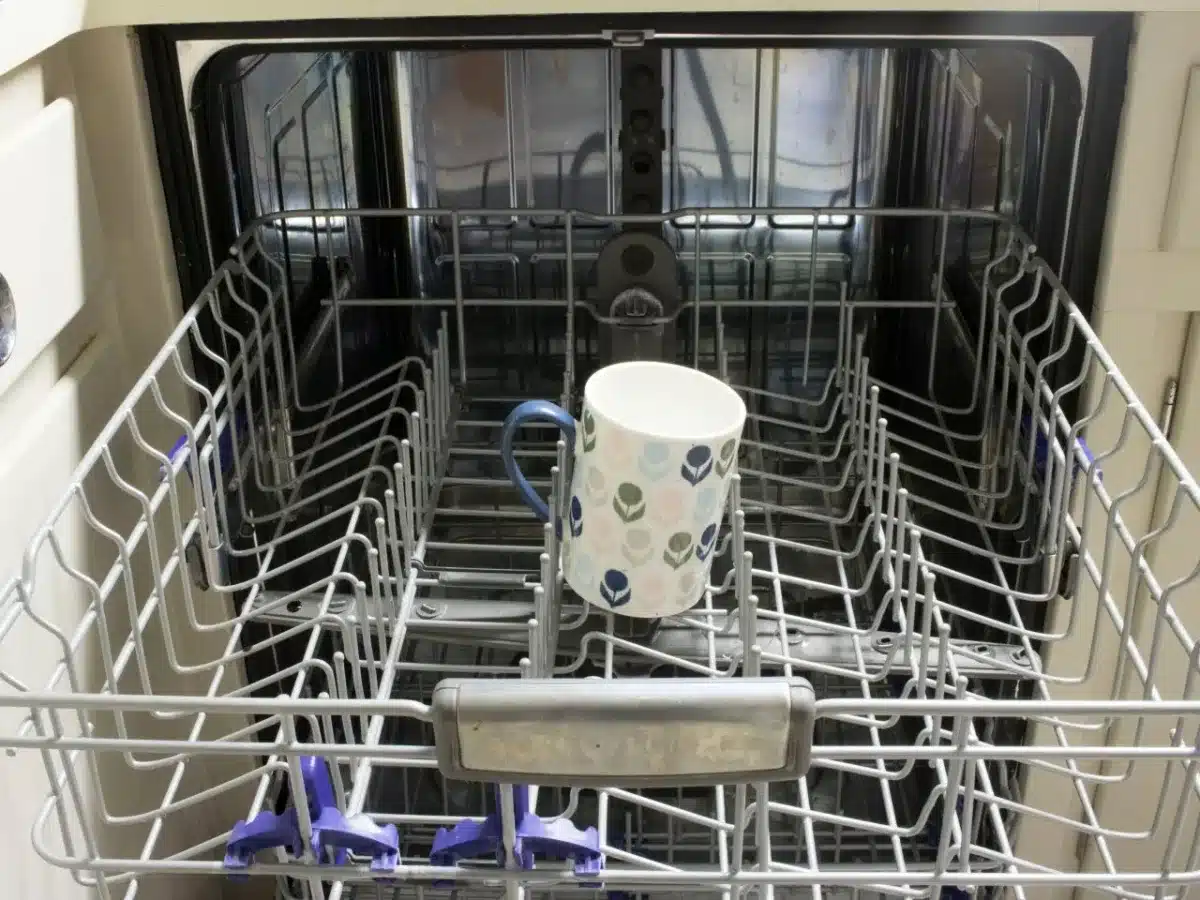
Place a cup of white vinegar on the top rack.
Run a hot, empty cycle after placing the cup.
If your manual forbids vinegar, use citric acid or a labeled descaler.
Quick Decision Flow: Can You Use Vinegar on Your Dishwasher Right Now?
If your manual explicitly forbids acidic cleaners, do not use vinegar. Use a manufacturer-approved cleaner instead.
If the manual is silent, check three quick conditions:
- Tub material, then choose placement. Stainless steel tolerates occasional acid better. Porcelain enamel may dull with repeated exposure.
- Seal material, then decide frequency. EPDM rubber seals can be affected by repeated acid exposure. Silicone seals tolerate acid better.
- Problem severity, then pick a method. Light odors use a top-rack cup. Heavy scale or mold needs filter, spray-arm, and possibly citric acid treatment.
Decision branches
- Manual forbids acid, any scale level: use a manufacturer cleaner or enzyme product.
- Manual allows acid, light odor: use the top-rack cup method monthly.
- Manual allows acid, heavy scale: clean parts first, then run a citric acid or targeted vinegar treatment, following the steps in the Deep Descale section.
Core Explanation: How Vinegar (Acetic Acid) Affects Scale, Odors, and Seals
White distilled vinegar contains about 5 percent acetic acid, enough to dissolve light mineral deposits and neutralize many kitchen odors. The acid reacts with calcium carbonate and other hard-water minerals, breaking deposits into material you can rinse away.
Vinegar also loosens light soap scum and organic residues that trap smells. That makes it a solid monthly maintenance step in moderate-water areas. Citric acid, an organic acid, often removes limescale faster and is gentler on seals for repeated use, so it is commonly recommended for quarterly descaling.
Do not mix vinegar with chlorine bleach or other chlorine-based products. Mixing acid with bleach releases toxic chlorinated gases, a chemical hazard outlined by the Centers for Disease Control and Prevention.
Features & Components to Check First: Tub Type, Filter, Spray Arms, Gaskets, and Dispenser
Check these parts before running any acid cycle:
- Tub type, then choose the method. Stainless-steel tubs handle occasional acid cycles well. Enamel tubs benefit from limited exposure.
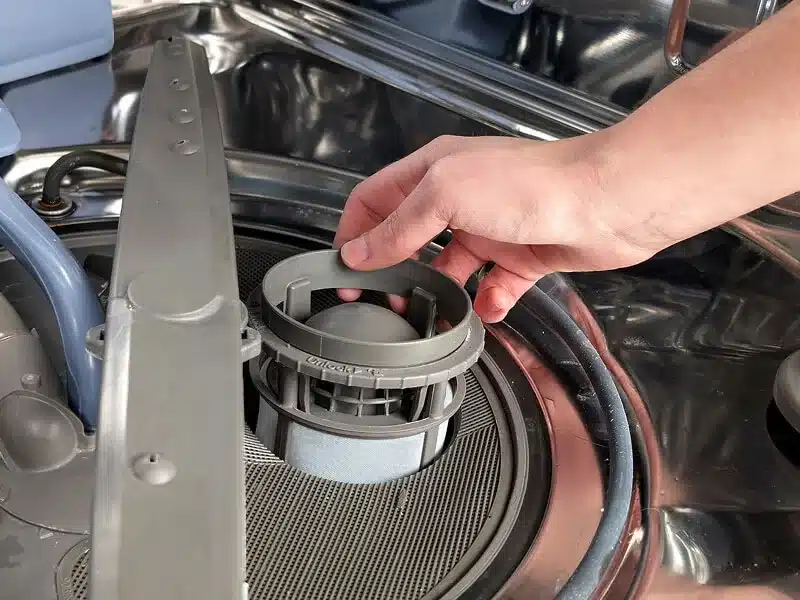
- Filter type, then remove and clean it. Removable mesh filters trap food and should be rinsed monthly. Non-removable filters still need visible grime wiped away.
- Spray arms, then inspect jets. Clogged spray-arm holes reduce cleaning performance. Clear jets with a toothpick or soft brush.
- Gaskets and seals, then wipe and inspect. Lift the door gasket to clear trapped crumbs and moisture. Replace cracked gaskets per manufacturer guidance.
- Detergent dispenser, then avoid pouring vinegar there unless the manual permits it. Dispensers open mechanically and may not tolerate concentrated liquids.
Practical storage and safety links
- Keep cleaning supplies organized in nearby cabinets, using compact organizers for safe access, see our under-counter storage ideas.
- For greasy residues around the door or nearby cabinetry, apply targeted degreasing methods described in our cleaning greasy cupboards guide.
Step-by-Step: Light Monthly Clean with Vinegar
Tools and materials
| Item | Purpose | Amount |
|---|---|---|
| White distilled vinegar (5% acetic acid) | Deodorize, mild descaling | 1 cup |
| Baking soda | Neutralize odors, brighten tub | 1 cup |
| Soft brush or old toothbrush | Scrub filter and gasket | 1 |
| Microfiber cloth | Wipe seals and edges | 1–2 |
| Gloves | Skin protection | Optional |
Preparation steps
- Empty the dishwasher. Remove all dishes and cookware.
- Run the hot water at the sink until it is very hot. This helps the dishwasher reach proper wash temperature quickly.
- Remove the filter, rinse out food debris, and scrub it with warm soapy water.
Top-rack cup method, exact steps
- Place a dishwasher-safe measuring cup holding one cup of white distilled vinegar on the top rack. Center it so it won't tip.
- Run the hottest, longest empty cycle, no detergent. The heat and steam help the vinegar circulate.
- After the cycle, sprinkle one cup of baking soda on the tub bottom and run a short hot rinse. This neutralizes smell and brightens the interior.
Timing and frequency
- Use the top-rack vinegar method monthly for routine deodorizing in moderate-water homes.
- If you have hard water, use citric acid instead of frequent vinegar cycles. See the Deep Descale section for dosing and steps.
Step-by-Step: Deep Descale and Mold Treatment (When to Use Vinegar vs Citric Acid)
If heavy limescale or visible mildew is present, start with mechanical cleaning. Remove racks, take out the filter, and clear spray-arm jets before any acid cycle.
Deep descaling steps
- Remove racks and the filter, then soak them in hot soapy water.
- Scrub the sump area and filter with a soft brush to remove trapped food.
- Clear spray-arm holes with a toothpick or small wire until water flows freely.
Choosing acid and dosage
- If the manual forbids vinegar, do not use it. Use citric acid powder, one to two tablespoons in the tub bottom, then run a hot cycle.
- If the manual allows vinegar and scale is heavy, pour two cups of white vinegar into the tub bottom and run the hottest long cycle. Repeat if spots remain.
Mold treatment and follow-up
- Scrub mold on the rubber gasket with a 1:1 vinegar and water solution, rinse, and dry. Replace the gasket if mold returns.
- For persistent biological odors, run an enzyme cleaner cycle after cleaning parts. If mold keeps returning, inspect for hidden moisture and consult professional mold advice.
When to call a technician
- If spray-arm performance does not recover after cleaning, or if the pump struggles, call a service technician. Mechanical faults need professional diagnosis.

Where to Put the Vinegar: Top Rack vs Tub Bottom vs Dispenser, Risks and Best Practice
Top-rack cup placement is the safest routine method for most machines. It lets vinegar vapor circulate without soaking seals directly.
Bottom-of-tub method, when to use it
- Use the tub-bottom pour for stubborn mineral deposits, only if the manual permits acid contact. Pour two cups into the tub bottom and run the hottest, longest cycle.
- Limit bottom pours to occasional use to avoid long-term exposure to seals and metal parts.
Avoid the detergent dispenser unless allowed
- Do not put vinegar in the detergent dispenser unless the manual explicitly permits it. Dispenser mechanisms can corrode from concentrated liquids.
- If the manual allows dispenser placement, follow the exact volume and timing specified.
What the diagram clarifies
- The diagram highlights recommended top-rack placement, occasional bottom-tub pours, and a warning icon for dispenser use when manuals prohibit acids.

Comparison / Alternatives: Vinegar vs Citric Acid vs Commercial Descalers vs Enzyme Cleaners
Vinegar and citric acid remove scale, but they differ in strength and seal impact. The table below helps you choose.
| Cleaner | Best for | Pros | Cons |
|---|---|---|---|
| White distilled vinegar | Monthly deodorizing, light scale | Cheap and available | Can stress seals if used often |
| Citric acid powder | Hard-water limescale | Effective, gentler on seals | Needs measuring, slightly messy |
| Commercial descaler | Warranty-safe deep descaling | Formulated for appliances | More expensive, follow label |
| Enzyme cleaner | Organic buildup and odors | Targets biofilm, safe on parts | Slower on mineral scale |
Who should use what
- Renters or low-use homes, choose vinegar for monthly odor control.
- Hard-water households, choose citric acid quarterly.
- Users with warranty constraints, use a labeled commercial descaler.
- Kitchens with persistent food smells, use an enzyme cleaner to remove biofilm.
Mistakes to Avoid: Overuse, Mixing Chemicals, Ignoring the Manual
Stop using vinegar frequently if the manual advises against acids. Repeated acid cycles can void warranties and wear seals.
Chemical hazards and common errors
- Never mix vinegar with bleach or chlorine cleaners. Mixing produces toxic chlorinated gases, a hazard the CDC highlights.
- Never pour vinegar into the detergent dispenser unless the manual allows it. Dispenser hardware can be damaged.
- Do not run acid cycles with plastic or wood inside. Heat and acid can warp or stain sensitive items.
Fix common user errors
- Always clean the filter before descaling. A clogged filter prevents good circulation.
- Clear spray-arm jets manually, then run the descaler. That restores cleaning power faster.
Safety, Warranty and Compliance: Manufacturer Warnings and Chemical Hazards
Follow the owner manual to protect warranty coverage. Manufacturer documentation lists prohibited cleaners and recommended maintenance steps.
Safety checklist
- Read the manual and follow any banned cleaner lists. Manufacturer guidance matters for repair claims.
- Wear gloves if you have sensitive skin. Vinegar can irritate with repeated contact.
- Do not mix acids with bleach or chlorine products. The resulting gas can cause serious respiratory harm.
If in doubt about warranty
- Contact manufacturer support before doing repeated acid cycles if the manual is unclear. Repairs after non-approved maintenance may not be covered.
- For recurring mechanical failures after cleaning, consult a qualified technician.
Maintenance Schedule: How Often to Clean Based on Water Hardness and Usage
Clean more often with hard water or heavy daily use. Regional water data from the USGS can help you confirm local hardness levels.
Maintenance table
| Condition | Monthly | Quarterly | Annually |
|---|---|---|---|
| Light use, soft water | Top-rack vinegar cup | Filter check | Full inspection |
| Heavy use, moderate water | Top-rack vinegar cup | Citric acid deep clean | Pump check |
| Hard water >7 GPG | Citric acid or commercial descaler | Spray-arm soak | Professional service if scale persists |
Scheduling tips
- Set calendar reminders for filter cleaning and descaling. That prevents scale from becoming a repair issue.
- Store cleaners in a ventilated cabinet near the appliance, and use compact organizers, see our under-counter storage ideas.
Troubleshooting: Persistent Odors, Poor Cleaning, Clogged Spray-Arm Jets, and Stains
If odors persist after a vinegar run, look at the drain path and garbage disposal connection first. Food trapped in the drain often causes smells.
Step fixes
- Persistent smell: Remove the filter, soak it, then run an enzyme cleaner. If smell continues, inspect disposals and traps and consider how to fix a broken pipe under the sink.
- Poor cleaning: Confirm spray-arm rotation and clear jets with a toothpick. Soak clogged arms in a citric acid solution.
- Stains or mold: Use citric acid for baked-on mineral deposits. For mold under seals, see guidance about black mold under the sink.
When to call a pro
- If pumps, heating, or drainage problems persist after cleaning, call a technician. Mechanical faults need diagnosis and repair.
Expert Tips & Pro Advice: Preheating Water, Filter Care, Gasket Maintenance, and Venting
Preheat the hot water at the sink until it runs hot, then start the dishwasher. Warmer starting water helps descaler performance.
Quick pro tips
- Clean the filter monthly, dry it, and inspect for tears. A damaged filter leaves residues and reduces circulation.
- Wipe the door gasket after runs with a microfiber cloth and mild detergent to prevent mold. Replace cracked gaskets according to manufacturer specs.
- Leave the door slightly open after cycles to dry the interior and prevent mildew. For spills and greasy areas, follow techniques for cleaning surfaces and clean kitchen floors.
Frequently Asked Questions
Can I use apple cider vinegar instead of white distilled vinegar?
No, use white distilled vinegar because it has consistent 5 percent acetic acid and no added sugars or color. Apple cider can stain finishes and leave residues.
How much citric acid should I use for a deep clean?
Use one to two tablespoons of food-grade citric acid in the tub bottom for a single hot cycle. Repeat once if heavy scale remains.
Will vinegar damage stainless-steel dishwasher tubs?
Occasional vinegar cycles are safe for stainless steel, but repeated concentrated acid exposure can dull finishes over time. For frequent descaling, citric acid is the gentler option.
Is it safe to mix vinegar and baking soda in the dishwasher?
No, do not mix them during the same cycle. Baking soda neutralizes acid, so run vinegar first, then a separate short baking soda rinse.
How do I stop mold from coming back on the gasket?
Dry the gasket after cycles and wipe it weekly with mild detergent. Leave the door cracked to ventilate. If mold returns, check for trapped water and hidden moisture.
Final Decision Guide: Pick the Right Cleaning Path for Your Dishwasher Model and Problem
Use this short workflow to choose a safe cleaning route.
Checklist
- Manual forbids acids: pick a manufacturer-approved descaler or enzyme cleaner.
- Light odor: place one cup of white distilled vinegar on the top rack monthly.
- Heavy scale or hard-water home: remove parts, clear jets, then run citric acid quarterly, one to two tablespoons.
- Mold or persistent organic odor: scrub gaskets and filter, then run an enzyme cleaner and improve ventilation.
Follow these steps, check your manual, and keep parts clean. That will keep cleaning performance strong and reduce repair needs.
