
Standing water at the bottom of your dishwasher usually means the drain pump has stopped moving water out of the tub. A dishwasher drain pump replacement is often the fix, and many homeowners can handle it without calling a technician. The pump pushes dirty water through the drain hose and into your sink or garbage disposal line.
When it fails, the cycle stops or leaves a puddle behind.
In our research, most residential dishwashers use a 120 volt AC drain pump in North America, while UK and EU models typically run on 220 to 240 volts. Manufacturer specifications indicate the impeller inside the pump housing is usually made of engineered plastic. Aggregate user reviews show that debris like glass shards or fruit pits is the leading cause of pump failure.
Before you buy a part or pull the appliance out, you need to confirm the pump is actually at fault.
Dishwasher Drain Pump Replacement
A dishwasher drain pump replacement swaps a failed drain pump for a new one.
The pump moves dirty water from the tub to the drain hose.
Most replacements take one to two hours.
OEM parts cost between forty and one hundred thirty dollars.
Turn off power and water before starting.
How a Dishwasher Drain Pump Works (and Why It Fails)
The drain pump sits at the lowest point of the dishwasher tub, usually inside the sump area near the filter. Its only job is to push dirty wash water out through the drain hose and into your household drain line. During the drain cycle, the motor spins an impeller that creates pressure and forces water toward the outlet.
Once the tub empties, the pump shuts off until the next cycle.
Pump failure usually happens for one of three reasons. First, debris such as broken glass, bone, or a fruit pit can jam or crack the impeller blades. Second, food particles and detergent residue can clog the intake screen and starve the pump of water.
Third, the motor winding can burn out or the electrical connector can corrode, stopping the impeller entirely.
Manufacturer specifications indicate these pumps are rated for intermittent duty, meaning they run only for minutes at a time. Running the dishwasher with a clogged filter forces the pump to work harder and shortens its lifespan. In our research, aggregate reviews report that a humming sound with no drainage is the most common early warning sign.
A silent pump that does not hum at all often points to an electrical issue rather than a mechanical blockage.
You can usually confirm pump failure by listening at the start of the drain cycle. If you hear a hum but the water stays put, the impeller is likely seized. If you hear nothing and the control panel shows a drain error code, the pump motor or its wiring may be dead.
Either way, replacement is often the only practical repair because internal pump parts are not sold separately on most models.
Some dishwashers use a separate circulation pump for spraying water and a dedicated drain pump for emptying. Do not confuse the two when ordering a replacement part. Checking your model number against the manufacturer parts diagram ensures you buy the correct component.
As of 2026, most major brands still use a similar sump-mounted design, though exact mounting tabs and hose angles vary by model. A service manual shows the pump location and removal order for your specific chassis. Skipping that step can turn a thirty minute job into a two hour frustration.
Is Your Drain Pump Actually the Problem
Yes, standing water after a cycle usually means the drain pump or its path is blocked, but other faults can look the same. A clogged drain hose or garbage disposal inlet can stop flow even when the pump runs fine. A failed control board may never send power to the pump at all.
Start with the easiest checks. Pull out the bottom filter and clear any food or debris. Look at the drain hose for kinks or blockages where it connects under the sink.
If the hose and filter are clear, listen at the start of the drain cycle.
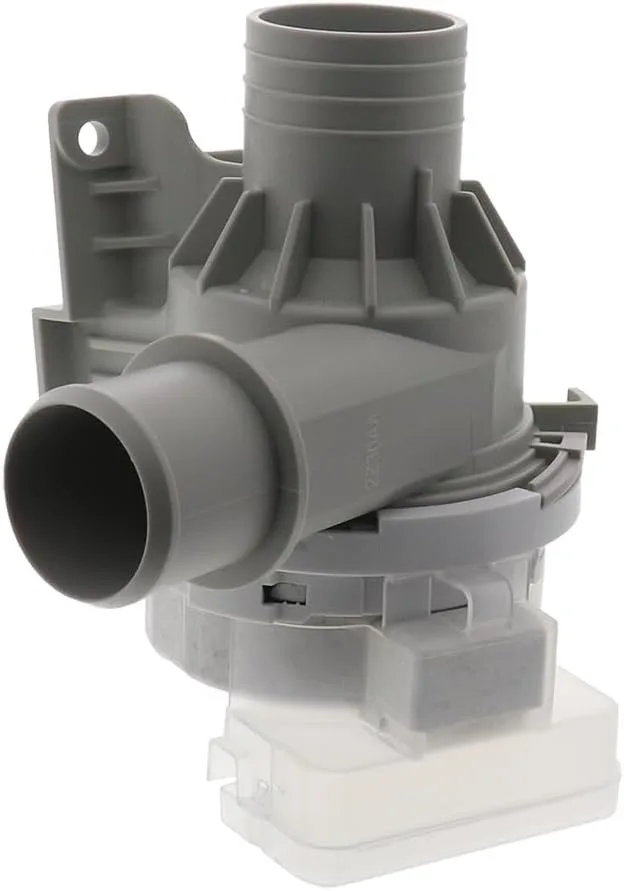
A humming sound with no water movement points to a seized impeller. Silence usually means an electrical fault. A control board that cuts out can mimic a dead pump, which is why mid cycle stoppage deserves a separate check.

If you confirm the pump is dead, note your model number before buying anything. Pump designs vary by brand and year, and a universal part may not seat correctly.
Identify Your Pump and Access Type
Your model number is the key to the right pump. Look for a sticker inside the door frame or on the side of the tub. Write it down before you order parts or open the sump.
Dishwashers use two main access styles. Bottom-access models hide the pump under the tub, so you must pull the appliance out from under the counter. Front-access models let you reach the pump through the lower kickplate without moving the dishwasher.
Some European brands mount the pump on the side of the sump, while most North American brands place it at the rear. The service manual shows the exact spot and the screw pattern. Skipping this identification step can leave you with a pump that does not match your housing or hose angle.
Tools and Parts You’ll Need
| Item | Purpose |
|---|---|
| Nut driver or socket set | Removes pump mounting screws |
| Slip-joint pliers | Loosens hose clamps |
| Flathead screwdriver | Pries off clips and panels |
| Bucket and old towels | Catches residual water |
| Replacement drain pump | Matches your model number |
| New hose clamp | Replaces old or corroded clamp |
| Work gloves | Protects hands from sharp metal edges |
Most pumps cost between forty and one hundred thirty dollars. A universal pump may cost less, but OEM parts match the original fit and wiring plug. Gather everything before you shut off power.
Having the right tools on hand prevents mid-job trips to the hardware store.
Step-by-Step: Replacing the Drain Pump
Bottom-Access vs Front-Access Models
Bottom-access jobs require you to disconnect water and power, then slide the dishwasher out far enough to reach underneath. Front-access jobs only need the kickplate removed. Both styles end at the same sump area, but bottom access adds time and maneuvering.
- Shut off power at the breaker. Unplugging is not enough on hardwired units.
- Turn off the water supply valve under the sink.
- Remove the lower kickplate or access panel.
- Place towels under the sump to catch drips.
- Clamp the drain hose to stop water from spilling.
- Disconnect the drain hose from the pump outlet.
- Disconnect the wire harness from the pump motor.
- Remove the mounting screws or clips.
- Pull out the old pump and compare it to the new one.
- Seat the new pump and remount it.
- Reconnect the hose and wire harness.
- Run a short drain cycle and check for leaks.
Cutting breaker power follows basic electrical safety guidance from the Consumer Product Safety Commission. The Electrical Safety Foundation International recommends verifying the circuit is dead before touching wires.
Visual Cues at Each Step
The pump outlet usually faces the drain hose, which runs upward toward the sink cabinet. The wire harness has a locking tab you must press before pulling. Mounting screws often sit in a circle around the pump housing.
If you see standing water in the sump, the hose clamp was not tight or the hose was not clamped before removal.
What It Costs and Whether to DIY
| Option | Parts Cost | Labor Cost | Total |
|---|---|---|---|
| DIY OEM pump | $40-$130 | $0 | $40-$130 |
| DIY aftermarket | $15-$50 | $0 | $15-$50 |
| Professional repair | $40-$130 | $120-$250 | $160-$380 |
Replacing the pump yourself saves most of the labor bill. A professional call usually costs more than a new pump plus parts. If your dishwasher is more than eight years old and shows other wear, a full replacement may make more sense.
Hardwired models require shutting off the breaker, not just unplugging. If you are not comfortable working with household voltage, the professional route removes that risk entirely. For electrical safety basics, see guidance from the Consumer Product Safety Commission.
If you are weighing repair against replacement, knowing when a dishwasher stops mid cycle can help you decide whether to walk away.
Mistakes That Turn a Simple Swap into a Flood

Forgetting to clamp the drain hose is the most common error. Water pours out the moment you disconnect the hose from the pump. Always slide a clamp onto the hose before you loosen anything.
Not cutting breaker power risks shock, especially on hardwired units. Verify the circuit is dead before touching any wires. Using the wrong pump creates leaks at the hose or wire connections because mounting tabs and fitting angles differ by brand.
Other errors include stripping the mounting screws, cross-threading the hose clamp, and skipping the leak test. Run a short drain cycle and watch the sump for drips before you push the dishwasher back into place. Leaving the kickplate off until after the test makes it easier to spot problems.
The under-sink drain setup matters too. A clogged garbage disposal inlet can mimic pump failure. Clear that connection before you assume the pump is dead.
Keeping the New Pump Clean and Long-Lived
Scrape plates before loading to keep large debris out of the sump. Food particles that bypass the filter can jam the impeller or wear down the seal over time. Clean the bottom filter once a month to prevent buildup from restricting flow.
Run an empty cycle with dishwasher cleaner every few months to break down grease inside the tub. Using the dishwasher sanitize cycle periodically also helps keep the interior clean and reduces odor-causing residue.
Check the drain hose connection once a year for cracks or loose clamps. A slow drain is often the first warning sign of a partial blockage. Catching it early protects the new pump from unnecessary strain and avoids a repeat repair.
For ongoing care, the dishwasher quick wash cycle makes a good post-repair leak test. Running it after the install confirms everything drains properly without wasting a full load.
Frequently Asked Questions
How do I know if my drain pump is bad?
Standing water after a cycle with a clear filter and hose usually means pump failure. A humming sound with no drainage confirms it. Silence often points to an electrical fault rather than a mechanical blockage.
Can I replace just the pump motor?
Most dishwashers sell the pump and motor as one assembly. Individual impellers or motor windings are rarely available as separate parts, so you usually replace the whole unit.
How long does the job take?
A front-access replacement takes about forty-five minutes. Bottom-access models can take up to two hours because you must pull the appliance out from under the counter.
Do I need to pull the dishwasher out?
Only if your model uses bottom access. Front-access models let you reach the pump through the kickplate without moving the appliance.
Will a new pump fix standing water if the hose is clogged?
No. A clogged drain hose or blocked disposal inlet stops flow even with a new pump. Clear the hose first before assuming the pump is dead.
Is it worth repairing an older dishwasher?
If the unit is under eight years old and otherwise sound, yes. Older dishwashers with rust or multiple failures are better replaced than repaired.