
An outdoor sign takes a beating. Rain, UV rays, temperature swings, and wind all conspire to warp, delaminate, or rot the material you choose. If you've ever watched a wooden sign sag after a single wet season, you know the material selection matters far more than the paint job.
This guide cuts through the confusion. We'll cover which plywood grades genuinely hold up outdoors, what thickness you actually need, how to seal and mount the finished sign, and the common mistakes that shorten a sign's life. Whether you're making a business storefront sign, a rustic welcome board, or a directional post for a property, the right plywood choice is the difference between a sign that lasts a decade and one that fails in a year.
Why Not All Plywood Works Outdoors
Plywood is a sandwich of wood veneers glued together. The problem is that standard interior plywood uses adhesives that dissolve when moisture seeps between the layers. Once water gets in, the layers separate—a process called delamination—and the sign becomes unusable.
For outdoor use, you need two things: waterproof glue and rot-resistant or treated wood. The American Plywood Association (APA) rates panels by exposure durability. Exterior-rated panels use a "fully waterproof" bond classified as Exposure 1 or Exterior. But even among Exterior-rated plywood, the wood species and veneer quality vary hugely.
Top Plywood Options for Outdoor Signs
Marine-Grade Plywood (A-A Marine)
What it is: A premium hardwood plywood made with waterproof phenolic resin glue and no core voids. The face veneers are virtually defect-free.
| Property | Detail |
|---|---|
| Glue type | Phenolic resin (waterproof) |
| Core | Solid — no gaps or voids |
| Face veneers | A-grade both sides (smooth, sanded) |
| Typical wood species | Okoume, Douglas fir, or mahogany |
| Price range | $60–$100 per 4×8 sheet (2026 prices) |
| Best for | Permanent signage near water, commercial signs, painted or varnished boards |
In practice, marine plywood is the safest bet for a sign you expect to last 5–10 years outdoors with minimal maintenance. Its lack of voids means you won't get water pockets inside the board. The smooth face also accepts paint and vinyl lettering without telegraphing core imperfections.
The main downside is cost. You can pay triple what an exterior-grade fir plywood costs. For a small residential sign, that may be overkill. But for a business sign that represents your brand, the investment is smart.
Exterior-Grade Plywood (CDX and ACX)
What it is: Construction-grade plywood made with Exposure 1 or Exterior glue. CDX has a C-grade face and D-grade back; ACX has an A-grade face and C-grade back.
| Property | Detail |
|---|---|
| Glue type | Exposure 1 or Exterior |
| Core | May contain small voids |
| Face veneers | C/D (CDX) or A/C (ACX) |
| Typical wood species | Douglas fir, Southern yellow pine |
| Price range | $30–$55 per 4×8 sheet |
| Best for | Temporary signs, signs that will be painted thickly, budget projects |
A common mistake is assuming CDX is fully water-resistant. The glue lines are waterproof, but the edges and face veneers are not. If you cut this plywood and leave the edges unsealed, moisture wicks in through the open grain and causes rot at the edges within a year.
ACX gives you a much nicer face for painting, but the back side (C-grade) may have knots and patches. If you only need one good face—which most signs do—ACX offers a good middle ground between cost and appearance.
Medium-Density Overlay (MDO) Plywood
What it is: Exterior-grade plywood with a resin-impregnated fiber overlay bonded to the face. The overlay creates a waterproof, ultra-smooth surface designed specifically for outdoor signs.
| Property | Detail |
|---|---|
| Glue type | Exterior |
| Overlay | Thermoset resin-impregnated fiber (one or both sides) |
| Face | Smooth, paintable, weatherproof |
| Price range | $70–$120 per 4×8 sheet |
| Best for | Highway signs, commercial signage, painted signs that need a flawless finish |
MDO is the unsung hero of outdoor signage. It was developed for highway road signs, so it's built to survive decades of sun, rain, and salt spray without the wood grain showing through the paint. The overlay acts as a moisture barrier, and you can paint directly onto it without priming.
The only catch is availability. Many big-box stores don't stock MDO; you may need to source it from a specialty lumber yard or sign supply house. If you can find it, MDO often outperforms marine plywood for painted signs because the overlay prevents the wood from "checking" (developing small surface cracks) as it dries.
Treated Plywood
What it is: Plywood pressure-treated with chemical preservatives to resist rot and insect damage.
| Property | Detail |
|---|---|
| Glue type | Typically Exposure 1 |
| Treatment | ACQ or CA chemical preservatives |
| Appearance | Greenish tint, may warp as it dries |
| Price range | $35–$60 per 4×8 sheet |
| Best for | Ground-contact signs, posts, signs in humid climates |
Treated plywood resists rot extremely well, but it has downsides for signage. It tends to check and warp as the preservative dries out, which can ruin a painted finish. Treatment chemicals can also corrode fasteners and react with some paints. If you use treated plywood, let it dry completely for two to four weeks before painting, and use stainless steel or hot-dipped galvanized fasteners.
What Thickness Do You Need?
Thickness determines how rigid the sign feels and how well it resists wind load.
| Sign size | Recommended thickness | Why |
|---|---|---|
| Up to 18 inches wide | 1/4 inch (6mm) | Small signs have little wind resistance |
| 18–36 inches | 1/2 inch (12mm) | Good balance of weight and stiffness |
| 36–60 inches | 3/4 inch (18mm) | Needs more rigidity to avoid flexing |
| Over 60 inches | 1 inch (25mm) or frame-reinforced | Must resist substantial wind forces |
A common mistake is using 1/4-inch plywood for a 48-inch sign. It wobbles in the wind, the fasteners loosen, and the sign fails at the mounting points. When in doubt, go one thickness up.
For large signs, consider adding a wooden frame to the back of the plywood sheet. A simple 1×2 or 1×3 frame around the perimeter and a cross brace in the middle stiffens the sign dramatically without the weight of thick plywood.
Sealing and Finishing
Even the best marine plywood will fail if you leave the edges exposed. This is where most DIY signs die.
The Three-Step Sealing Process
1. Seal all edges first. The end grain of plywood absorbs moisture twenty times faster than the faces. Coat every cut edge with at least two heavy coats of exterior-grade spar urethane or epoxy. Some sign makers use a thin layer of exterior wood filler on the edges and sand it smooth before sealing.
2. Prime both faces. Use an exterior-grade, stain-blocking primer. The back of the sign needs protection just as much as the front. A common oversight is priming only the visible side.
3. Apply two top coats. Use 100% acrylic exterior paint or marine enamel. Oil-based paints can yellow in UV light, while quality acrylics stay white and flexible. Re-coat every 2–3 years, especially on the top edge where water pools.
What About Polyurethane?
Spar urethane is the standard clear finish for outdoor wood, but it breaks down in UV light within 12–18 months. If you want the wood grain to show, use a marine-grade spar varnish with UV absorbers and reapply annually. For most signs, paint is more durable than clear finishes.
Mounting and Hardware
A 3/4-inch plywood sign measuring 36×24 inches weighs roughly 12–15 pounds. Add wind load, and the forces on each fastener can exceed 50 pounds in a gust.
Fastener Choices
- Stainless steel screws (deck or sheet metal style) — Best for all situations. They won't rust and stain the wood.
- Hot-dipped galvanized screws — Acceptable but less durable than stainless in coastal environments.
- Never use standard zinc-plated screws. They rust within months.
Pre-drill all screw holes slightly larger than the screw shaft. This allows the wood to expand and contract without splitting the board.
Mounting Methods
For wall-mounted signs: Use stainless steel lag bolts into framing, or toggle bolts into masonry. Leave a 1/2-inch gap behind the sign using washers or spacers so air can circulate and moisture doesn't get trapped.
For post-mounted signs: Use two posts with horizontal cross-bars, or a single post with a bracket that grips the sign at two points. Never mount a large sign to a single post with only one screw—it will spin in the wind.
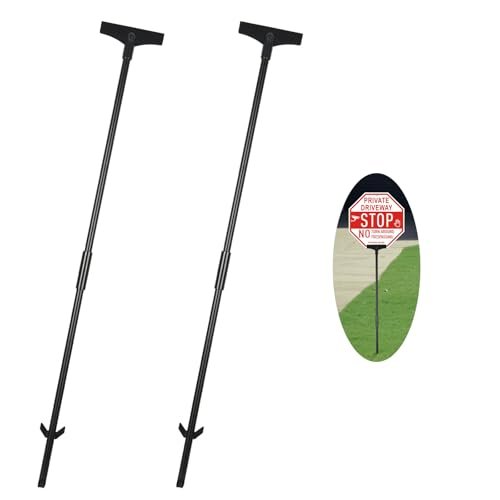
For ground-mounted stakes: Heavy-duty metal yard sign stakes work well for signs up to about 24×18 inches. Look for stakes with adjustable height and rust-resistant coatings. For larger signs, use wooden posts set in concrete.
Common Mistakes That Shorten a Sign's Life
- Using interior plywood: The glue fails within months. The small savings aren't worth the redo.
- Leaving edges unsealed: Water enters through the cut edges and delaminates the panel from the inside out.
- Painting only one side: Moisture from humidity penetrates the unsealed back and warps the board.
- Choosing too-thin material: A 1/4-inch sign larger than 18 inches will flex and crack at the fasteners.
- Drilling tight screw holes: The wood expands, splits around the screw, and the fastener grip fails.
- Mounting flush to a wall: Moisture gets trapped behind the sign and speeds rot.
Frequently Asked Questions
What's the best plywood for a sign that will be painted?
MDO plywood gives the smoothest painted finish and resists moisture better than any other option. If MDO isn't available, use A-A marine plywood with a quality exterior primer and two top coats of 100% acrylic paint.
Can I use OSB (oriented strand board) for an outdoor sign?
No. OSB swells badly when wet and has no waterproof glue rating. It will fail within one season.
How long will an outdoor plywood sign last with proper sealing?
A sign made from marine-grade plywood and maintained with a fresh top coat every 2–3 years can last 8–12 years. CDX plywood with careful sealing may last 3–5 years before the edges begin to degrade.
Should I paint the back of the sign?
Yes. The back is exposed to humidity and rain splash. Paint it with the same primer and exterior paint you use on the front. The entire board must be encapsulated.
What's the best way to attach a sign to a stucco or brick wall?
Use a hammer drill with a masonry bit, insert a stainless steel sleeve anchor, and fasten with a stainless steel screw. Leave a 1/2-inch gap using a spacer washer so water doesn't sit between the sign and the wall.
Conclusion
Choosing the right plywood for an outdoor sign comes down to matching the material to the environment and the expected lifespan. Marine-grade plywood and MDO offer the best durability for permanent signs, while ACX works for budget-conscious projects that get regular maintenance. Whatever you choose, the sealing and mounting details determine whether your sign stands for a decade or disintegrates next spring.
The simple rule: seal every face and edge, use stainless steel hardware, and don't skimp on thickness. Your sign represents your property or business—it deserves a material that can handle what the weather throws at it.
