
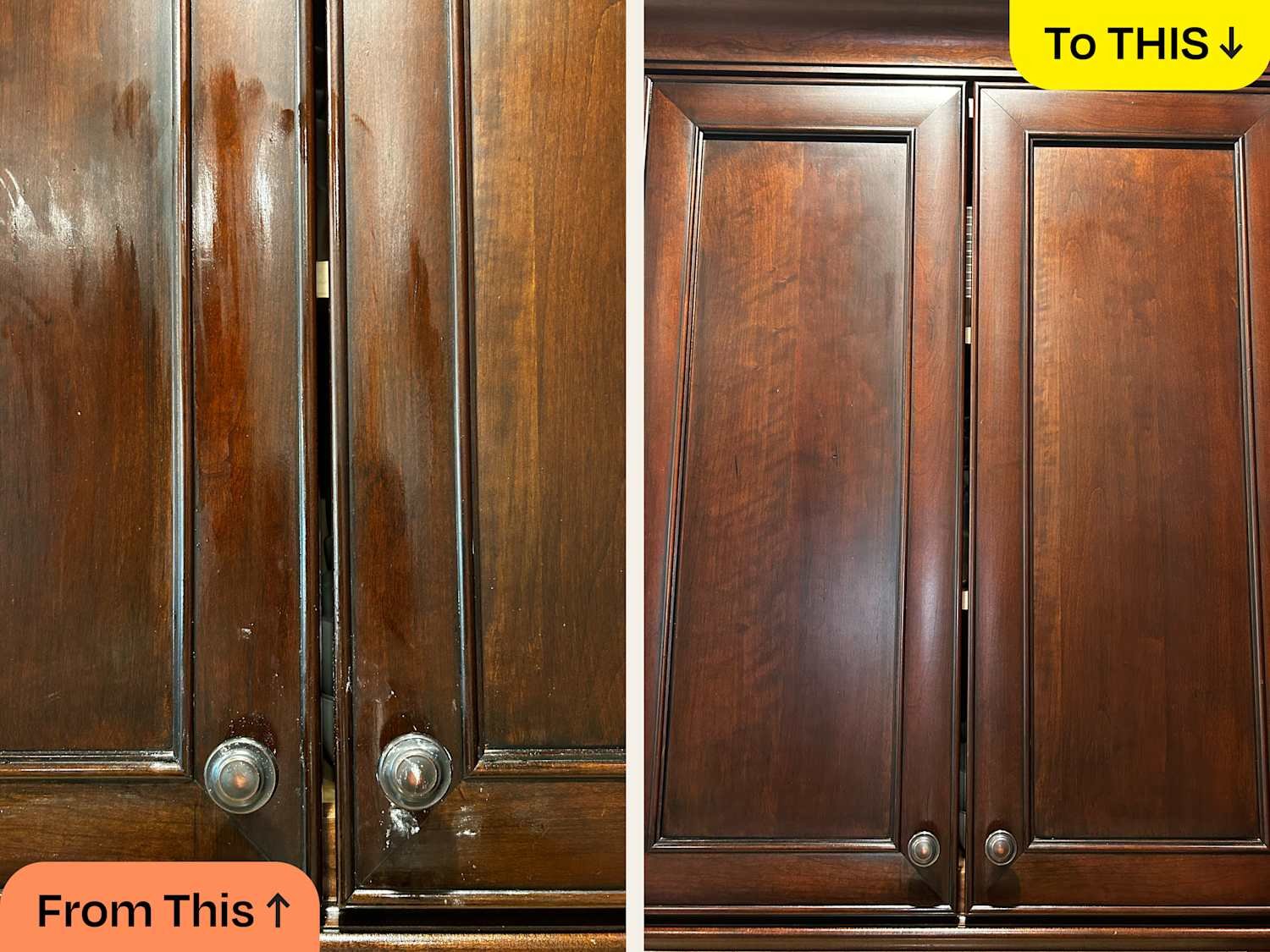
Have you ever opened your kitchen cabinets only to be greeted by a sticky, greasy mess? You’re not alone.
Over time, grease can build up on cabinet surfaces, leaving them looking dull and dirty. But don’t worry; there’s no need to replace those cabinets just yet. You can restore their sparkle with the right approach and a few simple tips.
Imagine running your fingers across a smooth, clean surface every time you reach for a plate or cup. Isn’t that satisfying? You’ll discover the best way to remove grease from kitchen cabinets, ensuring your kitchen remains a welcoming and hygienic space. Ready to transform your kitchen? Let’s dive in!

Credit: www.facebook.com
Causes Of Grease Buildup
Cooking splatters and airborne grease often lead to buildup on kitchen cabinets. Over time, this sticky residue attracts dust and grime. Regular cleaning helps maintain a tidy kitchen space.
Grease buildup on kitchen cabinets is not just an aesthetic problem. It can also harbor bacteria and make your kitchen feel less inviting. Understanding the causes of this sticky situation can help you tackle it more effectively. Have you ever wondered why your kitchen cabinets seem to attract grease like a magnet?Cooking Methods
Frying and sautéing are common culprits. These cooking methods release tiny grease particles into the air. They eventually settle on your kitchen surfaces, including cabinets.Lack Of Ventilation
Inadequate ventilation makes matters worse. Without proper airflow, grease particles linger longer in the kitchen. This results in a thicker layer of grime over time.Improper Cleaning Routines
Skipping regular cleaning allows grease to accumulate. Even if you clean your countertops, ignoring cabinets can lead to stubborn buildup. Consistent cleaning is crucial to prevent this.Type Of Cooking Oils
Some oils are more prone to splattering than others. For example, cooking with olive oil can create more airborne grease compared to other oils. Being mindful of this can help manage buildup.Proximity To Cooking Areas
Cabinets close to the stove are more vulnerable. The nearer they are, the more likely they are to catch stray grease particles. Consider this when arranging your kitchen layout. Recognizing these causes empowers you to make informed choices. Could adjusting your cooking habits and cleaning routine reduce the grime? A proactive approach will keep your cabinets looking pristine longer.Essential Cleaning Supplies
Removing grease from kitchen cabinets is simple with the right supplies. Use a mixture of warm water and dish soap. A soft sponge gently cleans without damaging surfaces, ensuring cabinets stay spotless.
Cleaning kitchen cabinets can be challenging, especially when grease builds up over time. Essential cleaning supplies can make this task easier and more effective. With the right tools, removing stubborn grease becomes manageable and efficient. Discovering the best supplies ensures your cabinets remain spotless and fresh.Vinegar Solution
Vinegar cuts through grease naturally. Mix equal parts vinegar and water. Spray on cabinets and wipe with a cloth. Use a soft cloth to avoid scratches. Vinegar also disinfects surfaces.Baking Soda Paste
Baking soda acts as a gentle abrasive. Make a paste with water and baking soda. Apply to greasy areas and scrub lightly. Rinse with a damp cloth. It removes grease without damaging surfaces.Dish Soap
Dish soap dissolves grease effectively. Mix soap with warm water in a bowl. Use a sponge to clean cabinets. Rinse and dry thoroughly. Choose a mild soap to protect the finish.Microfiber Cloths
Microfiber cloths trap dirt and grease. They are reusable and eco-friendly. Wipe cabinets with a damp cloth. Use dry cloths to remove residue. Microfiber prevents scratches while cleaning.Commercial Degreaser
Commercial degreasers are powerful. They break down stubborn grease easily. Follow instructions for safe use. Test on a small area first. Ensure ventilation while using strong chemicals.Old Toothbrush
An old toothbrush cleans hard-to-reach areas. It removes grease from corners and edges. Use it with baking soda paste or soap solution. Scrub gently to avoid damaging surfaces.Protective Gloves
Protective gloves keep hands safe. Wear gloves while using cleaning solutions. They prevent skin irritation. Choose durable gloves for comfort and protection. Ensure you have these supplies ready. Clean cabinets regularly to avoid grease buildup. Keep your kitchen fresh and hygienic.Natural Cleaning Solutions
Mix vinegar and water for a simple grease remover. Spray on cabinets and wipe with a soft cloth. Repeat if necessary for stubborn stains.
Natural cleaning solutions are effective for removing grease from kitchen cabinets. They are affordable and safe for both your home and the environment. Let’s explore some popular natural methods to tackle grease build-up.Vinegar And Baking Soda
Vinegar is a powerful cleaner that breaks down grease. Mix equal parts of vinegar and warm water. Dip a cloth into the solution, wring it out, and wipe the cabinet surfaces. Baking soda adds an abrasive quality, helping scrub away stubborn spots. Create a paste by combining baking soda with water. Apply the paste to greasy areas, then gently scrub with a soft brush or sponge. Rinse with clean water and dry with a towel.Lemon Juice And Salt
Lemon juice is a natural degreaser. Its acidity cuts through grease effectively. Mix lemon juice with water in equal parts. Salt acts as a gentle abrasive, enhancing the cleaning power. Sprinkle salt on a lemon half, then rub it directly onto greasy spots. Alternatively, create a mixture by combining salt and lemon juice into a paste. Apply to the cabinets, scrub lightly, and rinse with water. Dry thoroughly to prevent water stains.Commercial Grease Removers
Kitchen cabinets often bear the brunt of cooking splatters and grease buildup. Commercial grease removers offer a powerful solution. Designed for efficiency, they tackle stubborn grease with ease. These products are specifically formulated to dissolve and lift grime. They are perfect for deep cleaning tasks.
Degreasing Sprays
Degreasing sprays are popular for their ease of use. Simply spray and wipe for a clean surface. They penetrate grease layers, breaking them down quickly. These sprays contain active ingredients that target oil residues. Some come with a pleasant scent, leaving your kitchen smelling fresh. Always follow instructions for best results.
Cleaning Wipes
Cleaning wipes offer convenience for quick clean-ups. They are pre-moistened with grease-fighting solutions. Wipes are handy for spot cleaning and minor spills. They are disposable, making them hygienic. Ideal for busy kitchens, they save time and effort. Keep a pack within reach for everyday use.
Step-by-step Cleaning Process
Begin by mixing warm water and dish soap in a bowl. Use a soft cloth to gently scrub cabinets. Rinse with clean water and dry thoroughly with a towel.
Cleaning kitchen cabinets can feel like a daunting task, especially when stubborn grease is involved. A systematic approach can transform this chore into a manageable routine. Let’s dive into a step-by-step cleaning process that ensures your cabinets shine and remain grease-free.Preparation
Before you start, gather all necessary supplies. You’ll need a gentle dish soap, warm water, a soft cloth or sponge, and a clean towel. It’s also wise to clear off any items from your cabinets to allow easy access. Take a moment to test your cleaning solution on a hidden spot of the cabinet. This will ensure that the solution won’t damage the finish. Consider the type of cabinets you have—wooden, painted, or laminate. This may influence the cleaning solution you choose.Application
Mix a few drops of dish soap with warm water in a bowl. Dip your cloth or sponge into the mixture and wring it out until it’s damp, not soaking. Apply the solution gently on the greasy areas. Focus on small sections at a time to ensure thorough cleaning. Use circular motions to lift the grease off. For stubborn spots, let the solution sit for a minute before gently scrubbing. Be careful not to use abrasive materials that could scratch your cabinets.Final Rinse
Rinse your cloth with clean water and wipe down the cabinets to remove any soap residue. This step is crucial as leftover soap can attract more dirt and grease over time. Dry the cabinets with a clean towel to prevent water spots. Ensure all moisture is gone to maintain the integrity of your cabinets. Now, step back and admire your sparkling cabinets. Doesn’t it feel rewarding to see them shine? Regular maintenance will keep them looking new for years to come. What’s your biggest challenge when cleaning kitchen cabinets? Share your thoughts and tips in the comments!
Credit: www.facebook.com
Preventive Measures
Regular cleaning keeps kitchen cabinets grease-free. Use warm water and mild soap to wipe surfaces. Dry thoroughly to prevent residue build-up.
Preventive Measures are crucial to keep your kitchen cabinets free from grease buildup and maintain their original shine. Taking a few proactive steps can save you time and effort in the long run. Let’s explore some effective strategies to prevent grease accumulation.Regular Maintenance
Regular maintenance is your best ally against grease. Make it a habit to wipe down your cabinets after cooking. A simple microfiber cloth dampened with warm water can do wonders. Set a weekly schedule to thoroughly clean your cabinets. Use a gentle dish soap solution to tackle any stubborn spots. It’s much easier to manage small patches of grease regularly than to deal with a big mess later. Don’t forget to pay attention to cabinet handles and edges. These areas often get overlooked but are prime spots for grease to settle.Protective Coatings
Consider applying protective coatings to your cabinets. Products like furniture wax or specialized cabinet coatings can create a barrier against grease. They make it easier to wipe away any residue without damaging the surface. Ensure you choose a product that is suitable for your cabinet material. For example, wooden cabinets might benefit from a natural wax, while laminate surfaces could use a clear sealant. Reapply the protective coating every few months to maintain its effectiveness. This small step can significantly extend the life of your cabinets. Have you ever thought about how a simple coat of protection could save you hours of scrubbing? It’s these little things that make a big difference in your kitchen maintenance routine.Expert Tips For Effective Cleaning
Cleaning kitchen cabinets can feel like a daunting task. Grease build-up makes it even more challenging. But, with the right approach, it becomes manageable. Expert tips guide you through effective cleaning. These tips help you avoid mistakes and save time. Let’s explore how to clean your cabinets efficiently.
Avoid Common Mistakes
Many people use harsh chemicals on cabinets. This can damage the finish. Instead, opt for mild solutions. Dish soap mixed with warm water works well. Avoid using too much water. Excess moisture can warp wooden surfaces.
Scrubbing too hard is another mistake. It may remove paint or finish. Use a soft cloth or sponge instead. Gentle circular motions clean effectively without harm. Always test a small area first.
Time-saving Strategies
Plan your cleaning process to save time. Gather all necessary supplies before starting. This includes cloths, soap, and a bucket. Pre-mix your cleaning solution for efficiency.
Focus on one cabinet section at a time. This prevents feeling overwhelmed. It also ensures thorough cleaning. Work from top to bottom. This way, any drips fall on uncleaned surfaces.
Use a microfiber cloth for quick drying. It absorbs moisture faster than regular cloths. This reduces the drying time. Leave cabinet doors open after cleaning. It allows air circulation and speeds up drying.

Credit: www.youtube.com
Frequently Asked Questions
What Is The Best Degreaser For Kitchen Cabinets?
The best degreaser for kitchen cabinets is a mix of vinegar and water. It effectively cuts through grease. For tough stains, a commercial degreaser like Krud Kutter or Simple Green works well. Always test on a small area first.
Does Wd-40 Remove Grease From Kitchen Cabinets?
Yes, WD-40 can effectively remove grease from kitchen cabinets. Spray a small amount on the greasy area. Wipe it clean with a soft cloth. Always test in a hidden spot first to ensure it won’t damage the finish. Regular cleaning helps maintain cabinet appearance.
Does Murphy’s Oil Soap Remove Grease From Kitchen Cabinets?
Yes, Murphy’s Oil Soap effectively removes grease from kitchen cabinets. Its gentle formula cleans without damaging surfaces. Use a soft cloth or sponge to apply the soap. Rinse thoroughly for a spotless finish. Regular cleaning keeps cabinets looking fresh and grease-free.
What Dissolves Built-up Grease?
Vinegar, baking soda, and dish soap effectively dissolve built-up grease. Use vinegar and baking soda paste or dish soap solution. Apply, scrub, and rinse to remove grease. Consider commercial degreasers for stubborn stains. Regular cleaning prevents grease buildup, maintaining clean surfaces.
Conclusion
Removing grease from kitchen cabinets is simple with the right methods. Use natural cleaners like vinegar or baking soda for safe results. Regular cleaning prevents tough build-up and keeps cabinets looking fresh. Don’t forget to wipe spills immediately. This habit maintains cleanliness and reduces future work.
Choose solutions that fit your cabinet material. This ensures protection and long-lasting shine. Make cleaning a weekly routine. Clean cabinets brighten up your kitchen and create a welcoming space. Enjoy cooking in a clean environment. Follow these tips and keep your kitchen sparkling.
