
Are you planning to install a range hood in your kitchen but feeling puzzled about the right duct size? You’re not alone.
Choosing the correct duct size is crucial for optimal performance, ensuring your kitchen stays fresh and smoke-free. The wrong size can lead to inefficiencies, increased noise, and even potential damage to your range hood. But don’t worry; this guide is here to simplify things for you.
We’ll walk you through everything you need to know about selecting the perfect duct size, making sure your cooking space is both functional and comfortable. Get ready to transform your kitchen experience with the right information at your fingertips.
Importance Of Proper Duct Sizing
Choosing the right duct size is crucial for a range hood. It ensures optimal performance and efficiency. Proper duct sizing affects how well smoke and odors are removed. It also impacts energy use and noise levels. A well-sized duct keeps your kitchen air fresh and clean.
Impact On Ventilation Efficiency
A correctly sized duct improves ventilation efficiency. It allows air to flow smoothly without resistance. Proper airflow ensures quick removal of smoke and steam. It helps maintain a pleasant kitchen environment. Smaller ducts can restrict airflow, reducing efficiency. Larger ducts facilitate better air movement, enhancing performance.
Consequences Of Incorrect Sizing
Incorrect duct sizing can lead to several problems. A duct too small can cause poor ventilation. It may struggle to remove all smoke and odors. This can leave your kitchen smelling unpleasant. A duct too large can cause noise issues. It may also lead to increased energy consumption. Both scenarios can reduce the lifespan of your range hood.
Factors Influencing Duct Size
Choosing the right duct size for a range hood depends on several factors. Consider the range hood’s CFM (Cubic Feet per Minute) rating and kitchen layout. Larger kitchens and higher CFM ratings require bigger ducts to ensure efficient ventilation. Proper duct size ensures effective removal of smoke and odors.
When choosing the right duct size for your range hood, several factors play a crucial role. These factors ensure the optimal performance of your kitchen ventilation. Understanding these elements will help in making an informed decision.
Range Hood Cfm Ratings
The CFM rating stands for cubic feet per minute. It measures the airflow capacity of the range hood. Higher CFM ratings mean more air movement. A powerful range hood needs a larger duct size. This ensures efficient air removal from the kitchen. Check the manufacturer’s guidelines for specific CFM requirements.
Kitchen Layout Considerations
The kitchen’s layout impacts duct size choices. In larger kitchens, longer ducts may be necessary. This affects the air pressure and flow efficiency. Tight or compact spaces may limit duct options. Ensure the duct size matches the layout for optimal performance.
Duct Length And Turns
Longer duct runs need larger diameters. Each turn or bend reduces airflow efficiency. More turns can lead to a need for increased duct size. Aim for fewer turns to maintain airflow efficiency. This helps in reducing strain on the range hood motor.
Standard Duct Sizes
Choosing the right duct size for a range hood is crucial for efficient kitchen ventilation. Most standard duct sizes range from 6 to 8 inches in diameter. Proper sizing ensures effective smoke and odor removal, enhancing kitchen air quality.
Choosing the right duct size for your range hood is crucial for optimal performance. Standard duct sizes help ensure that air flows efficiently, keeping your kitchen fresh and free of unwanted odors. Let’s dive into the common sizes and their compatibility with different range hoods, so you can make the best decision for your kitchen setup.
Common Sizes And Dimensions
Most range hood ducts come in a few standard sizes. The most common diameters are 6 inches, 7 inches, and 8 inches. These sizes typically match the outlet sizes of many range hoods available on the market. You might wonder why these specific sizes are so prevalent. It’s because they provide the balance between effective air extraction and ease of installation. Larger ducts generally allow for better airflow, but they can be more challenging to install in tight spaces. There was a time I tried to squeeze an oversized duct into my kitchen and ended up with a puzzle of fittings and adapters. Lesson learned: sometimes standard is the way to go. What size are you considering for your kitchen?
Compatibility With Different Hoods
Not every duct size fits every range hood. It’s essential to check the manufacturer’s specifications for your range hood model. Some hoods are designed specifically for a 6-inch duct, while others might require a 7 or 8-inch duct. If your hood’s outlet is smaller than your ductwork, consider using an adapter. But keep in mind, reducing the duct size can impede performance. It’s like trying to breathe through a straw—less efficient! Consider the length and complexity of your duct system. Longer runs or those with many bends might benefit from a larger diameter for better airflow. Have you thought about how your duct size will impact your range hood’s efficiency? By understanding these standard duct sizes and their compatibility, you can ensure that your range hood performs efficiently, keeping your kitchen environment pleasant and inviting.
Calculating The Right Duct Size
Choosing the correct duct size for a range hood ensures efficient airflow and removes smoke and odors. An ideal duct size balances the hood’s power and kitchen layout. Proper sizing prevents noise and saves energy.
Calculating the right duct size for your range hood is crucial to ensure effective ventilation in your kitchen. A poorly sized duct can lead to inadequate airflow, causing cooking odors and smoke to linger longer than necessary. You want your kitchen to be a place of inspiration, not frustration. So, let’s dive into the essentials of determining the optimal duct size, and make your cooking space as efficient as possible.
Mathematical Formulas And Guidelines
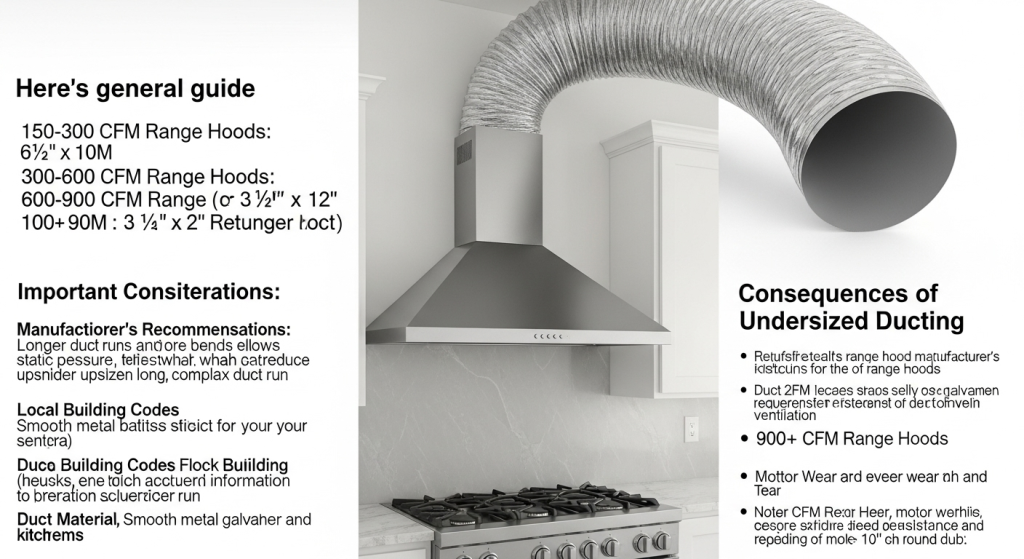
Understanding the basics of airflow measurement is a good starting point. Typically, duct size is calculated based on the cubic feet per minute (CFM) rating of your range hood. To match the CFM, consider the diameter of the duct. The general guideline is: the higher the CFM, the larger the duct should be. For instance, a range hood with 600 CFM might require an 8-inch duct, while a 900 CFM hood could need a 10-inch duct. Keeping these numbers in mind helps ensure optimal airflow. But what happens if your kitchen setup doesn’t allow for these sizes? Adjustments might be necessary. Consider factors like the length of the duct run and any bends or turns that could impact efficiency.
Consulting Professional Advice
If you’re unsure about making these calculations, it might be time to call in a professional. HVAC experts have the experience and tools to assess your kitchen’s needs accurately. They can offer insights into local building codes and regulations that might affect duct sizing. Have you ever spent hours trying to fix something, only to realize a quick call to a professional could have saved you time and frustration? Consulting an expert can not only ease the process but also ensure your kitchen complies with any necessary standards. Could there be hidden factors affecting your range hood’s performance that you haven’t considered? Choosing the right duct size involves more than just numbers. It’s about creating a seamless cooking experience, free from lingering odors and smoke. Whether you’re a seasoned chef or a culinary novice, the right setup can make all the difference in your kitchen adventures. What will you do to optimize your cooking space today?
Installation Tips For Ducts
When installing ducts for your range hood, the right techniques can make a world of difference in efficiency and performance. Proper installation not only ensures that your kitchen remains smoke-free but also enhances the overall function of your hood system. From creating airtight connections to reducing noise, a few key strategies can lead to optimal results. Let’s dive into some practical tips that can make your installation process smoother and more effective.
Ensuring Airtight Connections
Airtight connections are critical to preventing leaks and ensuring the efficient operation of your duct system. Gaps can lead to reduced suction and increased energy consumption. Use quality duct tape and caulk to seal all joints tightly. If you’ve ever faced the frustration of a poorly functioning range hood, you know the importance of these airtight seals. Your kitchen will thank you for the extra effort.
Minimizing Noise And Vibration
Noise and vibration can turn cooking into an unpleasant experience. To minimize these disturbances, consider installing insulated ductwork. Insulation not only reduces noise but also helps in maintaining the efficiency of your system. Reflect on those times when a loud hood disrupted a family gathering. Wouldn’t it be great to have a peaceful kitchen? Additionally, use flexible duct connectors to absorb vibrations and ensure a quieter operation.
When planning your duct installation, think about how these tips can transform your kitchen experience. What other adjustments could you make to enhance your kitchen’s functionality? Remember, a well-installed duct system is not just about efficiency—it’s about creating a harmonious cooking environment.
Material Options For Ducts
Choosing the right duct material for your range hood is crucial. It affects efficiency and longevity. Different materials offer varied benefits. Each type has its own set of advantages. Let’s explore the options available.
Metal Vs. Flexible Ducts
Metal ducts are sturdy and robust. They are usually made from stainless steel or aluminum. They provide excellent airflow and are less prone to damage. Flexible ducts are made from plastic or foil. They are lightweight and easy to install. They can bend around obstacles in tight spaces.
Durability And Maintenance
Metal ducts boast long-lasting durability. They resist wear and tear effectively. Cleaning them is straightforward, requiring minimal effort. Flexible ducts need regular checks for punctures. They may wear out faster with frequent use. Keeping them clean can be challenging.
Troubleshooting Common Issues
Choosing the right duct size for a range hood is crucial. Incorrect sizes can lead to various problems. This section will help you identify and solve common issues. Ensuring optimal performance and air quality is key.
Identifying Airflow Problems
Poor airflow often results from an incorrect duct size. Listen for unusual noises. These may indicate airflow blockage. Check for smoke lingering in the kitchen. This is another clear sign. Inspect the ductwork for any visible obstructions. Kinks or bends can also restrict airflow.
Solutions For Ineffective Venting
Ensure the duct size matches your range hood’s requirements. This is vital for performance. Replace any undersized ducts. This often solves venting issues. Clean the duct regularly. Accumulated grease and debris can clog it. Consider installing a backdraft damper. It prevents outside air from entering. Straighten any bent ducts. This improves airflow efficiency.
Upgrading Your Duct System
Considering an upgrade to your duct system can enhance your kitchen’s air quality. Improving airflow helps in removing smoke and odors efficiently. A well-sized duct system ensures your range hood functions effectively. It can prevent moisture buildup and reduce the risk of mold.
Choosing the right duct size is crucial. It can influence the performance of your range hood. Upgrading may seem challenging, but the benefits are worth it. Let’s explore how you can improve your duct system.
Signs You Need A Change
Is your kitchen filled with lingering odors? This might indicate an inefficient duct system. Notice smoke staying in the air longer than usual? Your range hood might need better ventilation. If your duct system is noisy, it could be struggling. Poor airflow can make cooking uncomfortable.
Excess moisture around your range hood is another warning sign. It may lead to mold and mildew. These signs suggest it’s time to consider upgrading your duct system. Ensuring efficient airflow can solve these problems.
Steps To A Successful Upgrade
Start by measuring the current duct size. Compare it with the recommended size for your range hood. Consult the manufacturer’s guidelines for optimal duct dimensions. This ensures the hood performs efficiently.
Next, choose the right duct material. Metal ducts are durable and work best for range hoods. Avoid flexible ducts; they can restrict airflow. Hire a professional for installation. Proper installation prevents leaks and enhances performance.
Check for any obstructions in the duct pathway. Clean the ducts to remove debris. Regular maintenance keeps your system running smoothly. Follow these steps for a successful duct system upgrade.
Frequently Asked Questions
Can I Use A 3in Duct For A Range Hood?
Using a 3-inch duct for a range hood is not recommended. It may restrict airflow and reduce efficiency. Most range hoods require a 6-inch or larger duct for optimal performance. Always check the manufacturer’s specifications for proper duct size to ensure effective ventilation.
What Is The Code For Range Hood Ducting?
The code for range hood ducting typically follows the International Residential Code (IRC) or local building codes. Ensure duct size matches the hood’s exhaust needs and use smooth, non-combustible materials. Check local regulations for specific requirements to maintain safe and efficient ventilation.
What Size Duct Is Needed For 400 Cfm?
For 400 CFM, typically a 7-inch diameter round duct is suitable. Ensure proper duct sizing to maintain efficient airflow and reduce energy loss. Always consult a professional for specific requirements and considerations.
What Size Vent Hood Do I Need For A 36 Inch Range?
Choose a vent hood at least 42 inches wide for a 36-inch range. This ensures optimal performance and coverage. Ensure proper installation height for effective ventilation and safety. A larger hood can enhance air capture and efficiency. Consider CFM rating based on cooking style and frequency.
Conclusion
Choosing the right duct size is crucial for your range hood. It ensures efficient ventilation and reduces kitchen odors. Smaller ducts may lead to poor performance. Larger ducts provide better airflow. Measure your space carefully before buying. Consider the range hood’s capacity and your kitchen layout.
Optimal duct size improves kitchen comfort and safety. Consult a professional if unsure. This guarantees the best fit for your needs. Remember, proper installation makes a big difference. Enjoy a cleaner, fresher cooking environment. With the right duct, your range hood performs its best.
