
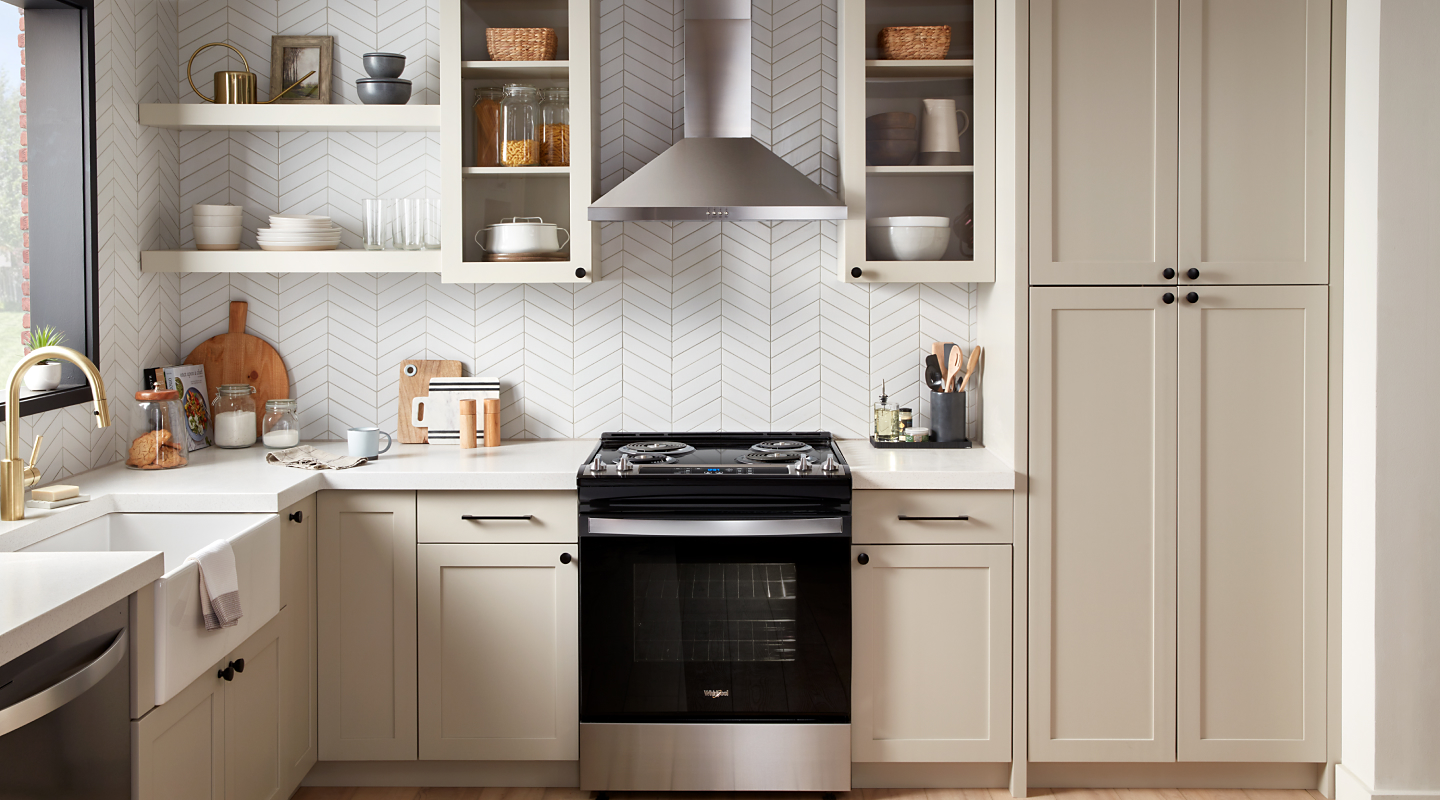
Are you planning a kitchen renovation or simply looking to upgrade your cooking space? One crucial aspect to consider is how high your range hood should be over your stove.
This decision not only impacts the aesthetics of your kitchen but also influences its functionality and safety. Imagine cooking in a space where smoke and odors don’t linger, where you can breathe easy and enjoy a clean, fresh environment. Getting the height just right can make all the difference.
You’ll discover the ideal range hood height, ensuring your kitchen remains the heart of your home—efficient, comfortable, and stylish. Stick with us, and you’ll soon master this essential aspect of kitchen design.
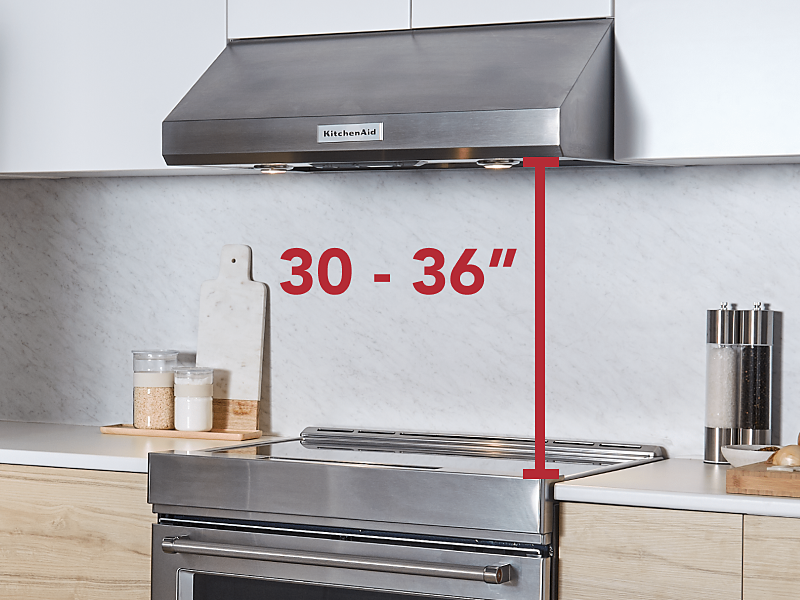
Credit: www.kitchenaid.com
Importance Of Range Hood Placement
The placement of your range hood is more important than you might think. It’s not just about aesthetics or fitting in with your kitchen’s design. Proper placement ensures maximum efficiency in removing smoke, odors, and heat from your cooking area.
Imagine cooking a spicy stir-fry. The aroma fills the room, but without a properly placed range hood, the scent lingers longer than desired. This can lead to greasy residue on your cabinets and walls. So, why does the height of your range hood matter?
Optimal Height For Performance
Placing your range hood at the right height is key to its performance. If it’s too low, it could interfere with your cooking or become a fire hazard. If it’s too high, it might not capture all the smoke and steam effectively.
Typically, experts recommend installing your range hood 20 to 24 inches above an electric stove and 24 to 30 inches above a gas stove. This range ensures that the hood can efficiently capture cooking fumes without obstructing your space.
Impact On Kitchen Comfort
Your kitchen should be a comfortable space, not a smoky cave. A properly placed range hood helps maintain good air quality by venting out smoke and fumes. This reduces the risk of breathing in harmful particles.
Have you ever noticed how much cooler your kitchen feels with a well-functioning range hood? It helps dissipate heat effectively, making your cooking experience more pleasant and reducing the need for additional cooling.
Aesthetic Considerations
While function is crucial, aesthetics matter too. A range hood that’s too high or too low can disrupt the visual balance of your kitchen. It should complement your kitchen’s design and not become an eyesore.
Consider the style and finish of your range hood, ensuring it aligns with your kitchen’s theme. A sleek, well-placed hood can enhance the overall look, making your kitchen both functional and beautiful.
Boosting Kitchen Safety
Safety is paramount when it comes to cooking. A range hood that’s too low poses a fire risk, while one that’s too high might not efficiently remove flammable vapors. Proper placement minimizes these risks, keeping your kitchen safer.
Think about your cooking habits. Do you fry often? If so, ensuring your range hood is at the correct height becomes even more critical to prevent accidents.
In the end, the right placement of your range hood not only enhances its efficiency but also contributes to a safer, more comfortable, and visually appealing kitchen. Take a moment to assess your current setup. Is your range hood at the optimal height? If not, it might be time to make a change.
Factors Influencing Height
Choosing the right height for your range hood is crucial for both functionality and aesthetics. Many factors influence this decision, and getting it wrong could lead to inefficient ventilation or even a design disaster. Whether you’re remodeling your kitchen or installing a new stove, it’s important to consider several key elements. Dive into these factors and ensure your range hood is positioned perfectly.
Ceiling Height Considerations
Ceiling height plays a significant role in determining the range hood’s placement. If you have high ceilings, you might need a longer chimney extension for the hood. This prevents it from looking awkwardly suspended in mid-air.
On the other hand, a low ceiling might limit the types of range hoods you can choose. A compact hood could be your best bet. Measure your kitchen’s ceiling height carefully before making any decisions. Does your ceiling height match your vision for a stylish kitchen?
Stove Type And Size
The type and size of your stove directly impact the range hood’s height. A powerful gas stove generates more heat and smoke than electric ones. This requires the hood to be positioned at a height that efficiently captures all fumes.
Larger stoves also need wider hoods, which might influence the installation height. Consider the dimensions of your stove and how it fits within your kitchen space. Is your range hood accommodating the power and size of your stove effectively?
Cooking Habits And Frequency
How often do you cook, and what do you usually prepare? If you’re whipping up three meals a day or love fried foods, you need a range hood that efficiently handles frequent use. It might be worth placing it slightly lower for better ventilation.
For occasional cooks, you might prioritize aesthetics over functionality. Think about your cooking style and how it impacts your kitchen environment. Do your cooking habits demand an extra-efficient range hood setup?
Choosing the right height for your range hood isn’t just about technical specs; it’s about how it fits into your lifestyle. Consider these factors carefully, and you’ll create a kitchen space that’s both beautiful and practical.
Standard Height Recommendations
Determining the ideal height for a range hood involves balancing functionality and aesthetics. Typically, range hoods should be installed 24-30 inches above the stove. This height ensures effective ventilation while maintaining a sleek kitchen design. Proper placement enhances cooking efficiency and keeps your kitchen free from smoke and odors.
Choosing the right height for your range hood is crucial for both functionality and safety in your kitchen. A range hood set too high might not effectively capture smoke and odors, while one positioned too low can become a fire hazard or obstruct your cooking space. Understanding the standard height recommendations can help you strike the perfect balance.Manufacturer Guidelines
Manufacturers usually provide specific installation guidelines tailored to their products. These are essential to ensure optimal performance and safety. Typically, these guidelines suggest a range of 18 to 30 inches above the cooktop. Following these instructions can help you avoid voiding your warranty. Check the user manual or the manufacturer’s website for precise details. Ignoring these could lead to a less efficient kitchen or, worse, safety issues.Industry Standards
The industry standards serve as a general rule of thumb when specific manufacturer guidelines aren’t available. Most experts agree on a range between 20 to 24 inches above an electric stove. For gas stoves, the recommended height increases to 24 to 30 inches. This accounts for the higher heat output from gas burners. Have you ever wondered why these standards exist? It’s all about maximizing airflow while minimizing risk. In my experience, adhering to these standards made a noticeable difference in my kitchen. Cooking odors were efficiently whisked away, and I felt confident about safety. Choosing the right height isn’t just about following rules—it’s about creating a more pleasant and functional cooking environment for you and your family. Have you checked if your range hood is at the optimal height? If not, it might be time for a quick measurement.Impact On Efficiency
The height of a range hood over the stove impacts its efficiency significantly. Proper placement ensures the hood can effectively remove smoke and odors. It influences how well the hood performs and affects energy use. Let’s explore how height impacts efficiency.
Ventilation Performance
The range hood must capture smoke and steam quickly. If it’s too high, it might not work effectively. Placing it lower helps trap the pollutants better. The hood should be at the right height for optimal airflow. This ensures that cooking remains pleasant and odor-free.
Energy Consumption
Energy use also depends on the hood’s height. A hood set too high might need more power. Lower placement can mean less energy needed for efficient ventilation. This can lead to savings on energy bills. Optimal height balances performance with energy efficiency.
Safety Concerns
Installing a range hood involves more than just aesthetics and functionality. Safety concerns play a significant role in determining its height over the stove. Proper placement ensures a safe cooking environment. Let’s explore the safety aspects that you should consider.
Fire Risk Reduction
Adequate distance between the hood and stove reduces fire risks. If the hood is too low, it could catch fire from high flames. Positioning it at the right height helps minimize this risk. Most experts recommend a height between 24 and 30 inches. This allows the hood to effectively capture smoke and grease. A well-placed hood prevents grease buildup, which can ignite. Safety first!
Heat Exposure
Heat exposure can damage your range hood over time. A hood that’s too close may face excessive heat. This can lead to wear and tear, reducing its lifespan. Maintaining a suitable height helps disperse heat efficiently. It also protects the hood’s internal components. A proper distance ensures both safety and durability.
Aesthetic Considerations
Consider placing the range hood 24 to 30 inches above the stove for optimal function and aesthetic appeal. This height ensures effective smoke and odor removal while blending seamlessly with kitchen design. Balancing practicality with style enhances the overall kitchen experience.
When deciding how high a range hood should be over your stove, aesthetic considerations play a crucial role. It’s not just about functionality; it’s about how your kitchen looks and feels. A well-placed range hood can enhance the beauty of your kitchen, making it a more inviting space for cooking and entertaining.Design Harmony
Design harmony is essential when choosing the height of your range hood. You want it to complement the overall look of your kitchen, not clash with it. Consider the style of your cabinets and appliances. Does your kitchen have a modern, sleek look, or is it more traditional? Matching the hood’s height with the design elements ensures everything flows seamlessly. A friend once chose a hood based on size alone, and it ended up looking out of place, disrupting the kitchen’s aesthetic. Don’t let that happen to you. Measure carefully and visualize how it will look with other fixtures.Space Utilization
Space utilization is another key factor. Think about the space above your stove and how the range hood fits into it. A hood that’s too low can make your kitchen feel cramped, while one that’s too high might not work effectively. Can you imagine stretching awkwardly to reach something because the hood is in the way? Not ideal. Aim for a height that maintains open space and functionality. If your kitchen is small, consider a compact hood that doesn’t overpower the room. Larger kitchens might accommodate a more prominent hood, adding to the grandeur of the space. Have you ever walked into a kitchen where everything just felt right? The range hood played a part in that balance. Take these considerations seriously, and you’ll create a kitchen that’s both beautiful and practical.Installation Tips
Installing a range hood correctly ensures safety and efficiency in your kitchen. The right height plays a crucial role in its performance. Follow these tips to install your range hood with ease.
Tools And Materials Needed
Before starting, gather essential tools and materials. You will need a measuring tape, a drill, screws, and a screwdriver. Other helpful items include a pencil, a level, and a ladder. Having all these items ready will make the process smoother.
Step-by-step Process
First, measure the distance between the stove and the hood. The ideal height is between 24 to 30 inches above the stove. Mark this height on the wall using a pencil. This ensures you install the hood at the correct level.
Next, use a level to draw a straight line across the wall. This line will guide your installation, keeping the hood aligned. If the hood is not level, it may not perform optimally.
Then, drill holes for the mounting screws on the marked line. Ensure the holes match the mounting brackets on the hood. Secure the hood to the wall using screws and a screwdriver. Tighten the screws well to avoid any wobbling.
Finally, connect the hood to the power supply. Check that all electrical connections are secure. Test the hood to ensure it functions properly. A proper installation ensures efficient air extraction and kitchen safety.

Credit: www.sindacopper.com
Troubleshooting Common Issues
Installing a range hood correctly is crucial for kitchen safety. Place it 20 to 24 inches above the stove for optimal performance. This height ensures effective smoke and odor removal while maintaining easy access.
When setting up a kitchen, ensuring your range hood is correctly positioned over the stove is crucial. But what happens when things aren’t perfect? Troubleshooting common issues can save you time and frustration. Let’s dive into some frequent problems and how to tackle them.Noise And Vibrations
Is your range hood sounding like a jet engine? Excessive noise can be more than just annoying; it might indicate a problem. Check if the hood is securely mounted. Loose screws can cause vibrations and noise. Another common culprit is the fan itself. If it’s unbalanced or worn out, it may need replacing. A friend of mine found that a simple fan replacement transformed her cooking experience, making it quieter and more enjoyable. Consider the ductwork. Are there any bends or blockages? These can amplify noise. Regular cleaning might solve the issue. How many times have you tackled a noisy appliance, only to find it was a simple fix?Poor Ventilation
If your kitchen feels stuffy or smells linger longer, your range hood might not be ventilating effectively. Is the hood height appropriate? Too high, and it might miss capturing smoke and odors. Measure the distance from stove to hood. Generally, 24 to 30 inches is optimal. Inspect the ductwork for obstructions. A blocked duct can hinder airflow. Also, check the filter. A clogged filter can drastically reduce efficiency. Regular cleaning or replacement is essential. Think about the hood’s capacity. Is it powerful enough for your stove? If you love cooking elaborate meals, you might need a hood with higher CFM (cubic feet per minute). Have you ever wondered why your kitchen feels like a sauna after cooking? It might be time to upgrade. Troubleshooting these issues can vastly improve your kitchen environment. What adjustments have you made that turned your cooking space into a haven?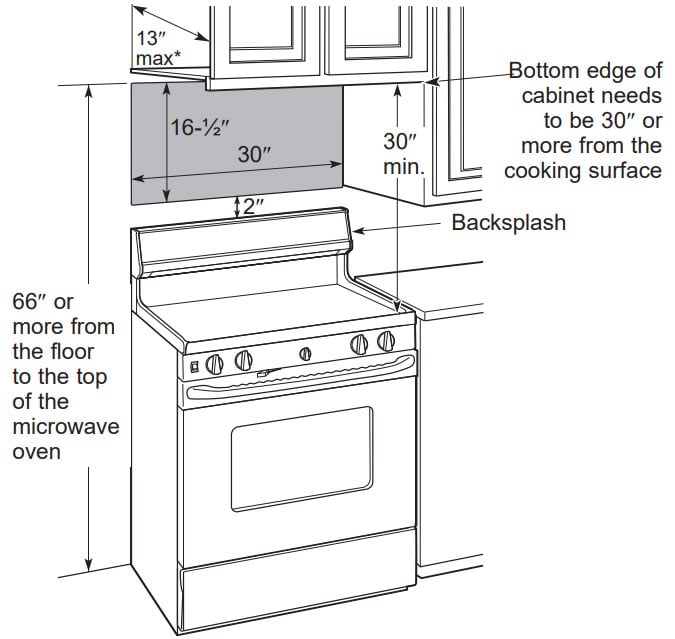
Credit: blog.yaleappliance.com
Frequently Asked Questions
How High Should A Range Hood Be From A Stove Top?
Install a range hood 24 to 30 inches above an electric stove. For gas stoves, maintain a height of 27 to 36 inches. Ensure proper ventilation and efficiency by following manufacturer guidelines. Adjust for personal preference and kitchen design if needed.
How High Should A Range Hood Be?
The ideal height for a range hood is 20 to 30 inches above the stove. This height ensures effective ventilation. It also prevents smoke and odors from spreading in your kitchen. Always check the manufacturer’s guidelines for specific measurements.
Does Range Hood Height Affect Performance?
Yes, the height of the range hood directly impacts its performance. A hood placed too high may not capture smoke effectively. Conversely, too low can hinder cooking space and airflow. Proper installation ensures optimal kitchen ventilation and efficiency.
What Factors Determine Range Hood Height?
Several factors influence range hood height, including stove type and kitchen design. The manufacturer’s guidelines also play a significant role. Additionally, local building codes might dictate specific height requirements. Consider these factors for safe and efficient hood installation.
Conclusion
Choosing the right range hood height is crucial. It affects kitchen safety and efficiency. Measure carefully before installation. Follow manufacturer guidelines. Ensure proper ventilation to remove smoke and odors. A well-placed hood enhances cooking experience. It keeps your kitchen fresh and clean.
Consider ceiling height and stove type. The right height also improves aesthetic appeal. It blends seamlessly with your kitchen design. Make informed choices for best results. Proper range hood placement enhances both function and style. Remember, a suitable height leads to better air quality.
Enjoy a comfortable cooking space with optimal ventilation.
