
Corner cabinet space is the black hole of every kitchen. A good corner cabinet organizer turns that wasted dead zone into usable storage, but the wrong one just adds frustration.
Standard base corner cabinets run 36 to 42 inches wide and 24 inches deep, yet most of that space sits empty because reaching the back is a struggle. The fix starts with picking the right organizer for your layout.
corner cabinet organizer
A corner cabinet organizer is a storage solution designed to maximize space in blind or diagonal kitchen cabinets. It comes in types like pull-out shelves, lazy Susans, and tiered racks. Each style improves access to items stored deep in the cabinet.
They work in base or upper cabinets with standard or custom dimensions.
Why Corner Cabinets Are Such a Headache (And How to Fix Them)
The problem isn’t just the awkward angle. It’s the depth. Most corner cabinets stretch 24 inches back, but the average person’s arm only reaches about 18 inches comfortably.
That leaves a 6-inch black hole where pots, pans, and dry goods disappear.
Then there’s the door swing. A standard 30-inch corner cabinet door can block access to half the shelf when open. Add in hinges, pipes, or uneven floors, and you’ve got a space that’s technically there but practically useless.
The fix isn’t more shelf space, it’s smarter organization.
The 5 Types of Corner Cabinet Organizers—Which One Solves Your Problem?
Not all organizers work the same. The right pick depends on your cabinet’s depth, what you’re storing, and how often you need to reach it.
Pull-out shelves slide out like drawers, giving full access to the back. They’re ideal for heavy items like pots and pans but need at least 24 inches of clearance to work properly.
Lazy Susans are rotating trays that spin to bring items to the front. They fit shallow cabinets and work well for spices or canned goods. The trade-off is less vertical space.
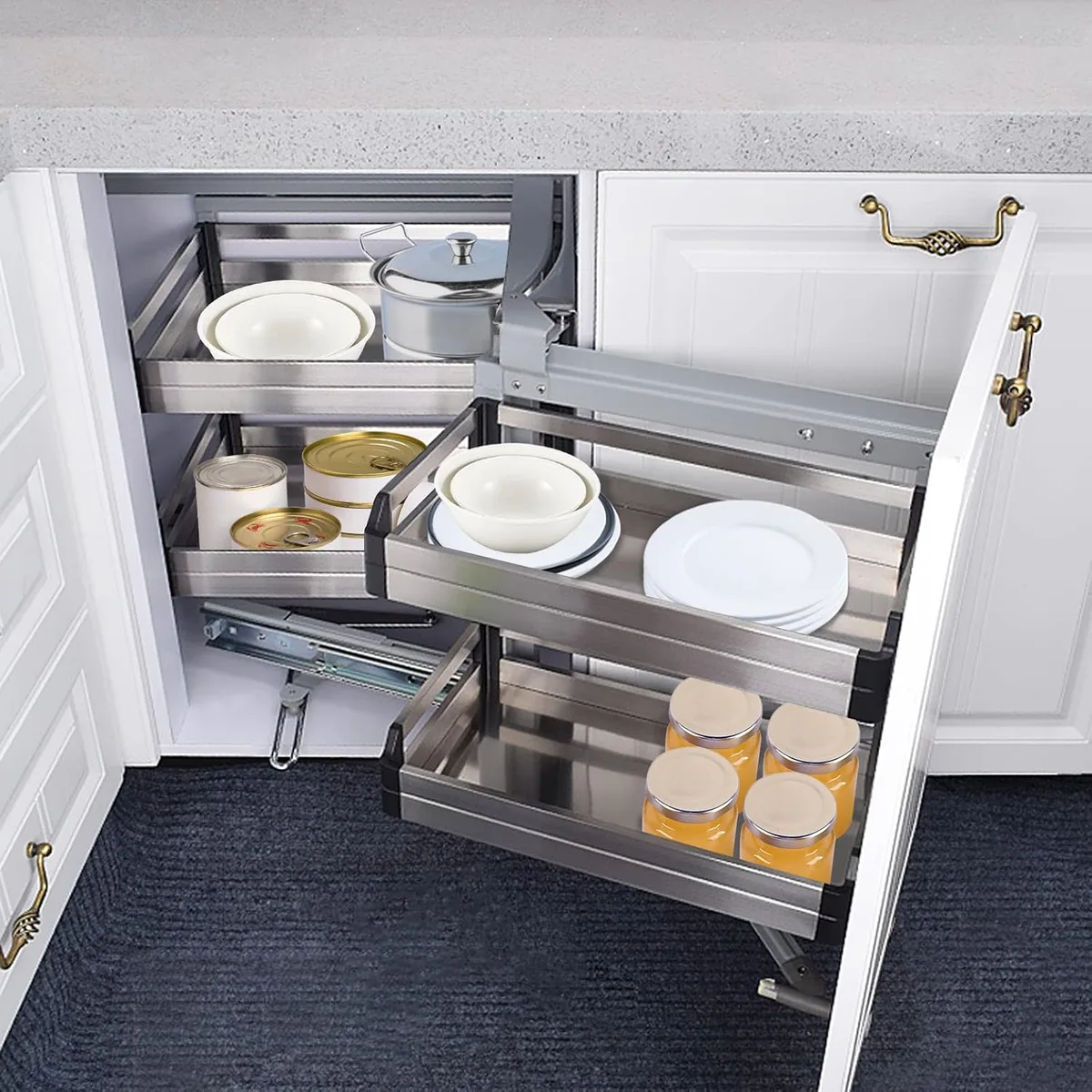
Image source: Web (Bing) / amazon.ca (Web image (fair-use with source credit))
Tiered racks add extra levels inside the cabinet, doubling or tripling storage. They’re great for lightweight items but can get cluttered if not organized.
Swing-out organizers pivot out like a door, bringing everything with them. They’re perfect for deep cabinets but require precise installation to avoid hitting adjacent doors.
Carousel organizers combine rotation with tiered shelves. They’re the most versatile but also the most expensive and complex to install.
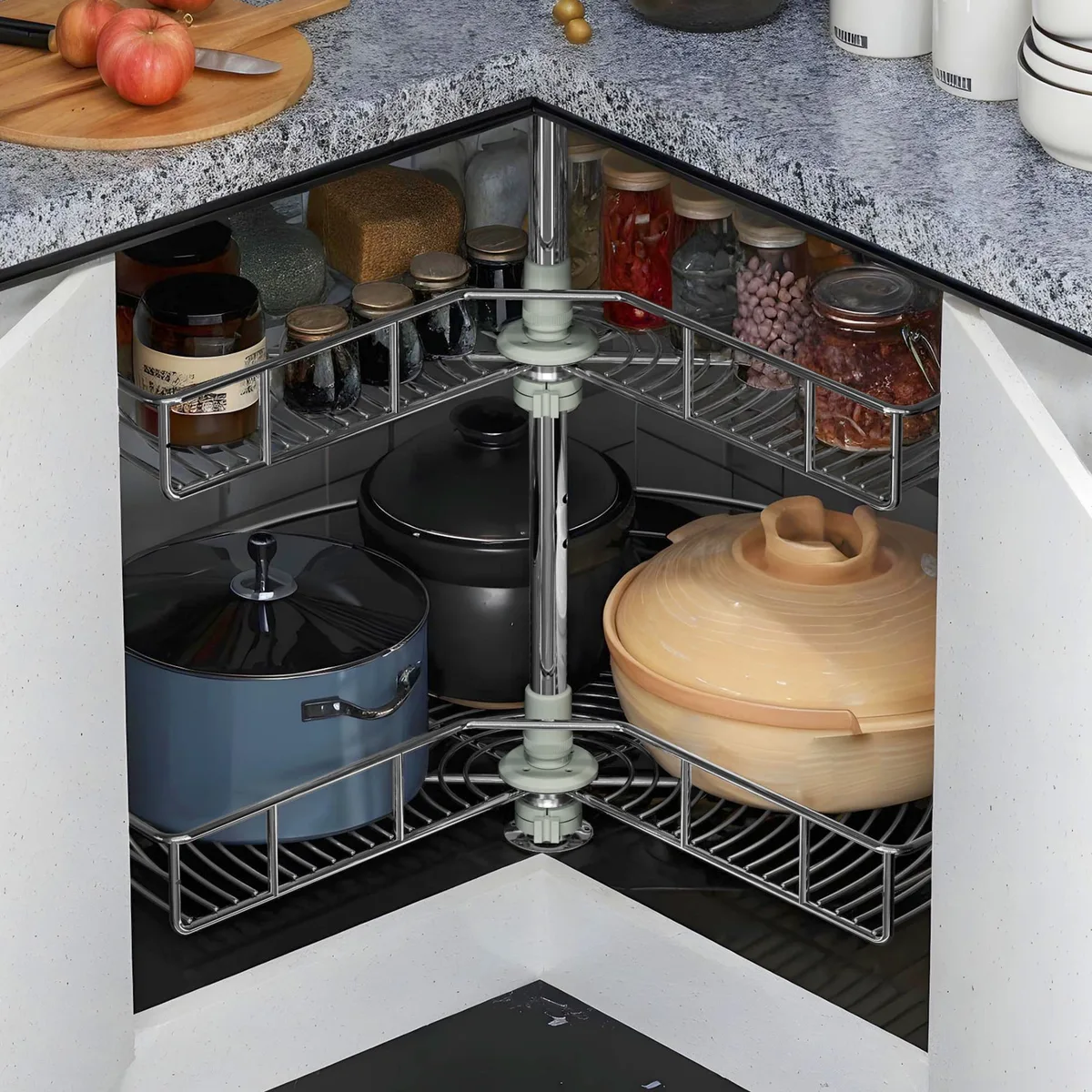
Image source: Web (Bing) / walmart.com (Web image (fair-use with source credit))
Side-by-Side Comparison: Cost, Space, and Real-World Use
| Type | Cost Range | Best For | Weight Capacity | Installation Difficulty |
|---|---|---|---|---|
| Pull-out shelves | $50–$150 | Heavy items (pots, pans) | 50–100 lbs | Moderate |
| Lazy Susan | $15–$40 | Light items (spices, cans) | 10–20 lbs | Easy |
| Tiered racks | $20–$60 | Small items (baking sheets, lids) | 10–30 lbs | Easy |
| Swing-out | $80–$200 | Deep cabinets | 30–70 lbs | Hard |
| Carousel | $100–$300 | Mixed use | 20–50 lbs | Hard |
Pull-out shelves and swing-out organizers handle the most weight but cost more. Lazy Susans and tiered racks are budget-friendly but limited to lighter loads. Carousels offer the best of both worlds but at a premium.
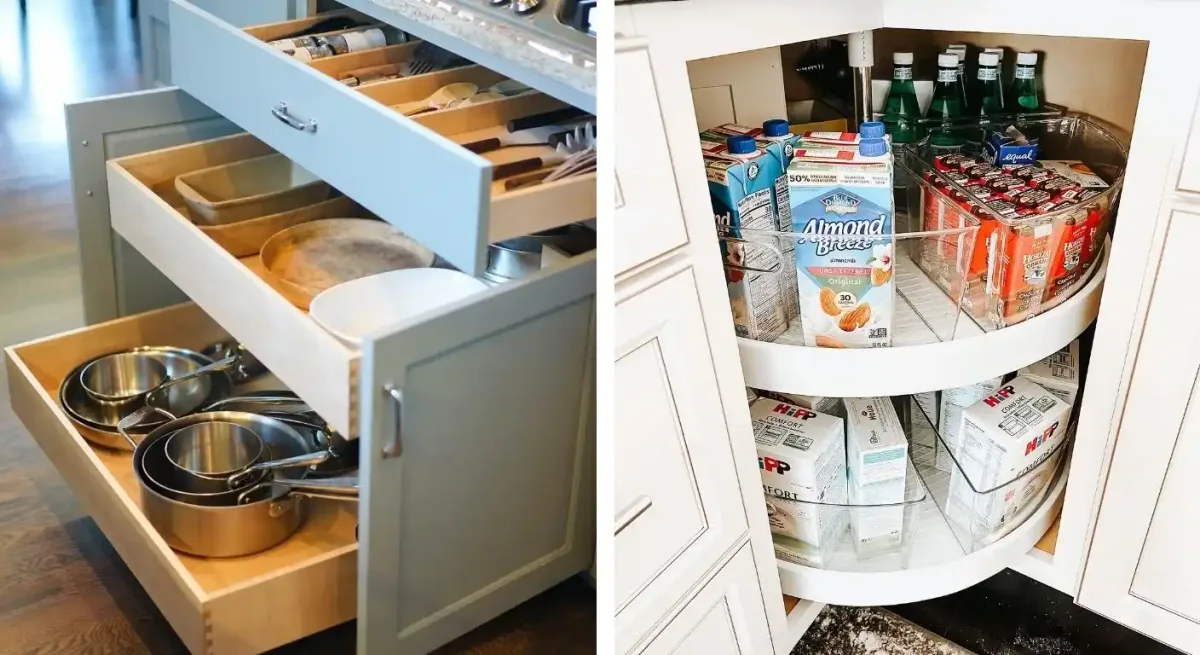
Image source: Bing (Web (fair-use with source credit))
For most kitchens, a pull-out shelf is the best balance of cost, capacity, and ease of use. If you’re renting or need a quick fix, a Lazy Susan is the simplest solution.
Best Organizer for Your Cabinet Type (With Measurements)
Start by measuring your cabinet’s width, depth, and height. Base corner cabinets are typically 36 to 42 inches wide and 24 inches deep. Upper corner cabinets are usually 30 to 36 inches wide and 12 to 18 inches deep.
For base cabinets, pull-out shelves or swing-out organizers work best. They handle heavy items and make use of the full depth. If your cabinet is shallower than 24 inches, a Lazy Susan or tiered rack might be a better fit.
For upper cabinets, tiered racks or small Lazy Susans are ideal. They maximize vertical space without requiring heavy-duty hardware.
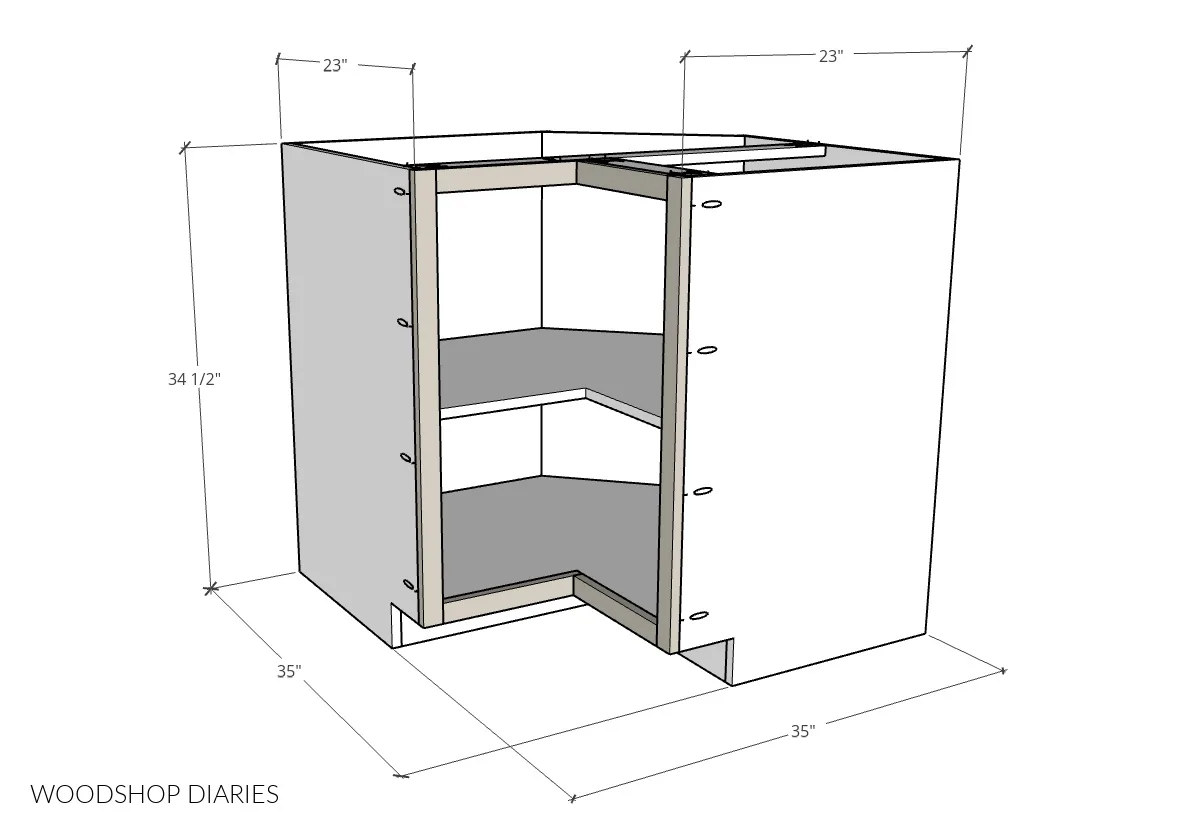
Image source: Web (Bing) / infoupdate.org (Web image (fair-use with source credit))
If your cabinet has obstacles like pipes or hinges, measure their location and height. This ensures your organizer won’t interfere with the cabinet’s operation.
Common Mistakes That Waste Money (And How to Avoid Them)
Skipping measurements is the top error. A pull-out shelf that’s too wide will jam, and a Lazy Susan that’s too tall won’t spin. Always measure depth, width, and height before buying.
Cheap hardware fails fast. Plastic slides crack under weight, and thin metal bends. Spend a little more on soft-close rails and reinforced mounts for heavy items.
Ignoring the door swing is another costly mistake. If the organizer hits the door when open, you’ll lose access to half the space. Check clearance with the door fully open.
Overloading is a quick way to break any organizer. Stick to the weight limits: 10, 20 lbs for plastic, 50, 100 lbs for metal. Distribute weight evenly to avoid sagging.
Forgetting to test the mechanism before installing can lead to frustration. Spin the Lazy Susan, slide the pull-out, or pivot the swing-out to ensure smooth operation.
Pro Tips for Installation and Long-Term Use
Start with a clean, empty cabinet. Remove everything, then wipe down the interior to ensure a smooth surface for mounting.
Use a level to align pull-out shelves or swing-out organizers. Uneven installation causes jamming or uneven wear. Mark your screw holes with a pencil before drilling.
For renters, adhesive-backed organizers are a game-saver. They hold 10, 15 lbs and peel off without damage. Just avoid them for heavy items like cast-iron pans.
Lubricate slides and pivots every 6 months. A quick spray of silicone lubricant keeps everything gliding smoothly. Dust and debris can gum up the works over time.
Group items by frequency of use. Keep daily essentials on the top tier or front of the pull-out. Reserve the back for seasonal or rarely used items.
Frequently Asked Questions
How do I know which organizer fits my cabinet?
Measure the width, depth, and height of your cabinet first. For base cabinets, pull-out shelves or swing-out organizers work best for heavy items. For upper cabinets, tiered racks or Lazy Susans maximize vertical space.
Can I install a corner cabinet organizer myself?
Yes, most organizers come with DIY-friendly instructions. Pull-out shelves and Lazy Susans are the easiest to install. Swing-out and carousel organizers may require more precision and tools.
What’s the weight limit for a Lazy Susan?
Most Lazy Susans support 10, 20 lbs. This makes them ideal for light items like spices, canned goods, or small kitchen tools. For heavier items, consider pull-out shelves or swing-out organizers.
Are corner cabinet organizers worth the cost?
They are if you use the space efficiently. A well-chosen organizer can double or triple your storage capacity and save time searching for items. The cost pays off in convenience and better use of your kitchen.
How do I maintain my corner cabinet organizer?
Wipe down surfaces regularly to prevent dust buildup. Lubricate slides and pivots every 6 months with silicone spray. Check screws and mounts periodically to ensure they remain tight.
