
You notice dishes coming out with stuck-on bits or a sour smell you can't shake. If you're trying to learn how to clean dishwasher filter, this guide gives a clear workflow you can use right away.
Manufacturer specifications and aggregate owner manuals recommend inspecting filters monthly for typical households, and more often in heavy-use homes, as of 2026. Read the quick answer below, then follow the decision workflow for your model.
How to Clean Dishwasher Filter: Step-by-Step
Quick Answer
how to clean dishwasher filter, remove the lower rack and find the filter.
Lift or twist out the removable filter, then tap debris into the trash.
Soak parts in warm soapy water, scrub with a soft brush, then rinse.
Reinstall the filter, run an empty hot rinse, then check for leaks.
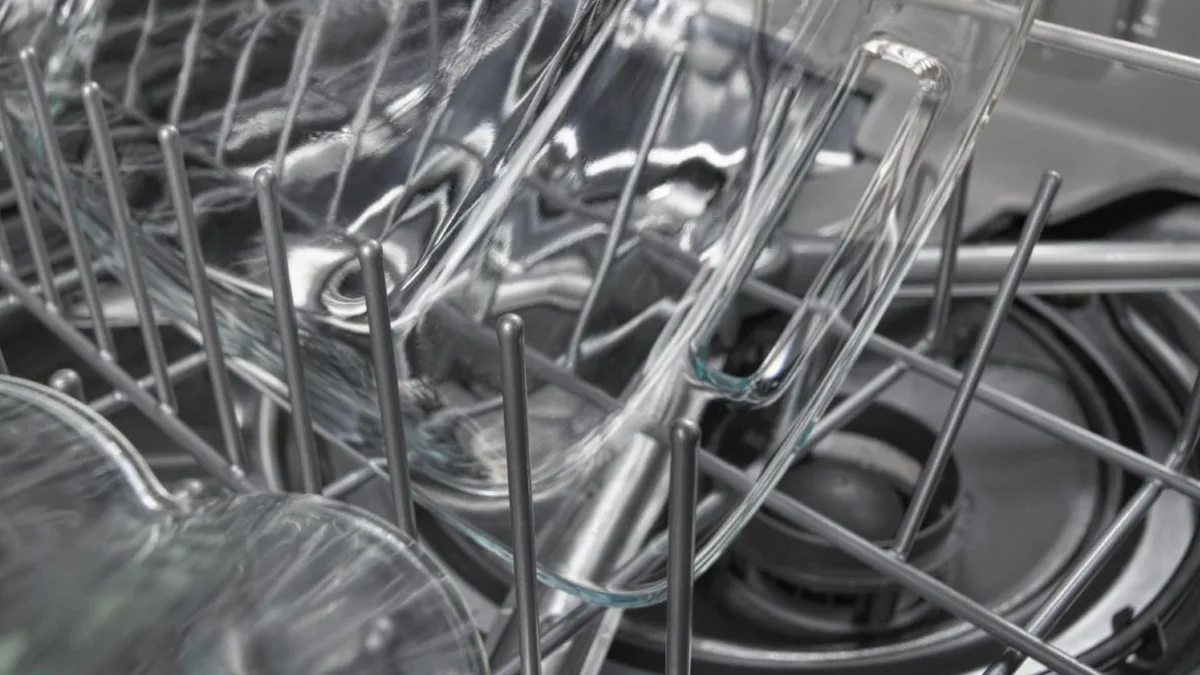
Problem / why a dirty dishwasher filter causes trouble
A clogged filter reduces water flow and lets food reattach to dishes.
That shows as visible particles, cloudy glasses, and poor detergent performance.
Trapped food and grease produce sour odors and encourage mildew in the sump.
Clogged filters also put extra load on the pump and motor.
If your dishwasher links to a garbage disposal, a disposal clog can push debris back into the machine.
Fixing the filter early prevents pump damage and avoids repair bills.
How dishwasher filters work and the common filter types
The filter sits at the tub bottom and keeps solids away from the pump.
Water flows through the mesh or screen, then the circulation pump sends it back up through the spray arms.
If the mesh tears, solids reach the impeller and cause noise or failure.
Common filter types
- Flat lift-out plate, a shallow basket that you can lift or twist out.
- Cylindrical multi-part cartridge, with a top mesh, fine screen, and base.
- Sealed or self-cleaning filter, which is not designed for user removal.
Tools and materials you'll want
| Item | Purpose |
|---|---|
| Soft-bristled brush or old toothbrush | Clean mesh and gasket seats |
| Non-abrasive sponge | Wipe plastic parts |
| Dish soap, warm water | Cut grease |
| White vinegar or citric acid | Remove mineral scale |
| Tweezers or needle-nose pliers | Extract trapped debris |
| Bowl or sink space | Soak parts safely |
For appliance safety guidance, consult the Consumer Product Safety Commission.
Identify your filter: quick checklist and photos-to-look-for
Pull out the lower rack and look at the center-bottom of the tub.
If you see a shallow plate with a handle, that is usually a flat removable filter.
If you see a tall cylinder with a cap, that is a multi-part cartridge.
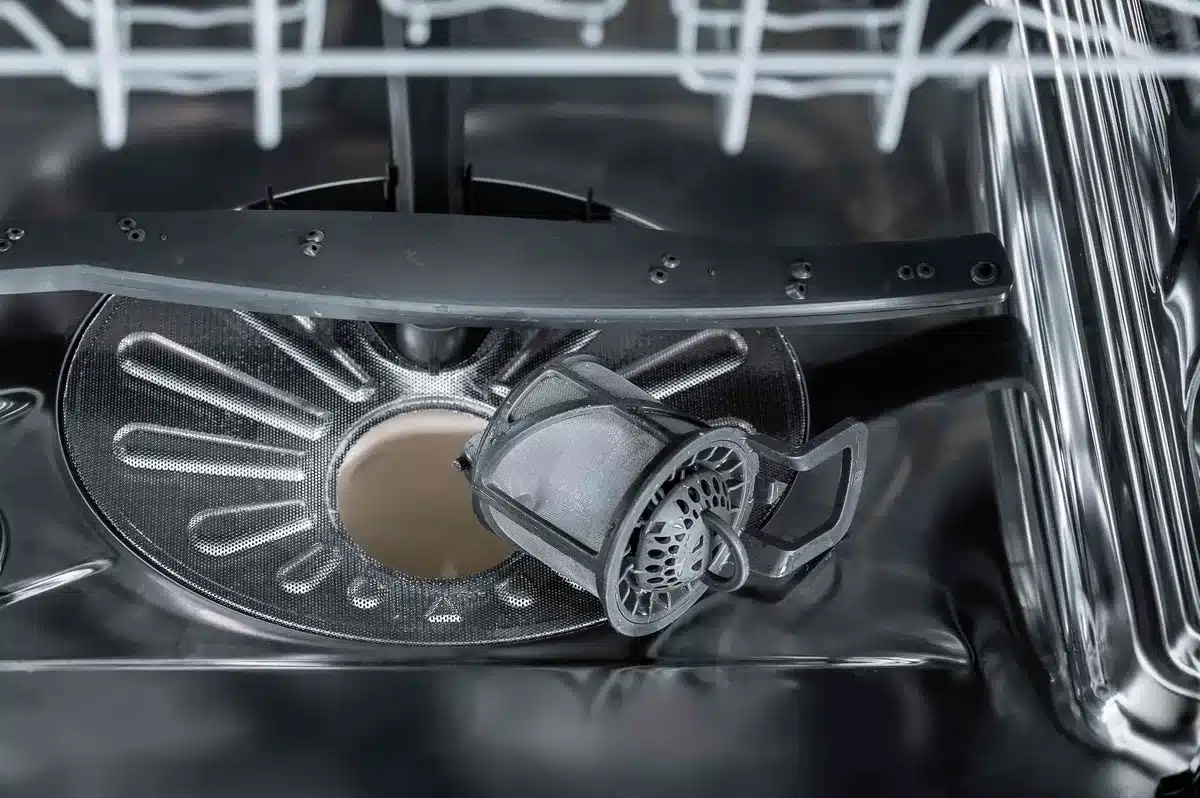
Quick identification cues
- Liftable plate or basket, user-removable in most models.
- Stackable pieces that separate into mesh, screen, and base, plan for soaking.
- No visible removal point, treat it as sealed and clean the sump instead.
If under-sink access is tight, free under-sink space before you work, it makes reassembly easier.
Decision workflow — which cleaning path to follow
If the filter comes out easily, follow the removable-filter path.
If it disassembles into pieces, follow the cartridge path.
If the manual says no user service or you cannot remove it, treat it as sealed and clean the sump and spray arms.
Branch A, removable flat or coarse filter
- Remove the lower rack, twist or lift the filter, and tap debris into the trash.
- Rinse under warm water, then soak in hot soapy water for 10 to 15 minutes if greasy.
- Scrub with a soft brush, rinse, re-seat in the original orientation, and run a hot rinse.
Branch B, cylindrical multi-part cartridge
- Work over the sink and keep parts in order. Photograph the pieces if helpful.
- Soak parts 15 to 30 minutes in hot, soapy water, then brush gently along the mesh.
- Replace torn mesh or cracked parts, reassemble, and run a short hot cycle.
Branch C, sealed or self-cleaning filter
- Do not force removal, that risks broken tabs and voided warranties.
- Remove visible debris from the sump with tweezers, then clean spray arms and run a cleaning cycle.
- If performance doesn't improve, call a qualified technician.
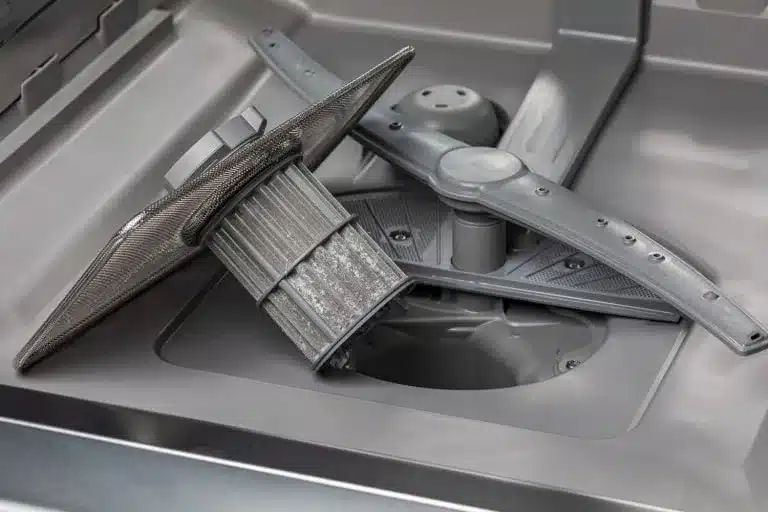
Step-by-step: removable flat / coarse lift-out filter
Turn the dishwasher off and pull out the lower rack.
Find the filter at the center-bottom under the lower spray arm.
Remove and clean
- Grip the filter, twist counterclockwise if it has a collar, then lift straight up.
- Tap loose food into the trash, not the sink, to reduce drain clogs.
- Rinse the filter under warm running water to remove grit.
Soak and scrub
- Soak in hot, soapy water for 10 to 15 minutes for grease.
- Scrub with a soft-bristled brush, clean gasket seats and the rim.
- For mineral deposits, soak 15 to 30 minutes in a 1:1 white vinegar and water mix, then rinse.
Reinstall and test
- Re-seat the filter in the same orientation and lock or twist it into place.
- Ensure the spray arm rotates freely and is not obstructed.
- Run an empty hot rinse and check for leaks or strange noises.
For stubborn grease on surrounding surfaces, follow targeted advice for cleaning grease on cabinets.
Step-by-step: cylindrical multi-part / mesh cartridge
Work over the sink, and lay parts on a towel to avoid losing small pieces.
Photograph each step to ensure correct reassembly order.
Disassembly and inspection
- Twist the top cap, then lift out the top mesh, inner screen, and base.
- Inspect for holes, stretched mesh, or cracked plastic. Replace damaged parts.
Soak, brush, and descale
- Soak all parts 15 to 30 minutes in hot, soapy water.
- Brush along the mesh fibers gently, do not push across them.
- For scale, use a citric-acid descaler per instructions or repeat a vinegar soak.
Reassembly and checks
- Replace any brittle O-rings, clean gasket seats, and line up orientation tabs.
- Press the cartridge together until it seats firmly, then lock it into the sump.
- Run a short hot cycle and listen for abnormal pump sounds.
If the assembly won't seat cleanly, clear under-sink clutter first so you can inspect parts fully.
Step-by-step: sealed or self-cleaning filter — what you can do
If the manual says "no user service," stop and follow the limited actions below.
Do not force removal, and do not use metal tools near the impeller.
Sump and spray-arm cleaning
- Turn off power at the breaker before probing the sump.
- Use tweezers to remove visible food, and avoid touching the impeller.
- Remove the lower spray arm if possible, rinse and clear each jet with a thin plastic pick.
Run a cleaning cycle
- Put one cup of white vinegar in a dishwasher-safe container on the top rack and run the hottest cycle.
- For heavy scale, use a commercial descaler exactly as labeled and per the appliance manual.
- If odors or poor performance continue, call a technician.
Check drain connections
- If your dishwasher drains to a garbage disposal, run the disposal to clear the connection.
- Inspect the sink air gap and rinse out trapped debris, if present.
- If drain or odor problems persist, fix a kitchen drain or call a plumber.
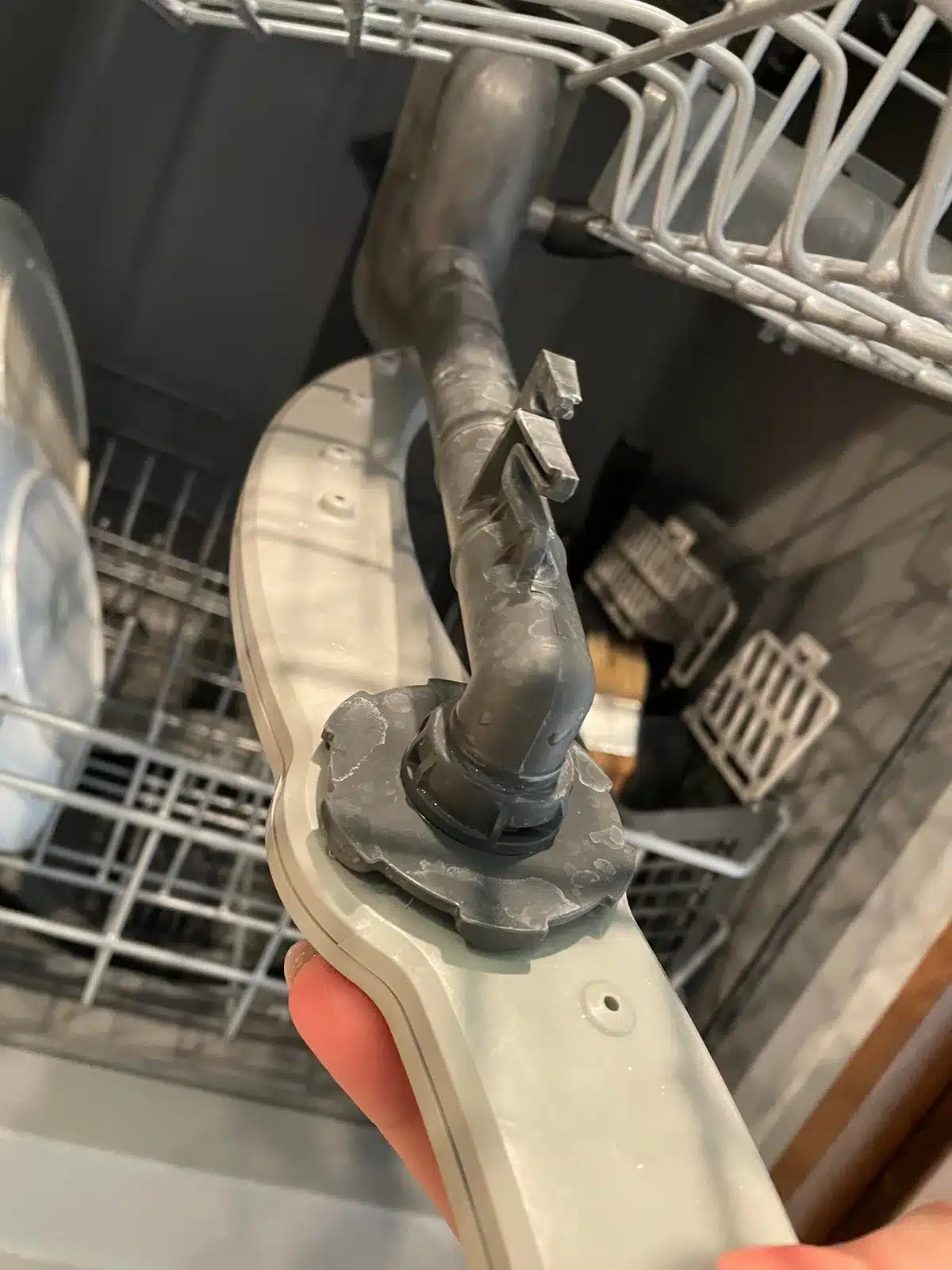
Troubleshooting & quick fixes
Use this short table to match symptoms to initial actions.
| Symptom | Likely cause | First fix |
|---|---|---|
| Food on dishes | Filter or spray-arm jets blocked | Clean filter, clear jets |
| Sour smell | Trapped food or grease | Remove debris, run vinegar cycle |
| Won't drain | Filter or drain hose blockage | Check filter, clear disposal |
| Grinding noise | Debris in impeller area | Power off, inspect sump |
| White spots | Hard-water deposits | Vinegar rinse, citric cleaner |
Targeted actions
- For food on dishes, clean the filter and confirm spray-arm rotation immediately.
- For persistent odors, run an empty hot cycle with one cup white vinegar, then sprinkle baking soda in the bottom and run a short rinse.
- For drain errors, clear the filter, then check the garbage disposal and air gap.
Call a technician if cleaning does not stop grinding noises or if error codes persist after these checks.
Mistakes to avoid (don’ts that damage filters or void warranty)
Don't pour concentrated bleach or strong acids on plastic parts.
They damage rubber seals and can cause leaks.
Don't use metal brushes on mesh, they create pinholes.
Don't force a stuck filter, broken tabs often require part replacement.
Don't run the dishwasher without a filter, it risks pump damage.
Always replace the filter before running a cycle.
Use manufacturer-approved parts when replacing filters to maintain fit and warranty.
Maintenance schedule & long-term optimization
Inspect the filter visually every one to two weeks with daily use.
Do a deep clean monthly under normal household conditions.
Do a deep clean every two weeks for heavy use, such as frequent pots and pans or family cooking.
Simple habits that cut maintenance
- Run a hot rinse weekly to flush small particles.
- Avoid placing large food scraps in the dishwasher, and run the disposal before the cycle when connected.
- Wipe nearby cabinet surfaces to reduce airborne grease settling into the machine.
Hard-water guidance
- Use a citric-acid dishwasher cleaner monthly to fight mineral scale.
- Clear spray-arm jets when you see deposits.
- If scale returns quickly, consider a whole-house softener to protect parts.
Check the site blog for short maintenance reads and extra tips.
Replacement parts & cost guide
A replacement filter usually costs $10 to $50 depending on the model.
Replace mesh with pinholes, warped gaskets, or cracked plastic.
How to find the right part
- Note the model number on the door frame and search the manufacturer support pages for part diagrams.
- Match the OEM part number for correct fit and gasket compatibility.
- If you need help locating diagrams, consult the owner manual or the manufacturer support portal.
When replacement makes sense
- Replace the filter if its condition risks the pump.
- If the replacement cost is under 20 percent of pump repair estimates, replace the filter first.
Safety, warranty, and when to call a pro
Call a qualified technician if the unit needs internal pump repairs.
Turn off power at the breaker before probing the sump or removing access panels.
Warranty and safety
- Follow the owner manual to avoid voiding warranties with unauthorized repairs.
- For appliance safety guidance, see the Consumer Product Safety Commission.
- If you find persistent mold or leaks, check mold under the sink and call a plumber.
Signs it's time for service
- Metal-on-metal grinding after cleaning the filter.
- Repeated error codes after filter and hose checks.
- A filter that won't remove without breaking tabs.
Expert tips, shortcuts, and pro checklist
Keep a small brush and shallow bowl for parts soaking near the sink.
Take a quick photo before removal to speed reassembly.
Set a monthly calendar reminder after each deep clean.
Pro checklist before finishing
- Lower rack in place, spray arm spins, filter locked and sealed.
- Run a short hot cycle and listen for odd noises.
- Check the garbage disposal and air gap for signs of backflow.
If under-sink space is an issue, free under-sink space to make maintenance easier.
Frequently Asked Questions
How often should I clean the dishwasher filter?
Clean visible debris weekly and do a deep clean monthly for typical households.
If you run heavy loads daily, deep clean every two weeks.
Manufacturer guidelines usually recommend monthly inspection.
Can I use vinegar to clean the filter?
Yes, a 1:1 white vinegar and water soak for 15 to 30 minutes works for light scale.
Rinse thoroughly after soaking and avoid repeated concentrated acid exposure on rubber gaskets.
For heavy scale, use a citric-acid product per instructions.
My filter is stuck, what do I do?
Do not force the filter, broken tabs can void the warranty.
Look for a locking clip, check the manual, and use a rubber glove for grip.
If it still resists, call a technician.
Will running the dishwasher without the filter cause damage?
Running without a filter allows debris into the pump and impeller, which risks damage.
Always replace the filter before operating the dishwasher.
If you must run a test cycle, monitor for unusual noises.
