
The shell snaps clean. Then the filling runs down your wrist. That's the gap between pretty molded chocolates and ones people actually want to eat.
Picking the right fillings for molded chocolates matters as much as tempering your couverture. Get the fill wrong and you'll fight leaks, bloom, and bonbons that look fine but taste stale within a week.
Water activity (aw) often decides whether a bonbon stays stable at room temperature or weeps within days. Manufacturer specs and food-science extension data point to roughly 0.60 to 0.85 aw for ambient shelf life, depending on formula. As of 2026, that range still separates beginner-friendly pralines from trickier fruit gels.
Before you pipe anything, understand why some fills work and others fail.
Quick Answer
Fillings for molded chocolates include ganache, praline paste, caramel, and pâté de fruit. Each needs the right viscosity at fill temperature. Water activity controls shelf life and leak risk.
Praline and gianduja stay stable longest at room temperature. Always leave headspace and cap with tempered chocolate.
Why the Filling Makes or Breaks Your Molded Chocolates
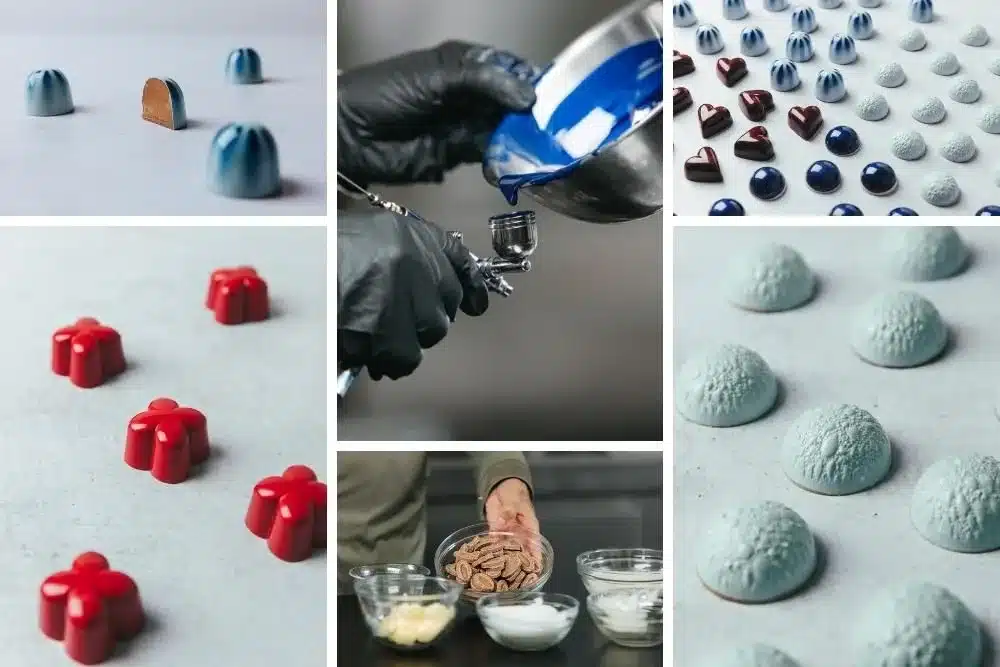
Image source: Bing (Web (fair-use with source credit))
A molded bonbon is really two products in one package. You've got a tempered cocoa butter shell and a separate filling with its own moisture, fat, and sugar balance. They have to get along for weeks, not just until demolding.
Our research across chocolatier forums and manufacturer guidance shows the same pattern. Shell problems get blamed first. Filling problems cause most of the damage.
Runny ganache blows out thin walls. Hygroscopic fruit gel pulls moisture into the shell and triggers sugar bloom. Oily praline can soften chocolate from the inside if the formula is off.
Think of the filling as the engine and the shell as the chassis. A perfect temper won't save a fill that's too wet, too hot, or too thin when piped.
What goes wrong most often:
- Leaking or weeping through micro-cracks in the cap
- Shell softening from moisture migration
- Fat bloom where nut oils meet cocoa butter
- Short shelf life in warm display cases
- Flavor clash between bitter dark shell and very sweet interior
If you've ever built a reliable nonstick layer on cast iron, you know surface prep sets up everything downstream. Molded chocolates work the same way. The shell is your barrier.
The filling has to respect that barrier from day one.
What Every Molded Filling Must Get Right: Water Activity, Viscosity, and the Cap Seal
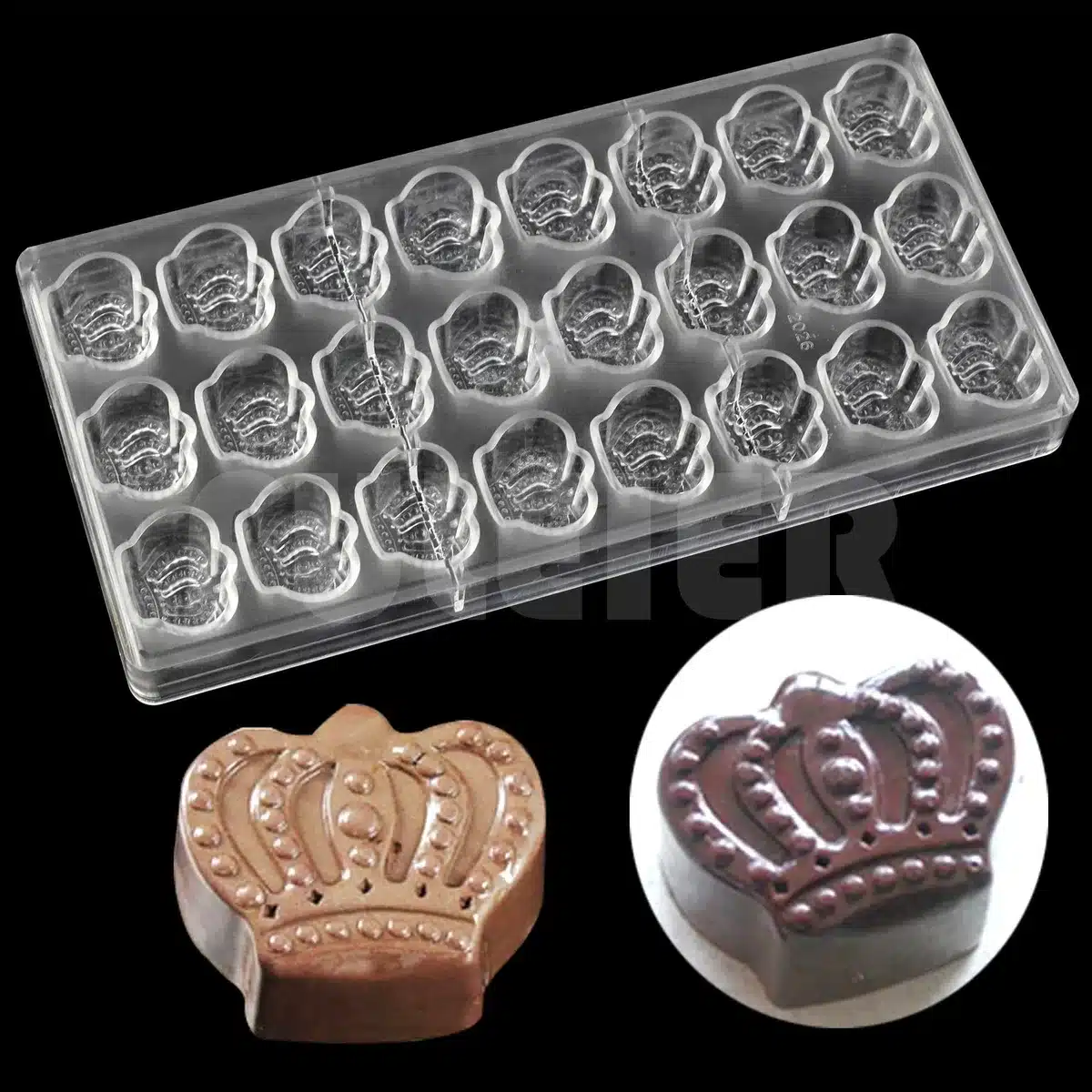
Image source: Bing (Web (fair-use with source credit))
Every successful molded filling passes three tests before it ever hits a polycarbonate mold. Miss one and you'll see it on the demolding tray.
What is water activity and why does it matter?
Water activity measures how much free moisture can support microbial growth or move into your chocolate shell. It's not the same as moisture percentage. Per FDA food safety guidance, controlling water activity is a core tool for shelf-stable confections.
Lower aw means longer ambient life. Praline pastes often sit around 0.40 to 0.55 aw. Standard ganache lands closer to 0.80 to 0.85 aw.
Fruit gels can run higher unless you manage Brix and pH carefully.
Viscosity at fill temperature
Pipe too hot and ganache runs through the shell. Pipe too cold and you trap air pockets under the cap. Most ganache fills best between 28°C and 32°C (82°F to 90°F).
Caramel needs a firm set point before piping. Praline paste should hold its shape without flowing.
| Filling type | Target aw (approx.) | Fill temp range |
|---|---|---|
| Praline / gianduja | 0.40–0.55 | 26°C–30°C |
| Dark ganache | 0.75–0.85 | 28°C–32°C |
| Soft caramel | 0.65–0.75 | 30°C–35°C (firm set) |
| Pâté de fruit | 0.75–0.85 | 40°C–50°C (gel set) |
The cap seal
Leave 1 to 2 mm headspace. Cap with tempered couverture at working temperature. Scrape flat and tap the mold to release trapped air.
That bottom layer is your moisture lock. A weak cap is the number-one cause of weeping bonbons in humid climates.
The Fillings Worth Comparing: Ganache, Praline, Caramel, Fruit Gel, and More
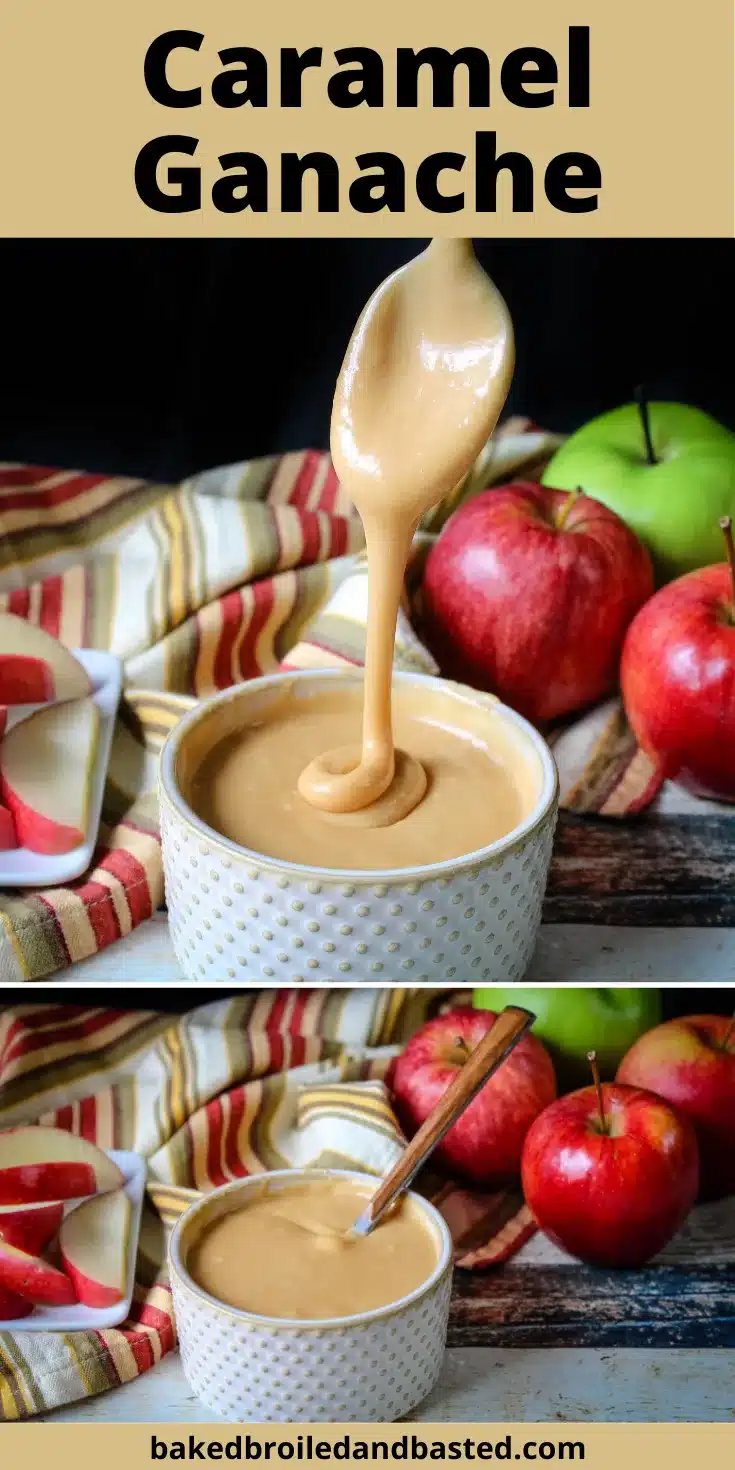
Image source: Web (Bing) / pinterest.com (Web image (fair-use with source credit))
Most bonbon menus rotate around a handful of core fills. Each one behaves differently inside a thin chocolate shell. Here's how they stack up when you're choosing what to make.
Ganache (Dark, Milk, White, and Liquor-Based)
Ganache is an emulsion of cream (or alternative fat) and chocolate. Dark ganache at a 1:1 cream-to-chocolate ratio sets firm and pipes cleanly. Milk and white need more chocolate to stabilize.
Liquor ganache uses spirits to lower aw slightly and add flavor.
Best for: Flavor variety, soft texture, fast recipe development.
Watch out for: Short ambient shelf life (often 1 to 3 weeks) unless you add invert sugar or glucose at 5% to 15% of total weight.
Praline Paste and Gianduja
Praline is ground nuts plus caramelized sugar. Gianduja adds chocolate to the mix. Both are low-moisture and fat-forward.
They pipe thick and hold well in thin shells.
Best for: Room-temp retail, nut-forward flavor, forgiving viscosity.
Watch out for: Nut oil migration if the grind is too coarse or the shell is too thin.
Soft Caramel and Salted Caramel
Caramel brings a luxury cue and a slow melt. You need the right cook temperature so it holds shape after demolding but still gives when bitten.
Best for: Premium assortments, salted flavor contrast.
Watch out for: Flow-out in warm storage if cooked too soft (below roughly 104°C / 219°F for most formulas).
Pâté de Fruit and Fruit Purée Fillings
Pâté de fruit is a cooked fruit gel, often 75° to 78°Bx. Bright flavor, naturally vegan, but hygroscopic. Fruit ganache splits the difference with added chocolate and fat.
Best for: Seasonal collections, sharp fruit identity.
Watch out for: Sugar bloom and mold risk if aw stays above 0.85.
Marzipan, Nougat, and Crunch Inclusions
Marzipan is almond-sugar paste. Firm, sweet, long-lasting. Nougat (monté) is whipped and lighter.
Feuilletine adds crunch without much moisture if layered inside a ganache or praline base.
Best for: Classic European profiles, textural contrast.
Watch out for: Over-sweetness against dark shells. Dry nougat can pull moisture from the shell over time.
Side-by-Side: Texture, Shelf Life, Skill Level, and Demolding Ease
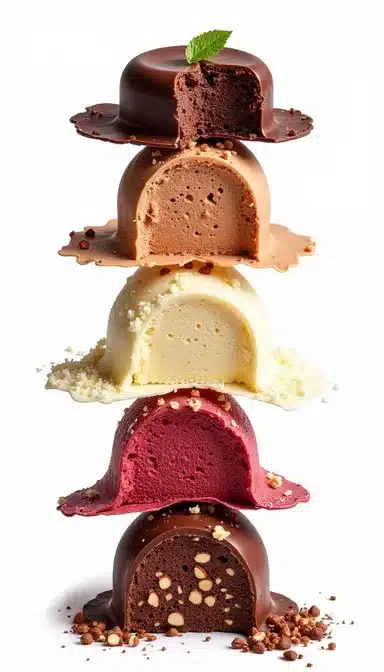
Image source: Web (Bing) / stockcake.com (Web image (fair-use with source credit))
This is the comparison most recipe lists skip. Aggregate reviews from home chocolatiers and small-batch makers point to the same tradeoffs year after year.
| Filling | Texture | Ambient shelf life | Skill level | Demolding ease |
|---|---|---|---|---|
| Praline / gianduja | Thick, nutty, spreadable | 4–8+ weeks | Low | Excellent |
| Dark ganache | Smooth, melts clean | 1–3 weeks | Low–medium | Good |
| Soft caramel | Chewy, flowing | 2–4 weeks | Medium | Good if set firm |
| Pâté de fruit | Firm gel, bright | 1–2 weeks | Medium–high | Good |
| Liquor ganache | Soft, boozy | 2–4 weeks | Medium | Fair (softer set) |
| Marzipan | Dense, chewy | 4–6 weeks | Low | Excellent |
Texture at bite: Praline and marzipan give immediate structure. Ganache and caramel deliver the classic soft-center snap contrast. Pâté de fruit feels bright and slightly resistant.
Shelf life: Low-aw nut pastes win for counter display. Ganache and fruit fills need faster turnover or cooler storage.
Skill level: Ganache forgives small temperature mistakes. Caramel demands accurate cooking. Fruit gel needs Brix and pH awareness.
Demolding: Anything too soft or piped too full cracks the shell on release. Praline and firm ganache are the most forgiving for beginners.
Best Fillings for Home Chocolatiers, Retail Counters, and Mail-Order Boxes
Your production context should drive the fill choice, not the other way around. The same ganache that wows at a dinner party can fail in a shipping box.
Home hobby chocolatiers
Start with dark ganache or hazelnut praline. Both pipe easily, set predictably, and tolerate small shell thickness mistakes. Make a test batch of 12 to 24 cavities before scaling up.
Rest filled molds at least 1 to 2 hours, or overnight, before demolding.
Retail counter and patisserie display
You need ambient stability and visual consistency. Gianduja, firm caramel, and praline pastes handle 18°C to 20°C display cases well. Rotate ganache flavors weekly.
Label use-by dates clearly. The USDA allergen labeling rules apply if you're selling commercially, so track nuts, dairy, and soy by fill type.
Mail-order and gift boxes
Shipping adds heat and vibration stress. Skip loose soft caramel and high-moisture fruit ganache unless you ship with cold packs. Praline, marzipan, and firm dark ganache survive better.
Pack with air gaps so bonbons don't rub and crack.
Quick decision guide:
- Learning the craft? → Dark ganache or praline
- Selling at room temp? → Gianduja, praline, firm caramel
- Shipping nationwide? → Low-aw nut pastes, firm ganache
- Vegan line? → Pâté de fruit or coconut-cream ganache (validate aw)
- Holiday gift rush? → Batch praline ahead. It holds for weeks
Match your filling to your timeline, your climate, and your customer. The best bonbon isn't the fanciest flavor. It's the one that still tastes right when someone finally bites in.
Fillings That Fail in Practice: Leaks, Weeping, Bloom, and Short Shelf Life
Most bonbon failures trace back to the fill, not bad tempering. Our research across chocolatier troubleshooting threads shows the same four problems repeating in home kitchens and small shops.
Leaking and weeping usually means the cap failed or the fill was piped too full. Soft ganache under pressure finds every micro-crack. Leave 1 to 2 mm headspace and cap while the shell is still slightly warm for a clean bond.
Sugar bloom looks like a gray dusty film on the shell. Hygroscopic fills like pâté de fruit pull moisture across the cocoa butter barrier. Lower aw, thicken the shell to 1.5 mm, or switch to a fruit ganache with added fat.
Fat bloom shows as whitish streaks or spots. Nut oil from coarse praline migrates into the shell over days. Grind finer, increase shell thickness, or add a thin chocolate barrier layer before piping oily fills.
Short shelf life hits when aw stays above 0.85 or storage runs too warm. Ganache without invert sugar often fades within a week above 22°C. Add 5% to 15% glucose or sorbitol, store at 16°C to 18°C, and date every box.
If caramel flows out after demolding, it was cooked too soft. Re-test with a cold water snap before your next run. Treat each failed tray like a problem you fix before it sets hard.
Diagnose the cause, adjust the formula, then rerun a small pilot batch.
Between production runs, clear trapped residue from your tools the same way you'd maintain any precision kitchen gear. Fat and sugar buildup in piping tips throws off fill weight and temperature.
FAQs About Fillings for Molded Chocolates
Can you put any ganache in molded chocolates?
No. Runny or high-moisture formulas blow out thin shells and weep within days. Use a firm ratio (1:1 dark, higher chocolate for milk or white), pipe at 28°C to 32°C, and cap immediately.
Add invert sugar if you need longer counter life.
How long do filled molded chocolates last at room temperature?
It depends on water activity. Low-aw praline and gianduja often hold 4 to 8 weeks at 16°C to 18°C. Standard ganache runs 1 to 3 weeks.
Pâté de fruit and high-moisture fruit fills turn over faster, often 1 to 2 weeks. Label and rotate stock.
Do you need to refrigerate molded bonbons?
Refrigerate only when the formula requires it or your climate runs hot and humid. Cold storage extends ganache life but causes condensation when boxes warm up. If you must chill, keep bonbons sealed and bring them to room temp still wrapped.
What filling is easiest for beginners?
Hazelnut praline or firm dark ganache. Both pipe thick, set predictably, and forgive small temperature swings. Skip soft caramel and fruit gel until you can test aw and cook sugar accurately.
Run a small test batch before scaling up the same way you'd troubleshoot any kitchen process step by step.
Why does my filling leak after demolding?
Three usual causes: overfilled cavities, a weak cap seal, or fill piped while too hot and runny. Leave headspace, scrape the cap flat, tap the mold to release air, and rest at least 1 to 2 hours before release. Overnight rest helps ganache set fully.
Can you use vegan fillings in molded shells?
Yes. Coconut-cream ganache, pâté de fruit, and nut pralines work without dairy. Validate water activity and emulsion stability.
Plant creams split more easily than dairy. Test demolding and shelf life before selling, same as any commercial line.
Which Filling Should You Start With? A Practical Verdict
If you're choosing one fill to learn molded bonbons, start with firm dark ganache or hazelnut praline. Both teach pipe temperature and cap technique without punishing small mistakes.
Pick dark ganache if flavor variety matters most. You can infuse the cream with coffee, tea, or spices and iterate fast. Expect 1 to 3 weeks ambient life unless you add glucose or invert sugar.
Pick praline or gianduja if stability matters more. Low aw, thick viscosity, and weeks of shelf life make it the safer bet for gifts, counters, or boxes that travel long distances. Grind nuts fine to avoid oil migration.
Save caramel for your second project once you trust your thermometer. Save pâté de fruit for when you're ready to track Brix and pH. Marzipan and crunch layers slot in easily once the base workflow feels automatic.
Your decision tree is simple. Learning at home? Ganache or praline.
Selling at room temp? Praline, gianduja, or firm caramel. Shipping long distance?
Low-aw nut pastes and firm ganache only. Vegan line? Fruit gel or coconut ganache with aw testing.
The best filling is the one that still tastes right when someone opens the box. Match formula to your timeline, climate, and skill level. Nail one fill, demold clean, then expand.
That's how working chocolatiers build a line that holds up in the real world, not just on the molding table.
