
Yes, you can scrub burnt water off stove if recent, but only when you match the method to your stovetop material. Glass-ceramic, gas grates, and electric coils each handle scrubbing differently. Get it wrong and you'll scratch the glass or ruin the finish.
So the real question isn't whether you can scrub. It's how you should scrub this specific stove.
Manufacturer care guides are blunt about one thing: abrasive pads and powders scratch glass-ceramic, and those scratches never come out. As of 2026, replacement glass tops still run $300 to $1,500. A little caution now saves real money later.
Here's how to read your situation and pick the right cleaning path.
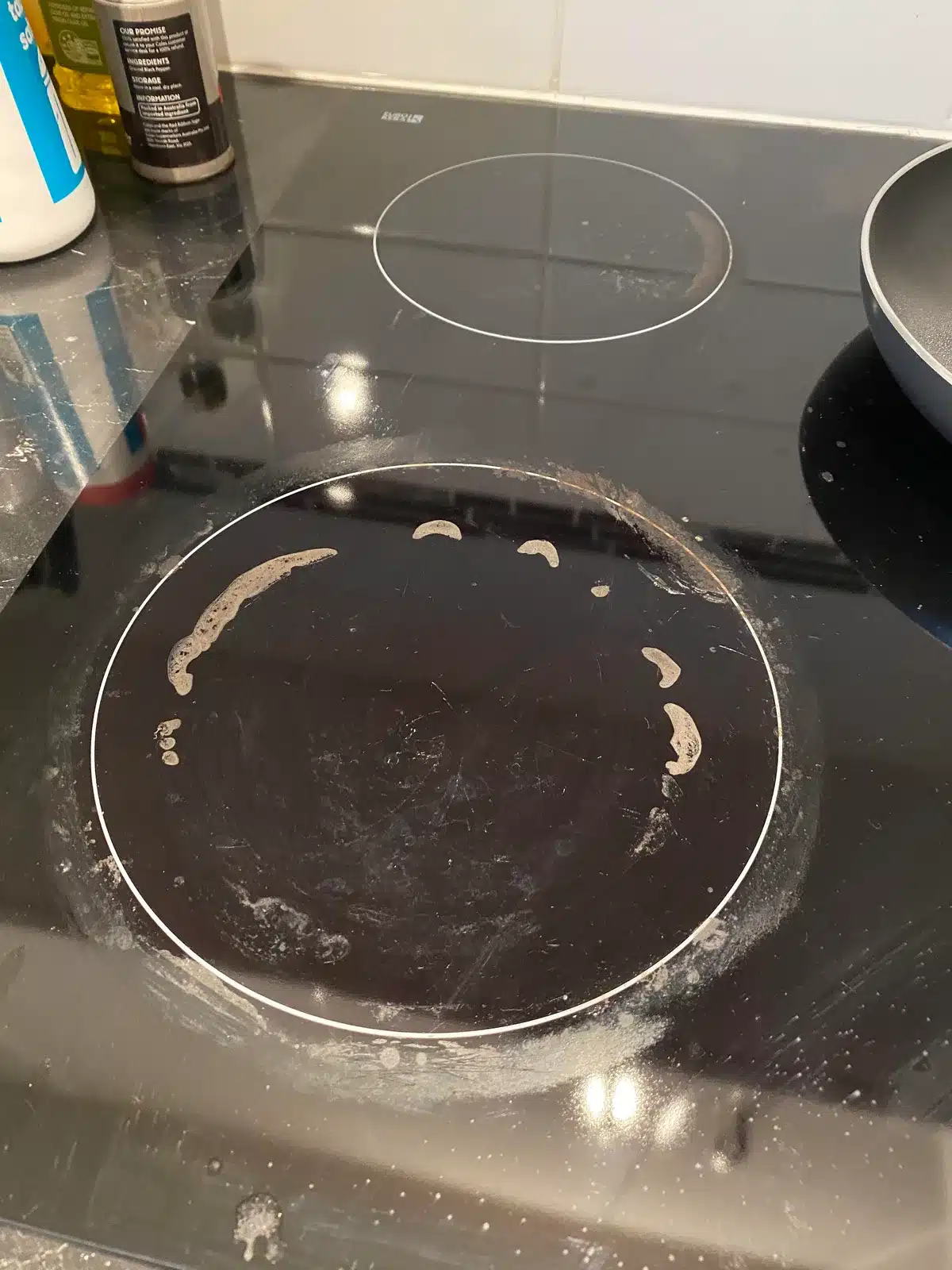
Image source: Web (Bing) / reddit.com (Web image (fair-use with source credit))
Quick Answer
Yes, you can scrub burnt water off a stove if recent, but use a non-scratch pad. Glass tops need a razor blade at a 30 to 45 degree angle. Gas grates can take a nylon brush.
Electric coils should never get wet. Let everything cool first. Then scrub gently with a cooktop cleaner.
What Burnt Water Residue Actually Is on Glass, Gas, and Coil Stoves
Burnt water residue isn't just water. When tap water boils dry, the minerals stay behind. Calcium and magnesium leave white or gray crusty rings.
That's limescale, or calcium carbonate, and it bonds to hot glass like cement.
If you had pasta water or sugary tea boiling over, the residue changes. Starches and sugars caramelize into brown or black sticky patches. Grease splatter polymerizes into a hard, rainbow-tinted film.
Each type needs a different approach.
Here's what you're actually looking at:
- White chalky ring: mineral scale from hard water.
- Brown crusty edge: burnt starch or sugar.
- Rainbow sheen: polymerized grease or heat tint.
- Black flaky bits: carbonized food particles.
Glass-ceramic cooktops show every mark because they're smooth and non-porous. Gas grates hide residue in the cast iron crevices. Electric coil drip pans catch the overflow and bake it on.
Age matters too. A fresh boil-over under an hour old wipes away with warm soapy water. A stain baked on for 24 hours or more needs a dwell time of 5 to 10 minutes with a proper cleaner.
For routine upkeep on other kitchen appliances, our guide on freshening up a smelly appliance follows the same principle. Match the cleaner to the surface.
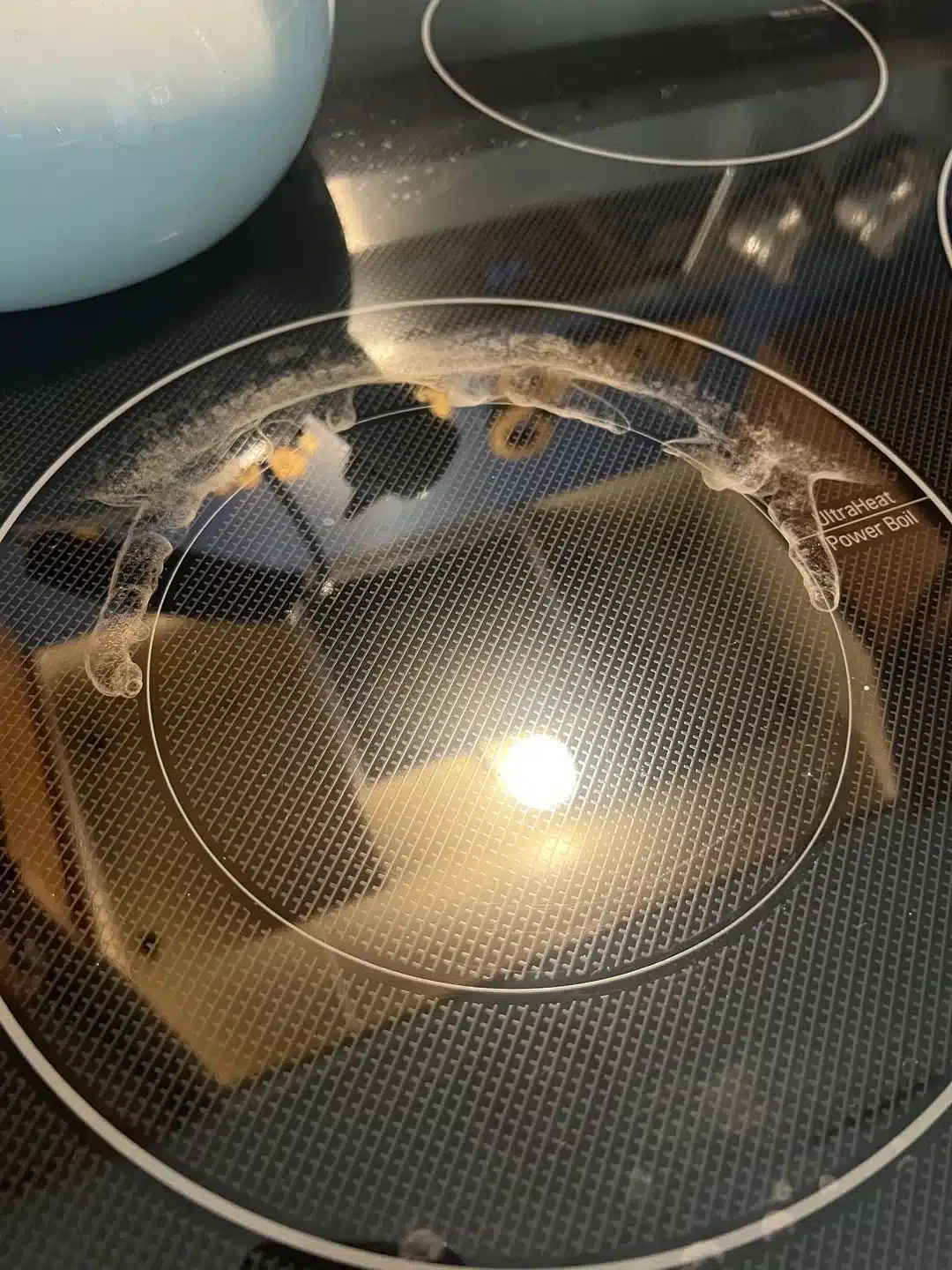
Image source: Web (Bing) / reddit.com (Web image (fair-use with source credit))
Condition Check: Stove Surface, Temperature, and Residue Type
Before you touch anything, run three checks. What's your stovetop made of? How hot is it right now?
What does the residue look like? Your answers decide everything.
Use this table to sort your situation fast:
| Surface Type | Safe Scrubbing Tool | Never Use |
|---|---|---|
| Glass-ceramic | Razor blade, non-scratch pad | Steel wool, abrasive powder |
| Gas grates (cast iron) | Nylon brush, plastic scraper | Razor blade, oven cleaner |
| Electric coil | Damp cloth only after cooling | Any scrubbing while wet |
| Stainless steel | Soft sponge, microfiber | Bleach, harsh acids |
Temperature is the next gate. If the surface is still warm to the touch, stop. Cleaning a hot cooktop can cause thermal shock.
That cracks glass and warps metal. Wait until it's completely cool, which takes 30 to 60 minutes after boiling dry.
Residue type tells you the chemistry. Mineral scale dissolves with acid. Vinegar at 5% acetic acid works well.
Burnt sugar and starch need alkaline help, so reach for a baking soda paste at a 3:1 ratio with water. Grease films need a surfactant, which means dish soap or a commercial cooktop cleaner.
One more check. Is it actually burnt water? Sometimes what looks like residue is heat tint, a permanent rainbow discoloration inside the glass itself.
No scrubbing fixes heat tint. You can only prevent it. If the mark doesn't budge after two gentle attempts, stop and reassess.
For a deeper clean on coils and drip pans, our walkthrough on tackling your electric stovetop covers the safe steps.
Decision Tree: Safe to Scrub, Scrape, Soak, or Wait
Follow this if/then logic to pick your action. No guessing.
If the stove is still hot, then wait. Do nothing until it's cool. That's non-negotiable for glass and coil surfaces.
If the surface is cool and glass-ceramic, then check the residue texture. If it's crusty and raised, scrape first with a razor blade held at a 30 to 45 degree angle. If it's a thin film, apply a cooktop cleaner, let it dwell 5 to 10 minutes, then wipe with a non-scratch pad.
If the surface is a gas grate, remove the grate. Soak it in hot soapy water for 15 minutes. Scrub with a nylon brush.
Never use a razor blade on cast iron because it gouges the seasoning.
If the surface is an electric coil, lift the coil only if your manual allows it. Wipe the drip pan with a damp cloth. Never immerse the coil in water.
If the residue is white and chalky, use an acid such as vinegar or lemon juice. If it's brown and sticky, use a baking soda paste.
If you've scrubbed gently twice and it won't come off, stop. You're either dealing with heat tint or you need a longer dwell time. More pressure won't help.
It just scratches.
For a related fix on cast iron care, see our method for seasoning a skillet properly to keep your gas grates in shape.
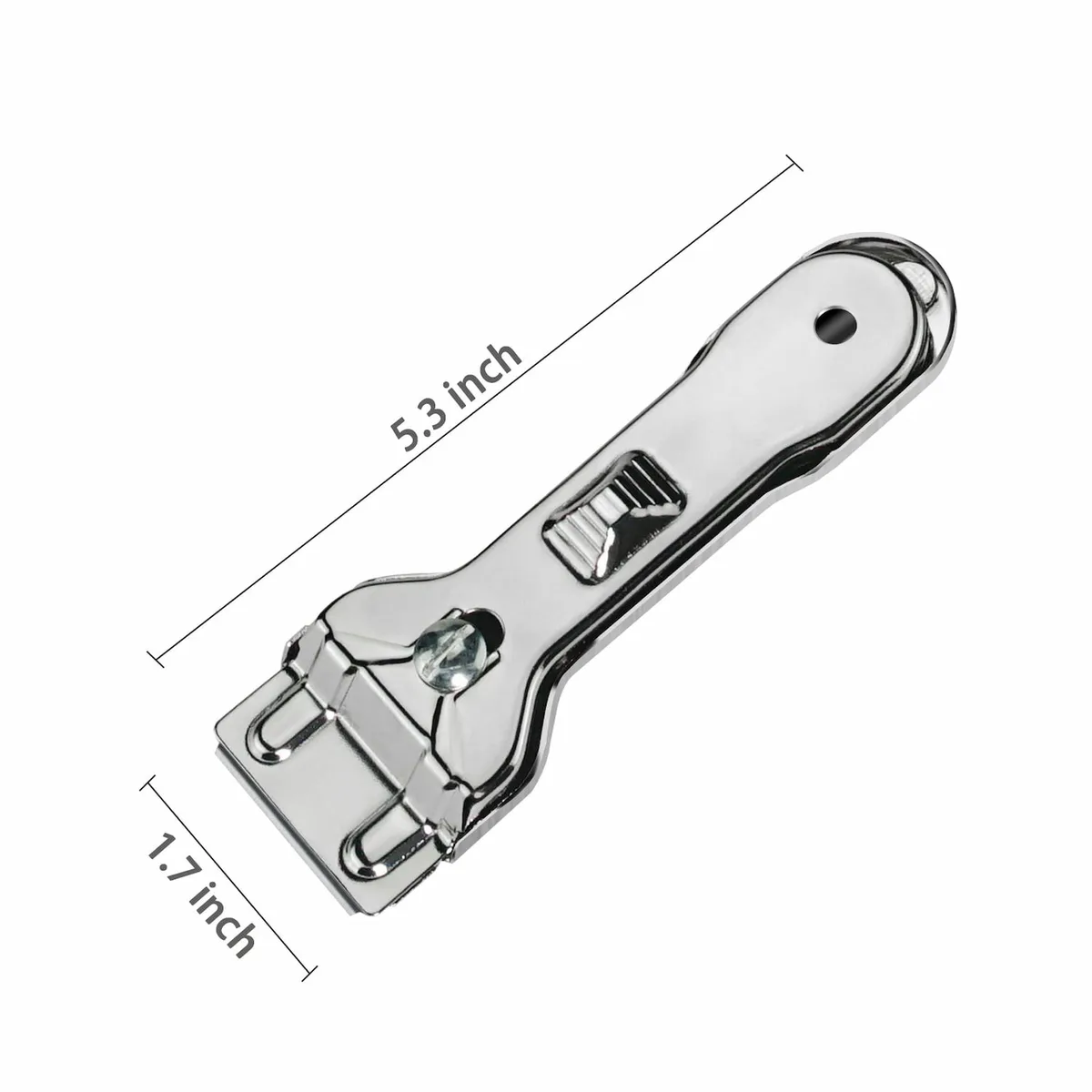
Image source: Web (Bing) / karinearappliances.com (Web image (fair-use with source credit))
Step-by-Step Cleaning Paths for Glass-Ceramic, Gas Grates, and Electric Coils
Here's the exact process for each surface. Pick your path and follow it.
Glass-Ceramic Cooktop
- Turn off the stove. Let it cool completely.
- Scrape off loose crust with a razor blade at a 30 to 45 degree angle. Keep the blade flat against the glass.
- Apply a cerium oxide or mild abrasive cooktop cleaner. Let it sit 5 to 10 minutes.
- Wipe with a damp microfiber cloth using circular motions.
- Buff dry with a clean cloth. Check for streaks.
Gas Grates and Burner Caps
- Remove grates and caps. Soak in hot soapy water for 15 minutes.
- Scrub with a nylon brush. For stubborn spots, make a baking soda paste.
- Rinse and dry completely before putting them back.
- Wipe the stovetop body with a damp cloth. Don't let water drip into the igniter.
Electric Coil and Drip Pans
- Unplug the stove or turn off the breaker.
- Lift the coil only if your manual says it's okay. Otherwise, clean around it.
- Wipe the drip pan with a damp cloth and mild dish soap.
- Dry everything thoroughly before restoring power.
For a broader cleaning routine that saves time, our guide on a quick vinegar and baking soda routine applies the same dwell-and-wipe logic. And if you're cleaning other kitchen gear, routine dishwasher upkeep follows similar care rules.
Manufacturer guidance from GE Appliances confirms that abrasive cleaners void many glass cooktop warranties. Standards bodies like UL also certify these appliances for specific surface tolerances. Stick to non-scratch tools and you stay on the right side of both.
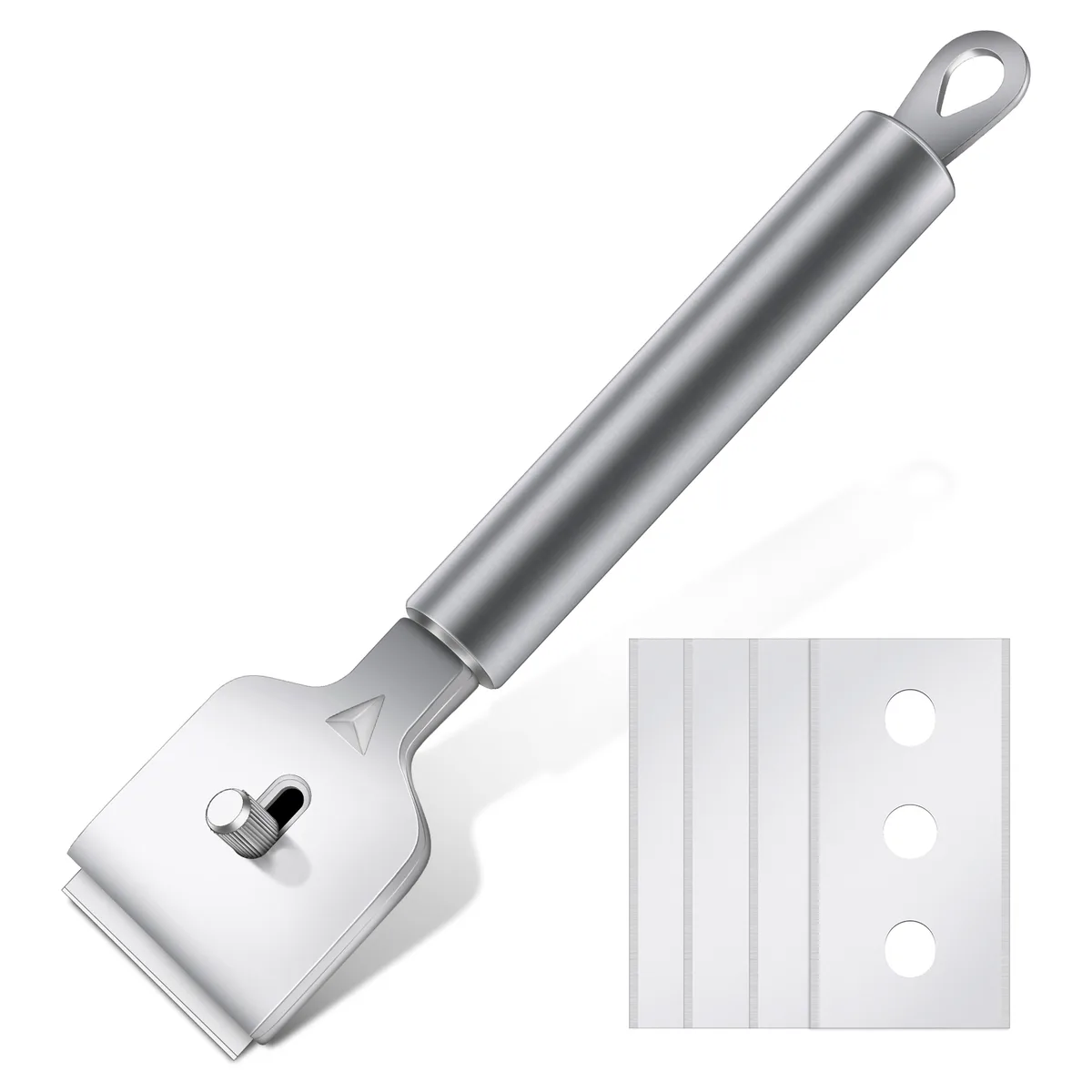
Image source: Web (Bing) / walmart.com (Web image (fair-use with source credit))
Mistakes That Scratch Glass Tops or Damage Gas Igniters
The biggest mistake is scrubbing while the stove is still hot. Thermal shock cracks glass-ceramic instantly. Always wait until it's cool to the touch.
Another common error is using steel wool or abrasive powders on glass. These leave permanent scratches. Even a single pass with a harsh pad can dull the surface for good.
Here's what to avoid:
- Pressing too hard with a razor blade. Let the blade do the work at a shallow angle.
- Using oven cleaner on a cooktop. It's too caustic for glass and can ruin the finish.
- Soaking gas igniters in water. Moisture corrodes the spark electrode.
- Mixing vinegar and bleach. That creates toxic chlorine gas.
- Scrubbing a coil burner while it's wet. You risk electrical shock.
For gas stoves, the igniter is the fragile part. Water dripping into the burner head can short it out. Wipe around the igniter with a barely damp cloth, then dry immediately.
If you've already scratched the glass, you can't buff it out. Prevention is the only fix. Stick to non-scratch pads and plastic scrapers for daily cleaning.
A razor blade is fine on glass, but only at that 30 to 45 degree angle.
When It's Not Burnt Water: Heat Tint, Hard Water Scale, or Warranty Risk
Sometimes the mark isn't burnt water at all. Heat tint looks like a rainbow sheen on glass-ceramic. It happens when the cooktop overheats.
No cleaner removes it because the discoloration sits inside the glass.
Hard water scale is different. It's a white, chalky film that builds up over time. Vinegar dissolves it, but you may need to soak for 10 to 15 minutes.
For heavy scale, a commercial descaler works faster.
Not sure what you're dealing with? Try this test. Rub a small area with a damp cloth.
If the mark wipes away, it's fresh residue. If it stays, it's either scale or heat tint. Scale feels rough.
Heat tint is smooth and shiny.
Warranty risk is real. Most manufacturers void coverage if you use abrasive cleaners. Check your manual before scrubbing anything.
A scratched cooktop from improper cleaning is on you, not the brand.
Hard water regions in the US Southwest and parts of the UK see more mineral scale than average. If you live there, descale monthly to prevent buildup.
Maintenance That Prevents Burnt Water Stains
A 30-second wipe after every cook stops most residue from baking on. Keep a damp microfiber cloth nearby and use it while the surface is still warm but not hot. That one habit prevents the stubborn stains we see most often in our research.
Use lids when boiling water. Uncovered pots splash mineral-rich water across the whole cooktop. A lid cuts splatter and keeps the surface dry.
In hard water regions, descale monthly. Vinegar at 5% acetic acid does the job. Let it dwell for 5 to 10 minutes, then wipe clean.
This stops calcium carbonate from building into a crusty ring.
A silicone or fiberglass cooktop protector mat helps on glass tops. It sits between the pot and the glass and catches spills before they bake on. Just confirm the mat is rated for your cooktop's heat output.
Watch what you boil. Pasta water, rice water, and sugary syrups leave the worst residue. Rinse the pot rim before setting it down.
A quick rinse now saves a scrape later.
Check your water hardness once with a cheap test strip. Anything above 7 grains per gallon (about 120 ppm) leaves scale fast. If you're in a hard water zone, expect more frequent descaling.
Never let a spill sit overnight. The longer residue bonds, the harder it fights back. Fresh is easy.
Old is a project.
Costs and What's at Stake If You Get It Wrong
The math is simple. A bottle of cooktop cleaner costs $5 to $15. A replacement glass top runs $300 to $1,500.
A new gas cooktop can hit $2,000 installed. So the wrong scrubbing method is an expensive mistake.
Here's the realistic cost breakdown:
| Item | Cost Range |
|---|---|
| Non-scratch pad plus cleaner | $5 to $15 |
| Razor blade scraper | $3 to $10 |
| Cerium oxide polish | $10 to $25 |
| Professional cooktop cleaning | $80 to $200 |
| Replacement glass top | $300 to $1,500 |
| New cooktop installed | $500 to $2,000+ |
Time matters too. A recent spill takes 5 to 15 minutes to clean. A baked-on stain from a week ago can take 30 minutes or more.
Scratches on glass don't buff out either. You live with them or you pay for a replacement.
Warranty is the hidden cost. Most manufacturers void coverage if you use abrasive cleaners. GE, Whirlpool, and Samsung all list this in their manuals.
One careless scrub can wipe out a 1 to 5 year warranty.
Proper cooktop care costs the average household under $20 a year. That's less than a single takeout dinner. Compare that to a $500 repair, and the choice is obvious.
Final Decision Guide: Your Next Step
Match your situation to the action. No guesswork needed.
If the stove is still hot, wait. Cool first, always.
If the surface is glass-ceramic and the residue is crusty, scrape with a razor blade at a 30 to 45 degree angle. Then apply cleaner, let it dwell 5 to 10 minutes, and wipe with a non-scratch pad.
If the surface is a gas grate, remove it. Soak in hot soapy water for 15 minutes. Scrub with a nylon brush.
If the surface is an electric coil, wipe with a damp cloth only. Never scrub a wet coil.
If the residue is white and chalky, use vinegar. If it's brown and sticky, use a baking soda paste.
If nothing works after two gentle attempts, stop. You're likely looking at heat tint, and no amount of scrubbing fixes that.
The bottom line is yes, you can scrub recent burnt water off a stove. Just match the tool to the surface, keep the pressure light, and never rush the cooling step. Do that and your cooktop stays scratch-free for years.
Frequently Asked Questions
Can you scrub burnt water off a stove if it's recent?
Yes, if the stove is cool and you use the right tool. Glass tops need a razor blade at a shallow angle. Gas grates take a nylon brush.
Electric coils should only be wiped, never scrubbed. Act within a few hours for the easiest removal.
What removes burnt water stains from a glass cooktop?
A cerium oxide cleaner or a baking soda paste works well. Apply it, let it dwell 5 to 10 minutes, then wipe with a non-scratch pad. For mineral scale, white vinegar at 5% acetic acid dissolves the residue.
Rinse and buff dry.
Is it safe to use a razor blade on a glass stove?
Yes, but only at a 30 to 45 degree angle. Keep the blade flat against the glass and scrape gently. Never use a razor on gas grates or electric coils.
Those surfaces scratch or damage easily.
How do you clean burnt water off a gas stove grate?
Remove the grate and soak it in hot soapy water for 15 minutes. Scrub with a nylon brush. For stubborn spots, use a baking soda paste.
Rinse and dry completely before putting it back. Never use a razor blade on cast iron.
Can you use steel wool on a stovetop?
No. Steel wool scratches glass-ceramic, stainless steel, and enamel. It also leaves metal fragments that rust.
Use a non-scratch pad or a microfiber cloth instead. For tough spots, reach for a plastic scraper.
What if the burnt water stain won't come off?
If gentle scrubbing twice doesn't work, stop. You're likely dealing with heat tint, which is permanent. Or you need a longer dwell time with the cleaner.
More pressure won't help. It just causes damage.
