
Most flan fails at the flip, not the recipe. If you're hunting for flan remekins (the common misspelling of flan ramekins), you're probably trying to get that clean caramel release and a custard that sets evenly. The wrong cup looks fine until you unmold and half the dessert stays glued inside.
Flan ramekins are small, oven-safe individual molds built for caramel custard baked in a water bath. Manufacturer specs and aggregate baking guides point to 4, 6 oz (120, 180 ml) vessels with 2, 2.5 inches of depth as the sweet spot. That depth changes everything about caramel pooling, custard ratio, and whether your flip actually works.
Here's what separates a flan ramekin from every other small cup in your kitchen.
Flan Ramekins: Sizes, Materials & How to Choose
Quick Answer
Flan remekins are oven-safe ramekins sized for individual caramel custard. The right ones hold 4, 6 oz and run about 2, 2.5 inches deep. They need straight or slightly flared sides for clean unmolding.
Fill them two-thirds full before a water bath bake at 325, 350°F. Chill fully before the plate flip.
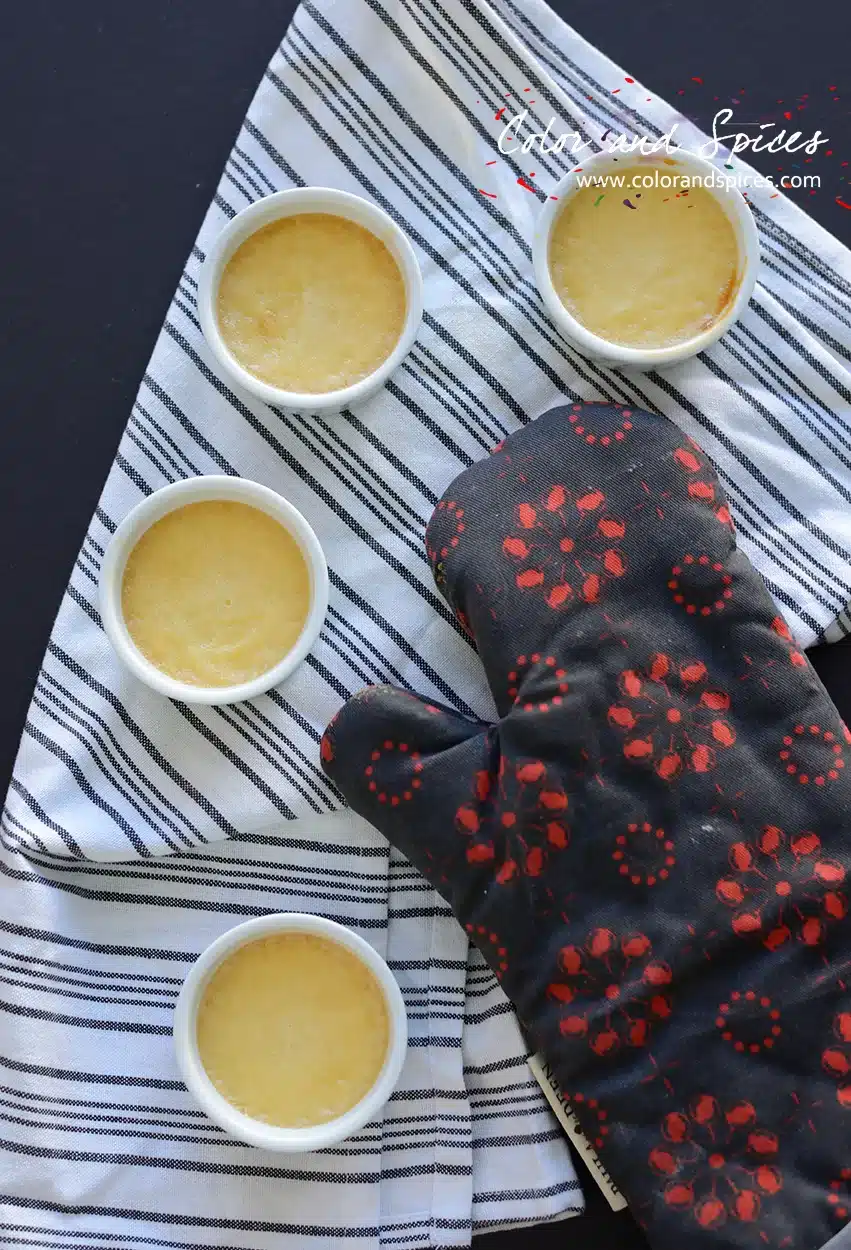
Image source: Web (Bing) / colorandspices.com (Web image (fair-use with source credit))
Why Flan Needs a Different Ramekin Than You Think
Flan (also called crème caramel or leche flan) is a two-layer dessert. Liquid caramel sits on the bottom. Egg-milk custard goes on top.
After baking and chilling, you flip the mold onto a plate. The caramel becomes a glossy sauce over the set custard.
That flip is where container choice matters. Shallow cups spread custard too thin. The set gets rubbery at the edges before the center firms up.
Deep, straight-sided ramekins give you enough volume for a proper caramel pool without overflow during the bake.
Our research across manufacturer listings and verified buyer feedback shows a clear pattern. Listings labeled "ramekin" often target crème brûlée, soufflé, or pudding. Those profiles differ from what flan needs.
Crème brûlée cups run shallow because the dessert gets torched on top, not flipped out.
Flan also bakes in a water bath (baño maría). Hot water surrounds the ramekins halfway up the sides. The mold must handle wet heat without cracking.
It must conduct heat evenly so the custard sets with a gentle center jiggle, not a soupy middle.
Per USDA egg safety guidance, egg-based custards need thorough cooking to a safe internal temperature. Even heat from the right vessel helps you hit doneness without overcooking the edges. A proper flan ramekin is a baking tool, not just a serving dish.
What to Look for in a Flan Ramekin: Size, Depth, and Shape
What size ramekin is best for flan?
4, 6 oz (120, 180 ml) per portion is the range that shows up most in flan recipes and bakeware specs as of 2026. A 6 oz ramekin gives you a taller, restaurant-style presentation. A 4 oz works for lighter portions or tighter calorie control.
Go much bigger than 8 oz and you're drifting into mini-bowl territory. The custard layer thins out. Caramel ratios feel off.
How deep should the walls be?
Aim for roughly 2, 2.5 inches of interior depth. You can eyeball it against your thumb length. If the cup looks like something you'd serve dip in, it's probably too shallow.
Depth controls two things at once. It holds enough caramel to sauce the portion after unmolding. It also keeps the custard layer thick enough to set smoothly in a water bath.
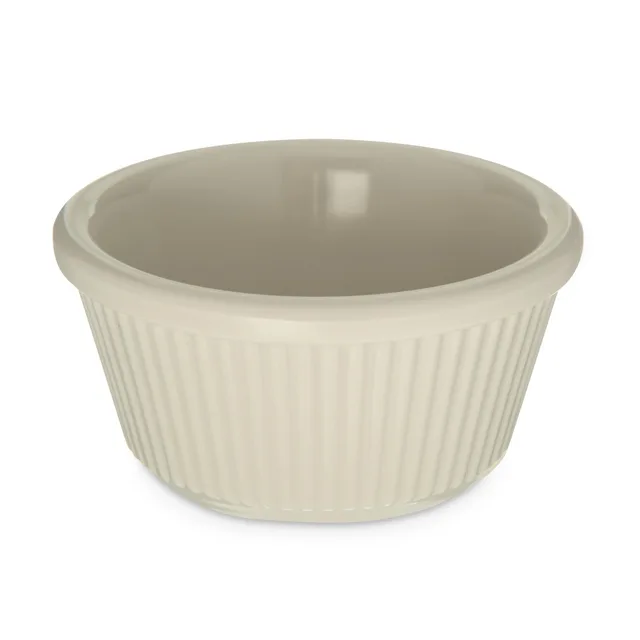
Image source: Web (Bing) / storage.googleapis.com (Web image (fair-use with source credit))
Does shape affect unmolding?
Yes. Straight or slightly flared sides release cleaner than heavy tapering. A subtle lip at the rim helps caramel flow out when you flip.
Avoid shapes with sharp interior corners where custard can grab.
| Spec | Ideal for flan | Why it matters |
|---|---|---|
| Capacity | 4–6 oz (120–180 ml) | Proper custard-to-caramel ratio |
| Depth | 2–2.5 in | Enough volume without overflow |
| Side profile | Straight or slight flare | Clean release on flip |
| Fill level | ~⅔ full | Room for expansion in water bath |
| Oven rating | 450°F+ | Safe for bake plus hot water bath |
Glazed ceramic or porcelain interiors matter too. A smooth, non-porous glaze keeps caramel from seeping into porous clay. That seepage leads to sticking you'll fight at unmold time.
If you're weighing set size, our look at how often home cooks reach for four versus six suggests most households use four at a time. A 6-piece set covers dinner parties without much extra storage.
Flan Ramekins vs Crème Brûlée Cups, Muffin Tins, and Family-Size Molds
Not every small oven-safe cup is a flan ramekin. Here's how the common substitutes compare.
Flan ramekins vs crème brûlée cups
Crème brûlée ramekins are wider and shallower. They're built for a brûléed sugar cap on top. You eat them straight from the cup.
Flan ramekins run deeper and narrower. You invert the whole thing. Aggregate recipe sources consistently pair flan with deeper molds.
Swap in brûlée cups and you get a wide, thin puck that overcooks at the rim.
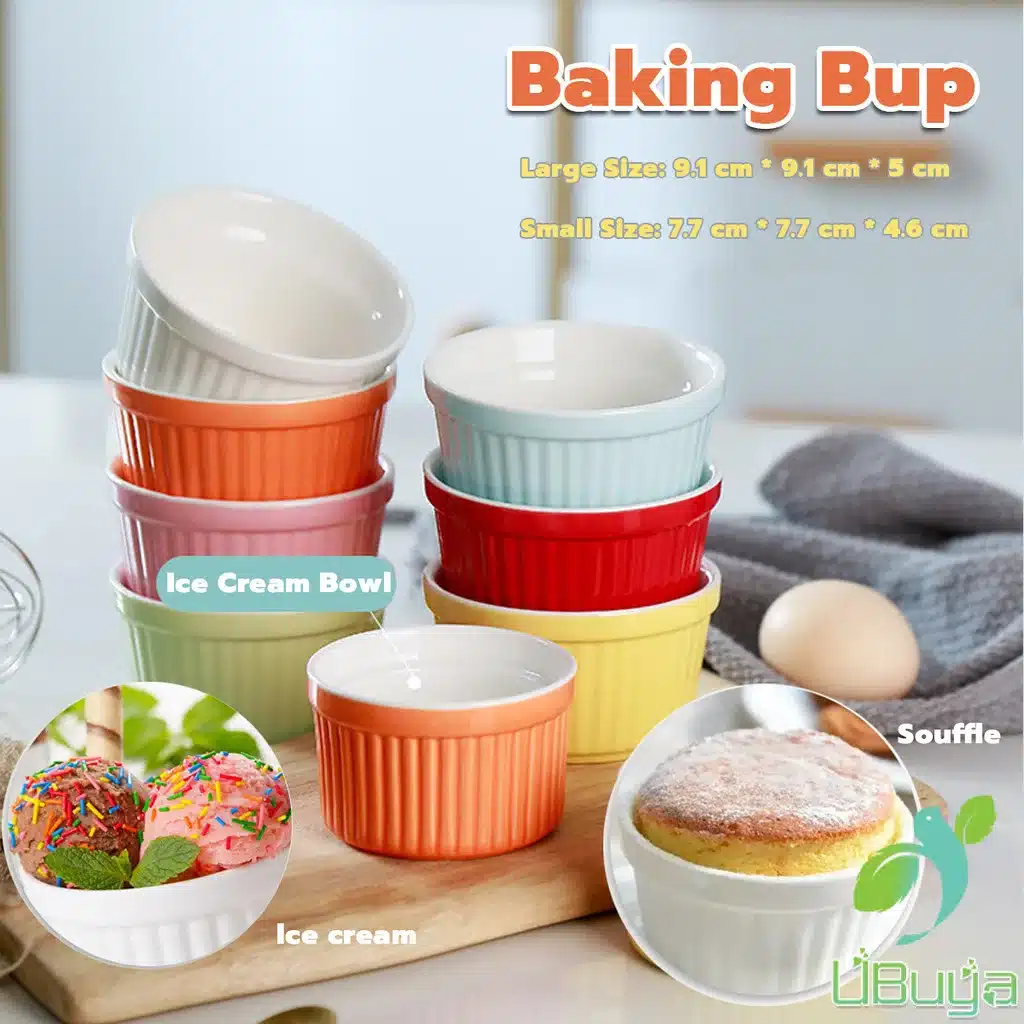
Image source: Web (Bing) / shopee.ph (Web image (fair-use with source credit))
Flan ramekins vs muffin tins
Muffin tins work in a pinch. They're rarely ideal. Cavities vary in depth.
Non-stick coatings can react oddly with hot caramel. Unmolding twelve stuck mini-flans from tight cups frustrates even experienced bakers.
If you improvise, use a standard 12-cup tin with the deepest wells. Greasing won't fix a bad flip the way a proper ramekin shape will.
Individual ramekins vs one large flan mold
A family-size flan mold (often aluminum) makes one big shareable dessert. It's common in Latin American home kitchens and holiday cooking. Individual ramekins suit dinner parties, portion control, and guests who want their own plate moment.
| Option | Best for | Main drawback for flan |
|---|---|---|
| Flan ramekin (4–6 oz) | Individual portions, clean flips | Need a matched set |
| Crème brûlée cup | Torched custards | Too shallow for flan |
| Muffin tin | Emergency batch bake | Uneven depth, sticky unmold |
| Large flan mold | Family-style serving | No individual plating |
Ceramic vs Glass vs Silicone vs Aluminum: Which Material Actually Works
Material changes heat transfer, durability in a water bath, and how caramel behaves against the walls.
Ceramic and porcelain
Glazed ceramic or porcelain is the default choice in most US and UK home kitchens. Manufacturer specs from brands like Le Creuset and Emile Henry typically rate these pieces to 500°F+.
Ceramic heats gently and evenly. That steady heat suits custard set. The glaze gives a smooth release surface when caramel is cooked correctly.
The tradeoff is weight and thermal shock risk. Don't plunge a hot ramekin into cold water. Let it cool gradually.
The same patience you'd use when seasoning raw cookware applies here. Sudden temperature swings crack ceramic.
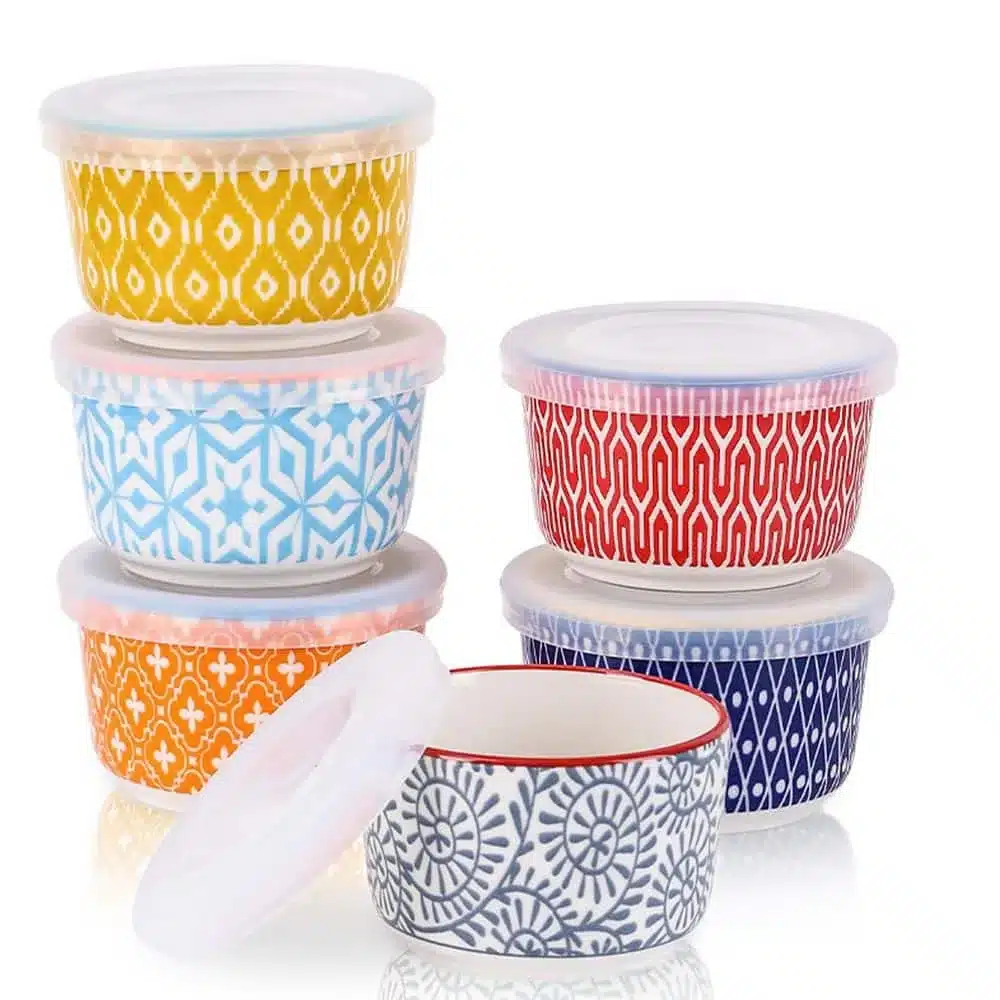
Image source: Bing (Web image (fair-use with source credit))
Borosilicate glass
Glass ramekins let you see caramel color and custard set through the walls. Borosilicate types handle oven heat better than standard glass.
Glass conducts heat a bit faster than thick ceramic. You may need to shave a few minutes off bake time. Watch the jiggle test closely.
Silicone
Silicone molds flex for unmolding. They can work for flan.
They don't brown or conduct heat the same way ceramic does. Custard set can feel softer at the same bake time. Many bakers use a sheet pan under flexible molds so they don't wobble in the water bath.
Aluminum flan molds
Aluminum molds dominate in many Latin American markets. They're lightweight, affordable, and conduct heat fast.
For individual portions, small aluminum ramekins exist. They heat quickly, so edges can set before the center if your oven runs hot. Lining or thorough greasing helps.
Some cooks prefer aluminum for leche flan tradition over modern ceramic.
| Material | Heat behavior | Unmold ease | Water-bath durability |
|---|---|---|---|
| Glazed ceramic/porcelain | Even, gentle | Excellent with proper caramel | High (if oven-rated) |
| Borosilicate glass | Moderate, visible | Good | High |
| Silicone | Softer set possible | Very flexible | High |
| Aluminum | Fast, edge-focused | Good with grease | High |
Food-contact safety matters regardless of material. The FDA publishes guidance on ceramic and glass food-contact surfaces. Look for food-safe, lead-free labels on imported ceramics.
Best Flan Ramekin for Your Situation (Home Baker, Entertaining, Budget, Premium)
There's no single winner. The best pick depends on how often you bake flan and what you prioritize.
Home baker making flan a few times a year
A 4, 6 piece glazed ceramic set in the 4, 5 oz range covers most recipes without a big spend. Aggregate retail pricing as of 2026 puts basic sets around $12, $25. Verify "oven-safe" in the product details.
Decorative serving ramekins sometimes skip high-heat ratings.
Focus on depth over brand name. A $15 set with 2+ inches of wall height beats a designer shallow cup.
Entertaining and dinner parties
Choose 6 oz ramekins for a taller presentation on the plate. A 6- or 8-piece matching set lets you bake and chill ahead. Flan holds well refrigerated 1, 2 days before the flip at service.
Straight sides photograph cleanly when sliced. Slightly flared rims still work if depth is there.
Budget-conscious cooks
Standard white ceramic sets from kitchen supply brands deliver what you need. Skip bundled "dessert sets" with mixed sizes unless the depth specs check out.
Improvised muffin tins cost nothing extra. Our research suggests the failure rate on unmolding runs higher. Factor in wasted eggs and milk when you calculate savings.
Premium and long-term kitchen investment
Heavier stoneware or premium ceramic from established bakeware makers costs $8, $20 per ramekin. You get thicker walls, consistent glaze quality, and better resistance to thermal stress over years of holiday use.
Treat them like any baked-on kitchen gear. If caramel boils over onto your cooktop, tackle spills promptly using methods similar to clearing scorched residue from a glass stovetop before it carbonizes.
Cleaning and upkeep after baking
Caramel bonds to rims if you let it sit. Soak ramekins in warm water. Avoid abrasive pads on glazed surfaces.
Most glazed ceramic ramekins are dishwasher-safe per manufacturer labels. A clean dishwasher prevents film from redepositing on porous glaze spots. Running a filter refresh cycle every month keeps glassware and bakeware coming out spotless.
For stubborn sugar residue on tools or adjacent surfaces, some cooks use a light baking soda paste. The same approach appears in vinegar-and-soda dishwasher maintenance routines that lift mineral and sugar film without harsh chemicals.
Quick pick summary:
- First flan attempt: 4-pack, 5 oz ceramic, 2+ in deep
- Regular Latin dessert cooking: 6-pack, 5, 6 oz, straight sides
- Tradition-focused leche flan: Small aluminum molds if that's what your recipe family uses
- Maximum flip confidence: Glazed porcelain, 5 oz, slight flare at rim
If caramel escapes during baking and hits a burner, address it while the sugar is still soft. Techniques for lifting fresh burnt-on stove marks work better before the spot hardens into glassy sugar.
Common Buying Mistakes That Lead to Sticky, Broken Flans
Most flan disasters trace back to the mold, not the custard recipe. These are the buying errors our research sees most often in product listings and verified buyer feedback.
Buying shallow crème brûlée cups by mistake
Listings often say "ramekin" without specifying depth. Crème brûlée cups look similar online. They're wider and shallower than flan ramekins.
The custard spreads thin. Edges overcook before the center sets. Caramel pools too wide and sticks to the flat bottom during the flip.
Always check interior depth in the specs. You want 2 inches minimum, not just a capacity number.
Ignoring oven-safe ratings
Decorative ramekins sell for dips, nuts, or prep work. Some aren't rated for sustained oven heat plus a water bath.
Look for 450°F or higher in the product details. If the listing skips oven safety, assume it's not bake-ready.
Choosing the wrong capacity for your recipe
A 3 oz cup overflows when you pour caramel plus custard. An 8 oz cup spreads both layers too thin.
Match your recipe yield to 4, 6 oz molds. Fill to about two-thirds, not the rim. Custard expands slightly in hot water.
Overlooking glaze quality on budget ceramic
Unglazed or rough interior surfaces grab caramel. Porous clay can absorb sugar over time.
Glazed porcelain or ceramic releases cleaner. Aggregate reviews flag sticking problems most on uncoated stoneware and mystery-import ceramics without food-safe labels.
Skipping straight sides for trendy shapes
Ruffled, angled, or heavy-taper cups photograph well. They fight you at unmold time.
Custard catches in corners and narrow bases. Straight or slightly flared walls give the most reliable flip.
| Mistake | What goes wrong | Fix |
|---|---|---|
| Shallow brûlée cup | Thin custard, bad set | Buy 2+ in deep |
| Non-oven ramekin | Cracking in water bath | Confirm 450°F+ rating |
| Overfilled mold | Overflow in bain-marie | Fill ⅔ full max |
| Rough interior | Caramel sticks | Choose smooth glaze |
Flan Ramekin FAQs
Can you use regular ramekins for flan?
Only if they're oven-safe and deep enough. Many standard ramekins work fine when they hold 4, 6 oz and stand about 2 inches tall. Shallow soup or dip ramekins won't give you the right custard thickness or a clean caramel release.
What's the difference between flan ramekins and remekins?
Nothing. "Remekins" is a common misspelling of ramekins. Both refer to the same small baking cups.
When you search flan remekins, you're looking for oven-safe individual molds sized for caramel custard.
Do you grease flan ramekins before adding caramel?
Usually no. Caramel goes in first and coats the interior as you swirl it. Extra grease can stop the sugar from adhering evenly.
Focus on smooth glazed walls and an even caramel layer instead.
How full should you fill flan ramekins?
Fill about two-thirds full after the caramel layer. That leaves room for custard expansion in the water bath. Overfilling pushes mixture over the rim.
Hot water then washes sugar into the pan.
Can flan ramekins go in the dishwasher?
Most glazed ceramic and porcelain ramekins are dishwasher-safe per manufacturer labels. Soak off baked caramel first. Abrasive scrubbers can dull the glaze over time, and dull glaze means more sticking later.
How long should flan chill before unmolding?
Chill at least 4 hours, or overnight for best results. The custard needs time to fully set and release from the walls. A warm center breaks apart on the plate even when the mold is perfect.
