
If you've ever opened the dishwasher to find a pod still sitting in the dispenser, you know how frustrating it can be. The question of how to use dishwasher detergent pods correctly is more than just a matter of convenience. It affects cleaning performance and appliance longevity.
Many people assume that dropping a pod in is enough, but small details make a big difference.
According to the 2026 Appliance Efficiency Standards, dishwashers using pre-measured pods can reduce water consumption by up to 15 percent compared to manual dispensing. That savings adds up over a year, but only if the pod dissolves completely and reaches every dish. Let's start by looking at the common problems that trip people up.
How to Use Dishwasher Detergent Pods
Place the pod in the main wash compartment of your dishwasher. Make sure the dispenser door closes completely before starting the cycle. Select a cycle that matches the soil level and load size.
Do not touch the pod with wet hands to avoid premature dissolution. Run the dishwasher as normal and avoid opening the door during the cycle.
The Common Problems with Dishwasher Pods (and Why They Happen)
Pods are convenient, but they can fail in predictable ways. The most common issue is an undissolved pod left in the dispenser after the cycle. This usually happens when the water temperature is too low or the pod is placed in the wrong spot.
Another frequent complaint is a sticky residue on dishes or inside the machine. That residue often comes from using too much detergent or a pod that didn't break apart fully.
A third problem is clogged spray arms or filters. Pod fragments can block the small holes that let water through. Finally, some people worry about safety, especially in homes with children.
Pods look like candy, and ingestion can cause serious harm.
The root causes are often related to water hardness, cycle selection, or improper loading. Hard water can slow dissolution, while a quick cycle may not give the pod enough time to release its contents. Using the wrong compartment or touching the pod with wet hands can also trigger these issues.
| Problem | Likely Cause |
|---|---|
| Pod not dissolving | Cold water, hard water, wrong compartment |
| Residue on dishes | Too much detergent, pod partially dissolved |
| Clogged spray arms | Pod fragments, food debris |
| Unpleasant odors | Standing water, food particles trapped |
| Safety concerns | Accessible storage, child-resistant packaging failure |
If you are dealing with a pod that will not dissolve, our detailed guide on troubleshooting undissolved pods walks through the steps to fix it. For low water pressure that prevents proper cleaning, check out our article on low water pressure fixes.
Quick Insight: The Golden Rule for Pod Success
The single most important rule is to keep the pod dry until the moment it goes into the dishwasher. The outer film is water-soluble, and any moisture before the cycle starts will begin the dissolution process early, leaving a sticky film on your dishes. That's why you should always handle pods with dry hands and store them in a sealed container.
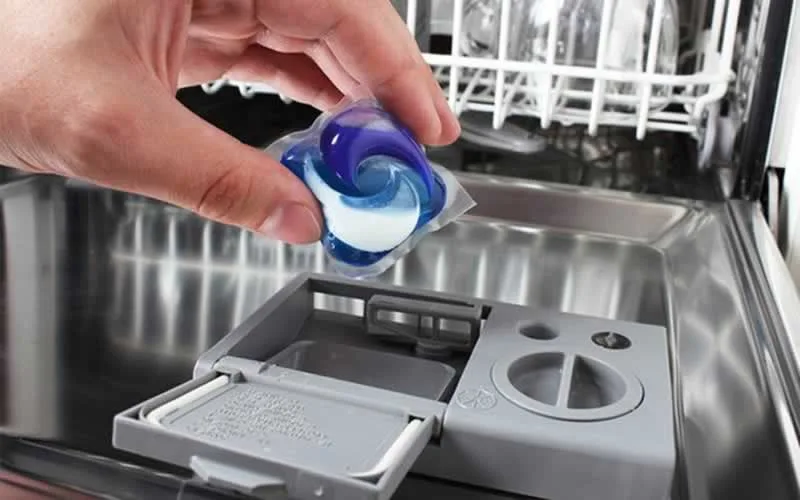
Image source: Bing (Web (fair-use with source credit))
A dry pod ensures the film stays intact until the hot water hits. It also prevents premature release of the detergent, which can cause oversudsing. If you ever find a pod that feels tacky, discard it and use a fresh one.
How Dishwasher Pods Work: A Simple Breakdown
Most pods use a polyvinyl alcohol film that dissolves in water. When the dishwasher heats water to 120 degrees Fahrenheit or higher, the film breaks apart and releases the detergent. The pod contains separate chambers for detergent, rinse aid, and sometimes a drying agent.
This design keeps the ingredients stable until they meet hot water.
The water temperature is critical. If the water is below 100 degrees, the film may not dissolve fully. That's why many manufacturers recommend using the hottest cycle available.
Some pods are formulated for cold water, but they still need enough time and agitation to work.
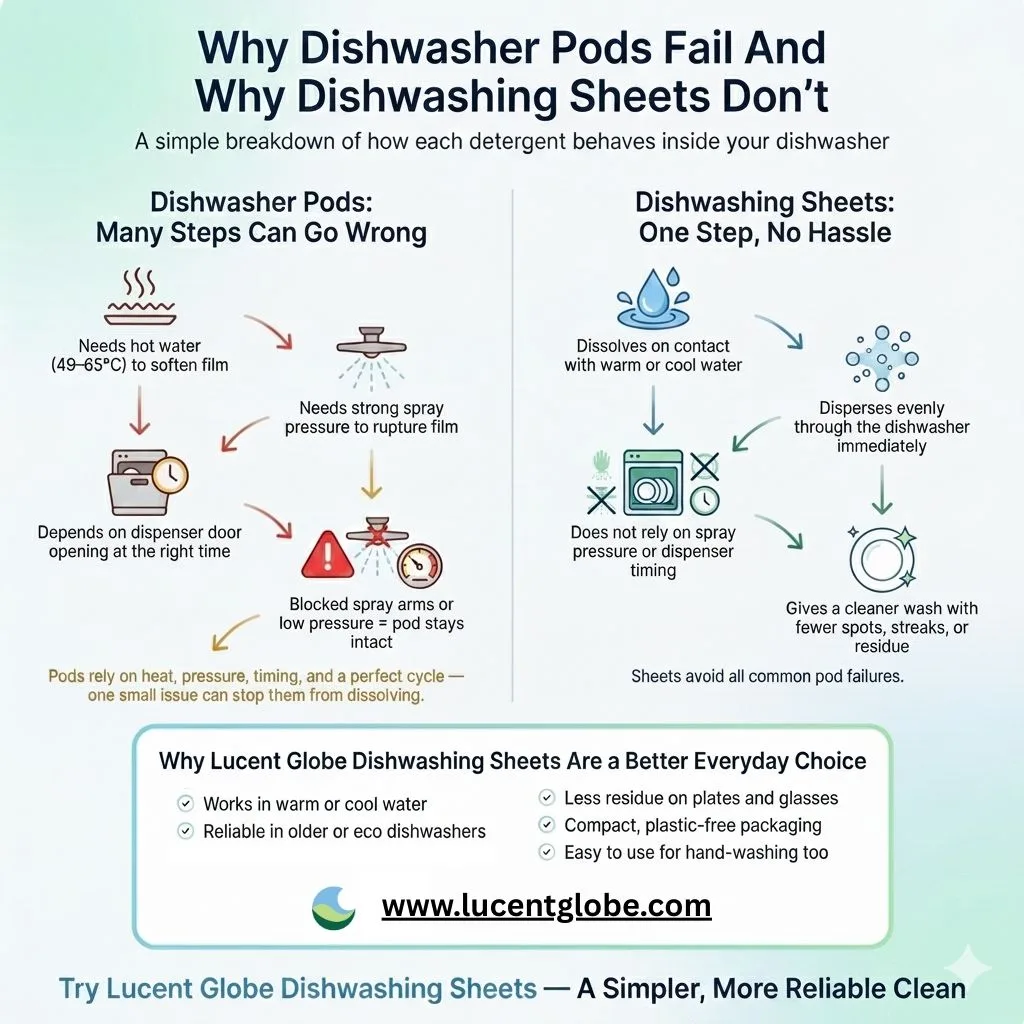
Image source: Bing (Web (fair-use with source credit))
The dissolution process also depends on water pressure and spray arm rotation. A clogged spray arm can prevent water from reaching the pod, leaving it intact. Regular cleaning of the filter and spray arms helps maintain performance.
If you want to understand how water pressure affects cleaning, our low water pressure guide explains the details.
Key Features to Consider When Choosing Pods
When you shop for pods, look for a few key features. First, check the dissolution rate. Pods that dissolve quickly in cold water are better for energy-saving cycles.
Second, consider scent. Unscented options are good for sensitive noses. Third, look for eco-friendly certifications like EPA Safer Product or USDA Biopreferred.
Size matters too. Standard pods work for most loads, but jumbo pods are useful for large families or heavily soiled dishes. Some brands offer multi-pack sizes that reduce packaging waste.
| Feature | Standard Pod | Jumbo Pod | Eco Pod |
|---|---|---|---|
| Dissolution speed | Fast in hot water | May need extra time | Varies by brand |
| Scent options | Multiple | Limited | Often unscented |
| Packaging | Plastic film | More material | Biodegradable film |
| Best for | Average loads | Large loads | Eco-conscious users |
If you often deal with heavy food residue, you might want to pair pods with a dishwasher designed for that task. Check out our guide on the best dishwasher for heavy food residue. Also, think about how your dishes are arranged.
A proper rack layout ensures water reaches all surfaces. Our article on dishwasher rack layout can help you test if your dishes fit well. If your rack won't slide smoothly, our guide on rack sliding issues can help.
Finally, follow manufacturer instructions. They often recommend a specific pod type for your model. Using the wrong pod can void the warranty.
The EPA WaterSense program certifies dishwashers that use less water, and many pods are designed to work with those models. You can learn more at the EPA WaterSense site.
Step-by-Step Guide to Using Pods Correctly
Using a pod is simple, but a few steps ensure the best results. Start by checking your dishwasher manual for any specific instructions. Some models have a separate compartment for pods, while others require you to place the pod directly in the tub.
- Store pods properly. Keep them in a cool, dry place away from direct sunlight. A sealed container prevents moisture from reaching the film.
- Handle with dry hands. Moisture on your hands can start the dissolution process before the pod hits the water.
- Place the pod correctly. Open the detergent dispenser and put the pod inside. If your dishwasher lacks a dispenser, place the pod in the back corner of the tub, away from the spray arm.
- Close the dispenser. Ensure the lid clicks shut to keep the pod secure until the cycle begins.
- Select the right cycle. Use a cycle that matches the soil level. Heavily soiled dishes need a longer cycle with higher water temperature.
- Avoid pre-rinsing. Modern dishwashers work best with dishes that have food residue. Pre-rinsing can reduce cleaning efficiency.
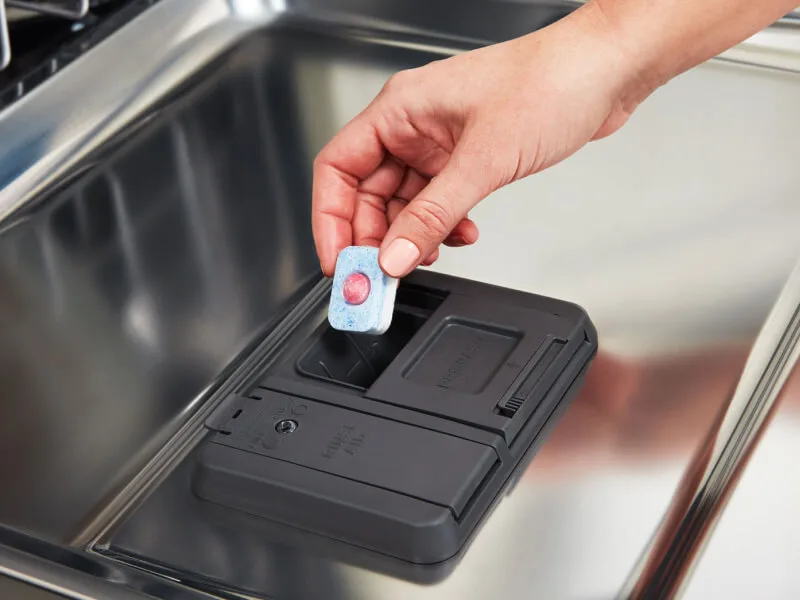
Image source: Bing (Web (fair-use with source credit))
After the cycle, check that the pod has dissolved completely. If not, your dishwasher may have a water temperature issue or a clogged filter. For persistent problems, our undissolved pods troubleshooting guide walks through the steps to diagnose and fix it.
Mistakes You Might Be Making (and How to Fix Them)
Even with the best intentions, small errors can ruin a load of dishes. Here are the most common mistakes and how to correct them.
- Using wet hands. This is the top offender. Always dry your hands before touching a pod.
- Placing the pod in the wrong spot. Some people put the pod in the pre-wash compartment or on the rack. The pod belongs in the main wash dispenser.
- Using too many pods. One pod is enough for a full load. Adding more can cause oversudsing and leave residue.
- Ignoring water temperature. A quick cycle with cold water may not dissolve the film. Choose a hotter cycle for best results.
- Overloading the dishwasher. Crowded dishes block water flow and prevent the pod from reaching all surfaces.
If you notice residue on your dishes, run a rinse-only cycle with a cup of vinegar in the dishwasher. This helps break down any leftover detergent. For clogged spray arms, remove them and soak them in warm, soapy water.
Who Should Use Pods: Best Use Cases and Scenarios
Pods are not one-size-fits-all. They work best for certain situations and user types.
- Busy households. Pods save time by eliminating measuring and pouring. They're ideal for families with a high daily dish load.
- Hard water areas. If your water has high mineral content, choose pods with built-in water softeners. These formulas prevent spots and film buildup.
- Eco-conscious users. Many brands now offer biodegradable films and reduced packaging. Look for certifications like EPA Safer Product.
- Small spaces. Pods take up less room than liquid detergent bottles. This is useful for apartments, RVs, or boats.
- First-time dishwasher owners. The pre-measured dose removes guesswork, making pods a beginner-friendly option.
However, if you have a very old dishwasher with low water temperature, pods may not dissolve well. In that case, liquid detergent might be more reliable. Similarly, if you frequently wash a few dishes, a liquid detergent with adjustable dosing can be more economical.
For large families, jumbo pods reduce the frequency of purchases. If you have a dishwasher that struggles with large pots, consider a model designed for bulky items. Our guide on the best dishwasher for large bowls and pots offers specific recommendations.
Pods vs. Other Detergents: Which Is Right for You?
Pods are convenient, but they are not the only option. Liquid detergent, powder, and tablets each have their own strengths. The right choice depends on your dishwasher, your water, and your habits.
Liquid detergent is the most flexible. You can adjust the amount based on load size and soil level. It works well in older dishwashers with lower water temperatures.
However, liquid detergent can spill and create a mess if not stored properly.
Powder detergent is often the most economical. It tends to last longer than liquids and can be more effective on tough stains. The downside is that powder can clump if it gets damp, and measuring can be less precise.
Tablets and pods are similar in their pre-measured convenience. Tablets often include a rinse aid and drying agent, making them an all-in-one solution. Pods separate these ingredients into chambers, which can be more effective but may cost slightly more.
| Detergent Type | Best For | Pros | Cons |
|---|---|---|---|
| Pods | Busy households, convenience | Pre-measured, no mess | Can be pricey, may not dissolve in cold water |
| Liquid | Flexible dosing, older dishwashers | Adjustable, works in low temps | Spills, needs storage space |
| Powder | Budget, tough stains | Economical, effective | Can clump, less precise |
| Tablets | All-in-one cleaning | Includes rinse aid | May be slower to dissolve |
If your dishwasher has a dedicated detergent dispenser, any of these types will work. If you have hard water, look for formulas with built-in water softeners. For eco-conscious users, powder and some eco pods often have less packaging waste.
When you are unsure, check your dishwasher manual. Manufacturers often recommend a specific detergent type for optimal performance. Using the wrong type can affect cleaning results and may void the warranty over time.
For a deeper dive into dishwasher maintenance, our guide on dishwasher door issues can help you understand how the dispenser works. If your dishwasher stops mid-cycle, our article on mid-cycle stopping explains common causes.
What You Pay: Costs and Value of Pods
Pods typically cost more per load than liquid or powder detergent. A standard pod averages between 15 and 30 cents per use, depending on the brand and pack size. Premium pods with eco-friendly films can reach 40 cents per load.
Liquid detergent is often the cheapest option. A typical bottle lasts for 60 to 80 loads. That brings the cost per load down to 10 to 15 cents.
Powder detergent is similar, with a box of 100 loads costing around 15 to 20 dollars.
The higher price of pods buys you convenience and consistency. You do not have to measure, and you avoid spills. For busy households, that convenience can be worth the extra cost.
| Detergent Type | Cost per Load | Pack Size | Best Value |
|---|---|---|---|
| Standard Pods | $0.15 – $0.30 | 50-100 count | Buying in bulk reduces cost |
| Premium Pods | $0.30 – $0.40 | 40-60 count | Eco-friendly options |
| Liquid Detergent | $0.10 – $0.15 | 60-80 loads | Large bottles offer savings |
| Powder Detergent | $0.15 – $0.20 | 100 loads | Boxed powder lasts longest |
If you are on a tight budget, liquid or powder detergent may be the better choice. If you value time and simplicity, pods are worth the investment. Some people mix and match, using pods for heavy loads and liquid for everyday washing.
Consider the total cost of ownership. A dishwasher that cleans well with pods may save you money on rinse aid and vinegar. You can also save by choosing a model that uses less water.
Our guide on durable machines for family use covers energy-efficient options that work well with pods.
Pro Tips from Experts for Best Results
Manufacturers and appliance technicians share a few tips that can make a big difference. These are based on years of service calls and user feedback.
First, always check the dishwasher manual before choosing a pod. Some brands, like Bosch and KitchenAid, recommend specific pod types for their models. Using the wrong pod can affect performance and may void the warranty.
Second, do not pre-rinse your dishes. Modern dishwashers are designed to handle food residue. Pre-rinsing can actually reduce cleaning efficiency because the dishwasher thinks the dishes are already clean and uses less detergent.
Third, use the hottest water setting available. Most pods dissolve best at 120 degrees Fahrenheit or higher. If your dishwasher has an energy-saving cycle, you may need to choose a different setting for heavily soiled loads.
Fourth, clean the filter regularly. A clogged filter reduces water flow and can prevent the pod from dissolving properly. Check the filter monthly and rinse it under running water.
Fifth, store pods in a cool, dry place. Heat and humidity can break down the film and affect performance. Keep the package sealed until you are ready to use a pod.
Sixth, add rinse aid to the designated compartment. Rinse aid helps water sheet off dishes, preventing spots and film buildup. Refill it when the indicator light comes on.
If your dishwasher has a drying issue, our guide on dishwasher drying problems offers troubleshooting steps. Proper drying helps prevent residue buildup from undissolved pods.
Safety First: Handling and Storing Pods Safely
Pods pose a serious safety risk, especially for young children and pets. The colorful packaging and candy-like appearance can attract curious minds. Ingestion of even one pod can cause vomiting, diarrhea, and chemical burns.
The Consumer Product Safety Commission (CPSC) requires child-resistant packaging for all dishwasher detergent pods. You can find more information at the CPSC website. However, child-resistant packaging is not child-proof.
Always store pods out of sight and reach.
Here are key safety practices:
- Store pods in a high cabinet or locked drawer.
- Keep the original container, which has clear warning labels.
- Do not transfer pods to candy or food containers.
- Wash your hands thoroughly after handling a pod.
- If a pod is ingested, call poison control immediately at 1-800-222-1222 or visit poison.org.
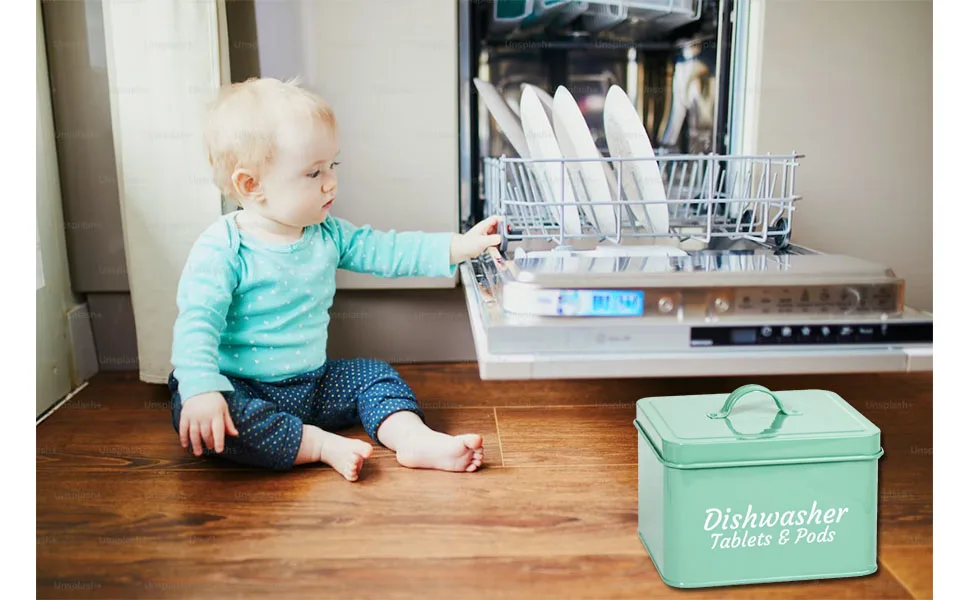
Image source: Bing (Web (fair-use with source credit))
The liquid inside pods is highly alkaline. It can cause severe eye damage and skin irritation. If a pod contacts your eyes, rinse with water for at least 15 minutes.
If it contacts skin, wash with soap and water.
Do not mix pods with other chemicals. The reaction can produce toxic gases. Use only the recommended amount for your load size.
If you have a dishwasher with a door that does not latch properly, consider replacing it. Our guide on dishwasher door closing issues explains how to diagnose and fix the problem. A secure door prevents children from accessing the detergent dispenser.
Keeping Your Dishwasher in Top Shape with Pods
Regular maintenance ensures your dishwasher runs efficiently and your pods dissolve completely. A well-maintained dishwasher also prevents damage to dishes and utensils.
Start by cleaning the filter. Food particles and detergent residue can clog the filter over time. Remove the filter and rinse it under warm water.
Use a soft brush to scrub away stubborn debris. Do this every one to two weeks.
Check the spray arms. Small holes can become blocked with mineral deposits or food debris. Remove the spray arms and soak them in vinegar for 30 minutes.
This dissolves lime buildup and keeps water flowing freely.
Inspect the detergent dispenser. Make sure the door opens and closes smoothly. If the dispenser is sticky or coated with residue, clean it with a damp cloth and mild soap.
Run a monthly cleaning cycle. Add a cup of white vinegar to the dishwasher and run a hot cycle. This removes buildup and odors.
For heavy mineral buildup, use a commercial dishwasher cleaner.
If your dishwasher has low water pressure, our guide on low water pressure fixes can help. Low pressure can prevent pods from dissolving properly.
For dishwashers that stop unexpectedly, our article on unexpected cycle stops covers common causes. A malfunctioning thermostat or control board can affect water temperature and cycle timing.
Finally, if your dishwasher is making unusual noises, our guide on loud dishwasher issues provides troubleshooting steps. Excessive noise can indicate a problem with the motor or spray arms.
Frequently Asked Questions
What is the best way to place a dishwasher pod?
Place the pod in the main wash compartment of your dishwasher. If your model has a detergent dispenser, put the pod inside and close the lid. If there is no dispenser, set the pod in the back corner of the tub, away from the spray arm.
This ensures the pod dissolves fully and releases the detergent at the right time.
Why won't my dishwasher pod dissolve?
An undissolved pod usually means the water temperature is too low, the pod was placed incorrectly, or the dishwasher has hard water. Check that you are using a hot cycle. Make sure the pod is in the main wash compartment.
If you have hard water, consider using a pod with a built-in water softener or adding a rinse aid to help dissolution.
Can I use a pod in a dishwasher with hard water?
Yes, but you need to choose the right pod. Look for formulas designed for hard water. These often include water softeners that prevent mineral buildup on dishes and inside the machine.
You may also need to run a vinegar cycle monthly to clear mineral deposits.
How much does a dishwasher pod cost per load?
A standard pod costs between 15 and 30 cents per load. Premium pods with eco-friendly films can cost up to 40 cents. Liquid detergent is cheaper, averaging 10 to 15 cents per load.
Powder detergent is similar, at about 15 to 20 cents per load.
Are dishwasher pods safe for children and pods?
Pods are dangerous if ingested. They contain highly alkaline chemicals that can cause serious harm. Always store pods in a locked cabinet or high shelf, out of sight and reach of children and pets.
Use the child-resistant packaging and never transfer pods to food containers.
What should I do if my dishwasher leaves residue?
First, check that you are using the correct amount of detergent. One pod is enough for a full load. If residue persists, run a rinse-only cycle with a cup of white vinegar.
This helps break down leftover detergent. Also, clean the filter and spray arms to ensure water flows freely.
Your Decision Guide: When to Use Pods and When to Consider Alternatives
Use pods if you value convenience, have a busy household, or want consistent dosing. They work best in dishwashers that maintain water temperature above 120 degrees. Pods are also a good choice for eco-conscious users who select biodegradable options.
Consider liquid detergent if your dishwasher is older, has low water temperature, or you frequently wash small loads. Liquid allows flexible dosing and is often cheaper per load.
Choose powder detergent for budget-conscious users or when tackling tough stains. Powder is economical and effective but can clump if stored in humid conditions.
Opt for tablets if you want an all-in-one solution that includes rinse aid and drying agent. They are convenient but may dissolve slower than pods.
If you have hard water, any detergent type can work if you choose a formula with water softeners. Always follow the manufacturer's instructions for your specific dishwasher model to ensure optimal performance and avoid voiding the warranty.