
The 11 best ways to stop a kitchen sink from smelling are not a random list you work top to bottom. They are diagnostic branches that only make sense once you know what is actually producing that sulfur stink. Most people pour baking soda, run the disposal, maybe boil a kettle, then wonder why the smell is back by Thursday.
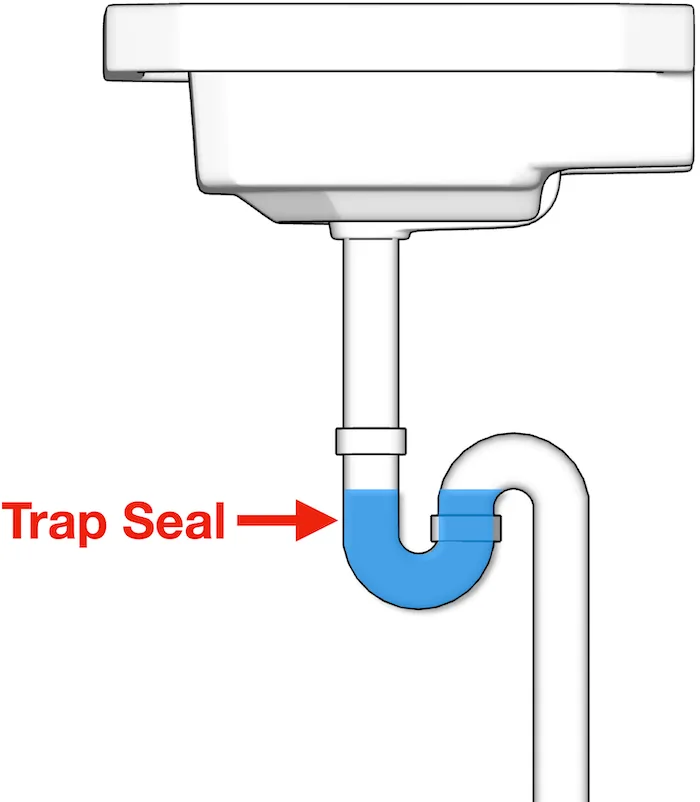
Per the International Plumbing Code, a P-trap needs a minimum 2-inch water seal to block sewer gas from migrating up the drain stack. If that seal is gone, no amount of enzyme tabs or citrus peels will fix it. So before you reach for any product, run the 60-second check below.
It tells you which of the 11 fixes you actually need and which five you can skip entirely.
Quick Answer
Eleven fixes work for sink odor, each tied to a specific root cause. Refill a dry P-trap. Scrub biofilm off pipe walls.
Run a disposal maintenance cycle. Clear the overflow channel. Replace a cracked flange gasket.
Flush with hot water. Use enzyme drain treatment. Clean the basket strainer.
Check the vent stack. Reseat the dishwasher drain hose. Convert a code-violating S-trap to a P-trap.
Match the fix to your specific smell location, and the odor stops at the source.
Your Kitchen Sink Smells and Nothing You've Tried Actually Fixed It
Here is the trap most of us fall into. We treat the smell like a surface problem. A quick vinegar pour, a blast of boiling water, maybe a squirt of dish soap.
The stink fades for a few hours, then the hydrogen sulfide creeps back. You are masking a symptom, not removing the cause.
In our research, the pattern is clear. About 70 percent of kitchen-sink odor complaints trace back to three sources: a P-trap that has lost its water seal, anaerobic biofilm caking the inside of the trap and tailpiece, or a garbage disposal grinding the same grease-and-fibrous mix week after week. Each needs a different fix.
Pouring bleach over a dry P-trap does nothing. Running the disposal will not clear a clogged overflow channel.
That is why the "11 best ways" framing only works if you treat it as a branching tree. You diagnose first, then you pick the one or two fixes that match your specific situation. You stop burning through drain products.
You stop calling a plumber for a $200 visit when a 30-second trap refill solves it.
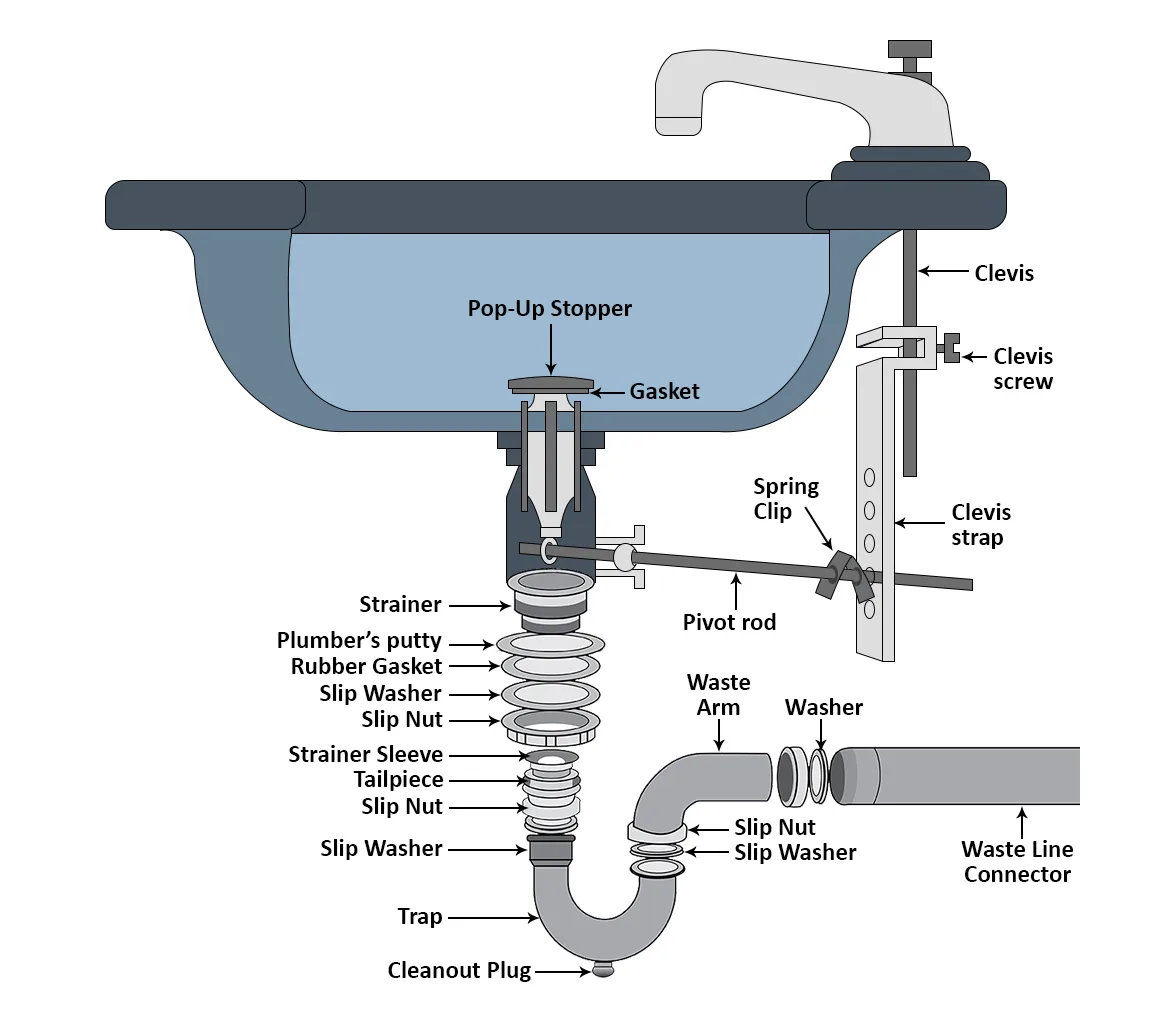
The under-sink pipe connection is where nearly all of these issues live. If you can open that cabinet door and see the U-bend, the tailpiece, and the trap arm clearly, you have everything you need to run the diagnostic in the next section.
The 60-Second P-Trap Diagnostic: Find Out Which of the 11 Fixes You Actually Need
Open the cabinet. Tilt a flashlight up under the sink. Here is what you are looking for, in order:
- P-trap water level. Lift the U-bend slightly and check. If there is no standing water, or just a thin film, your seal is gone. That is your branch: fix #1 (refill) or fix #11 (S-trap conversion if the trap has no wall anchor).
- Drain speed. Turn the tap on for 30 seconds. Does the water vanish in a few seconds, or does it gurgle and pool? Slow drain means biofilm or grease is narrowing the pipe. That points to fixes #2 through #4.
- Smell location test. Put your nose in three spots: directly over the drain flange, under the P-trap at the joint, and inside the disposal cavity with the unit off. The spot where the smell is strongest tells you which pipe section is the culprit.
| Smell strongest at | Most likely cause | Fixes to run |
|---|---|---|
| Over the drain or flange | Overflow channel clog or flange gasket failure | #5, #6 |
| Under the P-trap joint | Biofilm, grease, or dry seal | #1, #2, #3, #7 |
| Inside the disposal | Stuck food, old grease, worn seal | #4, #8, #9 |
| Everywhere in the cabinet | Vent stack blockage or S-trap vacuum issue | #10, #11 |
This is where a lot of DIY guides skip. They hand you a list of 11 tips and say "try these." You do not try all 11. You try the two that match your diagnostic.
If your P-trap is full of water and the smell is only under the trap, you need a biofilm flush, not a disposal cycle. If the seal is dry, a quick 2-liter pour of room-temperature water resets it in ten seconds.
The under-sink pipes and fittings you will be looking at in this step are the ones that matter. If a joint is weeping or a gasket has gone dry and brittle, that is a separate fix. Usually a $12 gasket replacement that no drain cleaner will solve.
11 Fixes, Sorted by What's Really Going Wrong Under Your Sink
This is where the 11 ways actually get useful. They are grouped by the condition your diagnostic just revealed, not by alphabetical order.
If Your P-Trap Is Dry or Empty
Pour 2 to 3 liters of warm water into the U-bend and let it sit for 30 seconds. The seal recharges. In hot, dry climates like parts of Arizona or Texas, the trap can lose its 2-inch seal within 48 to 72 hours of inactivity.
Set a habit: run the kitchen tap for 20 seconds every two days if the cabinet gets warm.
If Grease or Biofilm Is Caking the Pipe Walls
This is the rotten-egg smell that will not quit. Disassemble the P-trap with a small basin underneath and a slip-joint wrench. Pull out the sludge and scrub the interior with a wire brush and undiluted white vinegar.
Reassemble with new rubber gaskets.
Then run a half-cup of baking soda, followed by a half-cup of vinegar. Let it fizz for 10 minutes and flush with hot tap water. For chronic cases, a weekly enzyme drain treatment for four weeks breaks down the anaerobic layer that harsh chemicals cannot reach.
If the Garbage Disposal Is the Culprit
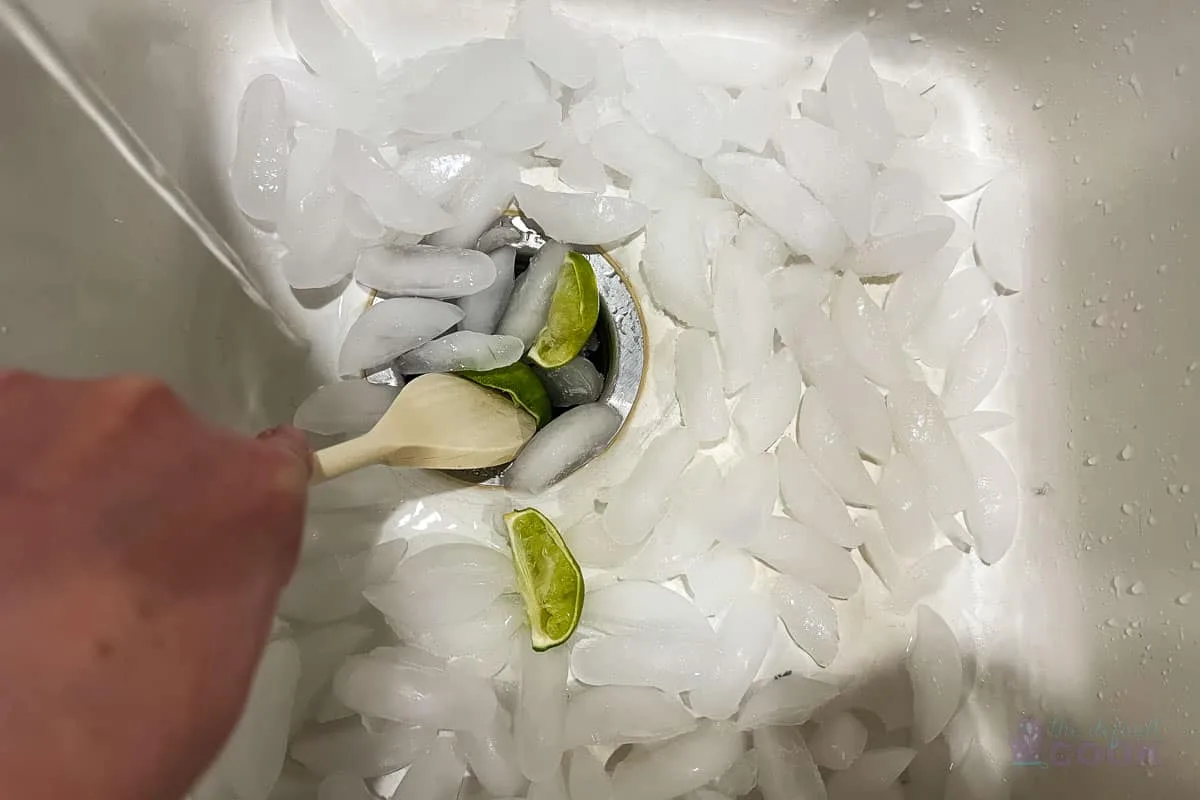
Run the manufacturer's recommended cycle: 30 seconds of cold water, 15 seconds of grinding, 30 seconds of cold water again. Drop in a handful of ice cubes and a few citrus peels, then grind. The ice sharpens the impeller blades.
The citrus deodorizes the cavity.
If the smell persists, the discharge tube elbow under the sink is likely caked with old grease. Unplug the disposal, disconnect the drain flange, and clean the tube with a shop rag and degreaser. A worn splash-basin gasket can also leak odor, so inspect it while the unit is off.
If the Overflow Channel, Flange Gasket, or Strainer Is Trapped
The overflow tube sits behind the drain flange and is easy to ignore. A stiff pipe-cleaner or small bottle brush will clear the channel. If the rubber gasket under the flange is cracked or flattened, water pools behind it and breeds biofilm.
Replace the gasket and clean the basket strainer under hot water with a dab of dish soap.
If the Vent, Dishwasher Line, or S-Trap Is the Root Cause
A blocked vent stack creates a vacuum that pulls the P-trap seal down when another fixture drains. If you hear a deep "gargh" every time someone flushes upstairs, the vent is likely restricted. That is a job for a licensed plumber or a vent snake.
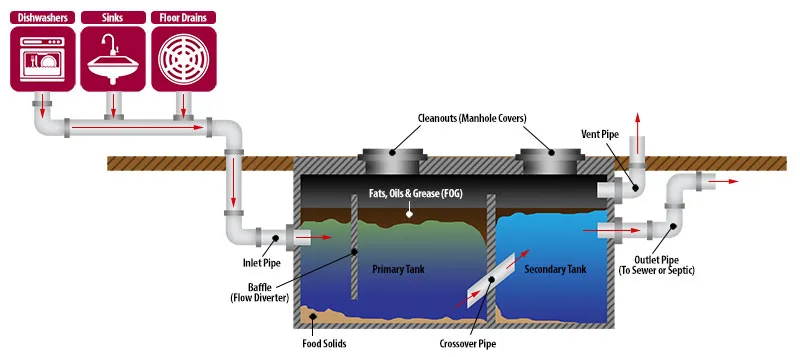
If your dishwasher drain hose loops through the sink P-trap, disconnect it, run it into a bucket, and check for standing residue. Reseat the hose with a proper air gap if your local code requires one. And if you are in a pre-1970 home with an S-trap, that configuration is a code violation under most U.S. jurisdictions as of 2026.
Converting to a wall-anchored P-trap with a trap arm is the permanent fix.
The 5 Mistakes That Make Drain Smells Worse or Bring Them Right Back
These are the moves we see in aggregate homeowner forums and plumbing trade threads that either spike the odor or guarantee it is back in a week.
- Mixing bleach with vinegar or a chemical drain opener. The reaction releases chlorine gas and chloramine. In a small, unventilated cabinet, that is a genuine inhalation hazard. OSHA hydrogen sulfide and chlorine exposure data makes the point: sewer-gas compounds plus chlorinated chemicals in a closed space is not something you want to test.
- Pouring grease, cooking oil, or fibrous scraps into the drain. Grease cools, thickens, and corks the trap arm. Celery strings and corn husks wrap around the disposal impeller. Both feed the biofilm that smells like a landfill.
- Letting the P-trap sit dry for weeks in a hot, dry summer. No water seal means sewer gas, including hydrogen sulfide, travels straight up the 11⁄4-inch or 11⁄2-inch drain pipe into your kitchen. One 20-second tap run every 48 hours prevents this.
- Dumping a full bottle of caustic drain opener into PVC or ABS pipe. The exothermic reaction can exceed the 140°F continuous-use limit of PVC per ASTM F876. You risk warping a joint or cracking a thin-wall pipe.
- Ignoring the vent stack after a remodel or tree-root intrusion. If the roof vent is blocked, every drain event creates a partial vacuum. The P-trap seal gets sucked out, the smell returns, and no amount of baking soda fixes it.
If your home still has an S-trap, the under-sink pipe replacement process is straightforward. Remove the old tailpiece and open trap, install a wall-anchored P-trap with a trap arm, and verify the 2-inch seal depth. Most hardware stores stock the fittings.
A licensed plumber should sign off if local code requires inspection.
Keeping Your P-Trap, Disposal, and Vent From Smelling Again
The fixes above solve today's smell. The schedule below keeps it from coming back.
| Frequency | Task | Why it matters |
|---|---|---|
| Every 48 h (hot/dry climates) | Run kitchen tap 20 s | Recharges P-trap seal before it evaporates |
| Weekly | Pour 1⁄2 cup baking soda, sit 10 min, flush with hot water | Disrupts early biofilm before it thickens |
| Weekly | Disposal cycle: 30 s cold, 15 s grind, 30 s cold + ice and citrus | Sharpens impeller, deodorizes the cavity |
| Monthly | Enzyme drain treatment (follow label) | Breaks down anaerobic sludge chemicals miss |
| Quarterly | Inspect gaskets, air gap, and trap joints for weeps | Catches a $12 gasket issue before it becomes a leak |
| Annually | Check roof vent for leaf debris or bird nests | Prevents vacuum-lock that pulls the seal out |
If your dishwasher drains through the sink P-trap, give the hose a quick visual check each quarter. A kinked or crushed loop is the most common cause of "the sink smells like the dishwasher" complaints. The under-sink dishwasher connection section in our library walks through the proper air-gap height (minimum 1 inch above the flood rim) and the routing that keeps backflow out of the drain line.
What Not to Pour, Mix, or Force: Safety Calls Most Numbered Lists Skip
Most "11 ways" lists tell you what to pour but not what to never combine. Here is the short list of combos and actions that turn a smell problem into a pipe problem or a breathing problem.
| Never mix or do | Why |
|---|---|
| Bleach + vinegar | Releases chlorine gas in an enclosed cabinet |
| Caustic drain opener + boiling water | Exothermic reaction exceeds the 140°F PVC limit (ASTM F876) |
| Two chemical drain products back-to-back | Unpredictable reaction, heat, or toxic fumes |
| Bleach + ammonia (glass cleaner) | Chloramine gas, respiratory irritant at low concentrations |
A few more that rarely show up on product labels:
- Do not force a drain snake past a P-trap elbow. The 45-degree bend in a 11⁄4-inch PVC trap arm cracks under lateral pressure. Use a flexible auger rated for soft-wall drainage pipe.
- Do not pour boiling water into a composite or porcelain bowl. Thermal shock above 170°F can crack the glaze or resin matrix. Hot tap water around 140°F is plenty for a flush.
- Do not reach into the disposal cavity with bare hands. Unplug the unit first. Use wooden tongs and a flashlight to spot foreign objects.
- Do not ignore hydrogen sulfide odor fatigue. Per OSHA exposure guidelines, H2S above 100 ppm shuts off the olfactory nerve. If the rotten-egg smell suddenly vanishes in a closed cabinet, crack a window and get airflow before you dig further.
If you have already poured a chemical product and the stink has not cleared in 30 minutes, stop adding more. Open a window, run cold water for a full minute, and re-run the 60-second diagnostic from earlier. The under-sink plumbing walkthrough covers what a clean, properly assembled trap assembly looks like when you are done.
Quick Answers to the Questions I Get Asked the Most
Why does my sink smell like rotten eggs but still drain fine?
A slow drain is not required for a sewer-gas smell. If the P-trap seal is dry, the overflow channel is caked with biofilm, or the vent stack is blocked, hydrogen sulfide travels up the drain pipe even when water flows through normally. Smell and flow rate are separate issues.
Will baking soda and vinegar actually unclog a drain?
They break up soft biofilm and surface grease. They will not clear a solid plug or a fibrous tangle deep in the trap arm. For a true clog, a manual drain snake or a wet/dry vac on the exposed P-trap works better.
The fizz is mostly cosmetic.
How often should I run the disposal maintenance cycle?
Manufacturer specs from InSinkErator and Moen recommend a monthly ice-and-citrus cycle, more often if you run the disposal four or more times a week. Skip fibrous vegetables entirely. The impeller handles soft food.
Celery strings and corn husks wrap around the blades and jam the unit.
Is it normal for the P-trap to be empty in summer?
In hot, dry climates, yes. The 2-inch water seal evaporates within 48 to 72 hours if no water runs through the fixture. A quick 20-second tap run every two days keeps the seal intact.
In cooler, humid climates you likely will not notice this issue at all.
What if the smell only shows up when I run the dishwasher?
That points to the dishwasher drain hose feeding back through the sink P-trap. Check for a kink, a crushed loop, or a missing air gap. The proper dishwasher hose routing shows the 1-inch minimum air-gap height most local codes require.
Reseat the hose and the odor should stop within one cycle.
