
Most Kitchen Cleaning Guides hand you a single checklist and pretend every surface is the same. That advice falls apart the moment you spray vinegar on marble or scrub stainless steel with bleach. Your countertop material, appliance finish, and level of buildup should decide your method, not a generic list.
Research shows acidic cleaners with a pH around 2 to 3 can etch natural stone within minutes. Neutral stone cleaners protect the finish instead. The CDC recommends cleaning food-contact surfaces daily to reduce cross-contamination risks.
Here is how to diagnose the breakdown and rebuild a routine that matches your kitchen.
Kitchen Cleaning Guides
Kitchen Cleaning Guides match methods to each surface. Use pH-neutral stone cleaners on marble and granite. Clean stainless steel with a dedicated metal cleaner.
Wipe food-contact surfaces daily per CDC guidance. Work top to bottom to avoid spreading grease.
Why Your Kitchen Cleaning Routine Keeps Failing
Most people reach for the same all-purpose spray on every surface. That habit works until it does not. Vinegar on marble causes etching within seconds.
Bleach on stainless steel leaves pitting that never comes out.
If your countertop is natural stone, then avoid acidic cleaners. If your sink is stainless steel, then skip bleach and chloride-based powders. If your backsplash grout looks discolored, then you likely need a grout brush and oxygen bleach rather than surface spray alone.
| Symptom | Likely Cause | Correct Action |
|---|---|---|
| Dull streaks on marble | Acidic cleaner etched the surface | Switch to a pH-neutral stone cleaner |
| White spots on faucet | Hard water mineral deposits | Rinse with diluted white vinegar, then wipe dry |
| Greasy film on cabinet tops | Cooking aerosol settling upward | Degrease cabinet tops monthly |
| Smelly dishwasher interior | Trapped food in filter and door seal | Clean the filter monthly and wipe the gasket weekly |
A routine fails when the product does not match the material. It also fails when steps happen out of sequence. You might wipe counters after mopping the floor, so crumbs fall back onto clean surfaces.
Or you spray glass cleaner on a greasy stovetop and wonder why the film stays put.
Here are mistakes that break the flow:
- Using one sponge for raw chicken juices and then wiping countertops
- Spraying cleaner directly onto appliance control panels
- Letting cleaner sit on finished wood longer than the label allows
- Mopping the floor before wiping down counters and the stove
A smelly drain often starts with trapped food in the pipe. You can address that at the source by checking your under-sink drain pipe for buildup before it spreads odor through the kitchen.
Match Your Cleaner to the Surface: Granite, Quartz, Marble, Stainless Steel, and Laminate

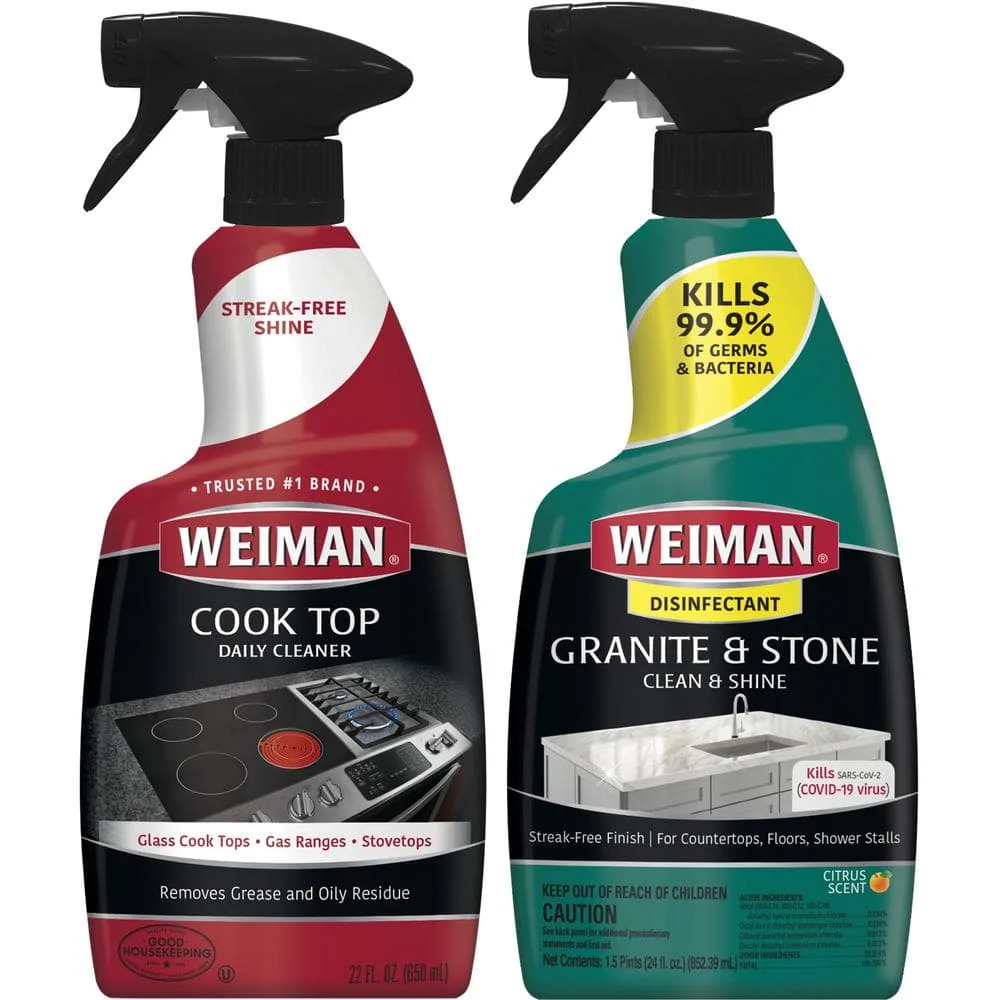
Granite, quartz, marble, stainless steel, and laminate each demand a different chemistry. Using the wrong cleaner does more than leave streaks. It can permanently dull stone, pit metal, or swell particleboard at the seams.
| Surface | Safe Cleaner | What to Avoid | Why It Matters |
|---|---|---|---|
| Granite | pH-neutral stone cleaner | Vinegar, lemon juice, ammonia | Acids etch and dull polished stone |
| Quartz | Warm water with mild dish soap | Oven cleaner, paint remover, high-pH degreasers | Resins can discolor or burn |
| Marble | pH-neutral stone cleaner | Vinegar, citrus, tomato juice left sitting | Calcium carbonate reacts with acid |
| Stainless steel | Stainless steel polish or mild soap | Bleach, chloride powders, steel wool | Chloride causes pitting; wool scratches |
| Laminate | All-purpose cleaner sprayed on cloth | Flooding seams, abrasive scrub pads | Water swells the core; pads scratch finish |
Natural stone such as granite and marble is porous. Manufacturers recommend sealing granite every one to three years depending on usage. Quartz is non-porous, so it resists stains but still reacts badly to harsh chemicals.
Stainless steel shows fingerprints and water spots quickly. A dedicated stainless steel cleaner or mild dish soap with a microfiber cloth works best. Never use bleach or chlorine-based powders on stainless finishes.
Baked-on residue on metal cookie sheets calls for a different approach than daily countertop care.
Laminate tolerates most mild cleaners, but excess water at seams causes swelling. Spray the cloth, not the surface, then wipe dry.
Dwell time matters. Let a disinfectant sit for the label-stated contact time before wiping food-contact zones. Rinse thoroughly afterward if the product is not food-safe.
EPA Safer Choice products are a good starting point if you want third-party verified formulas.
Clean in the Right Order: Top-to-Bottom Workflow
Cleaning in the wrong order is one of the fastest ways to double your work. Gravity pulls dust, crumbs, and grease downward. If you mop before wiping counters, debris falls on the floor you just cleaned.
Follow this sequence every time:
- Clear dishes and clutter from counters and sink.
- Dry dust high surfaces first, including cabinet tops, the range hood, and the top of the refrigerator.
- Wipe cabinet fronts and hardware.
- Clean countertops using a surface-appropriate cleaner.
- Wipe down appliance exteriors.
- Clean the sink and faucet last among wet surfaces.
- Sweep the floor.
- Mop the floor as the final step.
If you clean the sink before the counters, splashed water and food particles land in a basin you already scrubbed. If you mop before dusting cabinet tops, settled grease drifts down onto clean flooring.
Range hood grease is a common overlooked source. A clogged or dirty hood redistributes cooking aerosol every time you turn the fan on. Keeping your range hood duct clear helps airflow and reduces buildup on nearby surfaces.
Work top to bottom, dry before wet, and clean food-contact surfaces after you have removed visible soil.
The 10-Minute Nightly Kitchen Reset: Step-by-Step
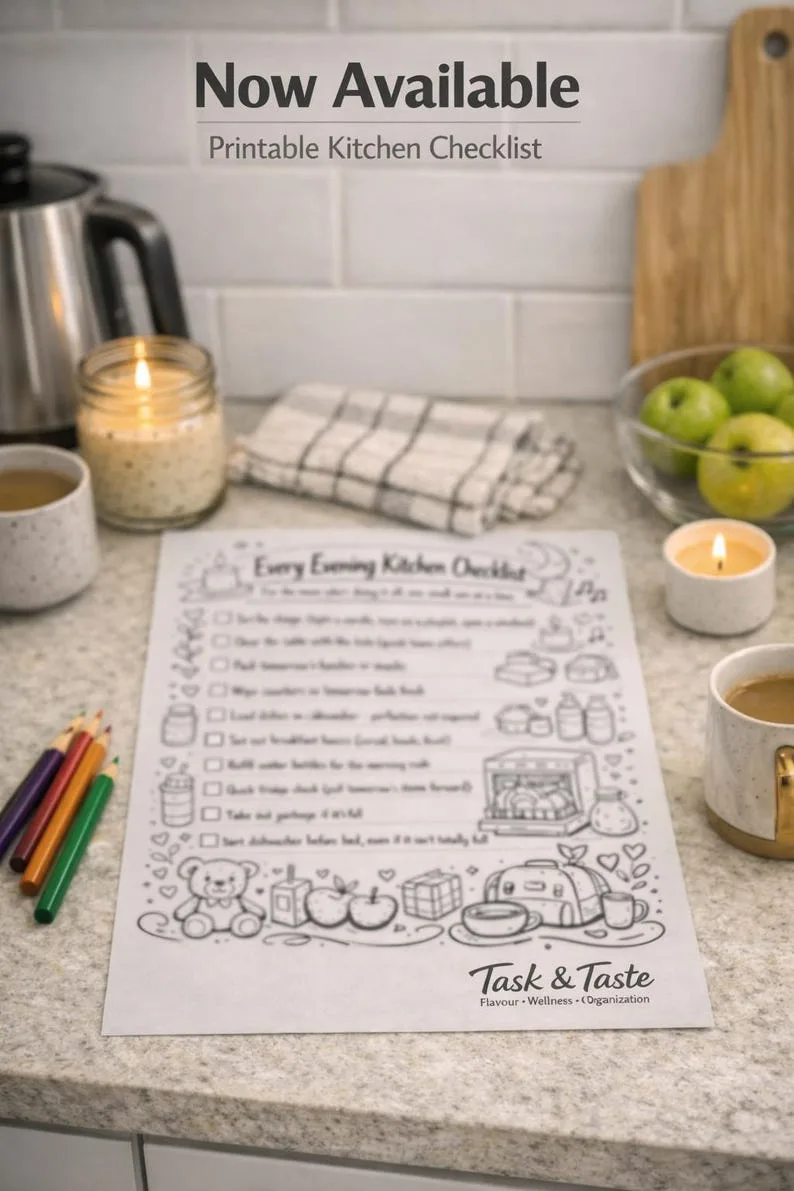
A nightly reset keeps weekly deep cleaning from becoming a marathon. The goal is not perfection. It is stopping buildup before it hardens.
| Task | Time | Tool |
|---|---|---|
| Load dishes or run the dishwasher | 3 minutes | Dishwasher or sink |
| Wipe counters and stovetop | 2 minutes | Microfiber cloth and surface cleaner |
| Spot clean the sink | 1 minute | Sponge and dish soap |
| Sweep visible crumbs | 1 minute | Broom or vacuum |
| Empty the trash if needed | 1 minute | Trash bag |
| Wipe high-touch points | 1 minute | Disinfecting wipe or damp cloth |
High-touch points include the refrigerator handle, microwave keypad, and faucet handles. These spots collect germs between deep cleans. Running the dishwasher sanitize cycle adds another layer of protection for dishes and utensils.
Set a timer for ten minutes. When it goes off, stop. A consistent short routine beats an occasional long scrub.
Daily, Weekly, and Monthly Kitchen Cleaning Schedule
Frequency should match how quickly grime returns in each zone. Food-contact surfaces need daily attention. Appliances and floors can wait longer.
| Frequency | Task | Example Timing |
|---|---|---|
| Daily | Wipe counters, sink, stovetop; run dishwasher | After dinner |
| Weekly | Clean microwave interior, fridge shelves, mop floor, dishwasher filter | Saturday morning |
| Monthly | Descale coffee maker, wash range hood grease filter, spot clean oven, wipe cabinet fronts | First Saturday |
| Quarterly | Deep clean oven, scrub grout, clean behind appliances, full move-out style clean | Season change |
Daily tasks protect food safety. The CDC notes that cleaning food-contact surfaces daily cuts cross-contamination risks. Weekly care targets spots that collect invisible film, such as the microwave turntable and refrigerator door bins.
Monthly maintenance follows manufacturer specifications. Descaling a coffee maker every one to three months prevents mineral buildup that affects brew temperature. Washing the range hood filter monthly keeps grease from circulating back onto counters.
Quarterly work reaches areas you cannot see during daily wipes. If you notice a persistent smell, it may come from under the sink rather than the trash. Checking for a foul odor under sink issues early prevents mold and drain clogs.
Bad smells often start with a leak or trapped debris. A water valve leaking under sink can create damp conditions that encourage mildew inside cabinets. As of 2026, most appliance manufacturers recommend checking seals and filters on a set schedule rather than waiting for visible failure.
Appliance-by-Appliance Cleaning Decisions
Your refrigerator needs zone-specific care. If your fridge has glass shelves and crisper drawers, then remove them and wash in warm soapy water. Wipe door gaskets with a damp cloth to prevent black mold from forming in the folds.
Vacuum condenser coils every six months if your model exposes them at the back or base.
Your oven decides the method. If your oven offers a self-clean cycle, then run it only with windows open and pets out of the room. The cycle heats to extreme temperatures and can smoke if heavy grease remains.
Remove racks first, or they may discolor and slide poorly afterward.
Your microwave traps steam and splatter. If food has splattered the interior walls, then heat a bowl of water with lemon slices for three minutes. The steam loosens residue so you can wipe it away with a microfiber cloth.
Never spray liquid directly into the keypad or ventilation slots.
Your dishwasher hides grime in the filter. If dishes come out with grit or film, then pull out the filter at the base of the tub and rinse it under hot water. Wipe the door gasket weekly with a vinegar solution to stop mildew.
Running the sanitize setting adds heat-based protection for dishes and utensils.
Your garbage disposal traps food particles. If the unit smells sour, then run cold water and grind ice cubes with citrus peels. Do not pour bleach into the disposal, as it can corrode metal components and damage pipes downstream.
Your range hood filter collects cooking aerosol. If the grease filter feels tacky to the touch, then remove it and soak in hot degreaser solution for fifteen minutes. Wash the filter monthly to keep cooking aerosol from settling back onto counters and cabinet tops.
Your coffee maker builds mineral scale. If brewing slows down, then descale with white vinegar or citric acid according to manufacturer specs. Mineral scale insulates the heating element and extends brew time.
Rinse the carafe and filter basket daily to remove coffee oils.
Your toaster collects crumbs at the base. If crumbs collect at the bottom, then slide out the crumb tray and empty it weekly. Wipe the exterior with a damp cloth and dry immediately.
Never immerse the heating elements or power cord.
Your air fryer basket holds baked-on oil. If oil has baked onto the nonstick coating, then soak the basket in warm soapy water for fifteen minutes before scrubbing with a non-scratch pad. Wipe the heating element gently only when the unit is completely cool.
Your stand mixer attachments need immediate washing. If you use dough hooks or beaters regularly, then wash attachments in warm soapy water after every use. Wipe the motor head with a slightly damp cloth, keeping liquid away from the speed controls.
| Appliance | Quick Check | Frequency |
|---|---|---|
| Refrigerator | Shelves, drawers, gaskets | Weekly wipe, monthly deep |
| Oven | Interior, racks, glass | As needed or quarterly |
| Microwave | Turntable, interior, keypad | Weekly |
| Dishwasher | Filter, spray arms, gasket | Monthly filter, weekly gasket |
| Garbage disposal | Grinding chamber | Weekly |
| Range hood | Grease filter | Monthly |
| Coffee maker | Carafe, basket, heating element | Daily rinse, monthly descale |
| Toaster | Crumb tray, exterior | Weekly |
| Air fryer | Basket, heating element | After each use |
| Stand mixer | Attachments, motor head | After each use |
DIY vs. Store-Bought Cleaners: What to Use Where
Not every job needs a commercial product. Some surfaces react badly to DIY acids, while others need stronger chemistry than pantry items can provide.
White vinegar, with a pH around 2 to 3, works well on glass, hard water spots, and diluted stainless steel. Avoid it on marble, granite, and natural stone because the acid etches the surface permanently.
Baking soda, with a pH around 8 to 9, suits oven paste, sink scrubbing, and deodorizing drains. Do not use it on aluminum, as it can cause discoloration.
Hydrogen peroxide at 3 percent strength disinfects cutting boards, grout lines, and non-porous surfaces. Never mix it with vinegar in the same container.
Castile soap handles general surface cleaning gently on most finishes. Rinse it off completely, or it leaves a filmy residue.
Rubbing alcohol disinfects high-touch points and evaporates without streaking. It is a good choice for appliance keypads and faucet handles.
For stone surfaces, a pH-neutral stone cleaner is the safest option. It protects granite, marble, and quartz from dulling or etching.
Stainless steel cleaner removes fingerprints and water spots without pitting the metal. Use it on appliances and sinks rather than all-purpose sprays.
A degreaser tackles range hoods, stovetops, and cabinet tops where cooking aerosol builds up. You can mix your own degreaser for range hood filters and stove backsplashes.
Enzyme cleaner breaks down organic matter in garbage disposals and drains. It targets the source of sour smells rather than masking them.
Oxygen bleach lifts mold stains from grout and tile more aggressively than baking soda. It is safe for most sealed surfaces when used as directed.
| Cleaner Type | Best For | Avoid On | Typical Cost |
|---|---|---|---|
| White vinegar | Glass, hard water, stainless steel | Natural stone, aluminum | Very low |
| Baking soda | Oven paste, sink scrub, deodorizing | Aluminum, delicate finishes | Very low |
| pH-neutral stone cleaner | Granite, marble, quartz | None for intended use | Moderate |
| Stainless steel cleaner | Appliances, sinks | Natural stone | Moderate |
| Degreaser | Range hood, stove, cabinet tops | Electrical panels | Low to moderate |
| Enzyme cleaner | Disposal, drains, organic odors | None major | Moderate |
Tools That Work vs. Tools That Spread Germs
Microfiber cloths trap dust and bacteria better than cotton. Wash them after each kitchen session and color-code by zone: red for raw meat areas, blue for general counters, green for glass.
Sponges harbor high bacterial loads. Research shows sponges can contain millions of bacteria per cubic centimeter. Replace every one to two weeks, or sanitize by microwaving a damp sponge for two minutes.
Paper towels are best for raw meat juices because they are disposable. Use them once and throw them away.
Scrub brushes come in stiff and soft varieties. Use stiff bristles for grout and soft bristles for delicate finishes.
An old toothbrush reaches hinges, faucet bases, and around cabinet knobs where grime collects.
A squeegee removes water from glass backsplashes without streaking. It works well on smooth vertical surfaces.
Steam cleaners offer chemical-free cleaning for tile and grout. Do not use them on unsealed wood, electrical panels, or surfaces that cannot tolerate heat and moisture.
Cross-contamination happens when one tool moves germs between zones. Never wipe a counter used for raw chicken with the same sponge you use on produce or clean dishes.
| Tool | Best Use | What to Avoid |
|---|---|---|
| Microfiber cloth | Dusting, polishing, general wipe-down | Using one cloth for raw meat and produce |
| Sponge | Short-term scrubbing | Leaving it damp for days |
| Paper towel | Raw meat spills, disposable cleanup | Dusting large surfaces |
| Stiff scrub brush | Grout, oven racks, sink | Polished stone or stainless steel |
| Soft scrub brush | Delicate finishes, stovetops | Heavy mineral buildup |
| Old toothbrush | Faucet bases, hinges, knobs | Large surface areas |
| Squeegee | Glass backsplashes, windows | Porous stone |
| Steam cleaner | Tile, grout, sealed surfaces | Unsealed wood, electrical controls |
Cleaning Mistakes That Damage Surfaces or Make You Sick
Some mistakes cost more than extra time. They permanently damage materials or create health risks.
Never mix bleach and ammonia. The combination releases chloramine gas, which irritates the lungs and eyes.
Never mix bleach and vinegar. This creates chlorine gas, a respiratory hazard.
Never mix bleach and rubbing alcohol. The reaction produces chloroform.
Never use vinegar on marble or granite. The acid etches calcium carbonate and leaves permanent dull spots.
Never use bleach on stainless steel. Chloride causes pitting that cannot be polished out.
Never scrub stainless steel with steel wool. It leaves fine scratches that trap grease and rust.
Never use the same sponge for raw meat surfaces and then for countertops. This spreads salmonella and campylobacter to food-contact zones.
Never spray cleaner directly onto appliance control panels. Liquid can seep into electronics and cause shorts.
Never skip rinsing food-contact surfaces after using a disinfectant. Residue can transfer to food.
Never use oven cleaner on aluminum racks or parts. It causes discoloration and corrosion.
If you have young children or pets, store cleaning chemicals out of reach and use fragrance-free, low-VOC options where possible. The FDA Food Code sets standards for commercial kitchen sanitation, and many of the same principles apply at home: clean first, then sanitize, and allow proper contact time.
How to Clean High-Touch Food Contact Zones Safely
High-touch points collect germs between deep cleans. These include refrigerator handles, microwave keypads, faucet handles, cabinet knobs, drawer pulls, light switches, and trash can lids.
Clean before you disinfect. Remove visible soil with soap and water first, then apply a disinfectant. Allow the product to sit for the label-stated contact time.
Wipe or rinse food-contact surfaces afterward if the instructions require it.
Use an EPA List N disinfectant or a food-safe sanitizer for zones that touch food directly. For refrigerator shelves and cutting boards, wash with hot soapy water and sanitize with a diluted bleach solution if appropriate, then rinse thoroughly.
Frequency matters. The CDC recommends cleaning food-contact surfaces daily to reduce cross-contamination risks. Wipe the refrigerator handle and microwave keypad every day during your nightly reset.
If a surface looks clean but still smells, the odor may come from inside the material or beneath it. A cutting board with deep knife grooves can harbor bacteria even after surface washing. Replace heavily scarred boards rather than trying to scrub them clean.
| Zone | Cleaning Method | Frequency |
|---|---|---|
| Refrigerator handle | Wipe with disinfecting cloth | Daily |
| Microwave keypad | Wipe with alcohol-based cleaner | Daily |
| Faucet handles | Soap and water, then disinfect | Daily |
| Cabinet knobs | Microfiber cloth with all-purpose cleaner | Weekly |
| Cutting board | Hot soapy water, sanitize, rinse | After each use |
| Trash can lid | Disinfecting spray and wipe | Weekly |
| Light switches | Alcohol wipe or disinfecting cloth | Weekly |
Hard Water, Humidity, and Old Apartment Problems
Hard water leaves mineral spots on faucets, glass, and stainless steel. Manufacturer specs indicate that vinegar dissolves calcium deposits effectively. If your area has hard water, then wipe faucets dry after use to prevent buildup.
Humidity speeds up mold growth in enclosed spaces. CDC guidance notes that damp seals and gaskets are common mold sites. If you live in a humid climate, then wipe dishwasher door seals and refrigerator gaskets weekly.
Older buildings bring their own problems. If your kitchen has outdated ventilation, then cooking aerosol settles on cabinet tops and range hoods more quickly. Deteriorating grout absorbs stains and needs oxygen bleach rather than surface spray alone.
Renters face move-out standards. If you are cleaning a rental kitchen, then landlords often expect appliances and cabinets wiped down, floors mopped, and surfaces free of grease film before you leave.
Quick Reference: Cleaner vs. Surface Decision Chart
A quick reference chart helps you match cleaner to surface at a glance. If you are unsure what to use, then find your surface in the left column and follow the row across.

| Surface | Recommended Cleaner | What to Avoid |
|---|---|---|
| Granite | pH-neutral stone cleaner | Vinegar, lemon juice |
| Marble | pH-neutral stone cleaner | Acidic cleaners |
| Quartz | Mild dish soap and water | Oven cleaner, high-pH degreaser |
| Stainless steel | Stainless steel cleaner | Bleach, steel wool |
| Laminate | All-purpose cleaner on cloth | Flooding seams |
| Grout | Oxygen bleach and stiff brush | Wire brushes on sealed tile |
| Glass | Glass cleaner or vinegar solution | Abrasive pads |
The decision tree logic works like this. Is the surface natural stone? Then use pH-neutral cleaner.
Is it stainless steel? Then avoid chloride. Is it grout?
Then use oxygen bleach and a stiff brush.
Frequently Asked Questions
How often should I clean my kitchen sink?
Clean your kitchen sink daily with dish soap and a sponge. Disinfect the faucet handles and basin after handling raw meat. Replace sponges every one to two weeks to prevent bacterial buildup.
Can I use vinegar on all kitchen surfaces?
No. Vinegar is safe on glass, stainless steel, and hard water spots, but it etches marble and granite. Use a pH-neutral stone cleaner on natural stone countertops instead.
What is the best way to clean grout?
Apply oxygen bleach to grout lines and let it sit for five to ten minutes. Scrub with a stiff brush or old toothbrush, then rinse with clean water. Avoid wire brushes on sealed tile.
Should I use bleach in the kitchen?
Use bleach only on non-porous surfaces and never mix it with vinegar, ammonia, or rubbing alcohol. Rinse food-contact surfaces thoroughly after disinfecting with bleach.
How do I remove hard water stains from stainless steel?
Soak a cloth in white vinegar and lay it on the stain for fifteen minutes. Wipe away the residue with a microfiber cloth, then dry buff to prevent new spotting.
What is the correct cleaning order for a kitchen?
Clear clutter, dry dust high surfaces, wipe cabinets, clean countertops, wipe appliances, scrub the sink, sweep, then mop. Working top to bottom prevents debris from falling on cleaned areas.
