
Figuring out corner cabinet organizer measurements doesn't have to be guesswork. The tricky part is that corner cabinets come in a handful of standard diagonal sizes, and each organizer type needs its own set of clearances to sit right. We've seen too many homeowners buy a unit that looks perfect on paper only to discover it jams the door or scrapes the toe kick.
In our research, we found that a typical 30-inch diagonal blind-corner base cabinet actually measures about 26 inches across the front opening. That gap between the diagonal number and the real interior space is why size charts look contradictory unless you know what they're measuring. Let's walk through exactly which dimensions matter and how to match them to the right organizer system.
corner cabinet organizer measurements
The standard lazy susan diameter equals your cabinet's front opening width minus about 1 to 2 inches of side clearance. Most 30-inch diagonal corner cabinets accept a 24 to 26 inch turntable, while 36-inch diagonals typically take a 30 to 32 inch unit. Pull-out systems and lever-arm magic corners measure differently because their tracks run along the cabinet sides instead of spinning on a center post.
Always verify the diagonal width first, then double-check the interior depth before ordering any hardware.
How to Measure a Corner Cabinet for an Organizer (The Right Way)
Measuring a corner cabinet starts with the front opening, not the diagonal. Place a tape measure across the visible gap where the doors meet when closed. That flat width is your true organizer diameter reference.
Subtract about an inch total for side clearance, then pick the nearest standard lazy susan size that fits.
Next, measure the diagonal from the outside corner to the inside back corner. Most builders label corner base cabinets by this number, usually 27, 30, 33, or 36 inches. That diagonal number tells you the cabinet box size, but it does not tell you the shelf depth.
Interior shelf depth often runs 20 to 24 inches, depending on how far the diagonal extends into the room.
You also need to check the toe-kick height and the door swing arc. A standard toe kick sits about 4 inches off the floor and eats into slide travel for pull-out systems. If your chosen organizer mounts low, make sure the cabinet door still latches without hitting the hardware.
Check the best microwave for small kitchens guide if you're optimizing every inch of corner storage, since those same clearance rules apply.
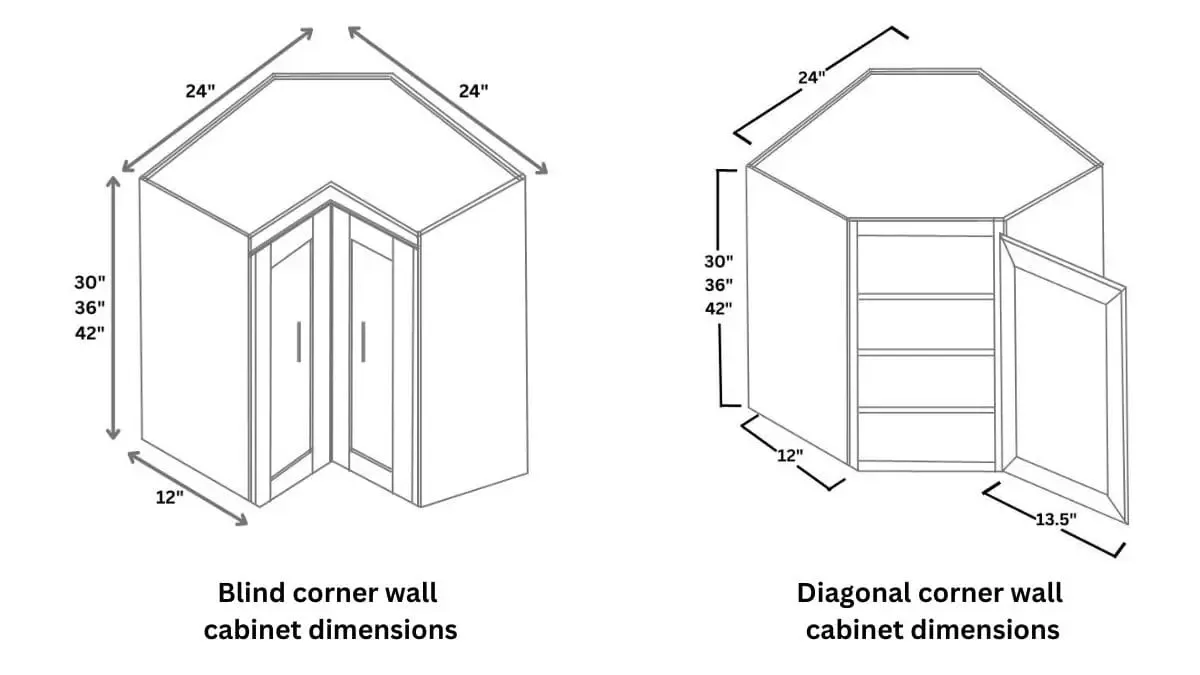
Image source: Bing (Web (fair-use with source credit))
Lazy Susan, Pull-Out Shelf, or Magic Corner — Which Fits Your Cabinet?
The right corner organizer depends on your cabinet shape and how you plan to use it. A lazy susan spins on a center post and works best in wide-opening cabinets where you want full 360-degree access. Pull-out shelves glide on undermount rails and suit deeper blind corners that would otherwise hide your stock.
A magic corner uses a lever-arm system to push shelves forward as you open the door, which maximizes storage in awkward diagonal spaces.
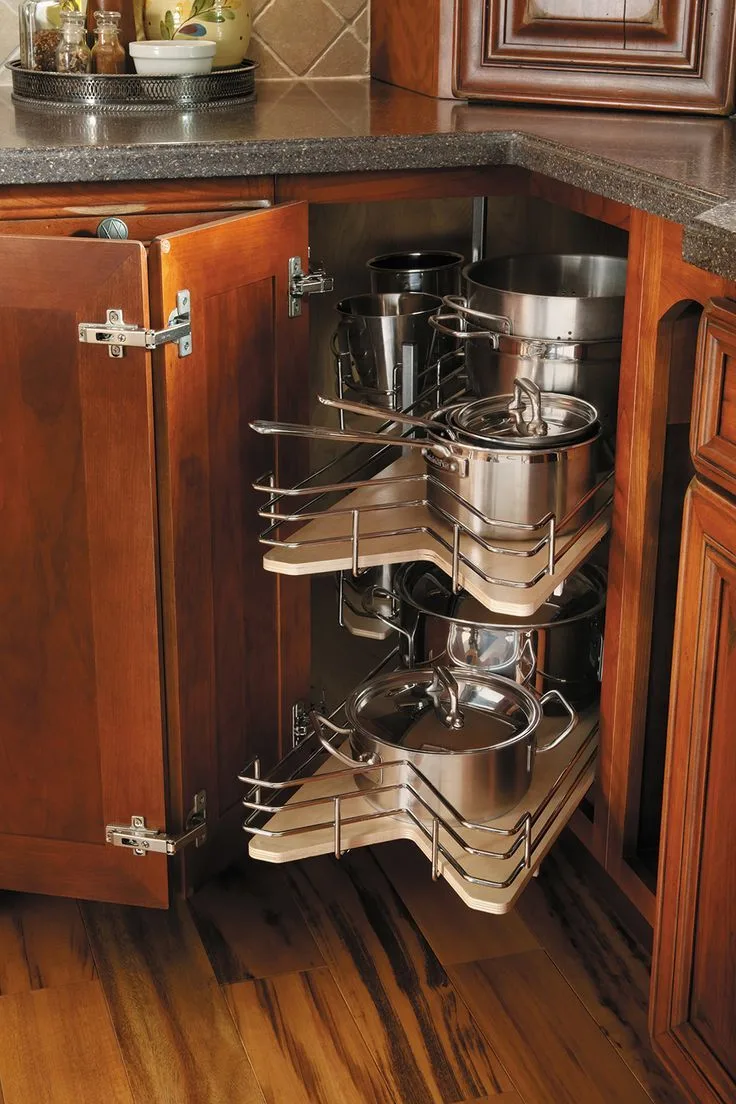
Image source: Bing (Web (fair-use with source credit))
Lazy susans struggle in narrow openings because the rotating disc hits the door frame. Pull-out tracks need at least 22 inches of clear floor space in front of the cabinet to fully extend. Magic corners require extra side clearance for the arm pivot, so they won't fit in cramped galley layouts.
If you're swapping out old hardware, review tips for keeping your appliances running smoothly so the surrounding cabinetry stays in good shape.
Corner Cabinet Organizer Measurements Cheat Sheet
| Diagonal Cabinet Size | Front Opening Width | Recommended Lazy Susan Diameter | Pull-Out Shelf Max Width | Typical Price Range |
|---|---|---|---|---|
| 27 inches | ~23 inches | 21 to 22 inches | Up to 20 inches | $40 to $120 |
| 30 inches | ~26 inches | 24 to 25 inches | Up to 23 inches | $60 to $180 |
| 33 inches | ~29 inches | 27 to 28 inches | Up to 26 inches | $80 to $250 |
| 36 inches | ~32 inches | 30 to 31 inches | Up to 29 inches | $100 to $400+ |
These numbers assume a standard 24-inch interior depth. Older homes often build corner cabinets deeper, sometimes reaching 27 or 30 inches inside. If your cabinet runs deeper than 24 inches, a lazy susan may still work, but pull-out shelves can feel unstable when fully extended under heavy loads.
Check manufacturer specs before buying, especially for wire baskets that list weight limits per shelf.
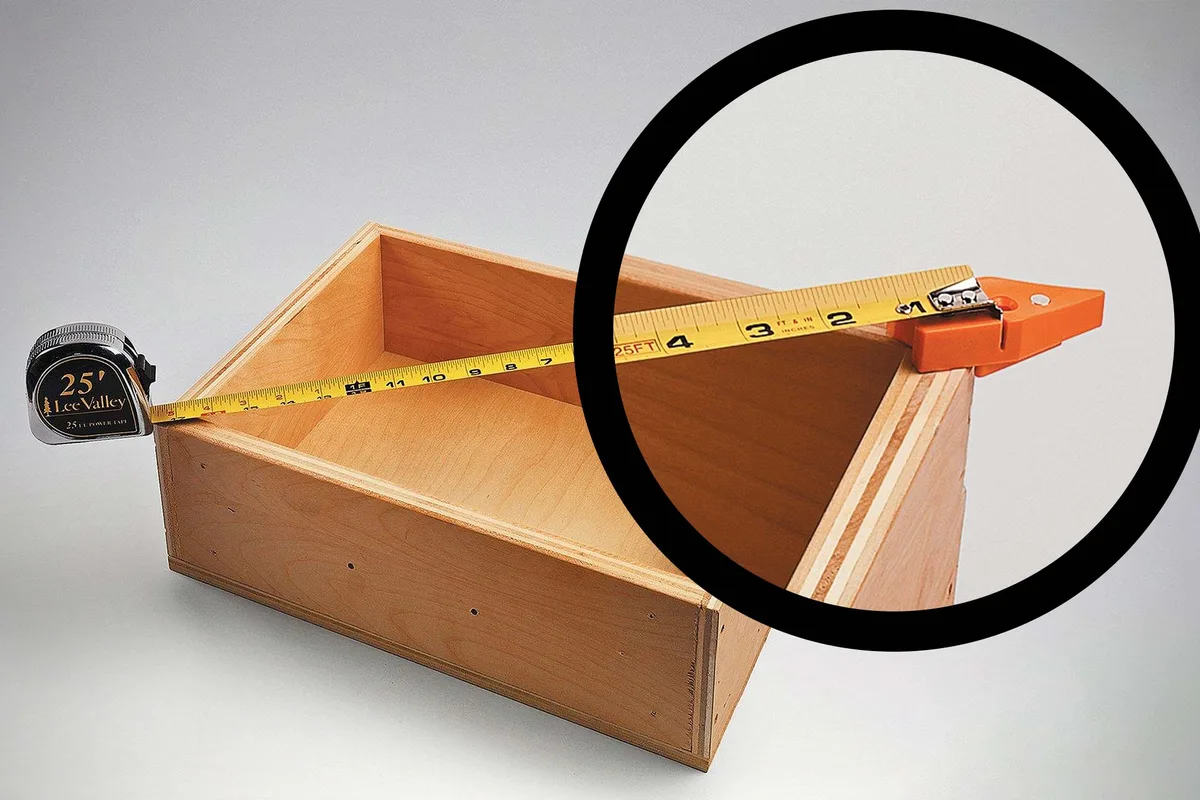
Image source: Bing (Web (fair-use with source credit))
Who Should Choose Which Corner Organizer
A lazy susan suits homeowners who want simple, low-cost rotation for light items like spice jars and canned goods. It works well in 30-inch diagonal cabinets where the front opening is wide enough for a full-diameter turntable. If you store heavy pots and pans, skip the basic wire version and move to a solid wood two-tier model with raised edges.
Pull-out shelves fit DIYers who value full visibility and easy one-hand access. They work best in deep 33- or 36-inch diagonal cabinets where items get lost in the back. Undermount soft-close slides from brands like Blum or Hettich handle heavy loads much better than economy tracks.
If you're planning a full kitchen refresh, pairing the new corner setup with top-rated cookware keeps the workflow smooth.
Magic corner lever-arm systems are ideal for homeowners who want maximum storage with minimal effort. They excel in tight corners where neither a large lazy susan nor a wide pull-out would clear the door swing. These systems cost more upfront but often justify the price through improved daily convenience.
For families hosting holidays, matching your new storage with essential serving tools helps everything stay organized and accessible.
Mistakes That Waste Money on Corner Cabinet Organizers
The most common mistake is measuring the diagonal width and ordering an organizer based on that number alone. A 30-inch diagonal cabinet does not accept a 30-inch lazy susan. The front opening is always smaller, usually by 3 to 5 inches depending on the angle.
Always measure the flat opening first, then work backward from there.
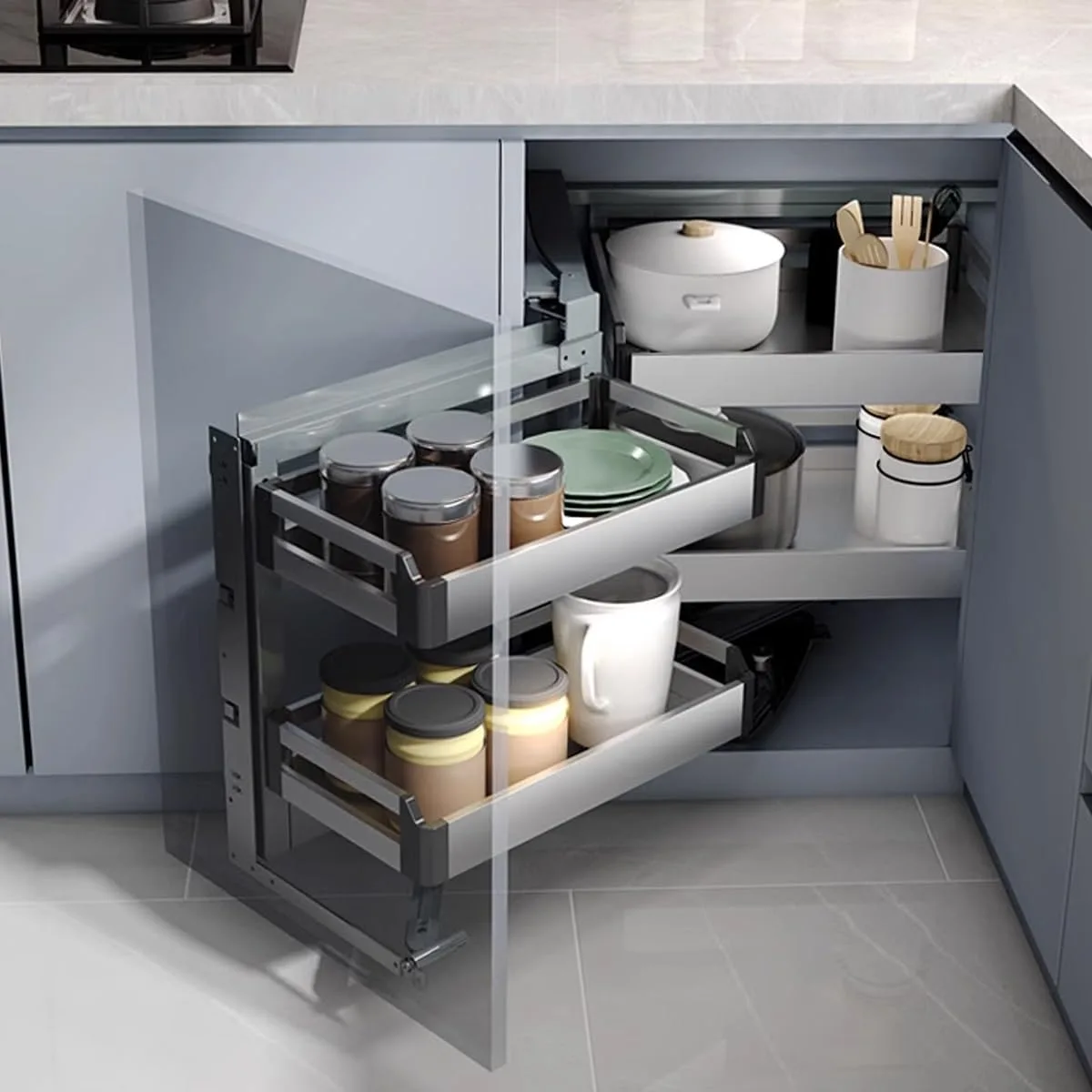
Image source: Bing (Web (fair-use with source credit))
Forgetting the toe kick is another costly error. Pull-out shelves and undermount slides sit low in the cabinet box. If you don't account for the 4-inch kick space, the hardware will hit the toe kick before the shelf extends fully.
You'll end up with a jammed door or a shelf that only rolls out halfway. Leave at least half an inch of clearance above the toe kick for any undermount system.
Ignoring door swing radius blocks bigger organizers faster than anything else. A large lazy susan or wide pull-out needs the cabinet door to open past the rotating disc or extended shelf. In tight kitchens, the door hits the counter, appliance, or adjacent cabinet before the organizer clears the frame.
Check your door arc before buying, especially if you're working near a best roasting pan for turkey or other bulky items that sit on nearby counters.
Not checking weight limits leads to sagging shelves and broken slides. Wire lazy susans often rate for 30 to 50 pounds per tier. Solid wood models handle 75 to 100 pounds.
If you're storing cast iron skillets or canned goods, pick a system with a higher rating and reinforced brackets. Economy wire baskets fail fastest under heavy loads, especially on deeper pulls.
Ordering without testing the interior depth wastes money on returns. Many corner cabinets run 27 to 30 inches deep inside, even when labeled 24 inches. A pull-out shelf built for 24 inches will hang out awkwardly in a deeper cabinet.
Measure from the back wall to the door frame before you buy, not just the box size.
Frequently Asked Questions
Does a 30-inch corner cabinet mean the diagonal is 30 inches?
Yes, that diagonal measurement refers to the full cabinet box size from outside corner to outside corner. It does not describe the front opening width, which is typically 3 to 5 inches narrower. Always verify both numbers before selecting an organizer to avoid sizing mismatches.
How much clearance do I need on each side of the organizer?
Leave at least half an inch to one inch of clearance on each side for smooth operation. This gap prevents friction against the cabinet frame and allows shelves to slide or rotate without binding. Larger units may require slightly more spacing depending on the mounting hardware.
Can I install a pull-out shelf if I have limited floor space?
Pull-out shelves need about 22 inches of clear floor space in front of the cabinet to fully extend. If your kitchen has narrow aisles or nearby appliances, a lazy susan or magic corner system may work better. Those options do not require the same amount of frontal clearance.
What is the difference between a lazy susan and a carousel?
The terms are often used interchangeably, but a carousel usually refers to a taller, multi-tier rotating unit designed for pantry corners. A lazy susan is typically a single-tier turntable that fits inside a base cabinet. Both rotate on a center post, but carousels reach higher into upper cabinet space.
Do I need to remove the cabinet doors to install an organizer?
Most lazy susans and pull-out shelves install with the doors still attached. You simply place the unit inside, level it, and secure it to the cabinet frame. Lever-arm magic corners sometimes require door removal for access, but the hardware mounts permanently once installed.
Check the manufacturer instructions before starting.
What is the best organizer for a deep blind corner?
Magic corner lever-arm systems work best in deep blind corners because they push shelves forward as you open the door. They eliminate dead space that pull-out shelves and lazy susans leave in the back. These systems cost more upfront but make the deepest corners fully usable.
