
If your glasses come out cloudy or your plates have a white film, you are not alone. How to Use Dishwasher Salt is often the missing step for spotless dishes. Many people blame the detergent, but hard water is usually the real cause.
Understanding this simple fact can change your results.
The U.S. Geological Survey says water is hard when it exceeds 120 mg/L of calcium carbonate. More than half of U.S. homes fall into that range.
This mineral load causes spots, film, and even damage inside your appliance. The next sections explain how dishwasher salt solves this problem and how to use it correctly.
How to Use Dishwasher Salt
Dishwasher salt softens water by removing calcium and magnesium ions. These minerals cause spots and film on dishes. The salt is added to a reservoir inside the dishwasher.
When the indicator light comes on, you refill it. Use only coarse salt made for dishwashers to avoid clogs.
Problem / Pain Point: Why Your Dishes Aren't Getting Clean
Hard water leaves minerals on dishes after the wash. These minerals create a cloudy look and a rough feel. They also bind to detergent and reduce its cleaning power.
Over time, the minerals coat the spray arms and heating element. This leads to poor cleaning, longer drying times, and higher energy use.
If you notice persistent cloudiness, check your water hardness. You can use a test strip or look up your local water report. If the level is above 120 mg/L, you likely need dishwasher salt.
Without it, the water softener cannot do its job.
Image source: Bing (Web (fair-use with source credit))
Core Explanation / How It Works: The Water Softener System in Your Dishwasher
Inside your dishwasher is a small water softener. It contains a bed of resin beads that attract calcium and magnesium ions. When the beads become full, the dishwasher runs a regeneration cycle.
During this cycle, a brine solution made from dishwasher salt flows through the resin. The sodium ions in the salt replace the hardness ions on the beads. The beads are then ready to soften water again.

Most modern dishwashers have a salt indicator light on the control panel. When the light comes on, it is time to add salt. The Water Quality Association offers detailed guidance on water softener maintenance.
You can find their resources at Water Quality Association.
If your dishes still do not dry properly, you may need to check other components. Our guide on dishwasher not drying dishes can help.
Features / Components / What's Inside: Understanding Dishwasher Salt and Its System
Dishwasher salt is different from table salt. It is pure and free of additives. The granules are coarse so they dissolve slowly and do not clump.
This prevents clogs in the reservoir and ensures consistent brine strength.
| Type | Purity | Granule Size | Best For |
|---|---|---|---|
| Coarse Salt | High | 2-5 mm | Standard dishwashers |
| Fine Salt | Medium | 1-2 mm | Quick-dissolve needs |
| Pellet Salt | High | 6-10 mm | High-efficiency models |
Using the wrong salt can cause residue on dishes or damage the resin. Always choose salt labeled for dishwashers. Check your manual for the recommended type.
Use Cases / Best For / Who It's Right For: Matching Salt to Your Water Hardness and Dishwasher
Your water hardness determines how often you need to add salt. Softer water needs less frequent refills. Very hard water may require monthly top-ups.
| Hardness Level | mg/L CaCO3 | Recommended Salt Usage |
|---|---|---|
| Soft | 0-60 | Minimal |
| Moderately Hard | 60-120 | Regular |
| Hard | 120-180 | Frequent |
| Very Hard | 180+ | Very Frequent |
Households with heavy daily use may benefit from a model built for large families. See our list of best dishwashers for large families. If you deal with heavy food residue, explore best dishwasher for heavy food residue.
Comparison / Alternatives / Options: Choosing the Right Salt and Avoiding Common Substitutes
Not all salts work in a dishwasher. Table salt contains anti-caking agents that can clog the softener and leave residue. Sea salt may have impurities that affect performance.
Water softener pellets are often too large for small reservoirs.
| Salt Type | Purity | Granule Size | Best For | Risks |
|---|---|---|---|---|
| Dishwasher Salt | High | 2-5 mm | Standard dishwashers | None if used correctly |
| Table Salt | Medium | Fine | Not recommended | Anti-caking agents clog system |
| Sea Salt | Variable | Variable | Not recommended | Impurities cause residue |
| Water Softener Pellets | High | 6-10 mm | Large systems | Too large for some reservoirs |
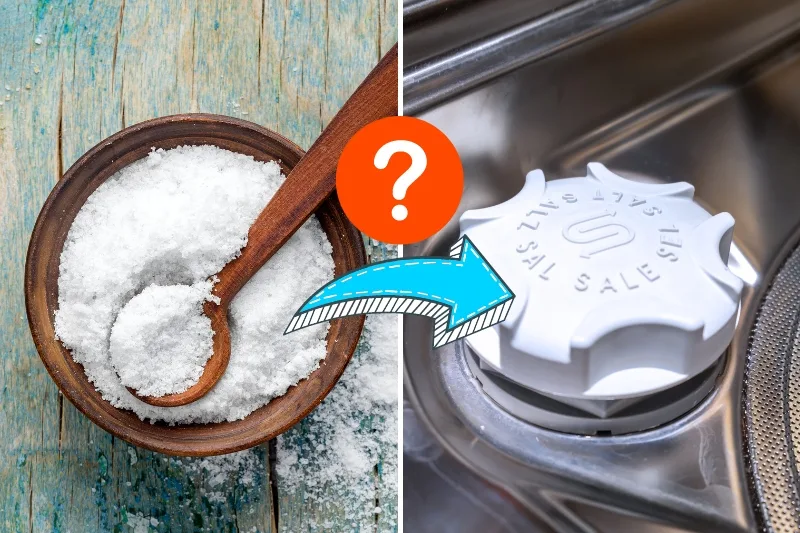
Always follow your manual's recommendation. Using the wrong salt can lead to poor cleaning and potential damage. For more on avoiding dishwasher problems, see our guide on dishwasher door not closing.
Step-by-Step Process / How to Guide: Filling and Activating the Salt Reservoir
Adding salt is simple, but it must be done right. Follow these steps to fill the reservoir and activate the system.
- Locate the reservoir. It is usually a cylindrical hole at the bottom of the tub.
- Remove the cap. Turn it counterclockwise or pull it out.
- Insert the funnel. Most dishwashers come with one. It keeps salt from spilling.
- Pour in the salt. Use only dishwasher salt. Fill to the top but do not overfill.
- Replace the cap. Tighten it to keep water out of the reservoir.
- Run a rinse cycle. This flushes any extra salt from the tub.
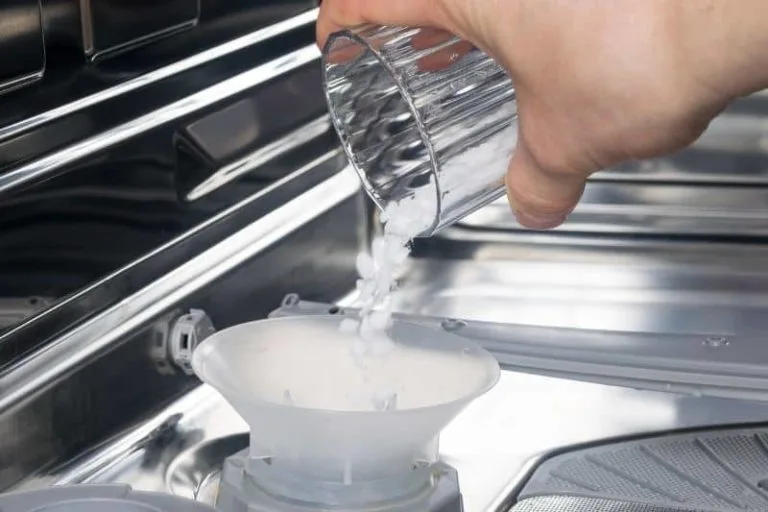
If the salt light stays on after refilling, check that the cap is fully closed. A loose cap can prevent the system from registering the refill. New dishwashers may need water in the reservoir before the first salt addition.
This primes the system.
For additional help, our article on dishwasher racks not sliding covers other common issues.
Mistakes to Avoid / Common Errors: Pitfalls That Can Damage Your Dishwasher
Even experienced users can make mistakes. These errors can reduce performance or damage your appliance.
- Using table salt. The anti-caking agents can clog the softener and leave residue.
- Overfilling the reservoir. Too much salt can enter the wash and ruin dishes.
- Ignoring the indicator light. Waiting too long can cause hard water spots.
- Skipping the rinse cycle after filling. This can leave salt in the tub.
- Using salt pellets in incompatible models. Check your manual to avoid clogs.
- Storing salt in a humid place. Moisture causes clumping and clogs.
- Mixing different salt types. This leads to inconsistent dissolution.
Avoid these pitfalls to keep your dishwasher running well. If problems persist, our guide on dishwasher stopping mid-cycle may help.
Safety / Legal / Compliance / Warnings: Handling Salt Safely and Ensuring Food Safety
Dishwasher salt is safe when handled correctly. It is corrosive and can irritate skin and eyes. Wear gloves when filling the reservoir to protect your hands.
Spilled salt makes surfaces slippery. Clean up spills right away with a damp cloth. Store salt in a dry place to prevent clumping.
Food safety matters. Always run a rinse cycle after adding salt. This flushes excess salt from the system.
Dishwasher salt is not food-grade. Keep it away from children and pets.
For more on appliance safety, see our article on Beko dishwasher noise issues.
Maintenance / Long-Term Optimization: Monitoring and Refilling for Peak Performance
Regular care keeps your dishwasher efficient. Check the salt indicator light on the control panel. When it lights up, refill.
Frequency depends on your water hardness and usage.
Soft water (0-60 mg/L) may need refills only a few times a year. Hard water (120-180 mg/L) might require monthly refills. Very hard water (180+ mg/L) could need more frequent attention.
The U.S. Geological Survey provides regional water hardness data. Use it to gauge your needs.
Clean the reservoir periodically. Remove any solid salt chunks and wipe the area with a damp cloth. This helps salt dissolve properly.
New dishwashers may need water in the reservoir before the first salt addition.
By staying on top of these tasks, you maintain efficiency and avoid repairs. For more on optimizing your dishwasher, explore our guide on best dishwashers for large bowls and pots.
Costs / Pricing / Data / Specs: What to Expect in Terms of Expense and Usage
Dishwasher salt is inexpensive. A typical 4 kg bag costs between $5 and $10. This works out to about $0.05 to $0.10 per wash, assuming average usage and water hardness.
| Item | Typical Cost | Notes |
|---|---|---|
| 4 kg bag of salt | $5–$10 | Available at supermarkets and online |
| Salt reservoir capacity | 4–10 lbs | Varies by dishwasher model |
| Refill frequency (moderate hardness) | Every 2–3 months | Based on a household of four |
Households with very hard water may use salt faster. Buying in bulk can lower the per-unit cost. Watch the indicator light to avoid overbuying.
Per NSF International standards, dishwasher salt must meet specific purity requirements. Details are available at NSF International.
For more on managing dishwasher expenses, see our guide on dishwasher rack layout.
Benefits & Drawbacks / Pros and Cons: Weighing the Advantages and Disadvantages
Using dishwasher salt has clear advantages and a few drawbacks.
Pros:
- Eliminates spots and film for sparkling dishes
- Protects the dishwasher from limescale damage
- Improves detergent efficiency, saving money over time
- Extends the lifespan of the appliance
Cons:
- Requires occasional refilling, which is an extra chore
- Using the wrong salt can cause damage
- Spilled salt can create a slip hazard
- Not necessary in areas with naturally soft water
For most households with hard water, the benefits outweigh the costs. For tips on achieving better drying results, see our guide on dishwasher not drying dishes.
For a deeper dive into appliance care, read about Beko dishwasher noise issues.
Real Scenarios / Case Examples: How Dishwasher Salt Works in Different Homes
A family of four in the Midwest, where water hardness averages 180 mg/L, may need to refill salt every four to six weeks. A couple in a coastal region with soft water (40 mg/L) might only add salt twice a year.
A small apartment with a compact dishwasher has a smaller reservoir, so refills happen more often. A large household with a high-efficiency model may go longer between refills. The key is to watch the indicator light and adjust based on your own usage.
For households with heavy daily use, our article on best dishwashers for large families offers additional insights. If your dishwasher has other issues, check out our guide on dishwasher stopping mid-cycle.
Frequently Asked Questions
Can I use table salt instead of dishwasher salt?
No, table salt contains anti-caking agents that can clog the water softener and leave residue on dishes. Always use salt labeled for dishwashers.
How do I know when to add salt?
Most dishwashers have a salt indicator light on the control panel. When it lights up, it is time to refill. If your model does not have a light, check the manual for a schedule based on water hardness.
What happens if I do not use dishwasher salt?
Without salt, the water softener cannot regenerate. This leads to hard water spots, film on dishes, and potential damage to the dishwasher's internal components over time.
Is dishwasher salt safe for food?
Dishwasher salt is not food-grade and may contain impurities. After refilling, always run a rinse cycle to flush any excess salt from the system. This ensures your dishes are safe for use.
Can I use water softener salt pellets?
Some dishwashers accept water softener salt pellets, but many are designed for coarser salt. Check your user manual to avoid clogs. Using the wrong type can void your warranty.
Final Recommendation / Verdict / Decision Guide: How to Choose and Use Salt Effectively
To get the most from your dishwasher, choose a pure, coarse salt formulated for dishwashers. Match the salt type to your model's recommendations. Refill when the indicator light comes on, and always run a rinse cycle after adding salt.
If you have hard water, using dishwasher salt is not optional. It is essential for clean dishes and a healthy appliance. For soft water areas, you may still benefit from occasional use to prevent buildup.
Follow the steps outlined above, and you will enjoy spotless results for years to come.
For more on optimizing your dishwasher, explore our guide on best dishwashers for large bowls and pots.