
If your glasses come out of the dishwasher with cloudy film or white spots, you already know the frustration of ineffective rinse aid. The correct approach to how to use dishwasher rinse aid can eliminate those blemishes and keep your dishes shining. Many homeowners assume the dispenser is simply filled and forgotten, but small adjustments make a big difference.
According to the American Water Works Association, over 85% of U.S. homes have water that is at least moderately hard, which directly impacts rinse aid performance. The U.S. Geological Survey classifies water above 120 mg/L as hard, and that level can leave deposits on glassware.
This guide walks you through the conditions, settings, and habits that make rinse aid work for you.
How to Use Dishwasher Rinse Aid for Spotless Dishes
To use dishwasher rinse aid, open the dishwasher and find the dispenser. Fill it with liquid rinse aid up to the maximum mark. Set the rinse aid level on the control panel.
Run a normal wash cycle as usual. Your dishes will come out spot-free and dry.
How to Use Dishwasher Rinse Aid
Problem / Pain Point: Why Your Dishes Still Have Spots Despite Using Rinse Aid
Spots on dishes after a rinse cycle are rarely caused by a single factor. Hard water leaves calcium and magnesium on surfaces, and these minerals bond with rinse aid if the dosage is off. A dispenser that is clogged or set too low will not release enough product.
Some rinse aid formulas are thin and may drain away before they can work. Finally, a wash cycle that ends with a cool rinse can leave water droplets behind.
- Check the dispenser for buildup or blockage.
- Verify that the rinse aid setting matches your water hardness.
- Use a formula designed for hard water if you live in a high-mineral area.
- Run a hot rinse to help water sheet off the dishes.
If you have tried these steps and still see film, the issue may be with the dishwasher's water softening system. A unit that is exhausted will let minerals pass through, and no amount of rinse aid can fully compensate. In that case, replacing the resin or adjusting the salt level can restore performance.
When a dishwasher still won't dry dishes, the vent or heating element may be at fault. Our guide on fixing a dishwasher that won't dry dishes walks through the common causes and simple tests.
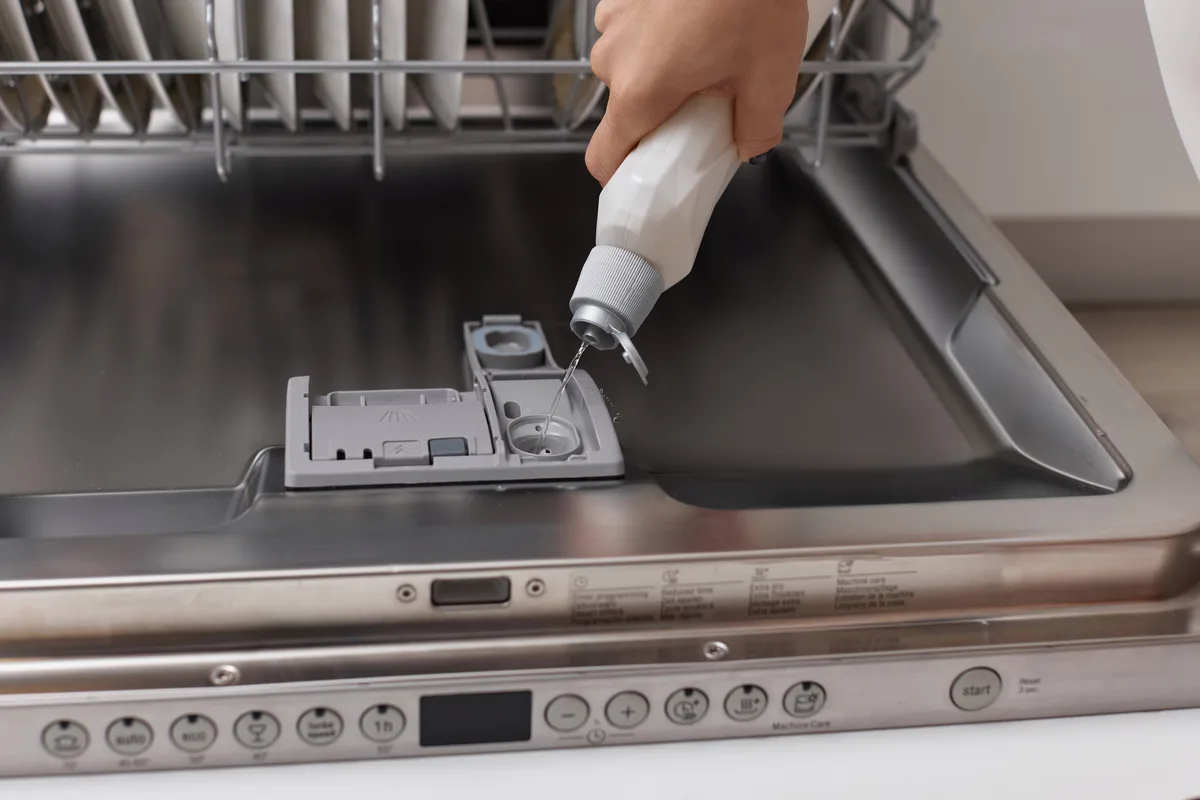
Image source: Bing (Web (fair-use with source credit))
Core Explanation / How It Works: What Rinse Aid Does and Why Water Hardness Changes Everything
Rinse aid works by lowering the surface tension of water. This change allows water to sheet off glassware instead of beading up. When water beads, it evaporates and leaves mineral spots behind.
By encouraging a thin, even flow, rinse aid reduces drying time and prevents those white streaks.
Water hardness plays a central role. The U.S. Geological Survey uses a scale that categorizes water as soft, moderately hard, hard, or very hard based on calcium carbonate equivalents.
Hard water contains more dissolved minerals, and these solids can overwhelm a standard rinse aid dose. You can check your local water report or use a test strip to find your level.
| Hardness Category | Calcium Carbonate (mg/L) | Typical Visual Signs |
|---|---|---|
| Soft | 0–60 | Few spots, quick drying |
| Moderately Hard | 61–120 | Occasional spots on glassware |
| Hard | 121–180 | Frequent spots, film on dishes |
| Very Hard | 181+ | Constant spotting, white residue |
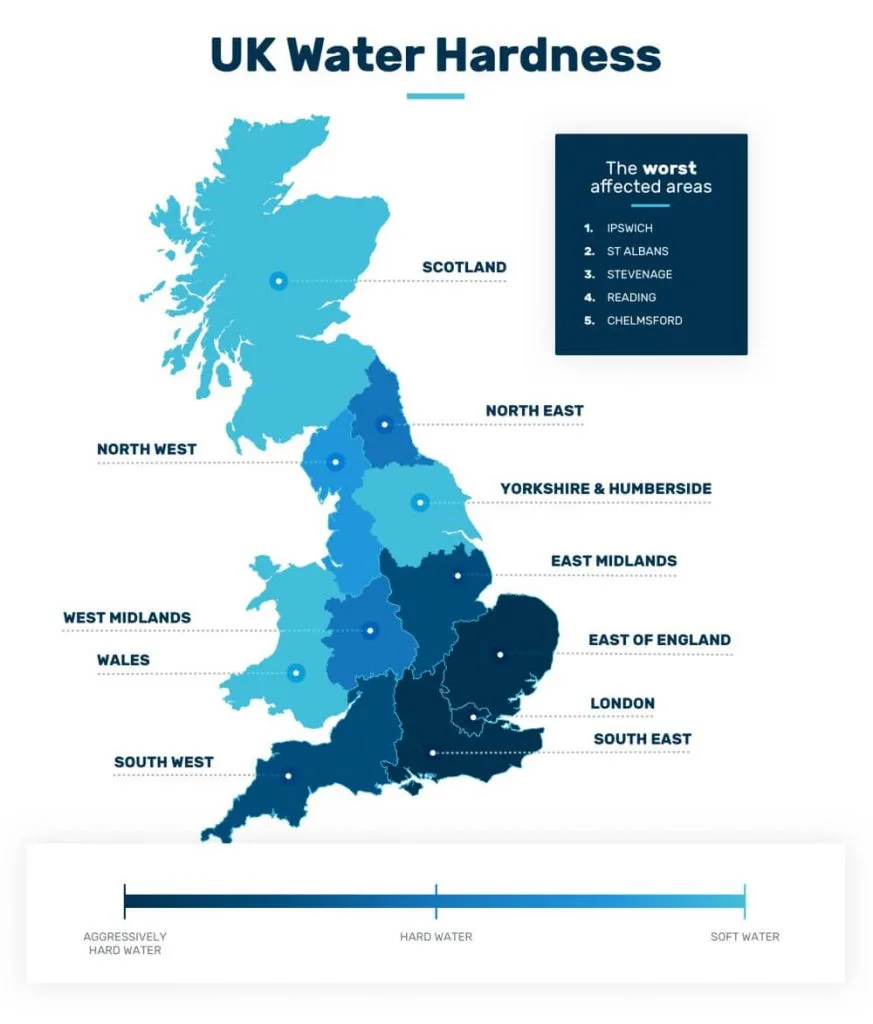
When water is hard, the rinse aid must be calibrated higher. Most dishwashers allow you to adjust the rinse aid setting in three or four steps. Matching the setting to your water hardness prevents both under‑dosing and over‑dosing.
Over‑dosing can leave a slippery film, while under‑dosing will not stop spots.
Low water pressure can also affect how rinse aid spreads. If the spray arms are blocked or the inlet valve is restricted, the water may not reach all surfaces. Our article on fixing a dishwasher with low water pressure covers those issues.
Use Cases / Best For / Who It's Right For: Matching Rinse Aid Use to Your Household and Dishwasher
Households in regions with high mineral content benefit the most from rinse aid. If you drink bottled water or have a whole‑home softener, you may need less product. Frequent glassware users, such as families that serve wine or beer, see the biggest improvement.
Commercial kitchens that run multiple cycles a day also rely on rinse aid to keep dishes presentable.
- Hard‑water areas: use a higher setting and a concentrated formula.
- Apartment dwellers with compact units: choose a dispenser that fits the small reservoir.
- Eco‑focused users: look for biodegradable formulas with third‑party certification.
- Large families: a bulk bottle reduces refill trips and cost per wash.
If you rarely use the dishwasher, a simple white‑vinegar solution can work as a substitute. However, for daily use, a dedicated rinse aid is more reliable and less likely to leave odors. For households that run heavy daily loads, our review of dishwashers built for large families highlights models with precise rinse aid controls.
Features / Components / What's Inside: Rinse Aid Types, Dispensers, and Key Ingredients Explained
Rinse aid comes in three main forms: liquid, gel, and tablets. Liquid is the most common and works with built‑in dispensers. Gel is thicker and may suit older models that have slower release.
Tablets combine rinse aid with detergent and are convenient for single‑serve use.
| Form | Typical Viscosity | Best For | Refill Frequency |
|---|---|---|---|
| Liquid | Low | Modern dishwashers with auto‑dispense | Every 30–40 cycles |
| Gel | Medium | Older units or manual dispensing | Every 20–30 cycles |
| Tablet | Solid | Users who prefer simplicity | Each wash cycle |
Dispensers themselves vary. Some are spring‑loaded, others use a simple flap. A clear window helps you see the level.
As of 2026, many new models include a sensor that indicates when the dispenser is empty, removing the guesswork.
The active ingredient in most rinse aids is a surfactant such as alcohol ethoxylate or alkyl polyglucoside. These compounds are chosen for their ability to lower surface tension without leaving residue. Some formulas add citric acid to combat mineral buildup, while others include enzymes for extra shine.
When rinse aid is paired with detergent pods, the pod must dissolve fully or the rinse aid may not mix properly. Our troubleshooting guide on dishwashers that won't dissolve detergent pods explains how to check water temperature and dispenser alignment.
For products that meet independent safety standards, look for the NSF International mark. This certification confirms that the formula has been tested for residue and material safety.
Comparison / Alternatives / Options: Commercial vs. Homemade Rinse Aid and Other Choices
Commercial rinse aid is convenient and formulated for specific water types. Homemade options like white vinegar or citric acid can work in a pinch. Vinegar is acidic and helps break down mineral deposits.
It is cheap and readily available. However, vinegar can degrade rubber seals over time if used too often. Citric acid is a stronger alternative that targets limescale effectively.
All-in-one detergents combine washing and rinsing in one product. They are simple to use and reduce clutter. The trade-off is that you lose the ability to adjust rinse aid separately.
If your water is very hard, an all-in-one may not provide enough rinse aid power.
| Option | Cost per Wash | Effectiveness | Best For |
|---|---|---|---|
| Commercial Liquid | $0.10 – $0.25 | High | Hard water areas |
| White Vinegar | $0.02 – $0.05 | Moderate | Occasional use |
| Citric Acid | $0.05 – $0.10 | High | Heavy mineral buildup |
| All-in-One Pod | $0.20 – $0.40 | Moderate to High | Convenience seekers |
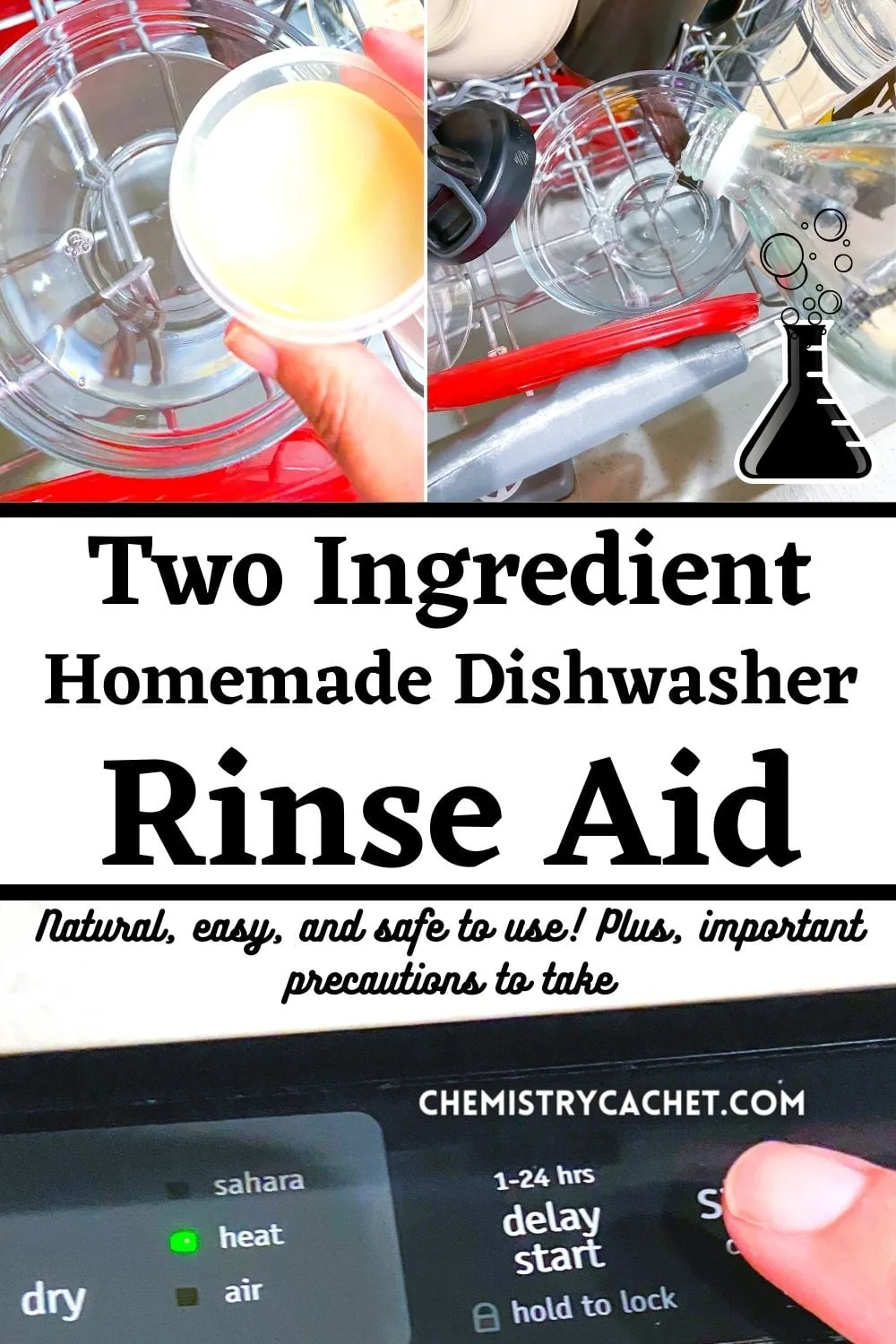
If you choose a homemade solution, test it on a single load first. Some dishware materials may react to strong acids. For most households, a commercial rinse aid is the safer bet.
It is tested for compatibility with your dishwasher's components.
Step-by-Step Process / How to Guide: Filling the Dispenser and Adjusting Settings Correctly
Filling the dispenser is straightforward, but the details matter. Locate the rinse aid compartment inside the dishwasher door. It usually has a clear cap with a fill line.
Open the cap and pour in the liquid rinse aid. Avoid overfilling, as excess can leak into the wash cycle and create suds.
Once filled, set the rinse aid level on the control panel. Most dishwashers have a dial or button sequence. Press the rinse aid button until the indicator matches your water hardness.
If you are unsure, start at a medium setting and adjust after a few loads.
Here is the step-by-step process:
- Open the dishwasher door and locate the dispenser.
- Remove the cap and check the current level.
- Fill with rinse aid up to the maximum mark.
- Replace the cap tightly.
- Press the rinse aid button on the control panel.
- Select the appropriate level based on your water test results.
- Run a short rinse cycle to prime the dispenser. If your model handles heavy food residue well, our guide on best dishwashers for heavy food residue can help you optimize the wash.
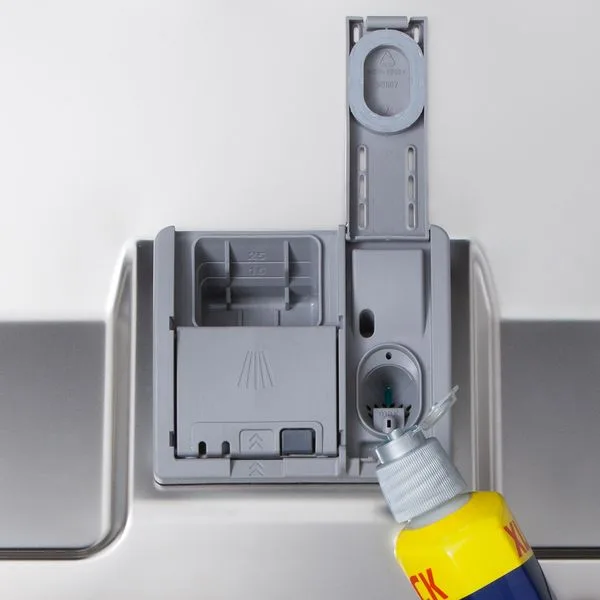
If the dispenser is hard to reach, consult your manual for the exact location. Some models have the dispenser on the inner door, while others are inside the tub. Knowing the layout prevents spills.
Mistakes to Avoid / Common Errors: Overuse, Underuse, and Other Pitfalls That Ruin Results
Overusing rinse aid leaves a slippery film on dishes. This residue can attract dirt and feel odd to the touch. Underusing it fails to prevent spots, especially on glassware.
The easiest fix is to match the setting to your water hardness.
Another common error is ignoring the dispenser. Over time, rinse aid can thicken or crystallize. A clogged dispenser will not release the product, and dishes will come out spotted.
Regular cleaning of the dispenser cap prevents this.
Using the wrong type of rinse aid can also cause issues. Gel formulas may not dispense correctly in a liquid-only system. Always check your dishwasher manual for the recommended type.
- Set the rinse aid level correctly for your water.
- Clean the dispenser cap monthly.
- Use the formula type specified in your manual.
- Do not mix different rinse aid types.
If you see white streaks, check the dispenser for clogs. If you see slippery residue, lower the rinse aid setting. Adjusting these two factors solves most problems.
Expert Tips / Pro Advice: Advanced Tricks for Spot-Free Dishes Every Time
For the best results, pair rinse aid with a hot water wash. Hot water helps the rinse aid spread evenly and evaporates faster. Run the dishwasher immediately after loading to prevent food residue from drying on.
If your dishwasher has a heated drying option, use it. The heat accelerates the drying process and reduces the time water sits on dishes. For models without heated drying, crack the door open slightly after the cycle ends.
This allows steam to escape and prevents condensation spots.
Another pro trick is to use a rinse aid dispenser cleaner. A mixture of vinegar and water can dissolve buildup inside the dispenser tube. Run an empty cycle with the cleaner to flush it out.
- Use hot water for the best rinse aid performance.
- Enable heated drying if available.
- Crack the door open after cycles to prevent condensation.
- Clean the dispenser tube quarterly with a vinegar solution.
For households with very hard water, consider adding dishwasher salt to the water softener. This works alongside rinse aid to reduce mineral content. Our guide on replacing a hardwired dishwasher covers models with advanced water softening systems.
Safety / Legal / Compliance / Warnings: Handling, Storage, and Disposal Guidelines
Rinse aid contains surfactants and sometimes mild acids. These chemicals can cause irritation if they contact eyes or skin. Always wear gloves when handling concentrated refill bottles.
If rinse aid gets on your skin, rinse with plenty of water.
Do not ingest rinse aid. It is not a food product, and swallowing even small amounts can cause stomach upset. Keep the bottle out of reach of children and pets.
Store it in a cool, dry place away from direct sunlight.
Disposal of empty containers is simple. Rinse the bottle with water and place it in the recycling bin if your local program accepts plastic. Check the label for specific disposal instructions.
Some brands offer take-back programs for empty bottles.
As of 2026, many rinse aid brands meet the EPA Safer Product standard. This certification means the formula uses ingredients that are safer for human health and the environment. Look for the Safer Product label when shopping.
- Wear gloves when handling rinse aid.
- Store out of reach of children and pets.
- Do not ingest.
- Rinse empty bottles before recycling.
- Look for EPA Safer Product certification.
If you experience irritation after contact, seek medical advice. In case of ingestion, call a poison control center immediately.
Maintenance / Long-Term Optimization
Regular upkeep keeps your rinse aid working at its best. Over time, rinse aid can thicken or leave residue inside the dispenser tube. A quick monthly check prevents clogs and ensures the correct amount is released each cycle.
To clean the dispenser, remove the cap and rinse it under warm water. Use a soft brush or toothpick to clear any buildup in the nozzle. For stubborn residue, soak the cap in a mixture of warm water and a few drops of dish soap for ten minutes.
Rinse thoroughly before reinstalling.
If your dishwasher has a filter, clean it as well. Food particles can affect water flow and rinse aid distribution. Consult your manual for the recommended filter cleaning schedule.
Most models require cleaning every two to four weeks.
Seasonal changes can alter your water hardness. In winter, water may become harder as minerals concentrate. Check your water report from the [U.S.
Geological Survey](https://www.usgs.gov/) at the start of each season. Adjust the rinse aid setting accordingly to maintain spot-free results.
When switching between rinse aid types, run an empty cycle with a dispenser cleaner. This flushes out any leftover formula and prevents mixing issues. Some brands offer a specific cleaner, but a cup of white vinegar in the detergent dispenser works as a substitute.
- Clean the dispenser cap monthly.
- Soak the cap in soapy water for tough residue.
- Check the dishwasher filter every two to four weeks.
- Review water hardness seasonally.
- Run a vinegar cycle when switching rinse aid types.
By following these steps, you extend the life of your rinse aid system and keep dishes shining.
Real Scenarios / Case Examples
Consider a household in the Midwest where water hardness averages 180 mg/L. The family of four initially set their dishwasher to the lowest rinse aid setting. Dishes came out with white spots and film.
After testing their water and raising the setting to high, they saw a dramatic change. Within one week, glassware was spot-free, and the dishwasher's drying time dropped by five minutes.
In a small apartment with a portable dishwasher, a user tried replacing commercial rinse aid with a homemade vinegar solution. The cost per wash fell from $0.15 to $0.02. However, after three months, the rubber seals began to show wear.
Switching back to a commercial formula prevented further damage while keeping costs low.
A restaurant kitchen that runs 20 cycles daily uses a concentrated rinse aid tablet. The staff reports that tablets reduce errors in dosing and save time. Over six months, they recorded a 30% reduction in rewashes due to spotting.
The consistency of tablets proved valuable in a high-volume setting.
| Scenario | Water Hardness | Rinse Aid Type | Outcome |
|---|---|---|---|
| Midwest family | 180 mg/L | Liquid, high setting | Spot-free in one week |
| Apartment dweller | 90 mg/L | Vinegar (temporary) | Cost saved, seal wear |
| Restaurant kitchen | 150 mg/L | Concentrated tablet | 30% fewer rewashes |
These examples show that matching the rinse aid to your specific conditions yields the best results.
Frequently Asked Questions
How often should I refill the rinse aid dispenser?
Most households need to refill every 30 to 40 wash cycles. The dispenser holds about 4 to 6 ounces of liquid. If you run the dishwasher daily, plan to refill once a month.
A full indicator light or a visible low level in the clear window signals it is time.
Can I use white vinegar instead of commercial rinse aid?
White vinegar can work as a temporary substitute because its acidity helps break down mineral deposits. However, frequent use can degrade rubber seals over time. If you choose vinegar, limit it to once a week and alternate with a commercial product to protect your dishwasher.
Why are my dishes still spotted after using rinse aid?
Spots often mean the rinse aid setting is too low for your water hardness. Other causes include a clogged dispenser, an empty reservoir, or a wash cycle that ends with a cool rinse. Check each of these factors and adjust accordingly.
Is rinse aid safe for septic systems?
Most rinse aids are safe for septic systems when used as directed. The surfactants in rinse aid are typically biodegradable. Look for a product labeled "septic safe" or one that meets EPA Safer Product standards to ensure minimal impact.
How do I know if my dishwasher's rinse aid setting is correct?
Start at a medium setting and run a few loads. If you see spots, increase the setting. If dishes feel slippery, decrease it.
A water hardness test strip from a hardware store gives you a precise number to match against your dishwasher's settings chart.
Can I use rinse aid with a water softener?
Yes, rinse aid works well alongside a water softener. The softener reduces mineral content, and the rinse aid prevents spots. You may need a lower rinse aid setting because the water is already softer.
Test and adjust to find the balance.
Final Recommendation / Verdict / Decision Guide
Your rinse aid routine depends on three factors: water hardness, dishwasher type, and household size. Follow this simple decision flow to choose the right approach.
First, test your water. If it is soft (under 60 mg/L), use a low rinse aid setting and a standard liquid formula. If it is moderately hard (61 to 120 mg/L), set the dispenser to medium.
For hard or very hard water (above 120 mg/L), choose a high setting and consider a concentrated formula.
Next, consider your dishwasher. Modern built-in units with heated drying benefit most from rinse aid. Portable or older models may work with a gel formula or occasional vinegar substitute.
If you use detergent pods, ensure the pod dissolves fully to avoid interfering with rinse aid release.
Finally, factor in your usage. Large families or frequent entertainers should opt for a bulk liquid bottle and clean the dispenser monthly. Light users can stretch refills further and rely on homemade solutions sparingly.
If spots persist after adjusting settings, check the dispenser for clogs and verify the water temperature. For persistent issues, our guide on dishwashers that keep stopping mid-cycle can help diagnose related problems.
In short, match your rinse aid to your water, your machine, and your habits. With these steps, you will achieve spot-free dishes every time.