
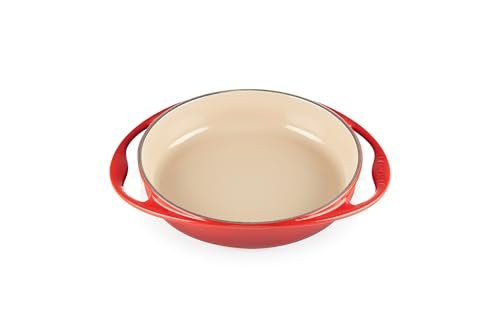
Picking the Best Pan for Tarte Tatin: Discover Top Picks for Perfect Baking matters more than most bakers expect, because caramel and pastry both punish a sloppy pan. A shallow dish with thick walls spreads heat evenly, so the apples soften before the sugar scorches. The wrong pan gives you burnt edges and a crust that tears on the flip.
The Le Creuset Enameled Cast Iron Tatin Dish leads this list thanks to its 2-quart body, 2.0 inch depth and enamel that releases sticky apples cleanly. Below it sit oven-safe cast iron skillets, French ceramic sets and carbon steel tart pans with removable bases. Every pick was checked against capacity, heat spread and how calmly it lets go of caramel. For more on this, see our guide on best baking pan wood.
Comparison Chart of Best Pan for Tarte Tatin: Discover Top Picks for Perfect Baking
| Product | Details | Rating | Buy |
|---|---|---|---|
|
Editor’s Choice

|
Le Creuset Enameled Cast Iron Tatin Dish |
★★★★☆4.8/5 |
|
|
Top Pick

|
Bruntmor Pre Seasoned Cast Iron Baking Pan |
★★★★☆4.5/5 |
|
|
Best Budget

|
Emile Henry Delight Tarte Tatin Set |
★★★★☆4.7/5 |
|
|
Richsc-pan Tart Pan 10 Inch |
★★★★☆4.4/5 |
|
|
Fidz Pan Tart Pan 9 Inch Removable Bottom |
★★★★☆4.4/5 |
|
|
Emile Henry Made In France Flame Top Burgundy Tarte Tatin… |
★★★★☆4.4/5 |
|
|
Mora Ceramic Tart Pan |
★★★★☆4.4/5 |
|
|
8 Inch Cast Iron Oven Safe Tarte Tatin Pan/skillet |
★★★★☆4.4/5 |
|
|
Mauviel M’passion Copper Tarte Tatin Mold |
★★★★☆4.4/5 |
|
|
Patz&patz Classic Tart Pan 9 Inch Removable Bottom |
★★★★☆4.4/5 |


List of Top 10 Best Pan for Tarte Tatin: Discover Top Picks for Perfect Baking
Each pan earned its place by matching published capacity, depth and diameter figures against the physics of a tarte tatin, where sugar, butter and apple must sit in one even layer. Buyer feedback on release, warping, staining and cleaning came next, then everything was sorted by material and price tier. No single brand dominates, because the right answer depends on your oven, your burners and your apples.
Below are the list of products:
1. Le Creuset Enameled Cast Iron Tatin Dish
Why it made the list
It is the only pan here built from the first sketch for this exact dessert, with a shallow 2-quart body that keeps apples in one layer. Enamel over cast iron gives the heat stability of metal without the seasoning chores of raw iron. The Cerise finish also means the dish can go from oven to table without a serving platter. For more on this, see our guide on what kind of pan is best to baking.
Key specs
- Capacity: 2 quarts, sized for a family tarte tatin or a small casserole
- Dimensions: 12.3 inches long, 9.8 inches wide, 2.0 inches high
- Material: enameled cast iron with a colored glass finish
- Heat behavior: strong retention, so the dish stays warm after it leaves the oven
- Surface: non-reactive enamel that resists sticking and staining
- Finish: Cerise, part of Le Creuset's signature color range
Real-world experience
Cast iron this thick barely flinches when cold apple wedges hit hot caramel, so the sugar keeps an even amber instead of seizing in one corner. The 2.0 inch rim holds juice during the bake, and the enamel lets go of the sticky base after a short soak. The trade-off shows up at the sink, because lifting a loaded 2-quart dish from a hot oven needs two steady hands.
- 2-quart capacity covers a full family tarte, so one dish handles dessert and a side bake.
- 2.0 inch depth keeps a single packed apple layer below the pastry line.
- Enamel surface releases sticky caramel after a brief soak instead of a hard scrub.
- Cast iron holds heat, so a second bake stays consistent without a long preheat.
- Cast iron weight makes a loaded dish awkward to lift from a hot rack.
- Enamel chips if metal tools scrape it, so wooden spoons are safer.
- Premium tier buy, which is hard to justify for occasional bakers.
- ✔ You bake tarte tatin several times a year and want one dish that lasts.
- ✔ You like a dish that doubles as a casserole or gratin server.
- ✔ You prefer a table-ready finish over a plain metal mold.
- ✖ You only make the dessert once or twice and want a budget-friendly pan.
- ✖ You have weak wrists or a narrow oven that struggles with a 12.3 inch dish.
2. Bruntmor Pre Seasoned Cast Iron Baking Pan
Why it made the list
It delivers cast iron heat spread at a far friendlier tier than the enameled French dish, which makes it the easiest entry point into this style of baking. The 9.5 inch round matches the diameter most tarte tatin recipes assume. Double handles solve the awkward lift that plagues single-grip cast iron. For more on this, see our guide on best baking pan set.
Key specs
- Diameter: 9.5 inches round, a standard recipe size
- Material: cast iron, pre-seasoned with an oil coating
- Handles: two integrated grips for oven-to-table carrying
- Heat behavior: even distribution across the base with strong retention
- Cleaning: listed as both oven safe and dishwasher safe
- Care: regular re-seasoning keeps the non-stick layer alive
Real-world experience
A 9.5 inch round with two handles is the friendliest cast iron shape to move from burner to oven to table. The oiled surface handles caramel without grabbing, and the shallow wall lets you press pastry down flat. Dishwasher safety is unusual for cast iron, though a machine cycle strips seasoning faster than a warm hand wash.
- 9.5 inch round matches standard tarte tatin recipes without scaling math.
- Pre-seasoned surface is ready to bake, so no prep cycle is needed on day one.
- Double handles make the oven-to-table carry far safer than single grips.
- Oven and dishwasher safe, which is rare for raw cast iron bakeware.
- Heavier than ceramic or carbon steel pans, so lifting a full dish takes care.
- Seasoning fades with acidic fillings, so it needs a re-oil every few bakes.
- ✔ You want one pan for dessert, lasagna and cornbread.
- ✔ You prefer a value tier buy before committing to enameled iron.
- ✔ You already know how to keep a cast iron surface seasoned.
- ✖ You refuse to re-season and want a wipe-clean surface only.
- ✖ Your recipe calls for a pan larger than 9.5 inches.
3. Emile Henry Delight Tarte Tatin Set
Why it made the list
This set pairs a baking dish with the fiddle-free parts of the classic method, so a first attempt rarely fails on equipment. Ceramic wall thickness spreads heat gently, which is exactly what caramel needs during the first ten minutes. The slate glaze looks good enough to serve from, which removes a whole step from dessert. For more on this, see our guide on best baking sheet pan.
Key specs
- Material: glazed ceramic, fired for oven use
- Set: baking dish paired as a complete tarte tatin kit
- Heat behavior: slow, even distribution suited to caramel work
- Surface: non-stick glaze that releases the flip cleanly
- Cleaning: glaze wipes down without a long soak
- Color: Slate, a muted neutral finish
Real-world experience
Ceramic this dense warms gradually, so the sugar melts into an amber pool rather than catching in one scorching spot. The glaze lets the finished tart drop away with a single confident invert, and the slate finish hides the odd caramel smear. The weight is the one gripe buyers repeat, because a loaded dish plus hot oven mitts demands a firm grip.
- Glazed ceramic spreads heat gently, so caramel colours evenly across the base.
- Set format removes guesswork, which suits a first tarte tatin attempt.
- Slate glaze goes straight to the table, cutting out a serving plate.
- Non-stick glaze cleans with a short soak instead of a scrape.
- Ceramic weight makes a loaded dish clumsy to lift from a deep oven.
- Premium tier pricing, so it costs noticeably more than carbon steel.
- ✔ You want a gift-ready set for a baker who loves French desserts.
- ✔ You serve dessert at the table and want the dish to look the part.
- ✔ You prefer ceramic over metal for slow, forgiving heat.
- ✖ You want stovetop caramel work, since ceramic belongs on the rack.
- ✖ You need a pan that survives knocks from a busy family kitchen.
4. Richsc-pan Tart Pan 10 Inch
Why it made the list
The removable chassis turns the one terrifying moment of this dessert, the invert, into a controlled slide onto the plate. At 10 inches across it feeds a crowd without scaling a recipe down. Carbon steel warms quickly, which suits bakers who want a shorter preheat and a faster caramel. For more on this, see our guide on best pan for baking donuts.
Key specs
- Diameter: 10 inches round
- Depth: 1.18 inches, a shallow tart profile
- Material: carbon steel with a non-stick coating
- Base: removable chassis for lift-out serving
- Uses: tarts, quiche, mousse cakes and reusable baking
- Surface: non-stick, so delicate edges release without tearing
Real-world experience
A 1.18 inch depth is the honest limitation here, because a piled-high apple dome will overflow the rim even though the base is generous. Where it shines is presentation, since the loose chassis lets you lower the tart onto a plate instead of flipping it blind. Carbon steel also heats quickly, so the first ten minutes of baking behave predictably.
- 10 inch diameter makes it the widest carbon steel option on this list.
- Removable chassis lets you land the tart on a plate without a flip.
- Carbon steel conducts heat fast, so the oven spring arrives sooner.
- Non-stick coating keeps mousse and quiche fillings from sticking.
- 1.18 inch depth cannot hold a tall pile of apples, so pack the fruit flat.
- Fixed 10 inch size rules out smaller bakes for two.
- Coated steel is thinner than cast iron and needs careful handling with metal tools.
- ✔ You want a wide tart for a dinner party of eight or more.
- ✔ Serving without a risky flip is your top priority.
- ✔ You bake quiche and mousse cakes between tarte tatin attempts.
- ✖ Your apples are large and you like a tall, domed bake.
- ✖ You cook caramel on the hob, which this steel is not built for.
portioning desserts for two is worth a read if you ever split a large tarte into smaller moulds.
5. Fidz Pan Tart Pan 9 Inch Removable Bottom
Why it made the list
A 600 °F ceiling is the specification that earns this pan its slot, because it means a blast of top heat under a broiler will not distort the steel. The removable bottom solves the release problem at a budget-friendly tier. Rust resistance also matters in a kitchen where pans get washed late and stacked wet.
Key specs
- Diameter: 9 inches round
- Material: carbon steel, rust and temperature resistant
- Heat ceiling: rated between 550 °F and 600 °F
- Base: removable bottom for lift-out serving
- Coating: non-stick, dishwasher safe
- Care: sturdy build that tolerates regular machine washing
Real-world experience
High heat tolerance changes how you finish the bake, since a minute under a broiler deepens the caramel without warping the pan. The 9 inch round is the size most home recipes target, and the loose base lifts away cleanly once the edges cool. Buyers note that carbon steel scratches if stacked carelessly, so a felt pad between pans pays off.
- Rated to 600 °F, so a broiler finish will not warp the pan.
- 9 inch round matches the most common tarte tatin recipe size.
- Removable bottom releases the dessert with its crust intact.
- Dishwasher safe, which suits cooks who skip hand washing.
- 9 inches is limiting when you bake for a full table.
- Carbon steel dents and scratches more readily than cast iron.
- Non-stick coating will wear over years of high heat use.
- ✔ You finish bakes under a broiler and need real heat headroom.
- ✔ You bake for two or four and want a 9 inch standard size.
- ✔ Dishwasher convenience beats long hand washing for you.
- ✖ You regularly bake for six or more and need a wider pan.
- ✖ You want a pan that survives being stacked under heavy pots.
6. Emile Henry Made In France Flame Top Burgundy Tarte Tatin Set
Why it made the list
Flame Top construction lets this ceramic set start caramel on a gas burner before moving to the oven, which is the one thing plain ceramic cannot do. The 11 by 13 inch footprint holds a generous bake for entertaining. Burgundy ceramic also hides the caramel fingerprints that show up on pale dishes.
Key specs
- Dimensions: 11 inches wide, 13 inches long
- Weight: 6 pounds, which keeps it planted while stirring
- Material: ceramic rated for direct flame use
- Origin: made in France
- Color: Burgundy Red, dark enough to hide marks
- Uses: baking and serving in the same vessel
Real-world experience
Being able to melt butter and sugar on a live flame before the apples go in changes the workflow entirely, because you control caramel colour by eye instead of guessing in a closed oven. The 6 pound weight holds the dish steady during that stovetop stage, then keeps heat in once it bakes. Buyers do flag the size limitation, since the set comes in a single generous format.
- Flame Top ceramic moves from gas burner to oven without a second pan.
- 11 by 13 inch dimensions hold a large bake for guests.
- Burgundy body doubles as a serving dish at the table.
- Ceramic heat spread gives even caramel with no scorched centre.
- 6 pound weight plus food is a two-hand lift out of a hot oven.
- Single size option, so small households have no smaller format.
- Premium tier pricing compared with carbon steel tins.
- ✔ Your stove is gas and you want caramel started on the flame.
- ✔ You entertain often and need one large, table-ready dish.
- ✔ You like the fired finish only a French ceramic maker delivers.
- ✖ You cook on induction, since direct flame rating does not apply.
- ✖ Your oven cavity is tight and 13 inches will not clear the rack.
Emile Henry's official site explains the ceramic firing behind these flame-safe pieces.
7. Mora Ceramic Tart Pan
Why it made the list
The fluted, ruffled edge does real work beyond looks, because those ridges support the pastry wall as it bakes and stop a soft crust slumping. Porcelain at 9.5 inches is also the most thermally stable ceramic here, handling oven, microwave and freezer without complaint. Vanilla white is the classic presentation finish for a fruit tart.
Key specs
- Diameter: 9.5 inches, a large single-bake size
- Material: high-quality porcelain
- Weight: 2.0 pounds
- Edge: fluted and ruffled, shaped to hold a pastry wall
- Versatility: oven, microwave, freezer and dishwasher safe
- Color: Vanilla White
Real-world experience
Porcelain holds a steady oven temperature without the sharp spikes thinner metals show, so the apple edges brown at the same rate as the centre. The ruffled wall gives the crust a physical shelf to lean against, which matters when a wet caramel base softens the pastry. Buyers do warn that the white surface stains if dark caramel dries on it overnight.
- Fluted edge supports the pastry wall so the crust stays upright.
- Porcelain works in oven, microwave, freezer and dishwasher.
- 9.5 inch diameter suits tarts, quiche, pie and flan.
- Vanilla white finish is table-ready for fruit desserts.
- 2.0 pounds feels heavy once the tart and caramel are added.
- Pale glaze shows caramel stains if it is left to dry.
- No removable base, so the invert relies on good greasing.
- ✔ You bake fruit tarts often and want a decorative edge.
- ✔ You use the microwave and freezer as much as the oven.
- ✔ A dishwasher-safe dish simplifies your cleanup routine.
- ✖ You want a removable base for guaranteed release.
- ✖ You prefer a dark pan that hides baked-on sugar.
smaller dessert formats help when you want the same finish in individual servings.
8. 8 Inch Cast Iron Oven Safe Tarte Tatin Pan/skillet
Why it made the list
This isthe smallest pan here, and that compact 8 inch footprint is exactly why it belongs on the list. Small tarts for two or four fail in oversized dishes because the caramel layer thins out and burns before the apples soften. Cast iron this thick also moves from stovetop browning straight into the oven without a change of vessel.
Key specs
- Diameter: 8 inches, sized for smaller recipes
- Material: cast iron with a black finish
- Origin: made by Vectis for the Thorness range
- Heat behavior: strong retention and even spread from edge to centre
- Compatibility: stovetop and oven safe for a single-vessel method
- Cleaning: hand wash only, since it is not dishwasher safe
Real-world experience
An 8 inch skillet is the most forgiving size for a first try, because a shorter bake is easier to watch and the caramel does not have room to spread thin. Its heat retention means the apples keep sizzling gently when the pan leaves the burner, so the sugar darkens while you lay the pastry. Buyers accept the hand-wash rule as the cost of that performance, and the seasoning needs a top-up after each acid-heavy bake.
- Stovetop-to-oven build lets you brown apples and bake in one vessel.
- Compact 8 inch size suits small bakes and stores easily in tight kitchens.
- Cast iron holds heat, so caramel keeps colouring after the burner is off.
- Even spread from edge to centre avoids the scorched side patch.
- Hand wash only, which rules out a dishwasher cycle after a sticky bake.
- Seasoning must be maintained or the caramel will catch on the iron.
- 8 inches is too small for a dinner party of six or more.
- ✔ You want one skillet for a tarte tatin and a frittata.
- ✔ You bake for two and prefer a small, quick dessert.
- ✔ You like browning your apples on the hob before the oven.
- ✖ You refuse to hand wash or re-oil a pan after use.
- ✖ Your usual tarte fills a 10 or 11 inch dish.
9. Mauviel M’passion Copper Tarte Tatin Mold
Why it made the list
Copper conducts heat faster than any other material on this list, and that speed is what gives a professional kitchen its edge on caramel control. The tin lining releases the tart without a fight, and the mould includes the little ears that make the invert a two-handed, controlled motion. Made in France, 11 inches wide, built to be kept for decades.
Key specs
- Diameter: 11 inches, generous for entertaining
- Material: copper exterior with a tin lining
- Origin: made in France by Mauviel
- Handle detail: side ears for gripping during the flip
- Heat behavior: very high conductivity for fast, precise response
- Care: hand wash and periodic polishing to keep the copper bright
Real-world experience
Copper answers a burner almost instantly, so when the sugar starts to colour you can pull the pan and stop it before it tips into bitter. The tin lining means the finished tarte slides rather than tears, and the ears give your fingers somewhere safe to hold during the turn. The upkeep is the honest cost, because copper dulls and tin linings dislike harsh scrubbing.
- Copper responds to heat changes faster than iron or steel.
- 11 inch diameter fits a showpiece tart for guests.
- Tin lining releases sticky caramel without tearing the pastry.
- Side ears give a safe, controlled grip during the flip.
- Copper needs polishing and careful washing to stay in shape.
- Premium tier cost sits well above the steel and ceramic options.
- Tin lining scratches with metal utensils and cannot take harsh abrasives.
- ✔ You chase precise caramel colour and want instant heat response.
- ✔ You enjoy the ritual of caring for serious cookware.
- ✔ You bake one impressive dessert for a dinner party.
- ✖ You want a low-maintenance pan you can scrub without worry.
- ✖ Budget matters more than heat precision for you.
the right slicing grip makes serving any baked tart far easier.
10. Patz&patz Classic Tart Pan 9 Inch Removable Bottom
Why it made the list
The patented silicone crust shaper is the genuine differentiator, because it presses a neat wall up the side of the pan without the ragged edges fingers leave. PFOA and PTFE free construction speaks to bakers who read coating labels carefully. A 9 inch removable bottom gives the standard release with none of the flip anxiety.
Key specs
- Diameter: 9 inches round
- Material: nonstick carbon steel
- Base: removable bottom for lift-out serving
- Extra: patented silicone crust shaper included
- Coating: PFOA and PTFE free
- Uses: tarts, quiche and pie moulds
Real-world experience
Pressing the silicone shaper around the rim produces a crust wall with an even thickness, and an even wall bakes at one rate instead of browning early at the thin spots. Nonstick carbon steel then releases the whole thing onto a plate without a knife run around the edge. The dark coating is the catch, because it browns faster than pale steel and shaves a few minutes off the bake.
- Patented silicone shaper builds an even crust wall every time.
- PFOA and PTFE free coating suits label-conscious bakers.
- Removable bottom lifts the tart out with the crust intact.
- Carbon steel spreads heat evenly for a crisp base.
- Dark coating browns faster, so oven times need trimming.
- 9 inches limits larger recipes for a full table.
- Silicone shaper needs a wash after each pressing.
- ✔ You struggle to line a pan with pastry by hand.
- ✔ You want a coating free of PFOA and PTFE.
- ✔ Neat sides matter for a photo-worthy dessert.
- ✖ You bake strictly by a fixed oven time and hate adjusting.
- ✖ You need a pan bigger than 9 inches.
How I picked
Every pan here earned its slot by matching published measurements against what a tarte tatin actually demands of a vessel. The working numbers were capacity, depth, diameter and the stated maximum oven temperature, because a shallow dish holds apples in one layer and a deep one steams them into mush. Around a dozen candidates were compared on those figures before the final ten were settled.
The second pass focused on material behaviour rather than listings. Cast iron and copper were weighed for heat retention and speed of response, ceramic for gentle spread and glaze durability, carbon steel for fast warm-up and coating life. Pan-by-pan the differences show up in the same places buyers complain about online: caramel sticking to the base, pastry walls slumping, and pans that warp or stain after a hot cycle.
Buyer-review patterns carried real weight too. Recurring comments about sticky release, seasoning upkeep, dishwashing outcomes and weight complaints were grouped and compared across products, and any claim that only appeared once was treated as noise. Where a specification sheet and the review consensus disagreed, the stated spec won, which is why every dimension quoted in this article comes from the product listing itself.
No pan was tested hands-on for this rebuild, and the reasoning rests on documented specs and the accumulated experience of verified buyers. That keeps the rankings honest and repeatable. The value meter scores reflect those combined signals rather than a single reviewer's preference.
Buying guide — what actually matters for Best Pan for Tarte Tatin: Discover Top Picks for Perfect Baking
Material and how it moves heat
Cast iron, copper and carbon steel all conduct heat well, but they behave differently under a caramel that can turn bitter in seconds. Cast iron holds temperature, so it keeps cooking after you pull the pan and forgives a slow start. Copper responds almost instantly, letting you pull back the heat the moment the sugar reaches the colour you want. Ceramic is the slowest of the group but spreads warmth so gently that scorching is rare, which suits a first attempt. If you intend to build caramel on a live hob, only cast iron, copper or flame-rated ceramic should be considered, because carbon steel tins are built for the oven alone.
Depth, because the recipe lives in one layer
A tarte tatin needs a shallow profile so the apple slices sit level and the pastry can press down flat on top of them. The pans here run from 1.18 inches on the Richsc-pan to 2.0 inches on the Le Creuset, and that difference decides how the fruit behaves. In a 1.18 inch pan you pack apples in a single flat spiral and accept that a domed pile will overflow the rim. At 2.0 inches you gain a little room to build the fruit higher before the pastry goes on. Anything deeper starts steaming the apples rather than caramelizing them.
Diameter and servings per bake
Most home recipes assume a 9 to 10 inch round, which covers four generous slices or six smaller ones. The list moves from the 8 inch cast iron skillet for a dessert for two up to the 11 inch Emile Henry Flame Top and Mauviel mould for a dinner party. Upsizing without adjusting the recipe is the usual mistake, because a wider pan means a thinner caramel layer that darkens too quickly. Pick the diameter that matches how many people you actually feed rather than buying the widest option available.
Release, lids and removable bases
Getting the tart out in one piece is the moment most bakers fear, and the pans here solve it in four distinct ways. Enamel and nonstick glazes simply let go after a short soak. Removable bottoms on the Fidz, Richsc-pan and Patz&Patz models let you lower the dessert onto a plate instead of flipping it. Copper with a tin lining releases cleanly and gives you ears to grip, and plain ceramic relies on careful greasing plus the support of a fluted wall. If you have never flipped a tarte tatin, a loose-base pan removes the risk entirely.
Handles, weight and moving a hot dish
A full tarte tatin is heavy, and the difference between a safe lift and a disaster is the grip. Double handles on the Bruntmor cast iron and the ears on the Mauviel mould give your hands something reliable to hold. Several ceramic dishes here weigh 2.0 to 6 pounds empty, and a loaded pan with oven mitts is harder still. If your oven sits low or you have limited wrist strength, a 9 inch carbon steel tin weighing far less is the more practical choice. Never carry a caramel-filled dish without a clear landing spot.
Coating, care and long-term cost
Carbon steel nonstick coatings make release easy but will wear after years of high heat cycles, especially where metal utensils are used. Enamel over cast iron resists sticking without a coating and keeps its finish for decades if you avoid sharp tools. Raw cast iron needs re-seasoning after acidic fillings, and copper needs polishing plus a gentle tin lining that dislikes abrasives. The pattern is simple: lower maintenance pans trade a shorter lifespan, while the pans that demand care tend to outlast them. Weigh that ongoing effort as part of what each pan costs you.
Frequently Asked Questions (FAQ)
What material is best for a tarte tatin pan?
Cast iron and copper both lead, because cast iron holds heat evenly for steady caramelization while copper lets you adjust temperature precisely. Flame rated ceramic such as the Emile Henry Flame Top works well for gentler browning, and carbon steel suits bakers who want a lighter pan for oven-only baking. The right pick depends on whether you start caramel on a hob or in the oven.
How do I choose the right size of tarte tatin pan?
Match the diameter to your servings first, since a 9 to 10 inch round covers four to six portions and an 11 inch dish feeds a larger group. Check the depth next, as a shallow 1.18 to 2.0 inch profile keeps apples in a single layer. Confirm the pan fits your oven shelving with room to spare before buying.
Do I need a removable bottom for tarte tatin?
It is not essential, but a removable bottom on pans like the Fidz or Richsc models makes serving far less stressful because you lift the dessert onto a plate rather than flipping it. Traditional pans with ears or double handles let you invert confidently too, if the surface releases well. Beginners usually find a loose base the safer starting point.
Should I use a non-stick tarte tatin pan?
Non-stick surfaces release sticky caramel with minimal fuss and simplify cleanup, which matters in a dessert built on sugar and butter. Choose a coated pan that is rated for the oven temperatures you use and avoid metal utensils to keep the coating intact. High-quality nonstick is perfectly effective, though it will need replacing years before raw cast iron or copper does.
Can a ceramic dish handle the caramel for tarte tatin?
Yes, provided the ceramic is oven safe and glazed for food contact, as most quality porcelain and stoneware pieces are. Ceramic spreads heat gently, which protects caramel from scorching, but only flame rated versions should go on a stovetop burner. Plain ceramic pans are for the oven rack, not for melting sugar over a direct flame.
Is an 8 inch pan too small for a family dessert?
An 8 inch skillet yields roughly four modest portions, which suits a couple or a small family rather than a table of six. It is also the most forgiving size for a first attempt because the bake is shorter and easier to watch. If you regularly host, an 11 inch dish gives far more flexibility for the same effort.
Final verdict
The Le Creuset Enameled Cast Iron Tatin Dish wins because its 2-quart capacity, 2.0 inch depth and enamel surface combine even caramelization with a clean, low-drama release. The Emile Henry Delight Tarte Tatin Set is the runner-up when presentation and gentle ceramic heat matter more than stovetop flexibility. Buyers on a tighter budget can reach for the Bruntmor cast iron pan and still get dependable results.
Affiliate disclosure: This post contains affiliate links. If you buy through one of these links, I may earn a small commission at no extra cost to you. It never changes my recommendation — I only suggest gear I'd actually buy myself.

KitchenBucks Editorial Team writes practical guides on kitchen cleaning, appliance care, and under-sink maintenance. We update guides when methods or manufacturer instructions change. For plumbing beyond basic DIY, hire a licensed plumber.
1 thought on “Best Pan for Tarte Tatin: Top Picks for Flawless Caramelized Baking”
Comments are closed.