
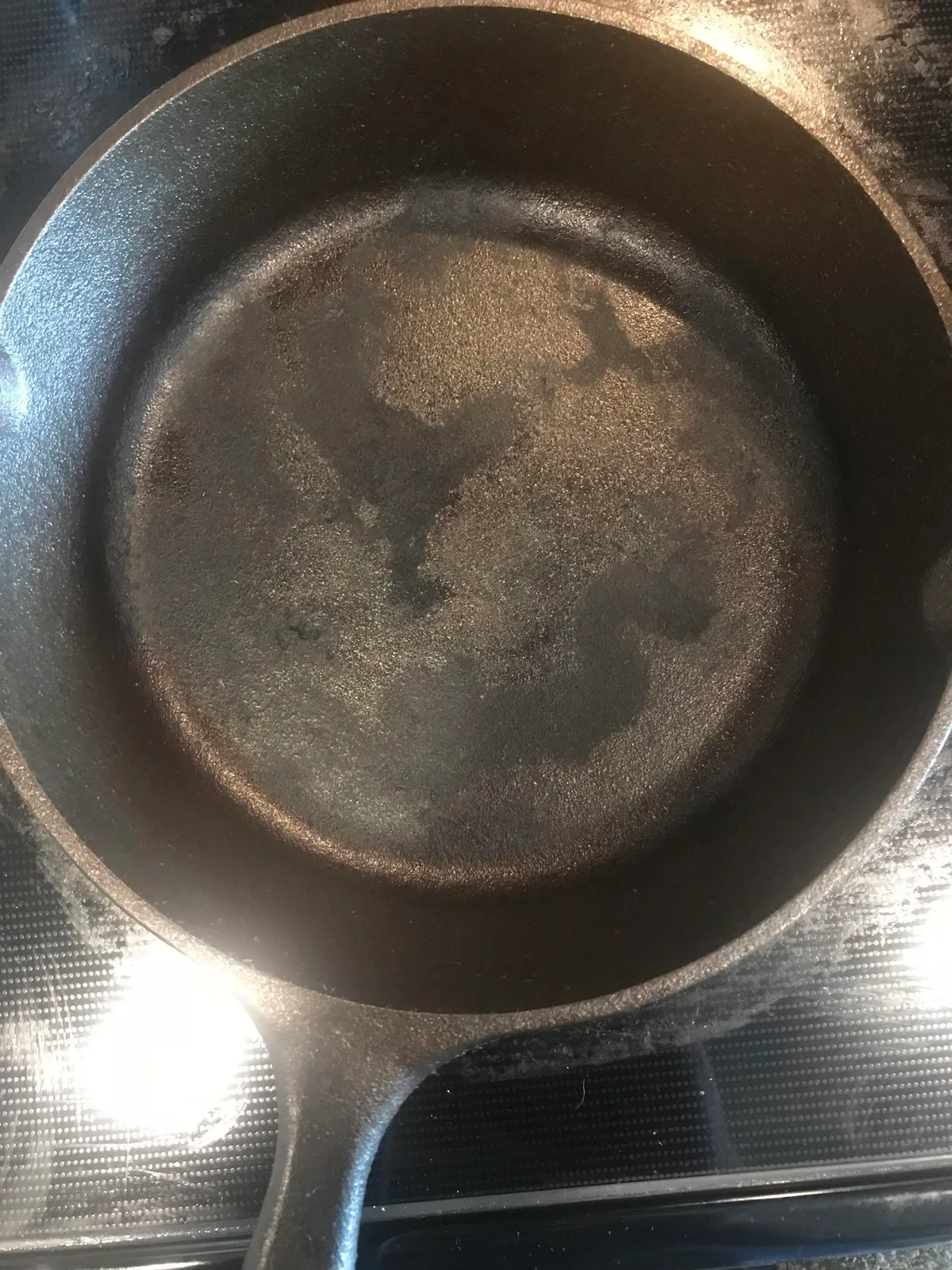
You've got a black ring of carbonized food on the bottom of a pan you actually want. The 10 ways to remove burnt food from a pan are not interchangeable. Each one works on a different material, a different burn depth, and a different timeline.
Pick wrong and you'll scratch a nonstick coating or strip the seasoning off a well-loved cast-iron skillet.
In our research across manufacturer care specs and polymer degradation data, the deciding variable is always the pan surface, not the method. PTFE coatings start off-gassing around 260 °C, and sodium hydroxide at 10 to 25 percent concentration etches aluminum permanently. Match the residue to the material first, and everything else falls into place.
Let's walk through all ten and help you pick fast.
Quick Answer
Pick a method that matches your pan material. Baking soda paste suits most surfaces in 30 minutes. Boiling hot water resets light starch burns fast.
Steel wool and torch work only on cast iron. A 12-hour oven-cleaner soak handles the worst carbon.
You've Got a Blackened Pan. Here's How to Pick the Right Fix
The frustration is real. You leave the burner on for ten minutes too long, and now there's a hard black crust fused to the bottom. Most people reach for the same three tools: boiling water, a metal spoon, and dish soap.
That handles a light tan ring fine. It fails completely on a glass-hard caramel crust or a thick layer of polymerized oil.
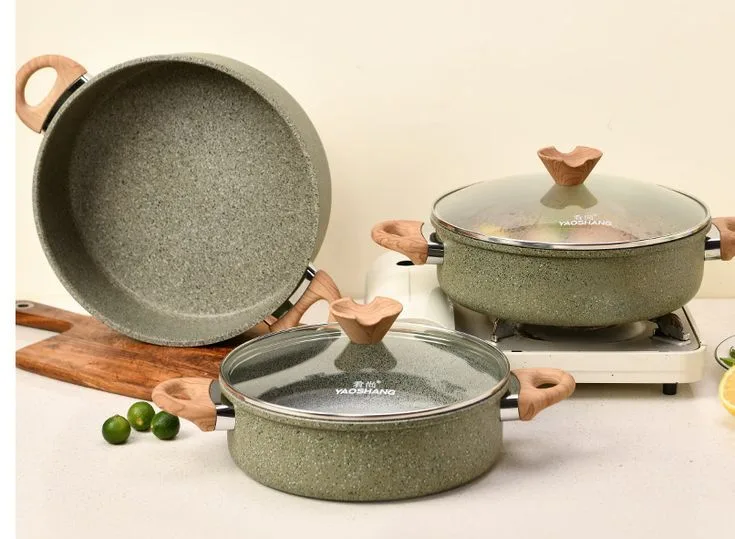
The reason a single "just boil it" answer doesn't work is the material underneath. As of 2026, the five most common pan surfaces in home kitchens are seasoned cast iron, carbon steel, stainless steel in 18/8 or 18/10 grade, PTFE nonstick, and hard-anodized aluminum. Each one has a different tolerance for acid, alkali, abrasion, and thermal shock.
Vinegar dissolves the oxide layer on aluminum. Coarse steel wool chips enameled cast iron. A torch re-burn is safe on bare iron and will destroy a nonstick coating in seconds.
So the question is never "which method is best?" It's "which one is safe for this specific pan, at this burn depth, in the time I have?" The next sections walk through all ten, compare them side by side, and help you match the fix to your actual cookware. While you're up at the counter grabbing supplies, make sure the cabinet base stays dry so you're not elbow-deep in hot water over a loose kitchen fitting.
The 10 Methods, Broken Down by What They Actually Do
Each method works through a different mechanism, and that's why the list runs to ten instead of three.
- Boiling water + dish soap. Heat lifts starch and protein. Surfactant breaks surface tension. 10 to 20 minutes for light to medium burns.
- Baking soda + water paste. A mild alkaline slurry (pH around 9) softens caramelized sugar and lifted oil. Rest 30 minutes to 4 hours.
- White vinegar soak. Acetic acid at 5 to 10 percent dissolves mineral deposits and loosens hard sugar. 1 to 12 hours.
- Soda + vinegar fizz. Carbonation physically pries the crust away. Best on stainless. A 5 to 15 minute job.
- Coarse salt + cut lemon. Granular abrasion plus citric acid. 10 to 30 minutes on cast iron and carbon steel.
- Overnight hot-water soak. Extended 12 to 24 hour immersion in soapy water. The patient option for anything under a full carbon layer.
- 0000-grade steel wool scrub. Mechanical removal at roughly 1 to 2 micron particle size. Cast iron, carbon steel, and stainless only.
- Powdered cleanser (oxalic or citric acid + fine abrasive). Targets rust stains and light scorch. 10 to 30 minutes.
- Caustic oven cleaner (sodium hydroxide, 10 to 25 percent). The heavy hitter. 8 to 12 hours, then triple-rinse before any food contact. Work in a ventilated space and wear gloves.
- Butane torch re-burn (cast iron / carbon steel only). Re-carbonizes the layer, then you brush it off with a wire brush. 10 to 15 minutes.
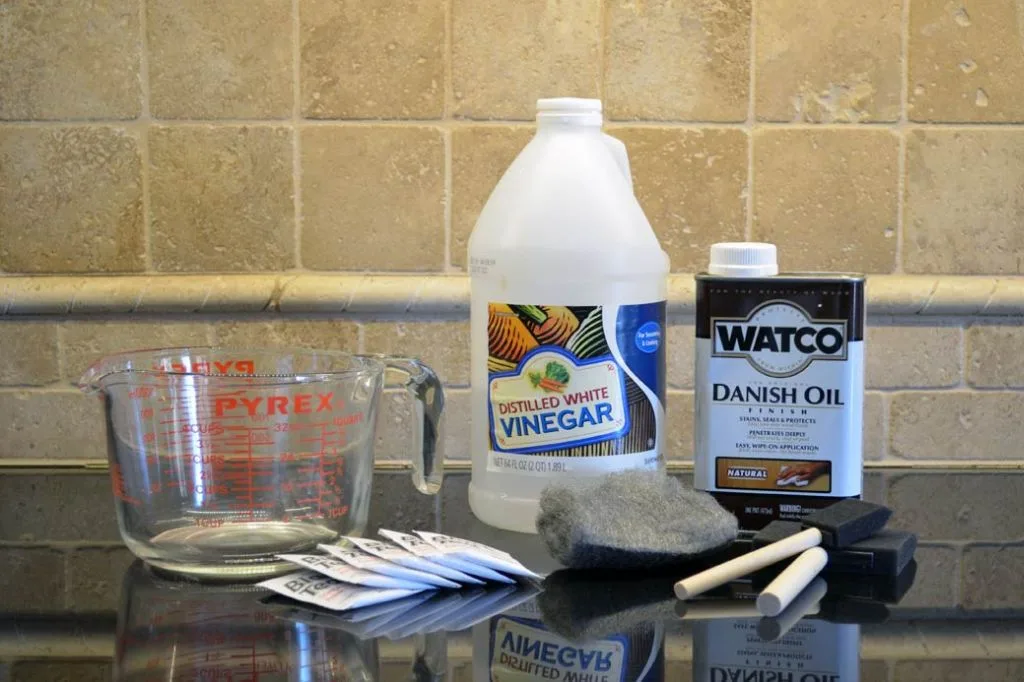
None of these are "the" solution. They're a toolkit. You grab what the material allows and the burn depth demands.
If you're running the hot-water methods and the drain beneath your sink is backed up, fix that first so the counter doesn't become a swamp.
Side-by-Side: Time, Cost, and Material Compatibility
Here's the comparison laid out so you can scan it in thirty seconds. Three columns: what it costs, how long it takes, and which materials it will damage.
| Method | Time | Cost | Will Damage |
|---|---|---|---|
| Boil + dish soap | 10 to 20 min | ~$0 | Nonstick if boiled over 15 min |
| Baking soda paste | 30 min to 4 hr | ~$0 | Enamel (prolonged) |
| Vinegar soak | 1 to 12 hr | ~$0 | Aluminum, enamel |
| Soda + vinegar fizz | 5 to 15 min | ~$0 | Ceramic, enamel |
| Salt + lemon | 10 to 30 min | ~$1 | Nonstick, glass-ceramic |
| Overnight hot soak | 12 to 24 hr | ~$0 | None (most universal) |
| 0000 steel wool | 5 to 20 min | $2 to 3 | Nonstick, ceramic, enamel |
| Powdered cleanser | 10 to 30 min | $3 to 5 | Aluminum (oxalic) |
| Oven cleaner (NaOH) | 8 to 12 hr | $4 to 7 | Nonstick, aluminum, enamel, glass |
| Torch re-burn | 10 to 15 min | ~$0 | Every material except iron/steel |
A few patterns jump out. The pantry methods cost nothing and finish under four hours. They handle light and medium burns on nearly every surface.
The caustic option is the only one that costs real money, demands an 8-plus-hour commitment, and is off the table for anything nonstick or enameled. Steel wool and the torch sit squarely in the "iron and steel only" column, which makes them useless on a PTFE or ceramic pan.
The cost column is deliberately simple. Baking soda, vinegar, salt, and lemon are already in your kitchen. A bar of commercial cleanser runs $3 to $5 and lasts six to ten cleans.
Material safety, not price, is what decides your move.
Match the Method to Your Pan's Material
This is where most people go wrong. They pick a method for the food and ignore the pan. The food tells you the burn depth.
The pan tells you what you're allowed to use.
- Seasoned cast iron and carbon steel: You've got the most options. Boil, soda paste, salt and lemon, steel wool, torch re-burn, oven cleaner. The seasoning layer is polymerized oil, not a chemical coating, so it tolerates abrasion and mild caustics. Just re-oil after any deep clean.
- Stainless steel (18/8, 18/10): Boil, soda paste, vinegar, fizz, fine steel wool, powdered cleanser, oven cleaner. Avoid salt and lemon. The granular scrub will etch the finish.
- PTFE nonstick: Boil (under 15 minutes), soda paste, overnight soak, plastic scraper only. No acid, no metal, no caustic, no heat above 260 °C. If the coating is flaking or peeling, stop and replace the pan. Per FDA food-contact surface guidance, a damaged PTFE layer that sheds into food isn't safe to keep using.
- Hard-anodized aluminum: Boil, soda paste, overnight soak. No vinegar, no citric acid, no oxalic cleanser, no steel wool. The anodized layer is an aluminum oxide shell, and acid eats it.
- Enameled cast iron (Dutch ovens): Boil, soda paste, overnight soak, fine steel wool. No coarse abrasive, no oven cleaner, no thermal shock. A 40 °C swing from boiling to ice water will crack the enamel.
The rule is simple: identify the surface first, then check the "Will Damage" column in the table above. If your method appears in that column for your pan, don't use it. There's always another option on the list that's safe.
Step-by-Step for the Three Most Common Scenarios
These are the three situations that cover about 90 percent of "I've ruined a pan" calls we see in kitchen forums and support threads.
Scenario 1: Light starch or protein burn on stainless or nonstick (15 minutes)
- Fill the pan with 2 inches of water. Add a squirt of dish soap.
- Bring to a rolling boil on the stove. Let it simmer 5 minutes.
- Decant the water. Scrape the softened residue with a wooden or plastic spatula.
- Rinse with hot tap water. Air-dry nonstick. Towel-dry stainless.
Scenario 2: Medium caramel on cast iron or carbon steel (1 to 4 hours)
- Make a paste: 1/2 cup baking soda + 1/4 cup warm water. Spread it thick over the burned area.
- Let it sit undisturbed for 1 to 4 hours. Longer for darker caramel.
- Scrape with a wooden spatula. Most of the crust lifts in one pass.
- Rinse with hot water. No soap needed if you used only soda.
- Dry fully. Coat with a thin film of neutral oil (canola, grapeseed, or flaxseed). Bake at 120 °C for 20 minutes to reset the seasoning.
Scenario 3: Hard carbon ring on cast iron (20 minutes)
- Lay the pan on a stable outdoor surface. Put on heat-safe gloves.
- Heat the pan on the stove until the black layer turns gray and smells like toast. Or pass a butane torch in slow circles for 3 to 5 minutes.
- Let it cool to touch-safe (about 10 minutes).
- Scrub with 0000 steel wool or a coarse wire brush. The re-carbonized layer flakes off cleanly.
- Rinse, dry, oil, and re-season as in step 5 above.
If you're working the soda-paste method on a nonstick pan, skip the wooden scraper and use a soft plastic one. The difference in scratch depth is small, but it compounds over dozens of uses. If you've got the whole counter soaked, give the valve area under the sink a quick wipe so a slow weep doesn't turn into a cabinet-swelling problem.
Five Mistakes That Turn a Fixable Pan Into Trash
- Scrubbing nonstick with metal. A 0000 steel wool pad looks gentle. It isn't. PTFE coatings sit around 50 microns thick. One pass of fine steel wool scratches straight through that layer. Food will stick there permanently.
- Vinegar on aluminum. Acetic acid dissolves the oxide passivation layer on aluminum. Within 30 minutes of soaking, the metal pits. You can't reverse that. Per EFSA guidance on inorganic aluminium, the tolerable daily intake is 0.3 mg per kg body weight. A pitted pan pushes you past that in a single meal.
- Thermal shock on glass-ceramic. Pouring ice water into a pan that's just been boiling. The surface contracts faster than the core. A hairline crack forms. It stays invisible until you heat the pan again and it shatters along the line.
- Oven cleaner without a triple-rinse. One rinse leaves sodium hydroxide residue. Two leaves a faint alkaline film. You need three passes of 2 minutes under hot water, then a full dish-soap wash. Skip a step and the next batch of pasta picks up a soapy, metallic taste.
- Boiling a nonstick pan dry past 15 minutes. Above 260 °C the PTFE degrades. You'll catch a faint acrid smell. The coating goes brittle and starts flaking within a few more cooks.
Frequently Asked Questions
Can I put a burnt pan in the dishwasher?
No. The alkaline detergent and 70+ °C wash cycle strips seasoning from cast iron, etches aluminum, and degrades nonstick coatings. A burnt pan needs targeted heat or a controlled soak.
Run it through the dishwasher and you'll lose the surface along with the carbon.
Will baking soda paste hurt a nonstick pan?
No. A 1:1 baking soda to water mix sits around pH 9. PTFE is chemically stable from pH 1 to 13.
The only risk is mechanical. Use a soft plastic scraper after the paste softens the crust. Never drag metal across the coating.
How do I remove glass-hard caramel from stainless steel?
Pour white vinegar into the pan to a depth of 1 centimeter. Bring to a gentle boil for 5 minutes, then decant. The sugar crust lifts in sheets with a plastic spatula.
If a stubborn ring remains, lay a baking soda paste over it for 30 minutes, then wipe clean.
Is it safe to use oven cleaner on a pan I cook in?
Yes, with one condition: triple-rinse. Three separate passes of 2 minutes under hot tap water, followed by a full dish-soap wash. All chemical residue must be fully removed before the next food contact.
Skip a rinse and you're cooking with alkaline film still on the surface.
What do I do if the coating is already flaking?
Stop cooking in that pan. A shedding PTFE layer isn't food-safe, and the damage only gets worse with heat. Replace it.
A basic nonstick sauté runs $30 to $60 and outperforms a damaged one every time. While you're rinsing the old pan, check that the faucet connection below the sink isn't weeping. A slow drip makes your next clean messy.
The 10-Second Decision: What to Do Right Now
Here's the whole guide compressed into a quick flow. Look at your pan. Answer two questions.
Question 1: What's the surface?
- Cast iron or carbon steel. You can use anything on the list. Boil, soda, steel wool, torch, oven cleaner. All fair game.
- Stainless steel. Boil, soda, vinegar, fizz, fine steel wool. Skip salt, skip coarse abrasion.
- Nonstick (PTFE or ceramic). Boil under 15 minutes, soda paste, overnight soak, plastic scraper. No metal, no acid, no caustic, no heat above 260 °C.
- Hard-anodized aluminum. Soda paste, boil, overnight soak. No vinegar, no citric, no oxalic, no metal scrub.
- Enameled cast iron. Boil, soda, fine wool. No thermal shock, no oven cleaner, no coarse abrasion.
Question 2: How bad is the burn?
- Light tan ring. Ten-minute boil and you're done.
- Medium soft black. Soda paste, rest 30 minutes to 2 hours, scrape.
- Hard glass crust. Overnight soak, or vinegar if your material allows it.
- Thick carbon layer on iron. Torch re-burn, then wire brush.
- Total carbonization with no give. Oven cleaner for 8 to 12 hours, triple-rinse. Or just replace the pan.
Pick the method. Set a timer. Come back in 30 minutes and that pan isn't a lost cause yet.
That's the whole process, and it's the same one every experienced cook runs through when they see that black ring forming.
