
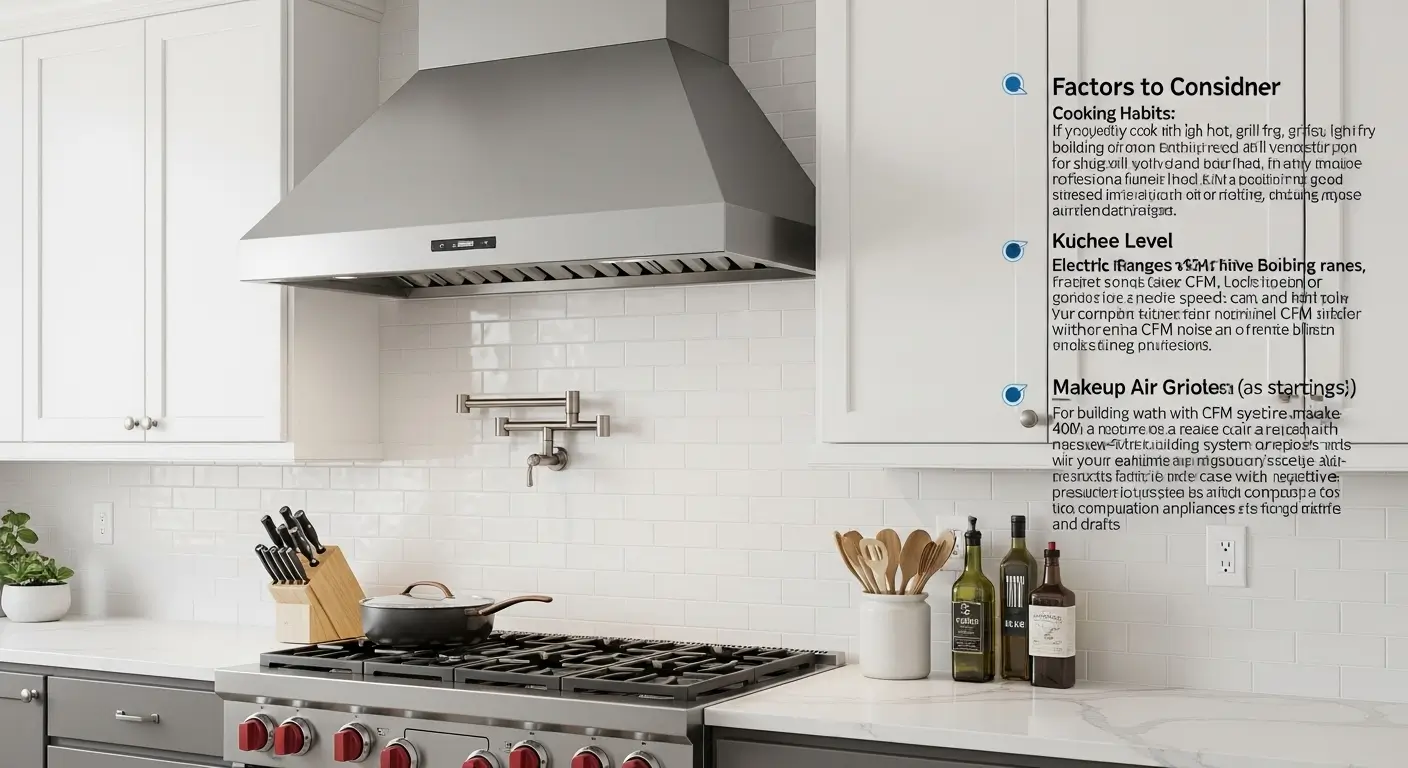
Imagine you’re cooking a delicious meal in your kitchen. The aroma fills the air, but so does the smoke and steam.
That’s where your range hood comes in. But have you ever wondered if your range hood is doing its job efficiently? The key to understanding its efficiency lies in a simple term CFM, or cubic feet per minute. You might be asking yourself, “What is a good CFM for a range hood?
This question is crucial for anyone wanting to maintain a fresh and clean kitchen environment. By the time you finish reading this article, you will know exactly what CFM means for your kitchen and how to choose the perfect range hood for your cooking needs. Stay with us, and you’ll discover how to transform your kitchen into a more enjoyable and practical space.
Importance Of Cfm In Range Hoods
CFM stands for cubic feet per minute. It measures airflow efficiency. A range hood with good CFM ensures a clean kitchen. It removes smoke, odors, and grease effectively. Understanding CFM is crucial for selecting the right range hood. Let’s explore why CFM matters.
What Does Cfm Mean?
CFM indicates how much air a hood can move. Higher CFM means better airflow. It ensures a smoke-free environment. This helps keep your kitchen fresh and clean.
Why Is Cfm Important?
CFM impacts the hood’s performance. A hood with low CFM may struggle. It might not remove smoke or odors well. A higher CFM ensures efficient ventilation. This is vital for a healthy kitchen environment.
How To Choose The Right Cfm
Consider your cooking habits. More cooking needs a higher CFM. Check your stove’s size too. A larger stove requires more airflow. Match the CFM to your kitchen needs.
Proper CFM improves air quality. It reduces smoke and odors. This leads to a pleasant cooking experience. It also helps maintain kitchen cleanliness.
Factors Affecting Cfm Requirements
Choosing the right CFM for a range hood depends on kitchen size and cooking habits. Larger kitchens or frequent heavy cooking need higher CFM. Proper ventilation ensures effective removal of smoke and odors.
When choosing a range hood, it’s crucial to understand the factors affecting CFM (Cubic Feet per Minute) requirements. CFM measures the airflow, determining how effectively your range hood can remove smoke, odors, and grease from your kitchen. Several elements play a role in deciding the optimal CFM for your space. Let’s dig into these factors and see how they impact your kitchen’s ventilation needs.
Kitchen Size And Layout
The size and layout of your kitchen significantly influence the CFM needed for your range hood. In a compact kitchen, a lower CFM may suffice, while a spacious, open-plan kitchen might demand more power. Measure your kitchen’s volume to get a baseline, using the formula: length x width x height. Consider the distance between your range and the exhaust outlet. Longer ducts or complex layouts can restrict airflow, requiring a higher CFM. My friend once struggled with a smoky kitchen because she underestimated her open layout’s impact on ventilation. Learn from her experience and ensure your range hood matches your kitchen’s dimensions.
Cooking Habits
Your cooking style can dramatically change the CFM you need. If you regularly fry, grill, or cook aromatic dishes, a higher CFM will better handle the smoke and odors. On the other hand, if you mostly boil or steam, a lower CFM might be adequate. Think about your cooking frequency.
Daily chefs will benefit from a more robust range hood, while occasional cooks might not need the same power. Reflect on your culinary habits do you love hosting dinner parties or trying new recipes? Your range hood should be ready to support your passion.
Ventilation Needs
Ventilation needs go beyond just removing kitchen smells; they also ensure a healthy home environment. Consider the number of windows and doors in your kitchen. If your kitchen lacks natural ventilation, a higher CFM range hood becomes essential. Evaluate whether your home has an integrated ventilation system. Homes with centralized air systems might require less CFM from a range hood. Are you planning any future renovations?
If so, factor in those changes to avoid needing a costly upgrade later. Choosing the right CFM for your range hood is not just about numbers. It’s about creating a kitchen environment that supports your lifestyle and cooking habits. What aspects of your kitchen will you consider when selecting a range hood?
Calculating The Right Cfm
Choosing the right CFM ensures your range hood effectively removes smoke and odors. A good CFM depends on kitchen size and cooking habits. Generally, 100 CFM per linear foot of the cooktop is recommended for optimal performance.
When choosing the right range hood for your kitchen, understanding the correct CFM (Cubic Feet per Minute) is crucial. The CFM determines how effectively your range hood will ventilate your cooking area. If it’s too low, odors and smoke linger. Too high, and you might be wasting energy. So, how do you calculate the right CFM for your needs? Let’s break it down.
Basic Calculation Methods
Start by considering the size of your kitchen and your cooking style. Generally, you need at least 100 CFM for every 12 inches of stove width. So, if you have a standard 30-inch range, look for a hood with a minimum of 250 CFM. If your cooking involves a lot of frying or grilling, you might want to add an additional 100 CFM to handle extra smoke and grease. This simple calculation gives a good baseline for most home cooks.
Advanced Calculation Techniques
For larger kitchens or open floor plans, consider the room’s volume. Multiply the kitchen’s length, width, and height to find the cubic feet. Then, divide by four to estimate the CFM needed to refresh the air every 15 minutes. If your range is against a wall, this method works well. However, for island ranges, multiply the CFM by 1.5 to account for the open space. This ensures you capture smoke before it escapes into the living area.
Do you often entertain guests or host large gatherings? Factor in the number of burners you use simultaneously. More burners mean more heat and fumes, so adjust the CFM upwards accordingly. Understanding these calculations not only helps you choose the right hood but also enhances your kitchen’s efficiency. What’s your cooking style? Think about it as you calculate the ideal CFM for your space.
Benefits Of Proper Cfm
Understanding the benefits of proper CFM in a range hood is crucial for any kitchen. CFM, or cubic feet per minute, measures the airflow a range hood can handle. Having the right CFM ensures efficient kitchen ventilation. It removes smoke and odors effectively, keeping the air fresh.
Effective Smoke Removal
A range hood with adequate CFM clears smoke swiftly. This prevents the smoke from spreading throughout the kitchen. Cooking often generates smoke, especially frying or grilling. The right CFM captures and expels it before it lingers. This keeps walls and cabinets free from stains. It also reduces the risk of smoke alarms going off unexpectedly.
Odor Control
Cooking odors can be persistent and unpleasant. A range hood with proper CFM significantly minimizes these odors. It quickly removes smells from spices, frying, and baking. This keeps the kitchen environment pleasant. Nobody likes the smell of last night’s dinner lingering. Good CFM ensures that aromas are vented out effectively.
Improved Air Quality
Proper CFM enhances indoor air quality. It filters out pollutants like grease and steam. This creates a healthier cooking environment. Breathing clean air is essential for health. Range hoods with suitable CFM contribute to this. They maintain a fresh atmosphere in the kitchen. This is especially important in homes with open kitchen layouts.
Common Mistakes In Cfm Selection
Choosing the right CFM (Cubic Feet per Minute) for your range hood is crucial to ensure efficient ventilation in your kitchen. It’s easy to make mistakes in CFM selection, whether you’re overestimating or underestimating the needs. This section will guide you through common pitfalls, helping you make informed decisions to optimize your kitchen’s air quality.
Overestimating Requirements
Have you ever thought bigger is always better? When selecting a range hood, many assume a higher CFM equals superior performance. While a powerful fan might seem appealing, it can lead to excessive noise and unnecessary energy consumption.
Consider this: if you have a small kitchen, a high CFM may create a wind tunnel effect, disrupting your cooking experience. Instead, focus on the size of your cooktop and cooking style to determine the right balance. Do you often fry or grill? Adjust accordingly but don’t go overboard.
Underestimating Needs
On the flip side, underestimating your CFM needs can result in insufficient ventilation. This mistake can leave your kitchen filled with lingering odors and smoke, compromising air quality. Have you ever had a dinner party where the smells from cooking lingered for hours? That’s a sign of inadequate CFM.
Think about your cooking habits. Do you frequently prepare meals that generate a lot of steam or smoke? Ensure your range hood can handle your culinary adventures. A modest CFM may suffice for light cooking, but if you’re an avid cook, you might need more power.
Ignoring Kitchen Design
Your kitchen’s layout plays a significant role in CFM selection. Many overlook this aspect, choosing a range hood solely based on its power. But consider your kitchen’s size and shape. Is your kitchen open-plan or closed off?
An open kitchen might require more CFM to effectively circulate air throughout the space, whereas a closed kitchen might need less. Reflect on the proximity of walls and ceilings as they can affect airflow. Remember, the design isn’t just about aesthetics—it’s about functionality too.
Ask yourself: How does your kitchen’s layout influence air movement? Address these details to ensure your range hood performs optimally, avoiding common mistakes in CFM selection.
Expert Tips For Choosing Range Hood Cfm
Choosing the right CFM for your range hood is crucial for effective kitchen ventilation. Typically, 300 to 500 CFM is ideal for most home kitchens. Consider your cooking habits and kitchen size to find the best fit.
Choosing the right CFM for your range hood can be tricky. A good range hood improves kitchen ventilation. It keeps your kitchen fresh and clean. Below are expert tips to help you decide.
Considering Noise Levels
Noise can be a big factor in your choice. A higher CFM often means more noise. Think about your home’s noise tolerance. You might want a quieter model. Check the decibel level before buying. Some models have sound-dampening features.
Evaluating Energy Efficiency
Energy efficiency saves you money. Look for range hoods with energy-efficient motors. This reduces power consumption. Check for an Energy Star label. It means the hood meets efficiency standards. A good range hood should balance power and efficiency.
Selecting Appropriate Models
Different kitchens need different range hoods. Measure your kitchen space first. Make sure the hood fits well. Under-cabinet hoods work for smaller spaces. Wall-mounted hoods are ideal for larger areas. Choose a model that suits your cooking style. Heavy cooking needs a more powerful hood. `
Maintenance For Optimal Performance
To ensure a range hood performs well, regular maintenance is key. Proper care not only extends its life but also boosts efficiency. Consistent upkeep can prevent issues and keep the kitchen environment pleasant.
Regular Cleaning
Clean your range hood at least once a month. Use a mild detergent and warm water. Wipe down all surfaces, including the hood exterior. This removes grease and grime build-up. A clean hood works better and is more hygienic.
Filter Replacement
Check your filters regularly. Some are washable, while others need replacing. Grease filters usually need cleaning every two months. Charcoal filters should be changed every 6 to 12 months. Clean filters improve airflow and efficiency.
Professional Inspections
Schedule a professional inspection annually. A technician can spot potential problems early. They can clean internal parts that are hard to reach. This keeps the hood running smoothly and safely.
Frequently Asked Questions
How Many Cfm Should My Range Hood Be?
Determine CFM by multiplying your kitchen’s square footage by 2. Range hoods over gas stoves require 100 CFM per 10,000 BTUs. Consider the kitchen size and stove type for optimal ventilation. Always ensure proper airflow for cooking safety and efficiency.
Is 900 Cfm Too Much For A Range Hood?
900 CFM is suitable for large kitchens or high-output cooking. Consider your kitchen’s size and cooking style. Ensure proper ventilation to avoid excess noise. Choose a range hood that matches your needs for effective performance.
Is 450 Cfm Enough For A Range Hood?
450 CFM is generally suitable for standard home cooking needs. It effectively removes smoke, odors, and steam. For heavy-duty cooking or larger spaces, consider higher CFM. Optimal performance depends on kitchen size and cooking habits. Always ensure proper installation and ventilation for best results.
Is 300 Cfm Or 400 Cfm Better?
Choose 400 CFM for larger spaces or heavy cooking. Opt for 300 CFM for smaller kitchens or lighter use. Your needs and kitchen size will determine the best option. Higher CFM provides better ventilation but may be noisier. Consider space and use before deciding.
Conclusion
Choosing the right CFM for a range hood is crucial. It ensures efficient ventilation in your kitchen. Consider your cooking habits and kitchen size. A higher CFM means better airflow. But not always necessary for small spaces. Balance power with quiet operation.
Check hood features and energy efficiency too. The right range hood enhances your cooking experience. Keeps your kitchen fresh and odor-free. Always consult a professional if unsure. Proper installation is key for performance. Make an informed decision for a healthier home environment.
Your kitchen deserves the best care.
