

Does your dishwasher leave glasses looking cloudy or dishes smelling musty right out of the cycle? Before you reach for harsh chemicals, consider a solution sitting in your pantry: distilled white vinegar. This versatile kitchen staple is one of the most effective and safest tools for restoring your machine’s performance. Over time, hard water minerals, grease, and food debris build up in hidden corners, affecting both cleanliness and longevity.
In this guide, you’ll learn exactly how to use white vinegar to deep clean your dishwasher, the science behind why it works, practical tips to avoid common mistakes, and how often to repeat the process to keep your appliance running like new.
Why White Vinegar Works Wonders on Your Dishwasher
White vinegar is far more than a salad dressing ingredient. Its primary cleaning power comes from acetic acid, which typically makes up 4–6% of the solution. This mild acid breaks down three main culprits of filthy dishwashers:
- Hard water deposits: Calcium and limescale are dissolved by the acid, restoring the shine to your interior and spray arms.
- Grease and soap scum: Acetic acid cuts through fatty residues that collect on filters and seals.
- Bacteria and odors: Vinegar neutralizes the alkaline environment that odor-causing bacteria thrive in.
Unlike commercial dishwasher tablets designed for a single use, vinegar is incredibly cost-effective. A gallon of white vinegar costs a fraction of what you would spend on branded cleaning tabs, and it is perfectly safe for septic systems and the environment. For a comprehensive look at how other natural ingredients compare, check out a natural degreaser alternative for your kitchen.
What You’ll Need Before You Start
Successful cleaning starts with proper preparation. Failing to prepare can actually make your dishwasher smell worse.
- Empty your dishwasher completely. Dishes, silverware, and any stray pieces of food must be removed.
- Remove and scrape the filter. The filter is the dirtiest part of your machine. Take it out, rinse it under hot water, and scrub off any visible debris with an old toothbrush. Properly cleaning your dishwasher’s filter regularly is a crucial step that many people skip.
- Check the drain. Look around the bottom sump for any large chunks of food or glass that might have fallen through.
- Gather supplies:
- 1–2 cups of distilled white vinegar
- A dishwasher-safe bowl or cup (glass or ceramic)
- Optional: baking soda, soft toothbrush, microfiber cloth
The Complete Step-by-Step Cleaning Process
Follow these instructions precisely for the best results.
Step 1 — Place the Vinegar Cup on the Top Rack
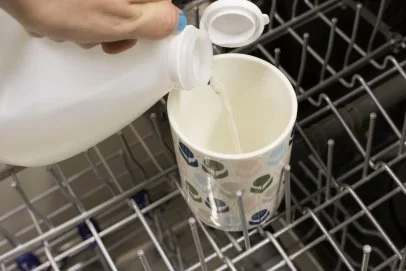
Pour 1 to 2 cups of white vinegar into your dishwasher-safe container. Place it securely on the top rack. This is non-negotiable for a specific reason: as the water heats up, the vinegar disperses slowly from the top down, coating every surface of the interior.
A common mistake: Placing the vinegar on the bottom rack or pouring it directly into the sump exposes the rubber gaskets and seals to concentrated acid for too long, which can cause them to dry out and crack over time. Gravity is your friend here.
:max_bytes(150000):strip_icc()/clean-dishwasher-with-vinegar-6834347-hero-c5e579575da942d8b700b5eeef57c345.jpg) Placing the cup on the upper rack ensures the vinegar disperses evenly throughout the cycle.
Credit: www.thespruce.com
Placing the cup on the upper rack ensures the vinegar disperses evenly throughout the cycle.
Credit: www.thespruce.com
Step 2 — Run the Hottest Cycle
Close the door and select the heaviest, longest, and hottest cycle your machine offers (usually called “Heavy Duty,” “Pot Scrubber,” or “Sanitize”). The high heat activates the vinegar, maximizing its ability to dissolve grease and mineral deposits. Do not add any detergent.
Step 3 — Pause for a Soak (Optional but Highly Recommended)
About 20 minutes into the cycle, when the machine is full of hot water and vinegar, pause the cycle. Let it sit for 1–2 hours. This soaking period gives the acidic solution extra time to break down stubborn limescale buildup inside the spray arms and along the heating element.
Step 4 — Finish the Cycle and Air Out
Resume the cycle and let it complete fully. Once finished, open the dishwasher door a few inches and let the interior air dry completely. This prevents any musty smells from forming immediately after cleaning.
Taking It a Step Further: The Baking Soda Rinse
If your dishwasher still smells faintly of vinegar or has visible stains, a baking soda rinse is the perfect follow-up. Baking soda is an alkaline compound that neutralizes any remaining acid and acts as a gentle abrasive.
- After the vinegar cycle finishes, remove the cup.
- Sprinkle about 1 cup of baking soda across the bottom of the dishwasher.
- Run a short, hot cycle (Rinse or Quick Wash).
This combination leaves your dishwasher smelling fresh and looking spotless. For a dedicated guide on this method, read our instructions on deep cleaning with a baking soda follow-up.
Don’t Forget the Door and Gaskets
While the machine cleans itself, the rubber seal around the door often gets neglected. Mold and mildew love the dark, damp crevice of the door gasket.
- Dip a soft toothbrush in undiluted white vinegar.
- Scrub the entire rubber gasket along the door and the matching lip on the tub.
- Wipe clean with a damp cloth.
For the exterior control panel, use soap and water. Vinegar can damage the silk-screened lettering on some panels.
 The door gasket traps moisture and food particles — scrubbing it prevents mold growth.
Credit: www.hgtv.com
The door gasket traps moisture and food particles — scrubbing it prevents mold growth.
Credit: www.hgtv.com
Troubleshooting Common Issues After Cleaning
Sometimes a vinegar cycle isn’t a magic bullet. Here is how to handle persistent problems.
Cloudy Glasses or White Film
If you still see a white film on your glasses, you are likely dealing with very hard water. You may need to run two consecutive vinegar cycles, or consider installing a water softener. The EPA’s Safer Choice program highlights how simple acids like acetic acid are an effective alternative to harsh chemical descaling agents.
Food Debris Left on Dishes
This usually points to clogged spray arms. Remove the arms (consult your manual) and check the holes. Use a paperclip or a thin piece of wire to dislodge any mineral deposits blocking water flow. Soaking the arms in a bowl of white vinegar overnight can work wonders.
Water Pooling at the Bottom
If water remains in the sump after the cycle completes, the drain is partially clogged. You must clean the drain hose. Before you do, familiarize yourself with understanding your dishwasher’s drain plumbing so you know exactly what you are working with.
How Often Should You Do This?
For most households, a monthly deep clean with white vinegar is sufficient. If you have hard water, rinse dishes heavily, or run your machine more than once a day, consider doing it every two weeks. Never wait until your dishwasher starts smelling bad to clean it — preventative maintenance is always easier.
Frequently Asked Questions
Q: Can I use apple cider vinegar instead of white vinegar? A: No. Apple cider vinegar can stain the interior of your dishwasher due to its color and sediment. Always use clear, distilled white vinegar for cleaning appliances.
Q: Is vinegar safe for stainless steel dishwashers? A: Yes, the short exposure during a cleaning cycle is perfectly safe for stainless steel tubs. Avoid letting undiluted vinegar sit on exterior stainless steel panels for long periods, as it can dull the finish. The principles of hand washing delicate cookware apply here — use appropriate products for the specific surface.
Q: Can I put vinegar in the rinse aid dispenser? A: While some people do this to save money, it is not recommended by most manufacturers, whose official care guidelines suggest using designated rinse aids. Vinegar is much thinner than commercial rinse aids and can leak out too quickly or damage the dispenser mechanism over time.
Q: What if my dishwasher smells like vinegar after the cycle? A: This is normal. The smell should dissipate completely as the interior dries. If you do the optional baking soda rinse, the smell will vanish immediately.
 A deep clean cycle with vinegar restores the shine and removes lingering odors.
Credit: www.youtube.com
A deep clean cycle with vinegar restores the shine and removes lingering odors.
Credit: www.youtube.com
Conclusion
Learning how to clean your dishwasher with white vinegar is one of the simplest and most effective kitchen maintenance habits you can adopt. It requires minimal effort, costs almost nothing, and dramatically improves your machine’s ability to clean your dishes. Combined with regular filter maintenance and an occasional baking soda rinse, your dishwasher will stay fresh, efficient, and reliable for years.
Stop relying on expensive tablets and harsh chemicals. Open your pantry, grab that bottle of white vinegar, and give your dishwasher the refresh it deserves today. Your wallet and your dinner plates will thank you.
