
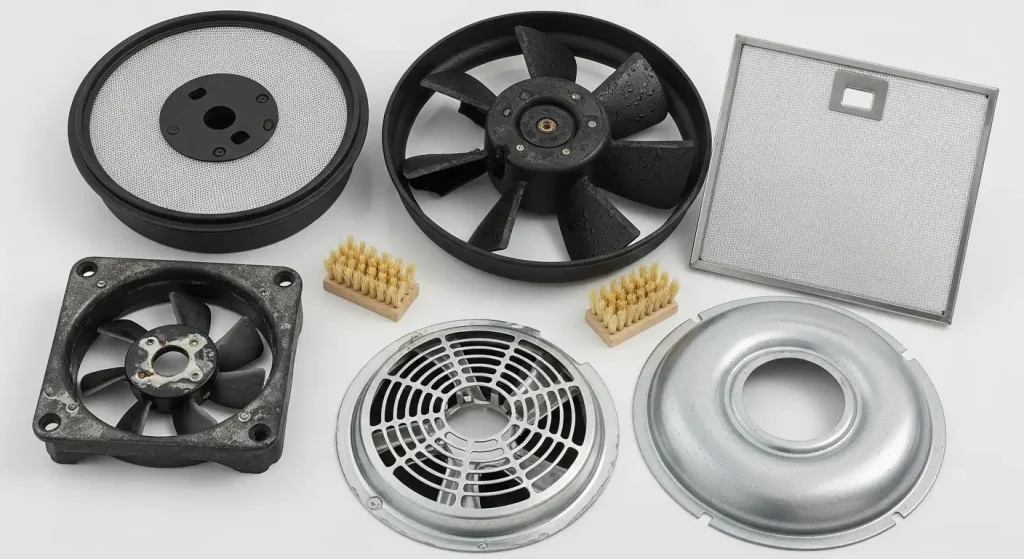
Is your kitchen feeling a little less fresh than usual? If your range hood fan is clogged with grease and grime, it might be the culprit.
You use it every day to keep your kitchen air clean, but when was the last time you gave it a good scrub? A dirty range hood fan not only makes your kitchen smell, but it can also affect its performance.
Imagine cooking without the worry of lingering odors and smoke. You deserve a kitchen that’s as fresh and inviting as your favorite meal. Dive into this guide to learn how to clean your range hood fan effectively, and reclaim the freshness of your cooking space. Keep reading to discover simple steps that will make a big difference in your kitchen’s atmosphere.
Types Of Range Hood Fans
Cleaning a range hood fan depends on its type. Under-cabinet fans are common and need regular maintenance. Wall-mounted fans require careful cleaning of filters and surfaces. Island range hoods, usually in the center of the kitchen, demand thorough attention to keep them functioning well.
Each type needs specific cleaning steps.
Cleaning a range hood fan might seem daunting, but understanding the different types of fans can make the task much easier. Range hood fans come in various designs, each with distinct cleaning needs. Before you roll up your sleeves and dive into the cleaning process, familiarize yourself with the type of fan you have. This knowledge not only helps in cleaning but also enhances the longevity of your appliance. Let’s explore the types of range hood fans, focusing on their ducted vs. ductless configurations and material variations.
Ducted Vs. Ductless
Range hood fans can be either ducted or ductless. Ducted fans vent air outside, effectively removing smoke and odors from your kitchen. Cleaning ducted fans often involves focusing on the fan blades and the duct system. One time, I discovered a surprising amount of grease in the duct of my range hood, which had been affecting its efficiency. In contrast, ductless fans recirculate air using filters.
These require regular cleaning or replacement of filters to maintain performance. Have you ever noticed your kitchen feeling stuffy despite running the fan? It might be due to clogged filters in your ductless range hood. Remember to check them frequently.
Material Variations
Range hood fans come in different materials like stainless steel, aluminum, and even tempered glass. Each material has specific cleaning needs. Stainless steel fans are popular for their durability and sleek appearance. They can be cleaned with mild detergent and a soft cloth to prevent scratching. Aluminum fans might be less expensive, but they require gentle cleaning to avoid damage. Using a soft brush can help remove stubborn grime without harming the surface. Tempered glass fans add a modern touch but can be prone to streaks. A vinegar solution can work wonders, leaving your glass spotless and sparkling.
When cleaning, consider the material of your fan to avoid accidental damage. Have you ever had an experience where you learned this the hard way? I once scratched my stainless steel range hood by using an abrasive cleaner lesson learned! Understanding these differences can make cleaning your range hood fan more efficient and less frustrating. What type of fan do you have, and are you ready to give it the care it deserves?
Tools And Supplies Needed
Gather essential tools like a screwdriver, microfiber cloth, and dish soap. Supplies such as warm water and a degreaser help in cleaning. Ensure you have a soft brush and gloves for safety and efficiency.
Cleaning a range hood fan can seem daunting, but with the right tools and supplies, it becomes a straightforward task. You don’t need to be an expert; just a bit of preparation will make the job easier and more effective. Let’s explore what you’ll need to get started.
Essential Cleaning Tools
When cleaning a range hood fan, having the right tools is crucial. A screwdriver is often necessary to remove the fan or filter. Make sure you have a soft-bristle brush to scrub away grease and grime without scratching surfaces. A microfiber cloth is excellent for wiping down the fan and leaving it streak-free. If you’ve ever tried using an ordinary rag, you know it can leave lint behind. Having a bucket handy for rinsing parts and storing cleaning solutions is also a smart move.
Recommended Cleaning Products
You might wonder which products work best for tackling stubborn grease. A degreaser is your go-to product, breaking down the toughest residues effortlessly. Many people prefer a natural vinegar solution—it’s both effective and eco-friendly. Dish soap is another staple you shouldn’t overlook. It’s gentle yet powerful enough to cut through everyday grime. Combining dish soap with warm water often does the trick for less intensive cleaning needs. Does your range hood fan require a little more attention?
Baking soda can be a game-changer, especially when mixed into a paste with water. It’s perfect for scrubbing away tough spots without harsh chemicals. By having these tools and supplies ready, you’ll transform your cleaning routine from overwhelming to manageable. What’s your go-to tool or product for cleaning? Share your tips below!
Safety Precautions
Wear protective gloves and goggles to prevent chemical exposure. Ensure the fan is turned off before cleaning. Use a sturdy ladder to reach the range hood safely.
Cleaning a range hood fan can seem straightforward, but ensuring your safety should be your top priority. Imagine the frustration of a simple cleaning task turning into a safety hazard. By taking the right precautions, you can avoid accidents and ensure a smooth cleaning process. Let’s explore some key safety measures that will keep you safe and your range hood in top shape.
Handling Electrical Components
Before you start cleaning, make sure to disconnect the range hood from power. This is a crucial step often overlooked. Simply unplugging the unit or switching off the circuit breaker can prevent electrical shocks. If you’ve ever experienced a static shock, you know how unpleasant it can be. Now imagine that amplified by the electricity running through your range hood. When handling electrical components, be gentle. The wiring and connections are delicate. If you’re not careful, you might damage them, leading to costly repairs. Remember, safety and a bit of patience go hand in hand. Are you willing to risk your safety for a few minutes saved?
Protective Gear
Wearing the right gear is essential. Gloves are your first line of defense against grime and harsh cleaning agents. They protect your skin and make the task less messy. Have you ever tried scrubbing stubborn grease with bare hands? It’s not fun. Safety goggles are another must-have. They protect your eyes from splashes of cleaning solutions. An unexpected splash in your eyes can ruin your day. Why not avoid that discomfort altogether? Consider wearing a mask if you’re sensitive to strong odors.
Cleaning agents can be pungent, and inhaling them might cause irritation. Protecting your respiratory system is as important as safeguarding any other part of your body. By taking these precautions, you not only protect yourself but also ensure the longevity of your range hood. Safety might seem like an extra step, but it’s the one that makes all the difference. What other safety measures do you find essential when tackling home projects?
How to Clean a Range Hood Fan
Begin by unplugging or turning off the power to the range hood. Remove filters and wipe away excess grease. Ensure easy access to the fan for thorough cleaning.
Cleaning your range hood fan might seem daunting, but preparing it properly can make the process smooth and hassle-free. It’s about getting the basics right to avoid any mishaps and ensure a thorough clean. Think of it as setting the stage for a performance—everything needs to be in place for the show to go on without a hitch. So, let’s dive into the essentials of preparing your range hood for cleaning.
Turning Off Power
Safety is your top priority here. Before you start any cleaning, switch off the power to the range hood. You might be surprised how easy it is to forget this step, especially if you’re eager to get things done. Locate the power switch or unplug the hood from the electrical outlet. It’s a small action that can prevent potential electrical hazards. Have you ever had a close call because you skipped this? Share your story and remind others why this step is crucial.
Removing Filters And Covers
Once you’re sure the power is off, it’s time to remove the filters and covers. These parts are often the dirtiest due to grease and grime build-up. Use a screwdriver or your hands to carefully detach any screws or clips holding the filters. Some filters pop out easily, while others might require gentle persuasion. Have you ever found something unexpected hidden in your range hood? It’s like a treasure hunt—sometimes you uncover what’s been causing that odd smell in your kitchen.
Lay the filters and covers on a towel or in a sink for easy cleaning. This also helps you keep track of all the pieces. Keeping your workspace organized can make the cleaning process more efficient and less stressful. Do these steps seem straightforward, or is there a part that still confuses you? Tackling these initial steps with confidence can set the tone for the rest of your cleaning task.
Cleaning The Filters
Cleaning the filters in your range hood fan is essential. Dirty filters can affect your kitchen’s air quality. Regular maintenance ensures your cooking area stays fresh. It also helps your fan run efficiently.
Soaking And Scrubbing
Start by removing the filters carefully. Place them in a sink filled with warm water. Add a few drops of dish soap to the water. Let the filters soak for about 15 minutes. This helps loosen grease and grime. Use a soft brush to scrub the filters gently. Pay attention to areas with stubborn dirt. Be thorough but gentle to avoid damage.
Drying And Reinstalling
After cleaning, rinse the filters with clean water. Shake them gently to remove excess water. Lay them on a clean towel to air dry completely. Ensure no moisture is left before reinstalling. Place the dry filters back in their slots. Secure them properly to avoid rattling noises. Your range hood fan is now ready for use.
Cleaning The Fan Blades
Cleaning the fan blades of your range hood is vital. It ensures efficient operation and improves air quality in your kitchen. Over time, grease and grime accumulate, hindering performance. Regular cleaning keeps your kitchen fresh and extends the life of your appliance.
Accessing The Fan
First, ensure your range hood is turned off. Safety is crucial. Locate the screws or clips securing the fan cover. Use a screwdriver to carefully remove them. Lift the cover off to reveal the fan blades. Keep a small bowl nearby to store screws. This prevents loss during cleaning.
Removing Built-up Grease
Prepare a mixture of warm water and mild dish soap. Dip a soft cloth or sponge in the solution. Gently scrub the fan blades to remove grease. For stubborn grime, use a soft-bristled brush. Avoid harsh chemicals that might damage the blades. Rinse thoroughly with clean water to remove soap residue.
Dry the blades with a clean cloth. Ensure no moisture remains. Reattach the fan cover securely. Tighten all screws to maintain safety. Regular cleaning prevents grease buildup and keeps your kitchen air fresh.
Cleaning The Hood Interior And Exterior
Keeping your kitchen fresh and clean involves more than just tidying up countertops. A range hood fan plays a crucial role in maintaining air quality by removing smoke, odors, and grease. Regular cleaning of both the interior and exterior is essential. It ensures the fan functions efficiently and enhances the overall kitchen aesthetics.
Degreasing The Interior
Grease buildup inside the hood can affect performance. Start by unplugging the appliance for safety. Carefully remove the fan filter. Soak it in hot, soapy water for 10 minutes. Use a soft brush to scrub away any grime. Rinse thoroughly and let it dry.
Wipe the interior surfaces with a damp cloth. Use a mixture of vinegar and water for stubborn grease. This natural solution effectively breaks down oily residue. Don’t forget to clean the fan blades. They accumulate dust and grease over time. A gentle wipe with a damp cloth usually suffices.
Polishing The Exterior
The exterior of your range hood can easily lose its shine. First, dust off the surface using a microfiber cloth. Choose a stainless steel cleaner for metal surfaces. Apply it with a soft cloth in circular motions. This helps avoid streaks and enhances shine.
For plastic surfaces, a mild soap solution works well. Gently rub the surface to remove fingerprints and smudges. Regularly cleaning the exterior prevents dirt buildup. It keeps your range hood looking new and attractive. Maintaining a clean hood boosts kitchen appeal.
Reassembling The Range Hood
Reassembling the range hood involves carefully aligning the fan and filter. Ensure they fit snugly into their slots. Tighten screws securely to prevent any loose parts.
Reassembling the range hood is an important step. It ensures everything works smoothly. After cleaning, parts need proper reattachment. This prevents rattling and ensures efficiency. Follow these steps to reassemble your range hood fan.
Reattaching Parts
Start by placing the fan back. Ensure it fits snugly into position. Next, secure the screws tightly. Loose screws can cause noise. Reattach the filter with care. Make sure it clicks into place. A secure fit ensures optimal performance. Finally, replace the cover. Align it properly with the slots. Tighten the screws for a firm hold.
Testing Functionality
Turn on the range hood. Listen for any unusual noises. The fan should run smoothly. Check the speed settings. They should change without issues. Ensure the light works. A functioning light aids in cooking. Confirm that the filter is secure. A loose filter affects performance. Everything should feel sturdy. If not, check connections again.
Maintenance Tips
Keeping the range hood fan clean boosts kitchen air quality. Start by unplugging it for safety. Remove the filters and wash them with warm, soapy water. Use a damp cloth to wipe the fan blades and hood interior, removing accumulated grease and grime.
Regular cleaning ensures efficient performance.
Keeping your range hood fan clean is not just about maintaining its appearance; it’s crucial for efficiency and safety in your kitchen. Regular maintenance can prevent unpleasant odors and the accumulation of grease, which can be a fire hazard. Below are some practical tips to help you keep your range hood fan in top condition, ensuring it works effectively and lasts longer.
Regular Cleaning Schedule
Developing a regular cleaning schedule can significantly impact the performance and longevity of your range hood fan. Aim to clean it once a month, or more frequently if you cook often. Why so often? Because a clean fan operates more efficiently, sucking up smoke and odors faster. Start simple: wipe down the exterior with a damp cloth and mild detergent to remove dust and stains. Deep clean: remove the fan filter and wash it thoroughly. Most filters can be cleaned with warm water and dish soap. You might be surprised at how much grime collects over time.
Preventing Grease Build-up
Grease is your range hood fan’s worst enemy. It not only affects performance but can also pose a fire risk. To prevent grease build-up, make it a habit to wipe down the fan after cooking fatty meals. A quick swipe can save you from the headache of deep cleaning later. Use a degreaser: invest in a good quality kitchen degreaser. Spray and wipe once a week to keep grease at bay.
Cook smart: use pans with lids to minimize the amount of grease traveling to your hood. Ever noticed how much cleaner your fan stays when you fry less? It’s a simple adjustment with big benefits. Are you paying attention to these small habits that make a big difference in your kitchen’s safety and cleanliness? Implement these tips and keep your range hood fan working efficiently.
Frequently Asked Questions
How Do You Clean A Greasy Range Hood Fan?
Use a degreaser spray on the range hood fan. Scrub with a soft brush. Rinse with warm water. Dry thoroughly with a clean cloth. Reassemble the fan.
How Do You Clean The Inside Of A Hood Fan?
Turn off the power. Remove the filters and soak them in hot, soapy water. Wipe the fan interior with a damp cloth and mild detergent. Scrub stubborn grease with a brush. Rinse and dry filters before reinstalling. Clean regularly for optimal performance.
How Do You Get Oily Sticky Dust Off The Hood?
Use a mixture of warm water and dish soap. Apply it with a soft cloth or sponge. Gently scrub the hood until the dust loosens. Rinse with clean water and dry with a microfiber cloth. This method effectively removes oily sticky dust without damaging the surface.
How Do You Get Hard Grease Out Of An Exhaust Fan?
Remove hard grease from an exhaust fan using a degreaser spray. Scrub with a brush, then rinse thoroughly. Dry completely before reassembling.
Conclusion
Cleaning a range hood fan is easier than it seems. Regular maintenance keeps your kitchen fresh and safe. Dust and grease build-up can affect air quality. Use simple tools like a cloth and detergent. Always unplug the fan before cleaning.
Check the filter for dirt. Replace it if necessary. Avoid harsh chemicals to protect surfaces. A clean fan lasts longer and works better. Spend a few minutes each month on upkeep. Enjoy a cleaner, healthier kitchen environment. Clean fans mean happy cooking experiences.
So, make it a routine. Your kitchen will thank you.
